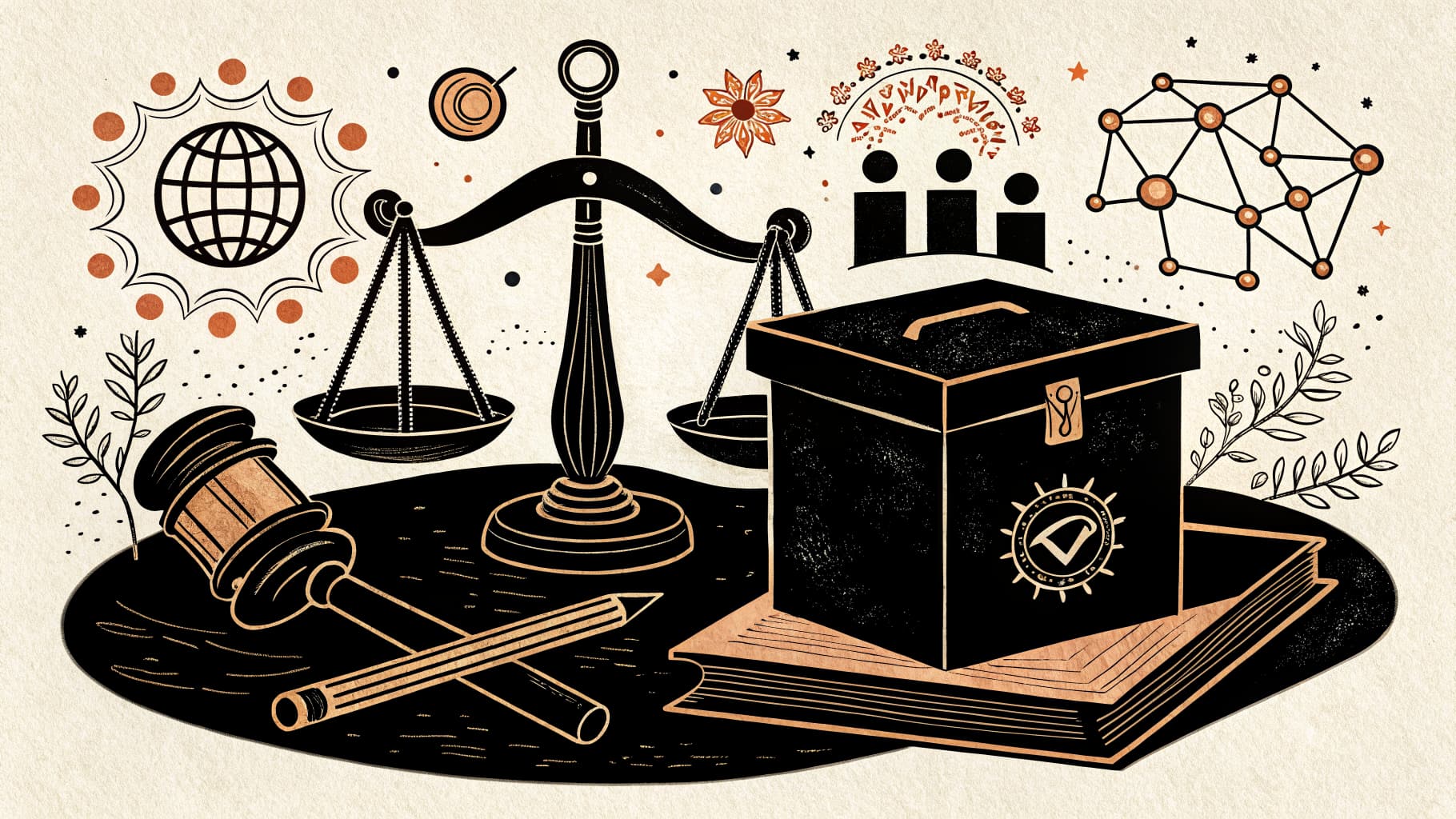
Creating Fair Laws
Analyzing how laws protect individuals and ensure that society functions in an orderly and just way.
TL;DR:Active learning works for this topic because Year 4 students build lasting civic understanding by doing, not just listening. When they practice resolving conflicts in role plays and mock trials, they connect fairness to their own experiences and see why neutral third parties matter.
About This Topic
Conflict is a natural part of life, and learning how to resolve it fairly is a key civic skill. In this topic, Year 4 students explore the different ways disputes are settled in Australia, from schoolyard mediation to the formal court system. They learn about the role of neutral third parties, like mediators and judges, who help people reach a resolution without resorting to anger or unfairness. This aligns with ACARA's focus on the processes for resolving differences.
Students also investigate the importance of listening to all sides of a story before making a judgment. This topic emphasizes that a 'just' resolution is one where the process was fair, even if one side doesn't get exactly what they wanted. This topic comes alive when students can physically model the patterns of a mediation session and practice the language of conflict resolution.
Key Questions
- Explain the process by which new laws are created in Australia.
- Critique a hypothetical law for its fairness and potential impact on different groups.
- Design a simple law to address a specific community problem.
Learning Objectives
- Explain the steps involved in making a new law in Australia.
- Analyze a proposed law to identify potential benefits and drawbacks for different community members.
- Design a simple, fair law to address a specific local issue, justifying its necessity and fairness.
- Compare the fairness of two different hypothetical laws designed to solve the same problem.
Before You Start
Why: Students need to understand the concept of rules and why they exist in various settings before they can analyze the process of creating laws.
Why: Understanding the roles of people in the community, such as local councillors or members of parliament, provides context for who makes laws.
Key Vocabulary
| Bill | A proposed law that has been introduced to Parliament but has not yet been passed. It must be debated and voted on by members of Parliament. |
| Parliament | The group of elected representatives who make laws for Australia. This includes the House of Representatives and the Senate at the federal level. |
| Debate | A formal discussion where different viewpoints on a proposed law are presented and argued. This is a crucial step in the law-making process to consider all sides. |
| Fairness | Treating everyone justly and equitably, ensuring that laws do not unfairly disadvantage or harm any particular group of people. |
Watch Out for These Misconceptions
Common MisconceptionResolving a dispute means finding out who is 'bad.'
What to Teach Instead
Students often look for a villain. Use a mediation simulation to show that many disputes are just misunderstandings or different needs, and the goal is to find a solution, not just a punishment.
Common MisconceptionThe person with the most power should decide the winner.
What to Teach Instead
Children may think the teacher or the 'coolest' kid should decide. Peer discussion about 'neutrality' helps them understand why we use independent judges and mediators who don't take sides.
Active Learning Ideas
See all activities→Role Play
Peer Mediation
Students act out a scenario where two friends disagree over a game. A third student acts as a mediator, using a script to help both sides speak, listen, and find a compromise.
Mock Trial
The Case of the Missing Pencil
Set up a simple classroom 'court.' Assign roles like judge, witnesses, and lawyers. Students must present evidence and follow fair procedures to determine what happened to a 'stolen' item.
Think-Pair-Share
Win-Win Solutions
Give pairs a conflict scenario (e.g., two groups wanting the same basketball court). They must brainstorm three 'win-win' solutions where both groups get some of what they want.
Real-World Connections
- Local councils, like the City of Sydney or Brisbane City Council, create local laws, often called by-laws, regarding issues such as parking, pet ownership, or noise levels. These laws are proposed, debated by councillors, and then enacted to manage community life.
- The Australian Parliament, located in Canberra, is where federal laws are made. For example, laws about national environmental protection or taxation are debated and voted on by elected members of Parliament before becoming official.
Assessment Ideas
Present students with a scenario: 'A new rule is proposed that all students must wear a specific hat to school every day.' Ask students to write down two reasons why this law might be fair and two reasons why it might be unfair, considering different students.
Pose the question: 'Imagine our school needs a new rule about lunchtime. What problem could this rule solve? What would be the steps to create this rule, and how would we make sure it's fair for everyone, including younger and older students?' Facilitate a class discussion, guiding students to consider different perspectives.
On an exit ticket, ask students to list one key difference between a 'bill' and a 'law.' Then, ask them to briefly describe one way a law could be unfair to a specific group of people.
Frequently Asked Questions
What is a mediator?
How does active learning help students learn to resolve disputes?
Why do we have courts for disputes?
How do First Nations Australians traditionally resolve disputes?
More in Rules, Laws, and Fair Play
Rules vs. Laws: Key Differences
Comparing the rules found in families and schools with the laws that govern the entire country.
8 methodologies
The Purpose of Laws in Society
Exploring why laws are necessary and how they contribute to order, safety, and fairness.
8 methodologies
The Role of Police and Courts
Understanding the roles of law enforcement and the justice system in upholding laws and resolving disputes.
8 methodologies
Resolving Disputes Peacefully
Exploring how the legal system and community mediators help people solve disagreements fairly.
8 methodologies
Consequences of Breaking Rules and Laws
Examining the different types of consequences for not following rules and laws, from school to society.
8 methodologies
Why Do We Follow Laws?
Discussing the reasons people choose to follow laws, including safety, fairness, and community well-being.
8 methodologies