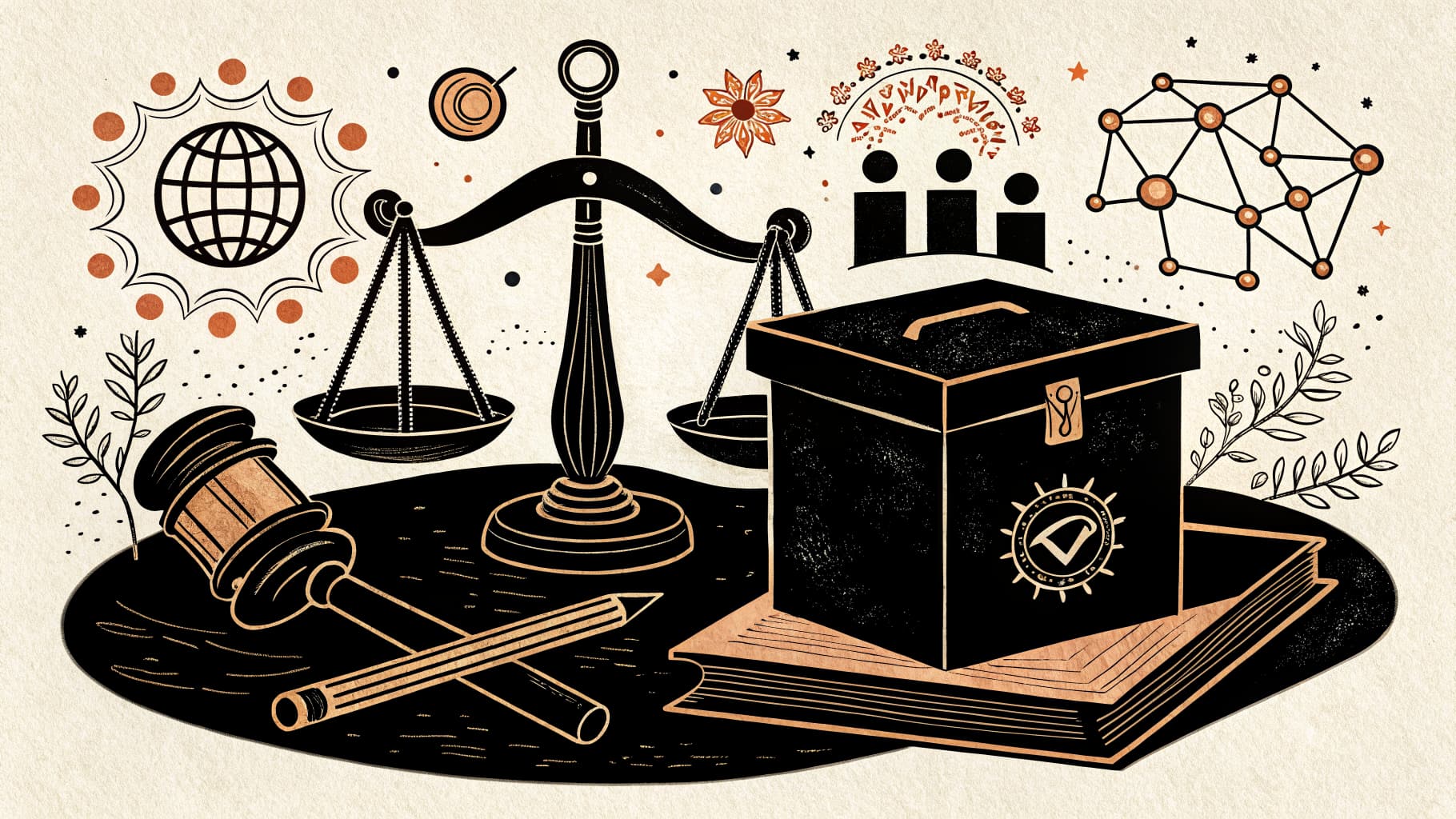
Consequences of Breaking Rules and Laws
Examining the different types of consequences for not following rules and laws, from school to society.
TL;DR:Active learning helps Year 4 students grasp the real-world impact of breaking rules and laws by letting them analyse, discuss, and role-play consequences directly. This approach moves beyond abstract discussions to concrete examples they can evaluate, compare, and justify, building a deeper understanding of fairness and responsibility.
About This Topic
Year 4 students explore the consequences of breaking rules and laws, distinguishing between school rules like uniform violations leading to warnings or detentions, and societal laws such as traffic offences resulting in fines or licence suspensions. They compare these across levels, from classroom expectations to national legislation, and analyse why consequences match the action's severity and harm caused. This aligns with AC9HASS4K02, fostering awareness of the rule of law in Australian democracy.
Students predict how repeated rule-breaking erodes community trust, safety, and fairness, connecting personal choices to wider impacts. Activities build skills in ethical reasoning, perspective-taking, and civic responsibility, preparing them for discussions on rights and responsibilities.
Active learning shines here because consequences feel distant to children. Role-plays of scenarios, sorting activities, and group predictions make abstract ideas concrete, boost engagement, and encourage empathy through peer interactions.
Key Questions
- Compare the consequences of breaking a school rule versus a national law.
- Explain why different actions have different consequences.
- Predict the impact of consistent rule-breaking on a community.
Learning Objectives
- Compare the consequences of breaking a school rule versus a national law, identifying specific differences in severity and process.
- Explain why different actions, from minor infractions to serious crimes, warrant distinct consequences based on harm and intent.
- Predict the impact of consistent rule-breaking on community safety, trust, and fairness, using specific examples.
- Classify various rule-breaking scenarios into categories of school rules or societal laws.
- Analyze the relationship between the severity of an action and the appropriateness of its consequence.
Before You Start
Why: Students need to understand that rules exist to create order and safety before they can compare consequences for breaking different types of rules.
Why: Prior knowledge of what a community is helps students grasp how rule-breaking impacts the group as a whole.
Key Vocabulary
| Consequence | A result or effect of an action or condition. For students, this can be a warning, detention, or a more serious outcome. |
| Rule | An instruction or principle that guides behaviour within a specific group or place, like a classroom or playground. Breaking a rule usually has a minor consequence. |
| Law | A system of rules that a country or community recognizes as regulating the actions of its members, which it may enforce by the imposition of penalties. Breaking a law has more significant consequences. |
| Fairness | Treating people equally and justly, ensuring that rules and consequences are applied without bias. |
| Community | A group of people living in the same place or having a particular characteristic in common. In this context, it refers to the school or the wider society. |
Watch Out for These Misconceptions
Common MisconceptionAll rule-breaking leads to the same punishment.
What to Teach Instead
Consequences vary by harm caused and context; minor school issues get warnings, serious laws bring jail. Sorting activities help students categorise and discuss proportionality, clarifying through peer justification.
Common MisconceptionConsequences only affect the rule-breaker.
What to Teach Instead
Breaking rules impacts communities, like unsafe playgrounds from ignored rules. Simulations reveal ripple effects, with group predictions building understanding of collective harm.
Common MisconceptionLaws do not apply if no one sees.
What to Teach Instead
Laws exist for societal good, enforced variably. Role-plays show detection methods and ethical reasons to follow rules, fostering internalised responsibility via discussions.
Active Learning Ideas
See all activities→Case Study Analysis
Sorting Activity: Consequence Match-Up
Prepare cards with rule/law breaches and matching consequences from school, community, and national levels. In pairs, students sort and justify matches, then share with the class. Extend by creating new examples.
Case Study Analysis
Role-Play: Court Scenarios
Assign roles like accused, judge, lawyer in small groups for school vs. law breaches. Groups act out trials, decide consequences, and debrief on fairness. Rotate roles for multiple rounds.
Simulation Game
Community Impact Chain
Whole class models rule-breaking chain: one student 'breaks' a rule, others react with consequences rippling out. Discuss predictions from key questions. Chart impacts on butcher paper.
Real-World Connections
- A local council might issue a fine to a business for not properly disposing of waste, a consequence for breaking an environmental law designed to protect the community's waterways.
- School principals and teachers apply consequences like detentions or loss of privileges for breaking school rules, such as not completing homework or disrupting class, to maintain a positive learning environment.
- Police officers enforce traffic laws by issuing tickets for speeding, a consequence for an action that could endanger other road users and the driver.
Assessment Ideas
Present students with a list of actions (e.g., 'talking during silent reading', 'running a red light', 'not wearing a school hat', 'stealing a bike'). Ask them to sort these into two columns: 'School Rule' and 'Societal Law'. Then, for two examples, have them write down a likely consequence for each.
Pose the question: 'Imagine if no one followed the rules at school or the laws in our country. What would happen to our community?' Facilitate a class discussion, guiding students to consider impacts on safety, trust, and fairness. Record key ideas on a chart.
Give each student a card with a scenario (e.g., 'A student cheats on a test', 'A person drives without a license'). Ask them to write: 1. Is this breaking a school rule or a national law? 2. What is one possible consequence? 3. Why is this consequence appropriate for this action?
Frequently Asked Questions
How to teach year 4 consequences of breaking rules vs laws?
What activities explain why actions have different consequences?
How can active learning help students understand consequences of rules and laws?
Predicting rule-breaking impact on Australian communities?
More in Rules, Laws, and Fair Play
Rules vs. Laws: Key Differences
Comparing the rules found in families and schools with the laws that govern the entire country.
8 methodologies
The Purpose of Laws in Society
Exploring why laws are necessary and how they contribute to order, safety, and fairness.
8 methodologies
Creating Fair Laws
Analyzing how laws protect individuals and ensure that society functions in an orderly and just way.
8 methodologies
The Role of Police and Courts
Understanding the roles of law enforcement and the justice system in upholding laws and resolving disputes.
8 methodologies
Resolving Disputes Peacefully
Exploring how the legal system and community mediators help people solve disagreements fairly.
8 methodologies
Why Do We Follow Laws?
Discussing the reasons people choose to follow laws, including safety, fairness, and community well-being.
8 methodologies