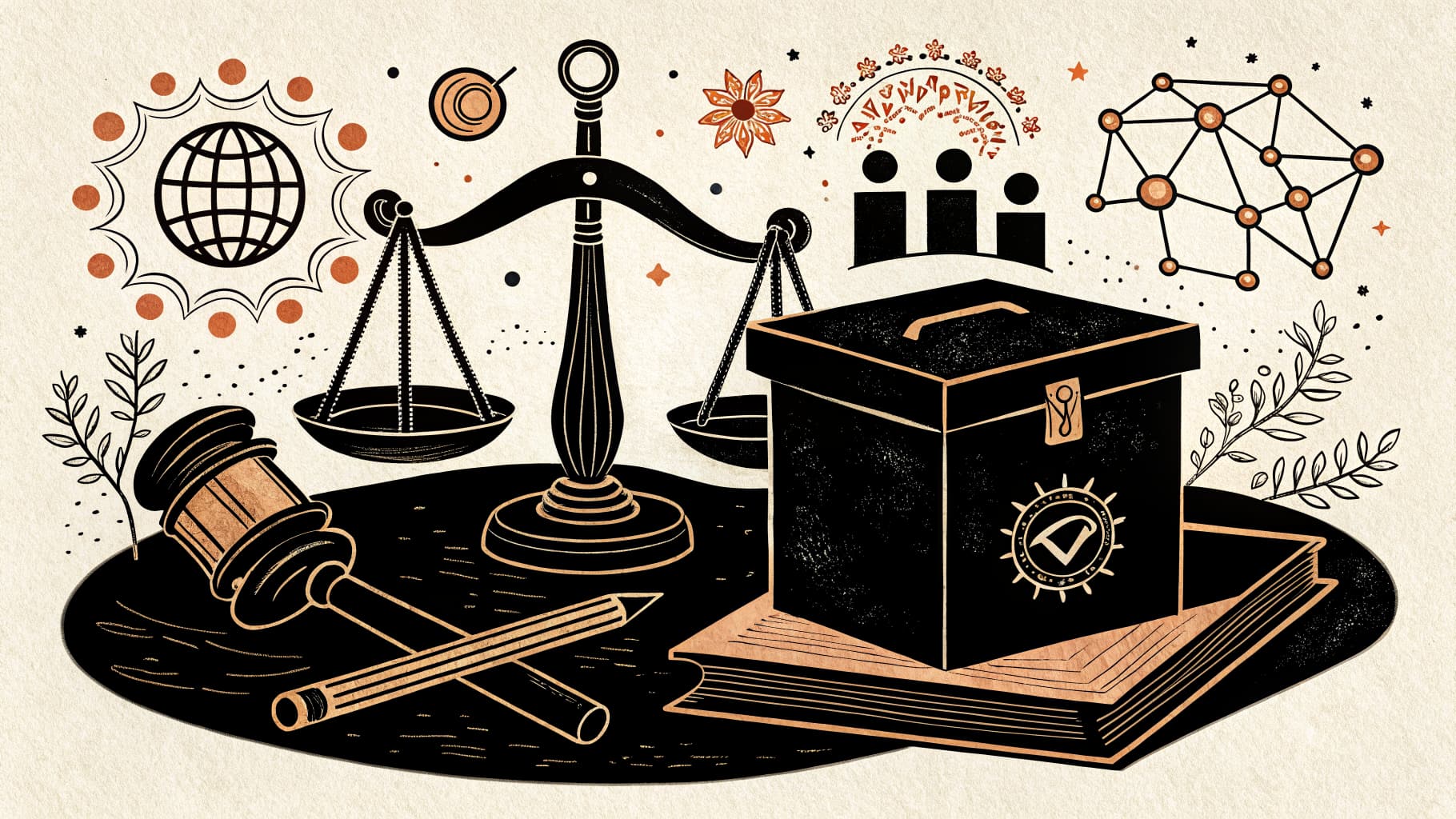
Making Decisions Together: Voting
Learning about the secret ballot and how voting ensures everyone has a say.
TL;DR:Active learning works for this topic because voting is a participatory process that students must experience to truly grasp. When they cast ballots, count votes, and see outcomes, abstract democratic ideas become concrete and meaningful. Role-plays and hands-on tasks build empathy and confidence, showing students that their voices carry weight in decisions that affect them.
About This Topic
Voting helps groups make fair decisions by ensuring each person has an equal say. Year 3 students learn about the secret ballot in Australian democracy, which keeps votes private to avoid pressure or bullying. They practice this through classroom examples, like choosing a reading corner activity, and connect it to the key idea that everyone matters in decisions affecting them.
This topic meets AC9HASS3K01 by exploring group decision-making processes. Students compare modern voting with traditional Aboriginal and Torres Strait Islander approaches, such as consensus in family or community gatherings before European settlement. These discussions highlight fairness across cultures and build respect for diverse ways of listening and agreeing.
Active learning fits perfectly because students grasp civic ideas best through participation. Mock votes and role-plays let them feel the weight of their choice and see results unfold, turning rules into lived experiences that stick long-term.
Key Questions
- How do people in a group decide what is fair and what to do together?
- What are some ways Aboriginal and Torres Strait Islander communities made decisions together before European settlement?
- Why is it important for everyone to have a say in decisions that affect them?
Learning Objectives
- Compare the process of voting in Australian democracy with decision-making methods used by Aboriginal and Torres Strait Islander communities before European settlement.
- Explain the purpose of a secret ballot in ensuring fairness and preventing coercion during elections.
- Identify instances where classroom or community decisions could be made using a voting process.
- Demonstrate how to cast a secret ballot in a mock voting scenario.
Before You Start
Why: Students need a basic understanding of why rules exist and how they help groups function before learning about the voting process to make those rules.
Why: Understanding the concept of fairness is foundational to grasping why voting and the secret ballot are important for ensuring everyone has an equal say.
Key Vocabulary
| Secret Ballot | A voting method where a voter's choice is anonymous. This protects voters from pressure or intimidation when they cast their vote. |
| Fairness | Treating everyone equally and justly. In voting, fairness means each person's vote counts the same and the process is open to all. |
| Decision Making | The process of choosing a course of action from several alternatives. Groups use different methods to decide what to do. |
| Consensus | A general agreement reached by a group. Some communities make decisions by discussing until everyone agrees or can accept the outcome. |
Watch Out for These Misconceptions
Common MisconceptionVoting is only for adults or leaders.
What to Teach Instead
Classroom votes show everyone, including children, uses voting for fair group choices. Role-plays help students practice and see their vote counts equally, building confidence in democratic participation from a young age.
Common MisconceptionSecret ballot hides bad choices.
What to Teach Instead
It protects honest opinions from peer pressure, as students discover in mock elections. Group discussions after voting reveal how privacy leads to truer group decisions, not deception.
Common MisconceptionOne vote never changes anything.
What to Teach Instead
Tallying close class votes demonstrates collective power. Hands-on simulations let students witness ties or shifts, emphasizing the importance of every voice in democracy.
Active Learning Ideas
See all activities→Think-Pair-Share
Whole Class: Secret Ballot Election
Present three class decision options, such as recess games. Give each student a paper ballot to mark secretly, fold, and place in a box. Tally votes together and graph results, discussing why secrecy encouraged honest choices.
Think-Pair-Share
Small Groups: ATSI Consensus Role-Play
Assign roles from an Aboriginal or Torres Strait Islander community meeting. Groups discuss a shared problem, like planning a gathering, aiming for full agreement through talking sticks or turns. Share strategies with the class afterward.
Think-Pair-Share
Pairs: Voting Comparison Chart
Partners list pros and cons of secret ballot versus show-of-hands voting. Draw examples from class and ATSI methods. Present one key difference to the group.
Real-World Connections
- Local council elections in towns like Alice Springs or Hobart use the secret ballot for residents to choose representatives who make decisions about local services.
- The Australian Electoral Commission (AEC) manages federal elections, ensuring the secret ballot is used for citizens to vote for members of parliament, like those in Canberra.
- Community groups, such as a local surf club in Bondi or a school P&C in Perth, might use a simple vote to decide on fundraising activities or club rules.
Assessment Ideas
Provide students with a slip of paper. Ask them to write down two reasons why the secret ballot is important in Australia. Then, ask them to draw a symbol that represents fairness in decision-making.
Pose the question: 'Imagine our class needs to decide on a new game for playtime. How could we make sure everyone's idea is heard and the decision is fair?' Guide students to discuss different methods, including voting, and explain the benefits of a secret ballot.
During a mock vote activity (e.g., choosing a class pet), observe students as they cast their votes. Ask individual students: 'Why are you putting your vote in the box without showing anyone?' and 'How does this help make the decision fair?'
Frequently Asked Questions
How do you teach the secret ballot in Year 3?
What are ATSI decision-making methods for primary students?
How can active learning help students understand voting?
Why include ATSI perspectives in voting lessons?
More in Democracy in Action
Who Represents Us? Local Leaders
Identifying the roles of local representatives and how they speak for their community.
8 methodologies
Majority Rule and Protecting Minorities
Balancing the will of the majority with the protection of the rights of smaller groups.
8 methodologies
Symbols of Australian Democracy
Exploring national symbols and their connection to democratic values.
8 methodologies
The Three Levels of Government
An introduction to local, state, and federal governments and their basic responsibilities.
8 methodologies
Elections: How Leaders Are Chosen
Understanding the basic process of an election, from candidates to counting votes.
8 methodologies
The Role of the Prime Minister
Introducing the role and responsibilities of Australia's Prime Minister.
8 methodologies