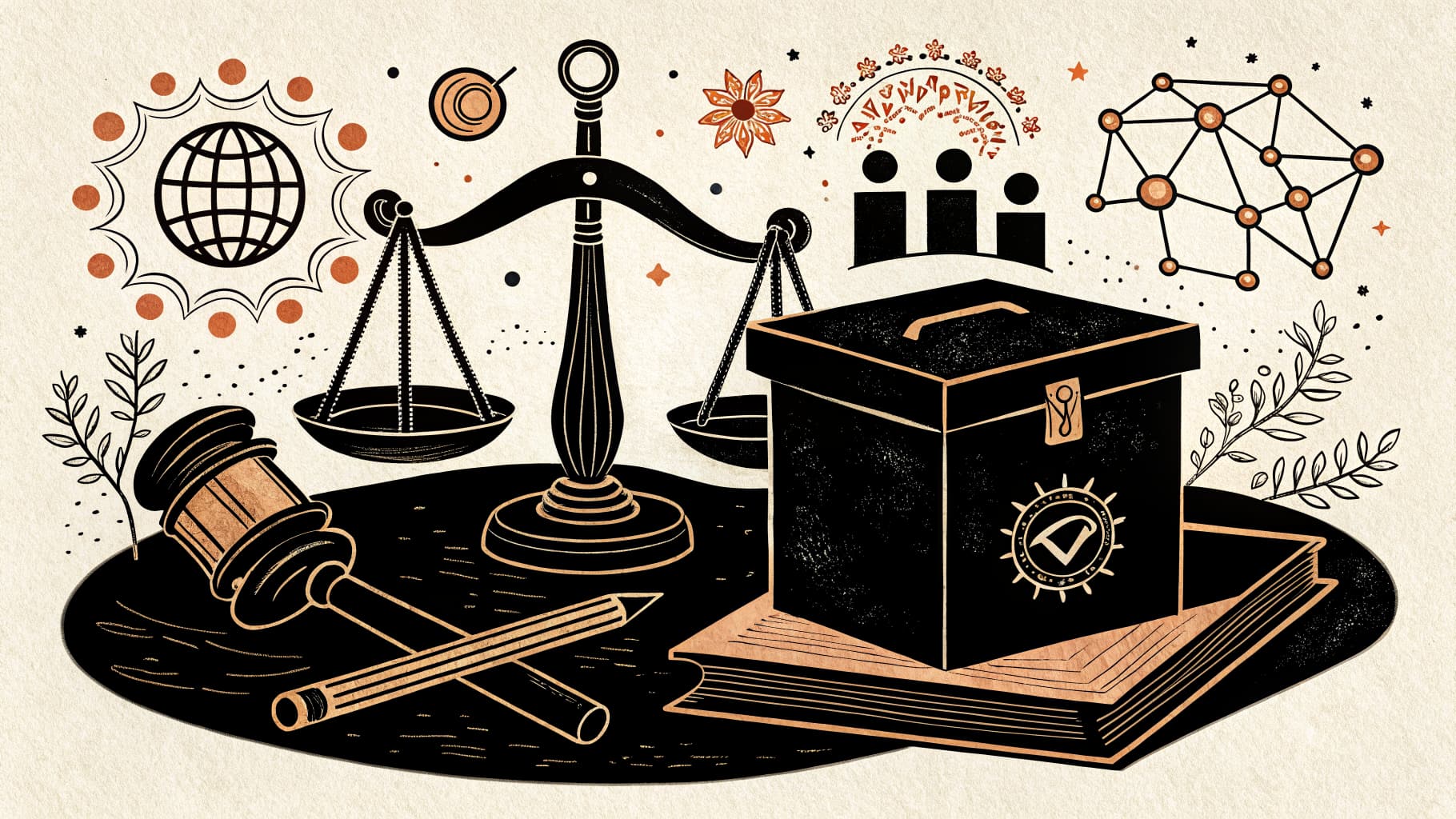
Elections: How Leaders Are Chosen
Understanding the basic process of an election, from candidates to counting votes.
TL;DR:Active learning fits this topic because elections are a lived experience for students, not just abstract facts. When students role-play voting, campaigning, and counting, they connect democratic concepts to real choices they know, like picking their class captain or school leaders.
About This Topic
Elections form the heart of Australian democracy, where citizens choose leaders by voting for candidates who present their ideas. In Year 3, students explore the key steps: candidates nominate and share policies through speeches or posters, voters mark secret ballots, and officials count votes to determine the winner with the most support. This process mirrors school captain elections and connects to local council or federal choices, helping students grasp fair participation.
Aligned with AC9HASS3K01, this topic builds knowledge of democratic processes and cultivates skills in analysis and prediction, such as why candidates campaign and what low turnout means for representation. Students examine how every vote counts in close races, fostering respect for diverse viewpoints and civic responsibility from an early age.
Active learning shines here because elections involve roles students can enact directly. Mock votes with real ballots and tallies turn abstract steps into personal experiences, while group campaigns encourage persuasion and collaboration. These hands-on methods make civic concepts stick, as students reflect on fairness and their own influence.
Key Questions
- Explain the steps involved in a democratic election.
- Analyze the importance of candidates presenting their ideas to voters.
- Predict the impact of low voter turnout on election results.
Learning Objectives
- Identify the key roles in an election, such as candidate, voter, and election official.
- Explain the sequence of steps in a simple election process, from nomination to vote counting.
- Compare the ideas presented by different candidates in a mock election scenario.
- Demonstrate how to cast a secret ballot correctly.
- Analyze the potential impact of a candidate receiving the most votes.
Before You Start
Why: Students should have a basic understanding of different roles people have within a community to grasp the concept of elected leaders.
Why: Understanding the concept of rules and why they are important for fairness is foundational to understanding democratic processes like voting.
Key Vocabulary
| Candidate | A person who is running in an election to be chosen for a position or job. |
| Voter | A person who is old enough to vote and who chooses a candidate in an election. |
| Ballot | A piece of paper or a system used to cast a vote in an election. It is usually secret. |
| Vote | An official choice that is made by one person or by a group of people, for example, in an election. |
| Election Official | A person who helps to run an election, for example, by checking voters or counting the votes. |
Watch Out for These Misconceptions
Common MisconceptionElections are like a popularity contest with no real ideas.
What to Teach Instead
Candidates must share policies for voters to judge. Role-playing speeches in mock elections lets students experience evaluating ideas, shifting focus from charm to substance through peer feedback.
Common MisconceptionThe person with the loudest voice always wins.
What to Teach Instead
Wins depend on vote counts, not volume. Hands-on tallying activities reveal how secret ballots ensure fairness, as students count and discuss discrepancies in simulated low-turnout scenarios.
Common MisconceptionVotes are public so everyone knows your choice.
What to Teach Instead
Australian elections use secret ballots for free choice. Practicing folded ballots in class builds trust in privacy, with discussions highlighting why anonymity encourages honest voting.
Active Learning Ideas
See all activities→Think-Pair-Share
Mock Election: Class Captain Vote
Nominate two candidates from volunteers. Each prepares a 1-minute speech on class improvements. Students vote secretly using printed ballots, then count votes together as a class. Discuss the winner and runner-up.
Think-Pair-Share
Campaign Poster Stations: Policy Pitch
Divide class into small groups, each designing posters for a fictional candidate's promises like playground upgrades. Groups present posters and field questions. Vote on most persuasive poster.
Think-Pair-Share
Vote Counting Relay: Accuracy Drill
Set up stations with sample ballots. Pairs sort and tally votes quickly, then verify as a group. Rotate roles between counter and checker to practice fair counting.
Real-World Connections
- Students can observe local council elections where candidates, like the mayor or councillors, present their plans for the community. These elected officials make decisions about local parks, libraries, and roads.
- Federal elections involve candidates running for Parliament, such as the Prime Minister. These leaders make laws that affect all Australians, influencing things like schools and hospitals.
- School captain elections use a similar process. Candidates give speeches about their ideas for the school, and students cast secret ballots to choose who they believe will best represent them.
Assessment Ideas
Provide students with a flowchart template of an election with missing labels. Ask them to fill in the blanks with key terms like 'Candidate', 'Voter', 'Ballot', 'Vote', 'Count Votes' to show understanding of the sequence.
After a mock election, ask: 'Imagine only 10 people voted in our class election. Would that be fair? Why or why not?' Guide students to discuss how low turnout might affect who wins and if the winner truly represents the whole class.
Give each student a card with a picture of a ballot box. Ask them to write one sentence explaining what happens inside the ballot box and one sentence about why it is important for voters to choose carefully.
Frequently Asked Questions
How do you teach election steps to Year 3 students?
Why do candidates present ideas in elections?
What happens with low voter turnout in elections?
How does active learning benefit teaching elections?
More in Democracy in Action
Making Decisions Together: Voting
Learning about the secret ballot and how voting ensures everyone has a say.
8 methodologies
Who Represents Us? Local Leaders
Identifying the roles of local representatives and how they speak for their community.
8 methodologies
Majority Rule and Protecting Minorities
Balancing the will of the majority with the protection of the rights of smaller groups.
8 methodologies
Symbols of Australian Democracy
Exploring national symbols and their connection to democratic values.
8 methodologies
The Three Levels of Government
An introduction to local, state, and federal governments and their basic responsibilities.
8 methodologies
The Role of the Prime Minister
Introducing the role and responsibilities of Australia's Prime Minister.
8 methodologies