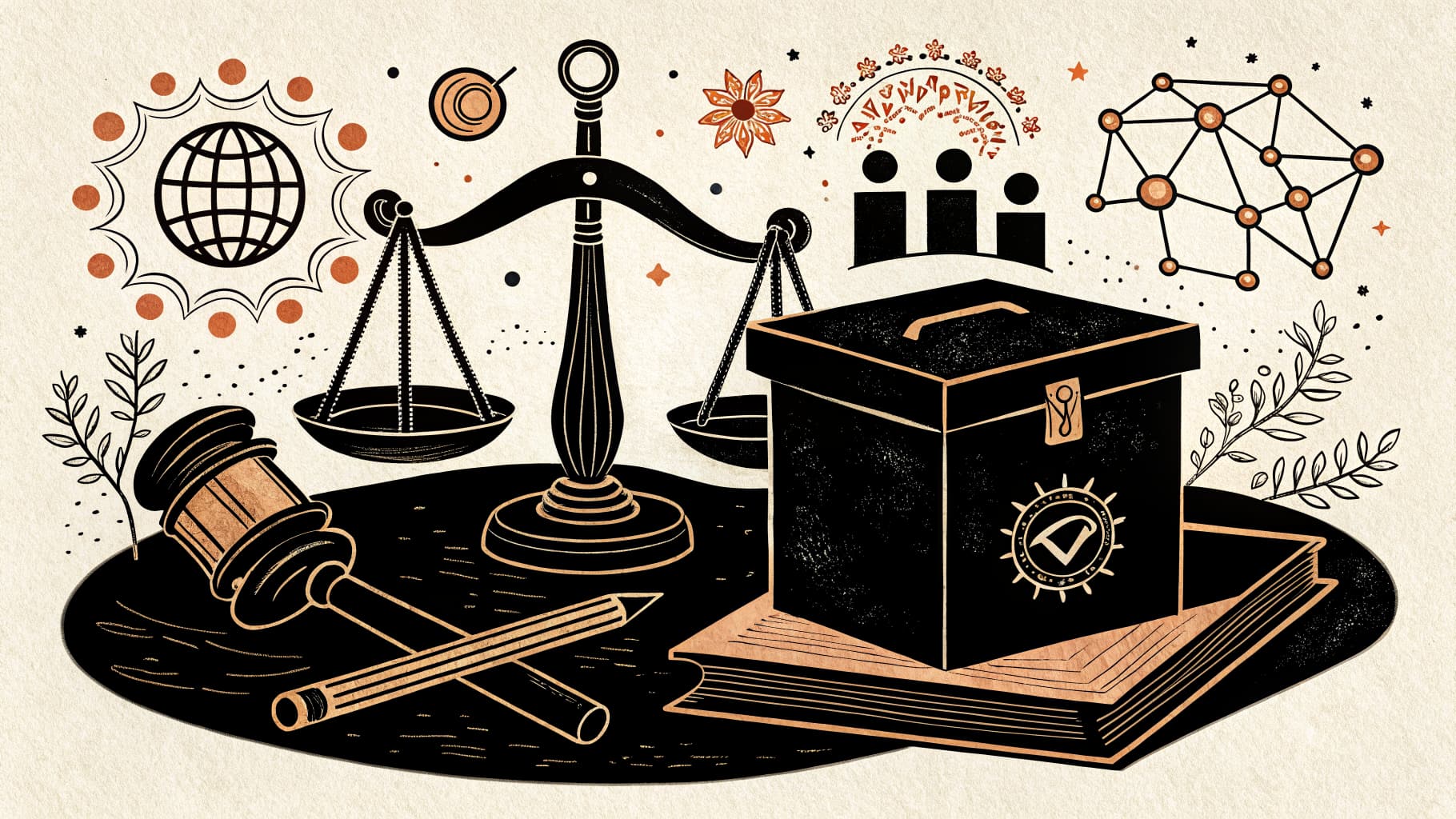
Political Donations and Campaign Finance
Analyzing the regulations around political donations and campaign finance, and their impact on democratic fairness.
TL;DR:Active learning helps students grasp how money moves through politics without losing sight of real consequences. When students simulate donations, analyze real data, or design reforms, they see how rules shape power without relying on abstract lectures.
About This Topic
Political donations and campaign finance shape Australia's democratic landscape. Year 10 students study regulations from the Australian Electoral Commission, such as annual disclosure thresholds over $16,900 and bans on foreign donations. They trace how funds flow to parties and candidates, assessing risks to policy impartiality and electoral equity.
Aligned with AC9C10K05, this topic prompts analysis of donation impacts on legislation, evaluation of rules like real-time disclosure trials, and design of fairer systems. Students confront tensions between funding free speech and curbing undue influence, skills vital for active citizenship in a multiparty system.
Active learning excels with this abstract content. Simulations of donation scenarios or group analysis of public AEC data make regulations concrete and reveal loopholes. Collaborative design challenges encourage students to propose practical reforms, building persuasive arguments and systems thinking.
Key Questions
- Analyze how political donations can influence policy decisions.
- Evaluate the effectiveness of current campaign finance regulations.
- Design a system for transparent and equitable political funding.
Learning Objectives
- Analyze how specific political donations, identified through public records, have potentially influenced Australian legislative outcomes.
- Evaluate the effectiveness of current Australian campaign finance regulations, such as disclosure thresholds and foreign donation bans, in promoting democratic fairness.
- Design a model for a transparent and equitable political funding system for Australian federal elections, justifying its components.
- Compare the arguments for and against different campaign finance reform proposals in Australia, considering their potential impacts on political participation and policy.
Before You Start
Why: Students need a foundational understanding of how Australia's federal government, parliament, and political parties function to grasp the context of political donations and campaign finance.
Why: Understanding core democratic principles, such as fairness, representation, and accountability, is essential for analyzing the impact of campaign finance on democratic processes.
Key Vocabulary
| Political Donation | A voluntary contribution of money or resources made to a political party, candidate, or associated entity to support their campaign or activities. |
| Campaign Finance | The funding of political campaigns and activities, including regulations and laws that govern how money is raised and spent by political actors. |
| Disclosure Threshold | The minimum amount of a political donation that must be publicly reported by the recipient, as set by electoral commissions. |
| Third-Party Campaigner | An individual or group, not a candidate or political party, that engages in campaign activity, often funded by donations. |
| Electoral Commission | An independent statutory body, like the Australian Electoral Commission (AEC), responsible for administering elections and regulating political finance. |
Watch Out for These Misconceptions
Common MisconceptionAll political donations lead to corruption.
What to Teach Instead
Most donations comply with laws, but influence varies by scale and source. Role-plays help students model legal flows and spot subtle biases, shifting focus from blanket suspicion to targeted scrutiny.
Common MisconceptionCurrent regulations fully eliminate undue influence.
What to Teach Instead
Loopholes like trusts persist despite disclosures. Data analysis activities expose these gaps, prompting students to evaluate effectiveness through evidence rather than assumptions.
Common MisconceptionOnly large corporate donations matter.
What to Teach Instead
Grassroots and union funds aggregate significantly. Group graphing of diverse sources reveals this, fostering nuanced views via collaborative pattern spotting.
Active Learning Ideas
See all activities→Problem-Based Learning
Role-Play Simulation: Mock Election Funding
Assign roles as party managers, donors, and AEC officials. Groups plan a campaign budget with mock donations, track disclosures, and face audits. Debrief on influence risks and rule gaps.
Problem-Based Learning
Data Analysis: AEC Disclosure Graphs
Provide recent AEC reports. Pairs graph top donors by party, calculate totals, and identify patterns. Share findings in a class gallery walk to discuss policy links.
Problem-Based Learning
Design Challenge: Reform Proposals
Small groups brainstorm a new funding model with caps or public vouchers. They pitch ideas to the class, vote on feasibility, and refine based on feedback.
Real-World Connections
- Journalists at major Australian newspapers, such as The Sydney Morning Herald or The Age, regularly analyze Australian Electoral Commission (AEC) data to report on the sources and amounts of political donations received by parties and candidates.
- Lobbyists working for industry groups, like the Minerals Council of Australia or the Australian Medical Association, engage with parliamentarians, and their activities are indirectly linked to the financial resources available to political parties through donations.
- The Australian Parliament itself debates and votes on legislation that can alter campaign finance laws, directly impacting how elections are funded and potentially influencing policy decisions based on financial support.
Assessment Ideas
Present students with a hypothetical donation scenario: 'A mining company donates $50,000 to a major political party before a federal election.' Ask students to write down two potential impacts this donation could have on policy decisions and one regulation from the AEC that applies to this donation.
Facilitate a class debate using the prompt: 'Should there be a complete ban on all corporate and union political donations in Australia?' Encourage students to use evidence from their research on current regulations and potential impacts to support their arguments.
Ask students to list one strength and one weakness of the current Australian campaign finance regulations. Then, have them suggest one specific reform that could address the weakness they identified.
Frequently Asked Questions
What are the key Australian regulations on political donations?
How do political donations influence policy decisions?
How can active learning help students understand campaign finance?
What reforms could improve campaign finance transparency?
More in The Legislative Process
From Bill to Law: Stages of Legislation
Understanding the stages of the legislative process and the importance of parliamentary debate and scrutiny.
8 methodologies
The Role of Political Parties
Analyzing the function of political parties in shaping policy, representing interests, and forming government.
8 methodologies
Electoral Systems: Preferential Voting
Exploring Australia's preferential voting system, its impact on election outcomes, and the importance of voter participation.
8 methodologies
The Influence of Lobby Groups
Assessing how interest groups, lobbyists, and corporate entities influence the creation of public policy.
8 methodologies
The Role of the Media in Democracy
Analyzing the media's power to shape public opinion and hold the government to account.
8 methodologies
Public Opinion and Policy Making
Investigating how public opinion is measured, influenced, and its role in shaping government policy.
8 methodologies