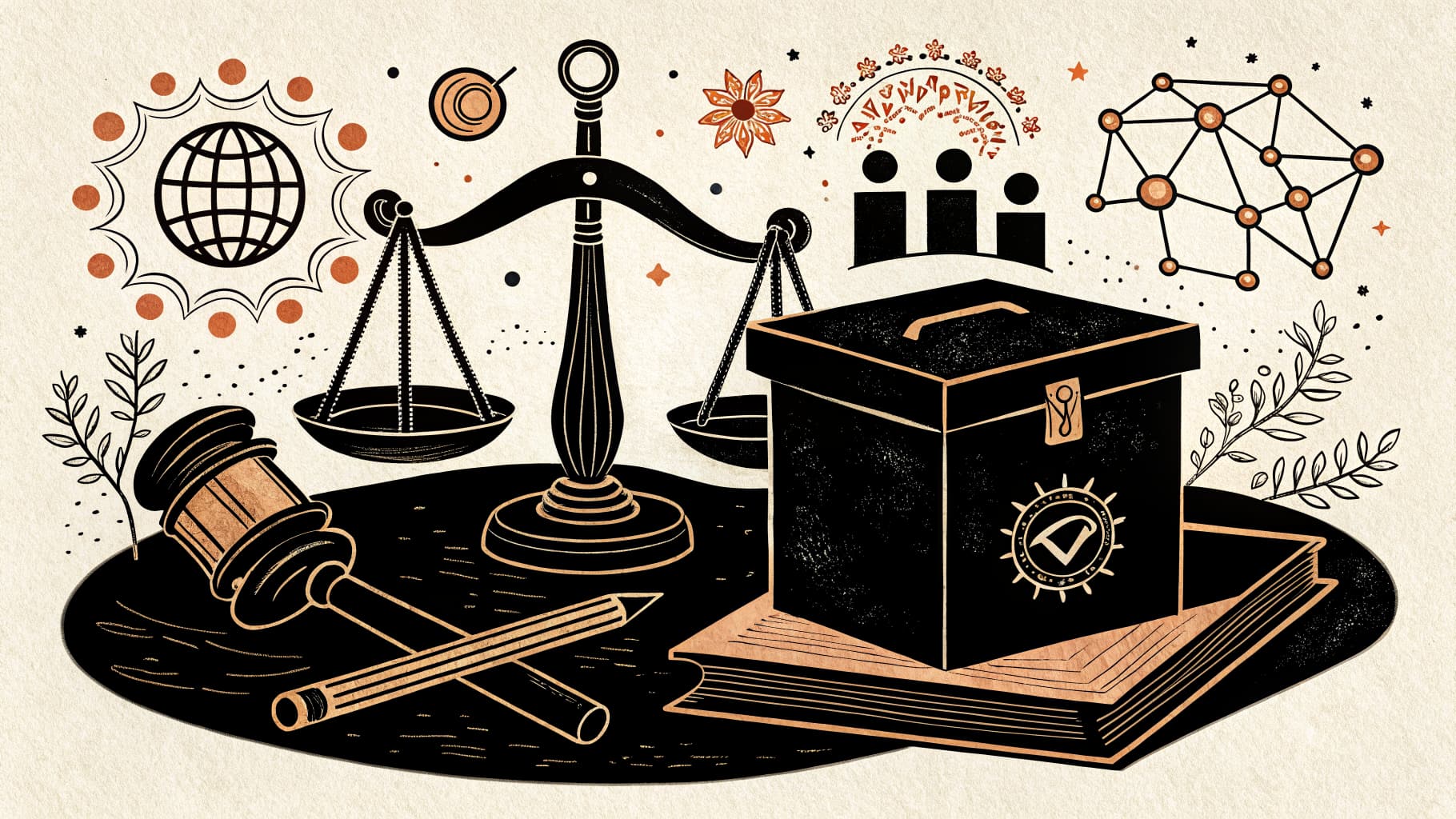
Electoral Systems: Preferential Voting
Exploring Australia's preferential voting system, its impact on election outcomes, and the importance of voter participation.
TL;DR:Active learning works for this topic because students need to experience firsthand how media choices shape political outcomes. Simply explaining bias or algorithms leaves students passive, but hands-on activities let them test claims with real examples.
About This Topic
The media is often called the 'fourth estate' because of its role in holding the government to account and informing the public. In Year 10, students analyze how the media shapes political agendas and public opinion in Australia. This topic covers the transition from traditional media (TV, newspapers) to digital and social media, and the challenges this poses for democracy, such as the spread of misinformation and the creation of 'echo chambers.'
Students investigate the importance of a free press, the role of the ABC as a public broadcaster, and the impact of media ownership concentration in Australia. This study connects to ACARA's focus on the influence of the media in the electoral and legislative process. To develop critical literacy, students benefit from 'Media Deconstruction' activities where they compare how different outlets report on the same political event.
Key Questions
- Explain the mechanics of Australia's preferential voting system.
- Analyze how electoral systems influence political representation.
- Evaluate the importance of compulsory voting in a democracy.
Learning Objectives
- Explain the step-by-step process of preferential voting in Australian federal elections.
- Analyze how different voting systems, including preferential voting, can affect the composition of parliament.
- Compare the outcomes of preferential voting with a 'first past the post' system using historical election data.
- Evaluate the impact of compulsory voting on voter turnout and election results in Australia.
- Critique the advantages and disadvantages of Australia's current electoral system.
Before You Start
Why: Students need to understand the roles of the Parliament (legislative) and the Executive to contextualize how elections determine who sits in parliament.
Why: A foundational understanding of democratic principles and the rights and responsibilities of citizens is necessary to discuss voting systems and participation.
Key Vocabulary
| Preferential Voting | An electoral system where voters number candidates in order of preference. A candidate needs more than 50% of the vote to win; if not, lower-polling candidates are eliminated, and their votes are redistributed according to the voters' next preferences. |
| Absolute Majority | More than 50% of the total votes cast. In preferential voting, a candidate must achieve this to be elected without further redistribution of votes. |
| Informal Vote | A ballot paper that is not filled out correctly according to the electoral rules, meaning it cannot be counted. This can happen if a voter does not number all candidates or numbers them incorrectly. |
| Compulsory Voting | A legal requirement for eligible citizens to register to vote and attend a polling place on election day. Failure to do so can result in a fine. |
| Scrutiny | The process of counting votes after an election. In preferential voting, this includes the redistribution of votes from eliminated candidates. |
Watch Out for These Misconceptions
Common MisconceptionIf it's on the news, it must be objective.
What to Teach Instead
All media involves choices about what to include and what to leave out. Even 'factual' reporting can have a bias based on the 'framing' of the story. Comparing 'opinion' pieces with 'news' pieces helps students see these distinctions.
Common MisconceptionSocial media has replaced traditional media.
What to Teach Instead
While social media is a major source of news, much of the content shared on social platforms still originates from traditional news organizations. Understanding the 'media ecosystem' helps students see how these sources interact.
Active Learning Ideas
See all activities→Inquiry Circle
Media Bias Hunt
Groups are given the same news event (e.g., a new tax policy) and three different sources: a tabloid newspaper, a broadsheet, and a social media thread. They must identify differences in headlines, tone, and the 'experts' quoted.
Simulation Game
The Press Gallery
During a mock parliamentary session, a group of students acts as 'journalists.' They must write a 280-character 'live tweet' and a short news headline for each major speech, then present their 'news cycle' to the class.
Think-Pair-Share
The Algorithm
Students discuss how social media algorithms might affect what political news they see. They reflect on whether this makes them more or less informed as future voters.
Real-World Connections
- Electoral Commission staff in each state and territory are responsible for administering federal and state elections, including the complex counting processes involved in preferential voting.
- Political analysts and journalists at news organizations like the ABC or The Sydney Morning Herald use preferential voting data to explain election results, predict trends, and analyze the performance of minor parties.
- Citizens attending a federal election polling booth on election day participate directly in the preferential voting system, deciding how to number their ballot paper.
Assessment Ideas
Present students with a simplified ballot paper for a hypothetical election with five candidates. Ask them to number the candidates according to their preferences and then explain, in writing, how their vote would be counted if their first preference did not win an absolute majority.
Facilitate a class debate on the proposition: 'Compulsory voting is essential for a healthy Australian democracy.' Encourage students to use evidence related to voter turnout and representation to support their arguments.
Ask students to write down one key difference between Australia's preferential voting system and a 'first past the post' system, and one reason why understanding how to fill out a ballot paper correctly is important.
Frequently Asked Questions
Why is media ownership a big deal in Australia?
What is the role of the ABC?
How does the media influence elections?
How can active learning help students understand the role of the media?
More in The Legislative Process
From Bill to Law: Stages of Legislation
Understanding the stages of the legislative process and the importance of parliamentary debate and scrutiny.
8 methodologies
The Role of Political Parties
Analyzing the function of political parties in shaping policy, representing interests, and forming government.
8 methodologies
The Influence of Lobby Groups
Assessing how interest groups, lobbyists, and corporate entities influence the creation of public policy.
8 methodologies
The Role of the Media in Democracy
Analyzing the media's power to shape public opinion and hold the government to account.
8 methodologies
Public Opinion and Policy Making
Investigating how public opinion is measured, influenced, and its role in shaping government policy.
8 methodologies
Accountability and Transparency in Government
Examining mechanisms that ensure government accountability, such as parliamentary scrutiny, ombudsmen, and freedom of information.
8 methodologies