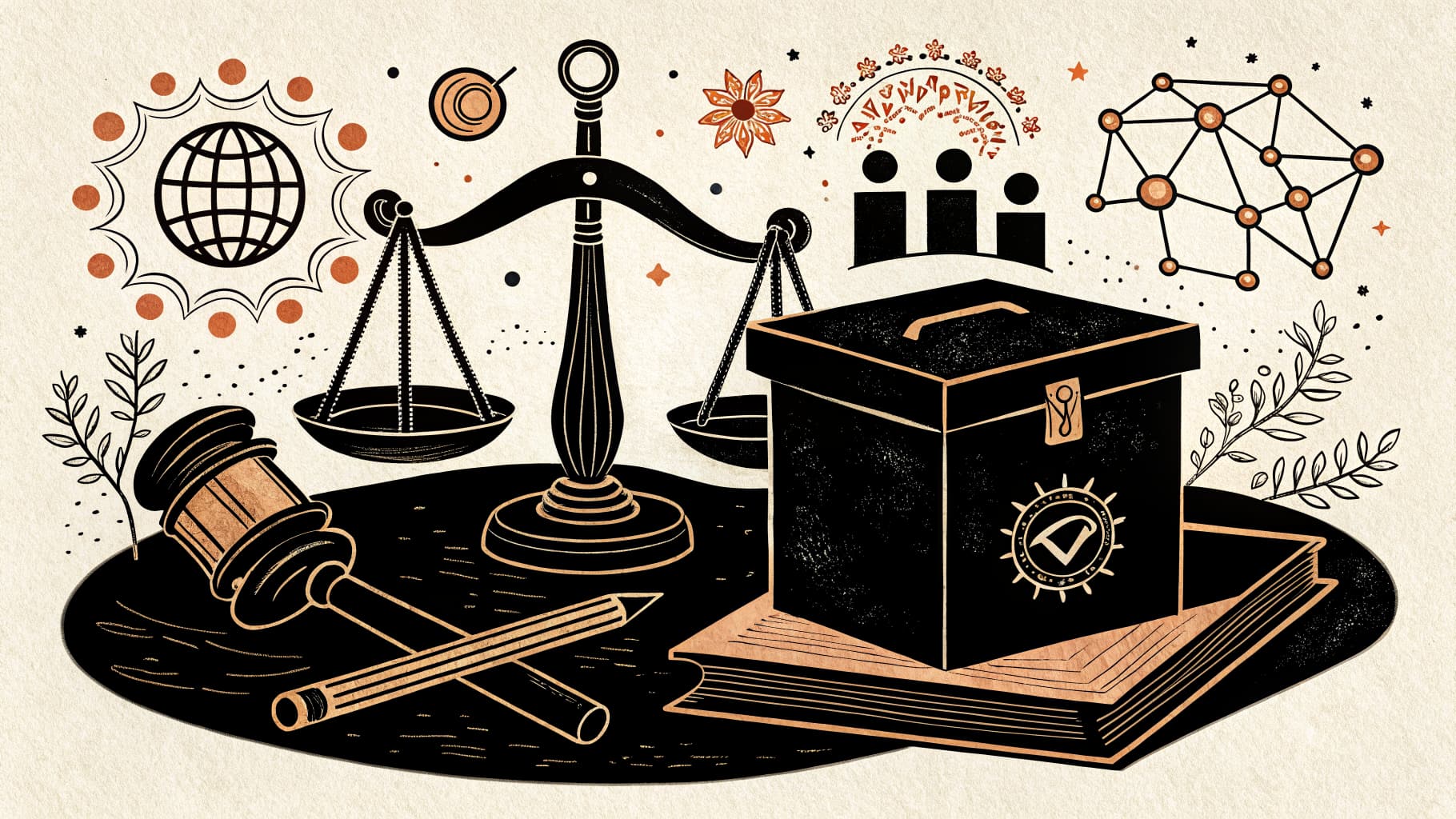
The Role of the Media in Democracy
Analyzing the media's power to shape public opinion and hold the government to account.
TL;DR:Active learning works for this topic because students need to experience bias firsthand to understand its impact on democracy. Analyzing real media examples and debating regulation helps them move from abstract ideas to concrete understanding of press freedom and accountability.
About This Topic
The Role of the Media in Democracy examines how media shapes public opinion and holds governments accountable in Australia's parliamentary system. Year 10 students analyze traditional outlets, social platforms, and investigative reporting to understand their influence on voters and policy. This builds on prior learning about laws and rights, preparing students to evaluate news critically amid diverse viewpoints.
Aligned with AC9C10K05, the topic tackles key questions: critiquing media as an independent watchdog or partisan tool, outlining government strategies against misinformation, and navigating tensions between press freedom and protecting sources. Students explore real Australian cases, such as coverage of parliamentary inquiries or election campaigns, to see media's dual role in transparency and persuasion.
Active learning excels for this topic because students engage directly with current events through debates, source analysis, and role-plays. These approaches make abstract concepts like bias and accountability concrete, encourage evidence-based arguments, and develop skills for discerning reliable information in everyday life.
Key Questions
- Critique the media's role as a watchdog versus a political tool.
- Explain how the government should respond to misinformation.
- Analyze the tension between journalistic freedom and source protection.
Learning Objectives
- Critique the media's role in shaping public discourse on government actions.
- Analyze the strategies governments can employ to counter misinformation effectively.
- Evaluate the ethical considerations surrounding journalistic freedom and the protection of sources in Australia.
- Compare the influence of traditional media outlets versus social media platforms on democratic processes.
- Synthesize information from various media sources to form an informed opinion on a current political issue.
Before You Start
Why: Students need to understand the structure and functions of Australian government to analyze how the media holds it accountable.
Why: Understanding fundamental rights, including freedom of speech and the press, is essential for discussing media freedom and its limitations.
Key Vocabulary
| Watchdog journalism | Journalism that investigates and reports on suspected wrongdoing in government, corporations, or other institutions, acting as a check on power. |
| Public opinion | The collective attitudes and beliefs of individuals within a society on a particular issue or set of issues. |
| Misinformation | False or inaccurate information, especially that which is deliberately intended to deceive. |
| Journalistic freedom | The right of journalists and news organizations to report the news and express opinions without censorship or interference from the government. |
| Source protection | The ethical and legal principle that journalists should not be compelled to reveal the identity of their confidential sources. |
Watch Out for These Misconceptions
Common MisconceptionAll media outlets report facts objectively without bias.
What to Teach Instead
Media reflects editorial choices and ownership influences, as seen in Australian cases like differing election coverage. Group analysis of paired articles reveals slant through word choice, helping students build criteria for evaluation. Peer teaching in jigsaws reinforces balanced perspectives.
Common MisconceptionSocial media is not real media and has no democratic impact.
What to Teach Instead
Platforms like Twitter amplify opinions and spread misinformation rapidly, influencing public discourse in Australia. Hands-on fact-checking races with viral posts show virality over accuracy. Collaborative timelines of social media's role in events clarify its power.
Common MisconceptionPress freedom means media faces no consequences for false reporting.
What to Teach Instead
Laws like defamation balance freedom with accountability, as in high-profile Australian lawsuits. Role-plays of press conferences expose tensions, while debates on regulation help students weigh protections against public harm.
Active Learning Ideas
See all activities→Jigsaw
Media Roles Perspectives
Divide class into expert groups on watchdog function, political influence, misinformation response, and freedom tensions. Each group researches Australian examples and prepares 2-minute summaries. Groups then reform to share and synthesize insights, creating a class mind map of media's democratic role.
Socratic Seminar
Bias Detection: Paired News Analysis
Pairs receive two articles on the same Australian event from different outlets. They highlight loaded language, omitted facts, and opinion vs fact. Pairs present findings to the class, voting on most biased example with justification.
Formal Debate
Government Misinformation Regulation
Form pro and con teams on whether government should fine media for fake news. Provide 10 minutes prep with sources, then 20-minute structured debate with rebuttals. Class votes and reflects on free speech trade-offs.
Real-World Connections
- Journalists at the ABC investigate allegations of corruption within local councils, publishing reports that lead to official inquiries and public debate.
- Political commentators on Sky News Australia and the ABC's Insiders program present differing analyses of government policy, influencing viewer perceptions during election campaigns.
- The Australian Electoral Commission (AEC) actively debunks false claims about voting procedures circulating on social media platforms like Facebook and X (formerly Twitter) during federal elections.
Assessment Ideas
Pose the question: 'Should governments have the power to censor or regulate online content deemed 'misinformation'?'. Facilitate a class debate where students must argue for or against, citing examples of media influence and government responses.
Provide students with two news articles covering the same political event, one from a reputable broadsheet newspaper and another from a partisan blog. Ask them to identify three specific differences in reporting, bias, or framing, and explain how these differences might affect reader understanding.
Ask students to write down one example of a time the media acted as a 'watchdog' and one example of a time the media might have acted as a 'political tool' in Australia. They should briefly explain their reasoning for each.
Frequently Asked Questions
How does media act as a watchdog in Australian democracy?
What should government do about media misinformation?
How can active learning help students understand media's role in democracy?
What tensions exist between journalistic freedom and source protection?
More in The Legislative Process
From Bill to Law: Stages of Legislation
Understanding the stages of the legislative process and the importance of parliamentary debate and scrutiny.
8 methodologies
The Role of Political Parties
Analyzing the function of political parties in shaping policy, representing interests, and forming government.
8 methodologies
Electoral Systems: Preferential Voting
Exploring Australia's preferential voting system, its impact on election outcomes, and the importance of voter participation.
8 methodologies
The Influence of Lobby Groups
Assessing how interest groups, lobbyists, and corporate entities influence the creation of public policy.
8 methodologies
Public Opinion and Policy Making
Investigating how public opinion is measured, influenced, and its role in shaping government policy.
8 methodologies
Accountability and Transparency in Government
Examining mechanisms that ensure government accountability, such as parliamentary scrutiny, ombudsmen, and freedom of information.
8 methodologies