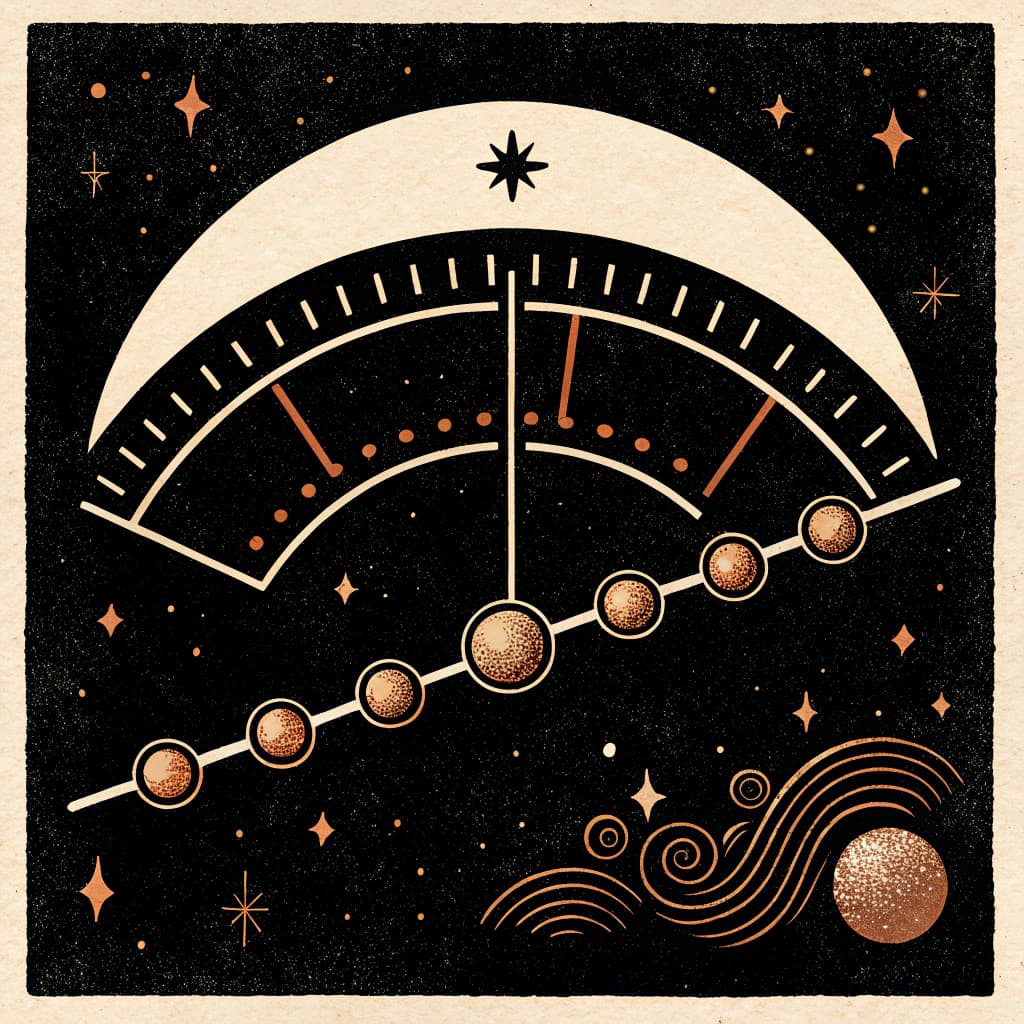
Students physically position themselves along a classroom continuum to represent their stance on a statement, making the range of opinions visible and discussable.
Human Barometer
Human Barometer is a kinesthetic discussion strategy where students arrange themselves along a spectrum from Strongly Agree to Strongly Disagree in response to a carefully chosen statement. Designed to surface nuanced thinking rather than binary positions, it is particularly well-suited to CBSE, ICSE, and state board classrooms engaging with the contested questions in history, civics, environmental science, and literature that NEP 2020 encourages teachers to explore. The methodology builds the critical enquiry and reasoned argumentation skills that board examinations rarely assess but that the National Education Policy identifies as central to 21st-century learning.
What Is Human Barometer? Definition, Origins, and Why It Works
Human Barometer is a physical discussion methodology where students arrange themselves along a continuum , from 'Strongly Agree' at one end to 'Strongly Disagree' at the other , to make the distribution of thinking in a classroom visible. In the Indian classroom context, this methodology addresses one of the most persistent challenges in CBSE, ICSE, and state board settings: the deeply ingrained habit of seeking a single correct answer, often reinforced by the high-stakes board examination culture that dominates Classes 6 through 12.
NEP 2020 explicitly calls for a shift from rote memorisation towards higher-order thinking, critical enquiry, and the capacity to hold and defend reasoned positions , precisely the competencies Human Barometer develops. The methodology is particularly well-suited to Indian social sciences, history, and civics classrooms, where NCERT content regularly surfaces genuinely contested questions: Was the partition of India inevitable? Does rapid industrialisation justify environmental costs? Should the minimum age for criminal responsibility be lowered? These are statements with no textbook answer, and the barometer makes visible the fact that thoughtful, well-informed people , including classmates , can reach different conclusions from the same evidence.
The physical continuum distinguishes Human Barometer from the binary formats that dominate Indian classroom discussions, which tend to be formal debates with two fixed sides. A spectrum allows for the nuanced middle positions that are often the most intellectually honest responses to complex questions. The Class 10 student who is 60% in favour of economic liberalisation, weighing job creation against inequality, has a meaningfully different intellectual situation from the student who is 90% in favour, and the spectrum makes this difference discussable rather than forcing both students into the same camp.
In the typical Indian classroom of 35–50 students, managing physical movement requires deliberate planning. Experienced facilitators in Indian settings often use the length of the classroom rather than its width, or designate zones (front wall to back wall) to maximise the available continuum. When space is genuinely constrained , common in government schools and older private institutions , a seated variant using a numbered card (1 to 5) achieves the same cognitive effect, though the physical visibility is reduced. The standing version should be attempted wherever room dimensions allow; the kinaesthetic element is not decorative but functional, committing students to a position in a way that a raised hand or a number on paper does not.
The most significant cultural adaptation required in Indian settings concerns the expectation of social conformity in opinion expression. Students who have been conditioned to align with teacher expectations, or to avoid publicly disagreeing with high-achieving peers, will initially cluster toward safe middle positions or toward positions they believe the teacher endorses. Two facilitation moves address this: first, asking students to write their position on a card before moving, so the commitment is made privately before the social dynamics of movement are visible; second, establishing explicit norms that the teacher has no preferred position and that changing one's place on the spectrum after hearing a compelling argument is a sign of intellectual strength, not weakness. This reframing , intellectual flexibility as rigour, not capitulation , is often the most important pedagogical work the facilitator does in Indian contexts.
Human Barometer also works well as a formative diagnostic within the Indian assessment cycle. A barometer at the start of a unit on Gandhian economics, environmental ethics, or constitutional rights maps the prior knowledge and values students bring. The same barometer at the end of the unit typically produces a more distributed, more considered set of positions , not convergence, but greater complexity. Comparing the two distributions is itself a meaningful closing activity, helping students see their own conceptual development across the unit in a way that a written test cannot capture. This aligns with NEP 2020's emphasis on holistic, 360-degree assessment beyond terminal examinations.
How to Facilitate Human Barometer: Step-by-Step Implementation Guide
Prepare Provocative Statements
2 min
Draft 3-5 open-ended statements related to your lesson content that do not have a simple 'yes' or 'no' answer.
Set Up the Physical Space
2 min
Clear a path across the room and place 'Strongly Agree' and 'Strongly Disagree' signs at opposite ends of the spectrum.
Present the Prompt
2 min
Read the first statement clearly and give students 30 seconds of silent 'think time' to determine their personal stance.
Execute the Movement
3 min
Direct students to physically move to the point on the line that best represents their opinion, including the middle for neutral stances.
Facilitate Justification
3 min
Ask volunteers from different points on the spectrum to explain why they chose their spot, encouraging them to cite evidence.
Allow for Re-positioning
3 min
Invite students to change their physical position on the line if a classmate's argument has shifted their perspective.
Debrief the Activity
3 min
Conclude with a brief written reflection or whole-class discussion about what students learned from the variety of viewpoints presented.
BEFORE YOU TEACH THIS
Read the Teacher's Guide first.
Flip Education's Teacher's Guide walks you through how to facilitate any active learning lesson: mindset, pre-class checklist, phase-by-phase facilitation, and a Quick Reference Card you can print and bring to class.
Read the Teacher's Guide →When to Use Human Barometer: Best Classes, Subjects, and Group Sizes
- History and civics classes exploring contested decisions and ethical dilemmas in the NCERT syllabus
- English and regional language literature classes analysing character motivation and authorial intent
- Social science and environmental studies classes weighing development against conservation trade-offs
- Classes 7–12 across CBSE, ICSE, and state board streams
Subject Fit
Common variants
Agree-disagree continuum
A line across the room from strongly agree to strongly disagree. Students stand on it and justify their spot. The original kinesthetic opinion poll.
Multi-statement barometer
The teacher reads a sequence of related statements. Students move after each one. The shifts over time show which ideas changed their minds.
Why Human Barometer Works: Research and Impact on Student Learning
Barkley, E. F., Major, C. H. (2015, Jossey-Bass, 2nd Edition)
The authors demonstrate that kinesthetic activities like the barometer increase student engagement and provide immediate formative feedback to instructors regarding the distribution of student understanding.
Hattie, J. (2008, Routledge)
Hattie's research highlights that classroom discussion and activities that make student thinking visible have high effect sizes on student achievement.
Lenz, B., Wells, J., Kingston, S. (2015, Jossey-Bass)
The study suggests that movement-based strategies improve retention and help students synthesize complex information through social interaction.
Common Mistakes Teachers Make with Human Barometer (and How to Avoid Them)
Large classes making physical movement chaotic
In classes of 40–50 students, inviting everyone to move simultaneously along a spectrum can produce disorder that derails the activity. Move students in small groups (10–12 at a time) while the rest observe and note their own position on a card, then rotate. Alternatively, use a row-by-row movement system , each row moves while others watch , which creates natural observation opportunities and slows the pace to something manageable.
Board exam conditioning suppressing genuine positioning
Students trained to locate the 'correct' answer will search for the position they believe the teacher wants, rather than forming an independent view. Explicitly state at the outset: 'There is no correct position on this spectrum. The examination will never ask you where on this line you stood. Your job right now is to think, not to recall.' Repeatedly affirming that intellectual honesty and reasoned disagreement are the goals helps override the marks-seeking instinct.
Social hierarchy causing students to follow class leaders
In Indian classrooms, high-achieving students or socially dominant peers exert strong influence on where others position themselves. If the class topper or a popular student moves to a particular position first, others follow without independent thought. Use the 'position card first' protocol: every student writes their position privately before anyone moves. Collect cards before the movement begins so you can reference the pre-social distribution if the physical positions diverge significantly.
Selecting topics that are culturally sensitive without preparation
India's social, religious, and political landscape contains topics that can escalate rapidly or put students from minority communities in uncomfortable positions if introduced without care. Statements about caste, communal harmony, or regional politics require explicit community agreements and careful framing before use. For early sessions, choose safer curriculum-linked topics , environmental trade-offs, historical decisions, literary character judgements , to build norms of respectful disagreement before approaching more charged content.
Forty-five minute periods leaving no time for the debrief
The typical Indian school period of 45 minutes is tight for a full Human Barometer sequence. Without a debrief , the written reflection or closing discussion that consolidates learning , the activity is just movement, not methodology. Budget strictly: 5 minutes for setup and norms, 25–30 minutes for 2–3 statements including movement and justification, and a minimum of 8–10 minutes for the closing debrief. Reducing to two well-chosen statements is always better than rushing through six without consolidation.
How Flip Education Helps
NCERT and board-aligned statements for any chapter
Flip generates 3–5 barometer statements directly mapped to the NCERT chapter or board syllabus topic you are teaching , whether CBSE, ICSE, or a state board curriculum. Each statement is designed to have a genuine spectrum of defensible positions, with no single textbook answer, so the activity develops the critical thinking skills that NEP 2020 prioritises rather than simply rehearsing content recall. The statements are ready to use in your next Class 6–12 period.
Space-adaptive facilitation plans for Indian classroom sizes
The generated mission includes two facilitation variants: a full standing-movement plan for classrooms with adequate floor space, and a seated card-based adaptation for smaller or more crowded rooms. Both variants include a group-rotation sequence designed for classes of 30–50 students, with timing guides calibrated to the standard 45-minute Indian school period. Instructions are written in clear, direct language suitable for teachers new to active learning methodologies.
Position cards and scaffolded justification frames
Flip produces printable position cards that students complete privately before the physical movement begins , a critical step for Indian classrooms where social conformity can suppress independent positioning. Alongside the cards, justification frames in Indian English help students articulate their reasoning using curriculum-appropriate vocabulary: 'I placed myself here because the evidence from [chapter/topic] shows...', 'I changed my position after hearing... because...' These scaffolds are especially useful for Classes 6–8 where academic argumentation language is still developing.
Reflective debrief and formative assessment exit slips
Each mission closes with a structured debrief sequence and a printable exit slip designed for the Indian classroom context , including a self-assessment question asking students to identify one argument that shifted their thinking and one they still reject, with reasons. This aligns with NEP 2020's competency-based assessment principles and gives teachers immediate formative data about conceptual development, supplementing the information that board-style terminal assessments cannot capture.
Tools and Materials Checklist for Human Barometer
- Clear floor space or imaginary line
- Anchor labels at each end (can be written on the board)
Human Barometer FAQs: Questions Teachers Actually Ask
What is the Human Barometer teaching strategy?
It is a kinesthetic activity where students stand along a line to represent their level of agreement with a statement. This visual tool helps students see the range of opinions in the classroom and encourages verbal justification of their stances.
How do I use Human Barometer in my classroom?
Designate one side of the room as 'Strongly Agree' and the other as 'Strongly Disagree,' then read a provocative statement. Ask students to move to the spot that represents their view and facilitate a discussion where they explain their placement to peers.
What are the benefits of using Human Barometer?
The primary benefits include increased student engagement through movement and the development of critical thinking skills. It also builds empathy as students are forced to listen to and acknowledge perspectives different from their own.
How can I manage classroom behavior during a Human Barometer?
Establish clear ground rules for respectful movement and active listening before the activity begins. Use a 'talking piece' or specific hand signals to ensure only one student speaks at a time while others remain in their positions.
Can Human Barometer be used for formative assessment?
Yes, it provides an immediate visual map of student misconceptions or prior knowledge regarding a specific topic. Teachers can use the distribution of students to decide whether to move forward or spend more time on a specific concept.
Classroom Resources for Human Barometer
Free printable resources designed for Human Barometer. Download, print, and use in your classroom.
Human Barometer Position Tracker
Students record their stance on each statement, their reasoning, and how their position shifted after hearing from classmates.
Download PDFHuman Barometer Reflection
Students reflect on how physically positioning themselves shaped their thinking and engagement with different viewpoints.
Download PDFHuman Barometer Facilitation Roles
Assign roles so students share responsibility for running a productive barometer activity.
Download PDFHuman Barometer Statement Bank
Cross-curricular statements designed to surface genuine disagreement and push students to take and defend positions.
Download PDFSEL Focus: Self-Awareness
A card focused on recognizing and articulating personal values during the Human Barometer activity.
Download PDFRelated
Methodologies Similar to Human Barometer
Four Corners
Students move to corners of the classroom representing their position on a statement, then discuss and defend their reasoning with peers,building the analytical skills board examinations reward.
Philosophical Chairs
A kinesthetic structured debate where students physically take sides on a controversial statement, then move if their thinking shifts, building the analytical and communication skills central to NEP 2020 competency goals.
Walk and Talk
Students discuss academic concepts in pairs while walking, combining movement with peer dialogue to deepen understanding and build the communication skills assessed in board examinations.
Ready to try this?
- Read the Teacher's Guide →
- Generate a mission with Human Barometer →
- Print the toolkit after generating
Generate a Mission with Human Barometer
A complete lesson plan, aligned to your curriculum.