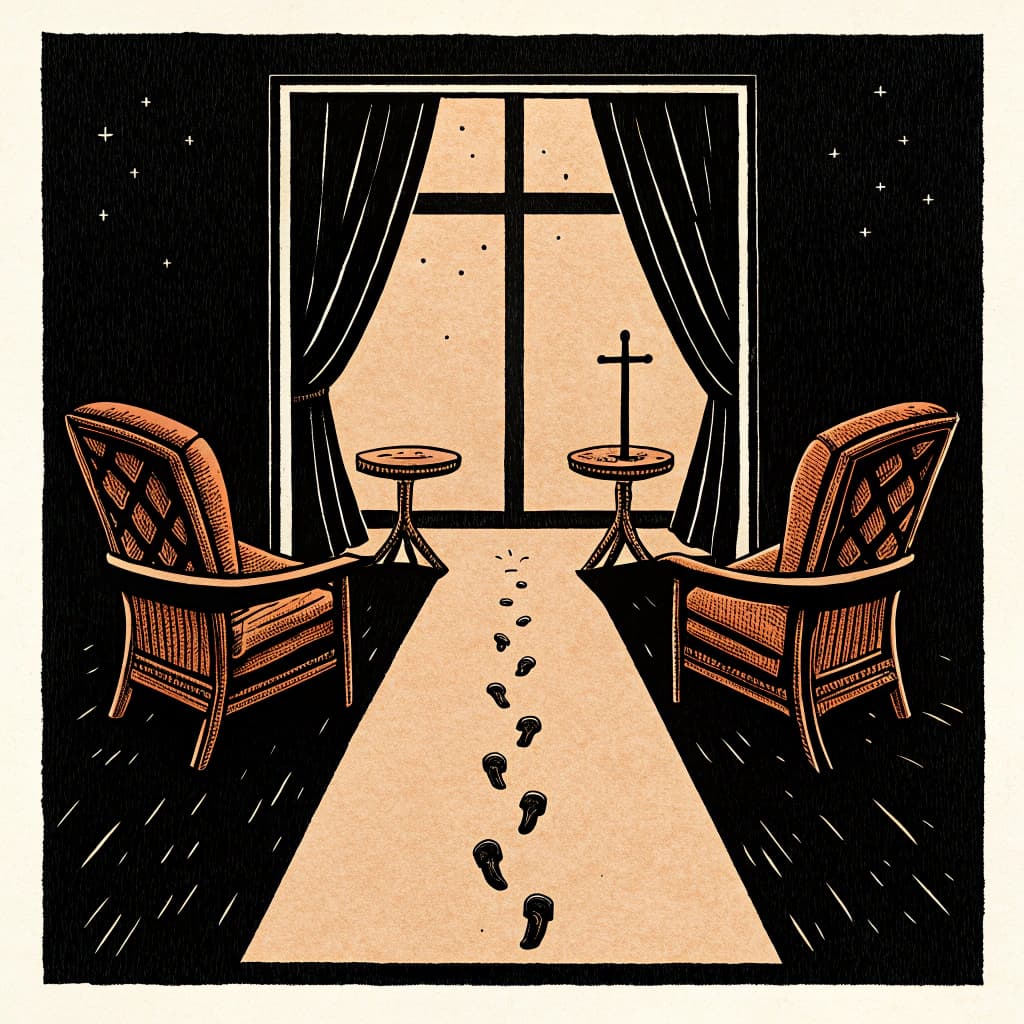
A kinesthetic structured debate where students physically take sides on a controversial statement, then move if their thinking shifts, building the analytical and communication skills central to NEP 2020 competency goals.
Philosophical Chairs
Students physically position themselves on two sides of the classroom based on their initial stance on a curriculum-linked question, agree, disagree, or undecided. Each speaker must summarise the previous speaker's argument before adding their own, and students are explicitly encouraged to cross the room if a peer's reasoning shifts their position. The session closes with a brief written reflection anchored to the board syllabus. Adapted for Classes 6 to 12 across CBSE, ICSE, and state boards, with facilitation variants for large-class and fixed-furniture settings.
What Is Philosophical Chairs? Definition, Origins, and Why It Works
Philosophical Chairs carries particular resonance for Indian classrooms precisely because it runs counter to so much of what students have been trained to expect from a lesson. In a system where correctness has historically meant reproducing the textbook answer, and where the pressure of board examinations rewards recall over reasoning, the act of publicly taking a position on a genuinely contested question , and then being required to defend it, listen to its challenge, and possibly revise it , is a genuinely novel experience for most students from Class 6 upward.
NEP 2020 names critical and creative thinking, communication, and collaborative enquiry as foundational competencies. Philosophical Chairs is one of the most direct methodological implementations of that policy intent. It develops exactly the skills the new competency-based assessment frameworks are beginning to reward , not just in the humanities, but in any subject where interpretation, ethical reasoning, or contested evidence appears. A Class 10 Science discussion on whether human gene editing should be permitted, a Class 9 History session on whether colonial infrastructure justified colonial rule, a Class 12 Political Science exchange on whether affirmative action produces genuine equality , each of these is a legitimate, curriculum-anchored Philosophical Chairs prompt.
The large Indian classroom , typically 35 to 50 students in CBSE and state board schools, sometimes more , demands specific adaptations. A single-aisle two-sides arrangement is often impractical in classrooms with fixed benches or inadequate floor space. Many experienced Indian facilitators run a standing variation: students who agree with the statement stand, those who disagree remain seated, and the 'undecided' group moves to the back or a side wall. This preserves the physical commitment and visible position-taking that makes the methodology work without requiring furniture reorganisation. In schools with larger halls or available open spaces, the traditional arrangement is fully achievable and worth the effort when the prompt warrants it.
The rote-learning inheritance creates a specific facilitation challenge: Indian students are well-drilled in producing what the teacher wants to hear. This means the opening positions in a Philosophical Chairs session are often performative rather than genuine , students will gravitate toward what they perceive as the 'correct' position rather than their actual view. Building psychological safety for genuine position-taking requires deliberate norm-setting. Explicitly telling students that there is no correct answer, that the teacher will not indicate which side is right, and that changing position is valued, not penalised, takes about five minutes but is non-negotiable. Without it, the session produces compliance, not enquiry.
The multilingual reality of Indian classrooms adds a dimension absent from most Western descriptions of this methodology. In a Class 8 classroom in Tamil Nadu or Maharashtra, students may be thinking in their home language and translating their arguments into English or Hindi for class participation. This cognitive load deserves accommodation: allowing students thirty seconds to discuss their position with a neighbour in their home language before articulating in the class language dramatically increases the quality and authenticity of participation, particularly from quieter or less confident English speakers. The content of the argument matters; the fluency of delivery should not be the gatekeeping criterion.
For Indian teachers navigating the gap between NEP 2020's aspirations and the practical reality of syllabi, timetables, and parental expectations centred on board results, Philosophical Chairs offers a strategically defensible choice. It can be anchored to specific NCERT chapter content, run within a single 45-minute period, and assessed through the written reflection that concludes it , producing artefacts that satisfy conventional accountability requirements while developing the higher-order competencies that NEP 2020 mandates.
How to Facilitate Philosophical Chairs: Step-by-Step Implementation Guide
Select a Central Prompt
4 min
Choose a controversial, open-ended statement related to your curriculum that does not have a simple 'right' or 'wrong' answer.
Configure the Room
4 min
Arrange chairs in two facing rows or clear a central aisle to designate 'Agree' and 'Disagree' zones, with a small 'Undecided' area in the middle.
Establish Norms and Rules
4 min
Explain that students must summarize the previous speaker's argument before speaking and that they are encouraged to move if their opinion changes.
Take Initial Positions
5 min
Read the prompt aloud and give students one minute of silent reflection before they physically move to the side that represents their current stance.
Facilitate the Dialogue
5 min
Moderate the discussion by alternating between sides, ensuring that no single student dominates and that everyone uses evidence to support their claims.
Encourage Movement
4 min
Remind students throughout the session that they should physically walk to the other side of the room if a peer's argument shifts their thinking.
Conduct a Debrief
4 min
Conclude the activity by having students write a brief reflection on which arguments were most persuasive and why they chose their final position.
BEFORE YOU TEACH THIS
Read the Teacher's Guide first.
Flip Education's Teacher's Guide walks you through how to facilitate any active learning lesson: mindset, pre-class checklist, phase-by-phase facilitation, and a Quick Reference Card you can print and bring to class.
Read the Teacher's Guide →When to Use Philosophical Chairs: Best Classes, Subjects, and Group Sizes
- Classes 6–12
- Social Science
- History and Civics
- English Literature
Subject Fit
Common variants
Classic philosophical chairs
Two sides face each other. Speakers alternate, and students can physically switch sides when persuaded. The movement is the signal.
Three-chair variant
Add an undecided middle row. Students in the middle must name what would move them before the discussion ends. Prevents performative commitment.
Why Philosophical Chairs Works: Research and Impact on Student Learning
Kuhn, D., & Crowell, A. (2011, Psychological Science, 22(4), 545-552)
Engaging in structured dialogic argumentation significantly develops students' ability to construct and evaluate evidence-based arguments over time.
Kuhn, D. (2015, Educational Researcher, 44(1), 46-53)
Structured peer-to-peer debate and dialogic argumentation are highly effective at helping students internalize dialectical thinking frameworks and increasing overall engagement.
Common Mistakes Teachers Make with Philosophical Chairs (and How to Avoid Them)
Students dismissing the activity as 'off-syllabus'
In board exam culture, students and sometimes parents evaluate activities by their proximity to the question paper. If students perceive Philosophical Chairs as a break from syllabus work rather than a deeper engagement with it, participation will be performative. Anchor every prompt explicitly to the NCERT chapter or board topic under study, and frame the debrief in terms of the analytical skills assessed in Section B or Part II of board papers. Make the curriculum connection explicit before the session begins, not after.
Social hierarchy silencing genuine positions
Indian classrooms carry strong hierarchical norms , seniority, perceived academic rank, and social dynamics that may include gender and community pressures all shape who feels safe publicly disagreeing. Students who would privately hold a minority view often publicly migrate to the majority side to avoid social cost. Counter this by anonymising the initial position choice where possible (written on a slip before standing), by explicitly honouring the middle position as the most intellectually rigorous, and by calling on quieter students early to set a norm of broad participation.
Managing physical movement in crowded or fixed-furniture classrooms
Standard Indian classrooms with 40-plus students and fixed benches cannot accommodate the traditional two-rows arrangement without prior reorganisation, which a 45-minute period rarely allows. Defaulting to a stand/sit/side-wall variation preserves the core pedagogical mechanism , visible, physical commitment to a position , without requiring furniture changes. Never abandon the physical element entirely and revert to a show-of-hands or verbal survey; the embodied stance is what makes this methodology distinct from an ordinary class discussion.
Language anxiety blocking genuine argumentation
In English-medium schools where English is not the home language of most students, the cognitive demand of constructing a nuanced argument in a second or third language can override the intellectual engagement with the question itself. Students may retreat to brief, safe statements rather than risk making a grammatical error on a complex point. Build in a thirty-second peer-discussion step in any language before each student speaks to the full class. Evaluate the quality of the reasoning, not the polish of the English.
Skipping the written reflection under time pressure
The 45-minute period leaves roughly eight to ten minutes for debrief if the discussion runs to plan , and Indian teachers under syllabus pressure are tempted to use that time to introduce the next topic. The written reflection is not optional padding; it is the consolidation step where the spoken, emotional, and physical experience of the session converts into examined written reasoning. A five-minute exit reflection asking students to write which argument shifted their thinking, and what evidence would move them further, produces the analytical writing skills that board examinations actually assess.
How Flip Education Helps
NCERT and board curriculum-aligned discussion prompts
Flip generates Philosophical Chairs statements mapped directly to the chapter and topic you are teaching , whether CBSE, ICSE, or state board curriculum , so the discussion is a genuine extension of the lesson content, not a detour from it. Each prompt is designed to be genuinely ambiguous (no textbook-correct answer) while remaining anchored to the conceptual territory of the unit. You receive three to five prompt options at different levels of provocation, so you can match the readiness of your particular class.
Large-class facilitation guide with a standing variation
The mission includes a facilitation script adapted for classes of 35 to 50 students, including a stand/sit/side-wall variant for classrooms where rearranging furniture is not practical. You receive numbered facilitation moves , how to open positions, how to alternate between sides, how to draw out the middle group, and how to manage dominant voices , along with specific prompts for re-engaging students who have gone quiet. The script is designed for the 45-minute period with time allocations at each stage.
NEP 2020 competency documentation for school administration
Every Flip mission includes a one-page teacher brief that maps the activity to the competency framework in the NEP 2020 and the learning outcomes specified in the NCERT pedagogical guidelines. This document is designed to be shared with Heads of Department or Principals who require evidence that discussion-based activities serve formal curriculum goals. It frames the methodology in the language of competency-based education and board assessment reform, giving teachers a straightforward response to 'how does this help in the exam?'
Multilingual facilitation notes and home-language think-pair step
The mission brief includes a structured think-pair step that explicitly accommodates home-language discussion before students speak to the full class, along with notes for the teacher on managing a multilingual argument space. Facilitation tips address the specific dynamic of English-medium schools where English is a second or third language for most participants, ensuring the assessment of thinking quality is not conflated with English fluency.
Tools and Materials Checklist for Philosophical Chairs
- Clear floor space for two facing lines
- Statement posted on the board
- Optional: scoring sheet for tracking the room's position over time (optional)
Philosophical Chairs FAQs: Questions Teachers Actually Ask
What is Philosophical Chairs in education?
Philosophical Chairs is a student-centered discussion strategy where learners move to different sides of the room based on their agreement or disagreement with a prompt. It focuses on active listening and the fluid nature of opinions rather than rigid competition. This method encourages students to change their minds when presented with compelling evidence.
How do I use Philosophical Chairs in my classroom?
Start by presenting a binary 'agree/disagree' statement and designating two sides of the room for these positions. Students choose a side, and you facilitate a discussion where speakers must summarize the previous person's point before sharing their own. You should act as a neutral moderator to ensure all voices are heard and the rules of civil discourse are followed.
What are the benefits of Philosophical Chairs for students?
The primary benefits include improved critical thinking, enhanced oral communication, and the development of empathy through active listening. It also provides a kinesthetic outlet for energy, which can increase engagement for students who find traditional seating restrictive. Students learn to value evidence over emotion when forming and defending their viewpoints.
What is the difference between Philosophical Chairs and Socratic Seminar?
Philosophical Chairs is physically active and usually centers on a binary choice, whereas Socratic Seminars are typically seated and focus on open-ended text analysis. While both emphasize inquiry, Philosophical Chairs uses movement to make student stances visible and dynamic. Socratic Seminars tend to be more collaborative in meaning-making, while Chairs involves more direct persuasion.
Classroom Resources for Philosophical Chairs
Free printable resources designed for Philosophical Chairs. Download, print, and use in your classroom.
Philosophical Chairs Position Tracker
Students document their initial position, the evidence behind it, arguments that challenged them, and whether their position shifted during the discussion.
Download PDFPhilosophical Chairs Reflection
Students reflect on how physically moving to show their position affected their engagement and how their thinking evolved.
Download PDFPhilosophical Chairs Role Cards
Assign roles to support a structured, respectful discussion where students physically show their positions.
Download PDFPhilosophical Chairs Statements & Prompts
Ready-to-use statements and discussion prompts designed for the physical positioning format of Philosophical Chairs.
Download PDFSEL Focus: Self-Awareness in Philosophical Chairs
A card focused on recognizing one's own beliefs, biases, and emotional responses when taking a public stance on a controversial issue.
Download PDFRelated
Methodologies Similar to Philosophical Chairs
Socratic Seminar
A structured, student-led discussion method in which learners use open-ended questioning and textual evidence to collaboratively analyse complex ideas, aligning directly with NEP 2020's emphasis on critical thinking and competency-based learning.
Formal Debate
Students argue opposing positions on a curriculum-linked resolution, building critical thinking, evidence literacy, and oral communication skills, directly aligned with NEP 2020 competency goals.
Four Corners
Students move to corners of the classroom representing their position on a statement, then discuss and defend their reasoning with peers,building the analytical skills board examinations reward.
Ready to try this?
- Read the Teacher's Guide →
- Generate a mission with Philosophical Chairs →
- Print the toolkit after generating
Generate a Mission with Philosophical Chairs
A complete lesson plan, aligned to your curriculum.