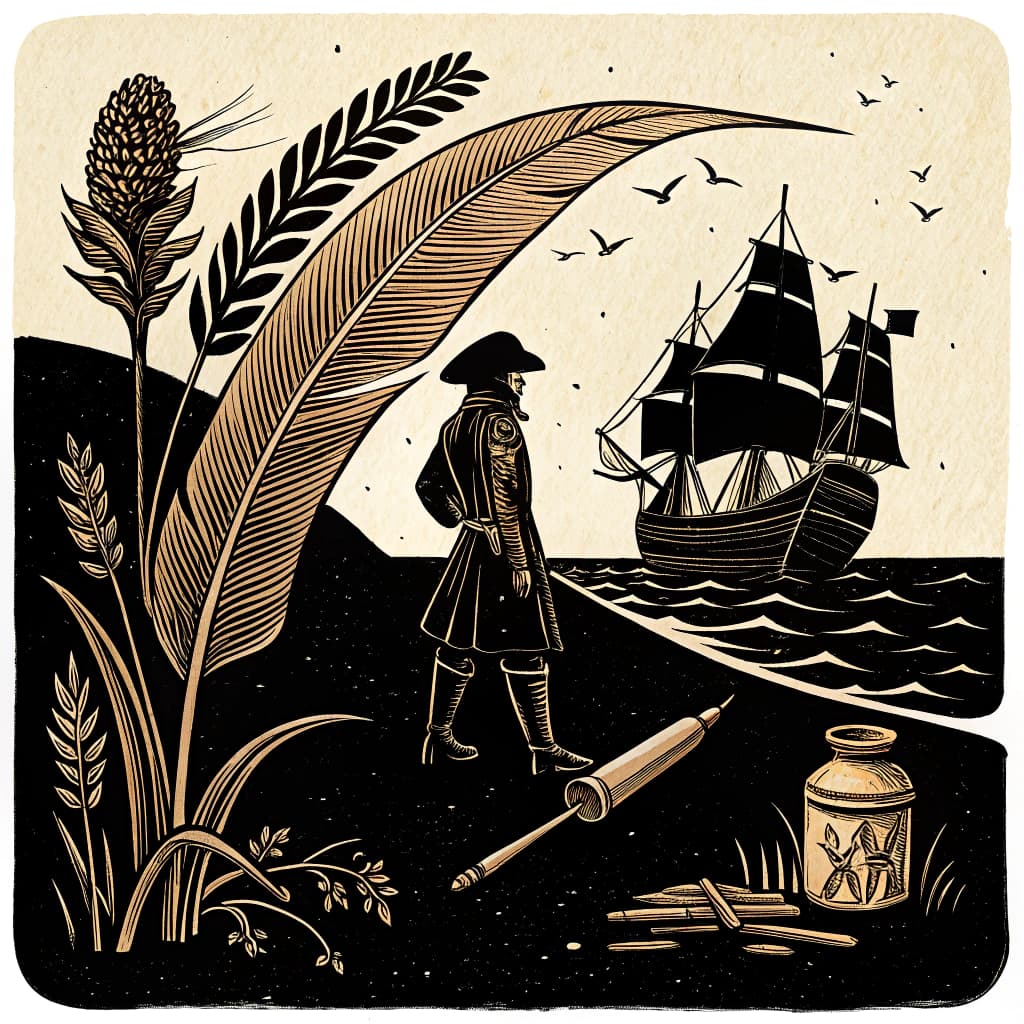
The Louisiana Purchase & Exploration
Study the acquisition of the Louisiana Territory, its constitutional implications, and the Lewis and Clark expedition.
TL;DR:Active learning works well for this topic because it puts students in the position of historical decision-makers and explorers. By debating Jefferson’s choice or tracing Lewis and Clark’s route, students engage with the complexity of the Louisiana Purchase rather than memorizing dates or details.
About This Topic
In 1803, President Thomas Jefferson faced a decision that tested his own constitutional principles. France had offered to sell the entire Louisiana Territory, roughly 828,000 square miles, for about $15 million. Jefferson believed deeply in a strict reading of the Constitution, which contained no specific language authorizing the federal government to purchase foreign territory. Yet the deal was too strategically valuable to refuse. His decision to proceed despite his constitutional doubts offers students a clear example of how political leaders balance principle with practical reality.
The Lewis and Clark expedition, launched in 1804, turned the abstract acquisition into a geographic reality Americans could understand. Meriwether Lewis and William Clark were tasked with mapping the Missouri River, making diplomatic contact with Native nations, and documenting plants and animals. Their Corps of Discovery returned in 1806 with journals, botanical samples, and maps that shaped American understanding of the continent for decades.
Active learning makes this topic come alive because students can trace the expedition's route, weigh the constitutional arguments Jefferson faced, and evaluate what the expedition achieved and at what cost to the people already living there.
Key Questions
- Explain Thomas Jefferson's motivations for purchasing the Louisiana Territory.
- Analyze the constitutional debate surrounding the Louisiana Purchase.
- Evaluate the goals and achievements of the Lewis and Clark expedition.
Learning Objectives
- Explain Thomas Jefferson's primary motivations for pursuing the Louisiana Purchase, referencing his concerns about national security and westward expansion.
- Analyze the constitutional arguments for and against the Louisiana Purchase, identifying the differing interpretations of presidential power.
- Evaluate the stated goals of the Lewis and Clark expedition, such as mapping, diplomacy, and scientific discovery.
- Compare the achievements of the Lewis and Clark expedition against its original objectives, citing specific examples from their journals or maps.
- Identify the Native American nations encountered by Lewis and Clark and describe the nature of their interactions.
Before You Start
Why: Students need a basic understanding of the U.S. Constitution and the roles of the President and Congress to grasp the constitutional debate.
Why: Familiarity with early European exploration and settlement patterns provides context for understanding the motivations behind westward expansion.
Key Vocabulary
| Louisiana Territory | A vast expanse of land west of the Mississippi River, acquired by the United States from France in 1803. |
| Strict Constructionism | A legal philosophy that interprets the Constitution narrowly, adhering strictly to its explicit text and powers. |
| Corps of Discovery | The official name for the Lewis and Clark expedition, tasked with exploring the newly acquired Louisiana Territory. |
| Diplomatic Relations | Formal interactions and agreements between different nations or groups, in this case, the U.S. expedition and Native American tribes. |
| Portage | The act of carrying boats and supplies overland between bodies of water, a common challenge faced by explorers. |
Watch Out for These Misconceptions
Common MisconceptionThe Louisiana Purchase was a straightforward, uncontroversial decision.
What to Teach Instead
Jefferson himself was deeply uncertain because of his strict constructionist principles, and Federalists in Congress argued the purchase was unconstitutional and set a dangerous precedent. Debating these opposing positions helps students understand that major historical decisions were contested, not inevitable.
Common MisconceptionLewis and Clark were exploring empty, unknown land.
What to Teach Instead
The Louisiana Territory was home to dozens of Native nations with established trade networks, political structures, and detailed geographic knowledge. The Corps relied heavily on Native guides and translators, particularly Sacagawea. Examining this reliance helps students understand the complexity of what "exploration" meant and for whom.
Common MisconceptionSacagawea was just a guide who showed Lewis and Clark the way.
What to Teach Instead
Sacagawea served as an interpreter, a diplomatic signal of peaceful intent (a woman with a baby was not a war party), and a cultural bridge to Shoshone communities whose horses the expedition needed. Her role was multifaceted and strategic, not just directional.
Active Learning Ideas
See all activities→Formal Debate
Should Jefferson Buy Louisiana?
Divide the class into two groups: strict constructionists who oppose the purchase and pragmatists who support it. Each group prepares three arguments using provided source cards covering constitutional text, strategic benefits, and Jefferson's own past writings. After the debate, students write a short reflection on which argument they personally find most persuasive.
Simulation Game
Mapping Activity: Lewis and Clark's Route
Give students a blank map of North America west of the Mississippi. Using a timeline of expedition entries, students mark the route, label key geographic features encountered, and note which Native nations the Corps met. Students then identify three geographic challenges the expedition faced and how they were addressed, using information from the expedition journals.
Gallery Walk
What Did the Expedition Accomplish?
Set up stations featuring samples of Lewis and Clark's plant and animal records, excerpts from Sacagawea's role in the journey, diplomatic gift records from meetings with Native nations, and maps before and after the expedition. Student groups evaluate each station using a graphic organizer asking: Who benefited? Who was harmed? What did Americans learn?
Real-World Connections
- Geographers and cartographers today use historical expedition maps, like those from Lewis and Clark, as foundational documents to understand early American landscapes and inform modern mapping projects.
- International trade lawyers and diplomats regularly navigate complex treaties and land acquisition agreements, similar to the negotiations and constitutional debates surrounding the Louisiana Purchase.
- Park rangers and naturalists at National Parks, such as Gateway Arch National Park in St. Louis or Yellowstone, educate visitors about the historical significance of westward expansion and the ecological discoveries made during early explorations.
Assessment Ideas
Present students with two short quotes: one reflecting Jefferson's constitutional concerns and another supporting the purchase. Ask students to identify which quote represents which viewpoint and briefly explain why.
Facilitate a class discussion using the prompt: 'Imagine you are a member of Congress in 1803. Based on what you know about the Constitution and the potential benefits, would you vote YES or NO on the Louisiana Purchase? Explain your reasoning, considering both the practical advantages and the legal questions.'
Provide students with a blank map of the United States. Ask them to draw the approximate boundaries of the Louisiana Purchase and label one key river explored by Lewis and Clark. Then, have them write one sentence summarizing a major achievement of the expedition.
Frequently Asked Questions
Why did Thomas Jefferson buy the Louisiana Territory?
What constitutional problem did the Louisiana Purchase create?
What were the goals of the Lewis and Clark expedition?
How does active learning help students understand the Louisiana Purchase?
Planning templates for Early American History
5E Model
The 5E Model structures lessons through five phases (Engage, Explore, Explain, Elaborate, and Evaluate), guiding students from curiosity to deep understanding through inquiry-based learning.
Unit PlannerThematic Unit
Organize a multi-week unit around a central theme or essential question that cuts across topics, texts, and disciplines, helping students see connections and build deeper understanding.
RubricSingle-Point Rubric
Build a single-point rubric that defines only the "meets standard" level, leaving space for teachers to document what exceeded and what fell short. Simple to create, easy for students to understand.
More in The Early Republic & Expansion
George Washington's Presidency
Examine the precedents set by the first president, the formation of the Cabinet, and his Farewell Address.
8 methodologies
Rise of Political Parties
Investigate the emergence of the Federalist and Democratic-Republican parties and their differing visions for the nation.
8 methodologies
The War of 1812 & National Identity
Examine the causes, key events, and consequences of the second conflict with Britain, and its role in fostering American nationalism.
8 methodologies
Early Industrial Revolution in America
Investigate the impact of early inventions like the cotton gin and steam engine on American economy and society.
8 methodologies
The Monroe Doctrine & Foreign Policy
Study the declaration of the Monroe Doctrine and its impact on American foreign policy in the Western Hemisphere.
8 methodologies
Indian Removal & The Trail of Tears
Examine the policies of Indian Removal, the Cherokee Nation's resistance, and the forced relocation known as the Trail of Tears.
8 methodologies