United States · Common Core State Standards
6th Grade Ancient Civilizations
A comprehensive journey through the earliest human societies and the great civilizations of the ancient world. This 6th-grade curriculum covers human origins, Mesopotamia, Egypt, India, China, Greece, Rome, and the Americas.
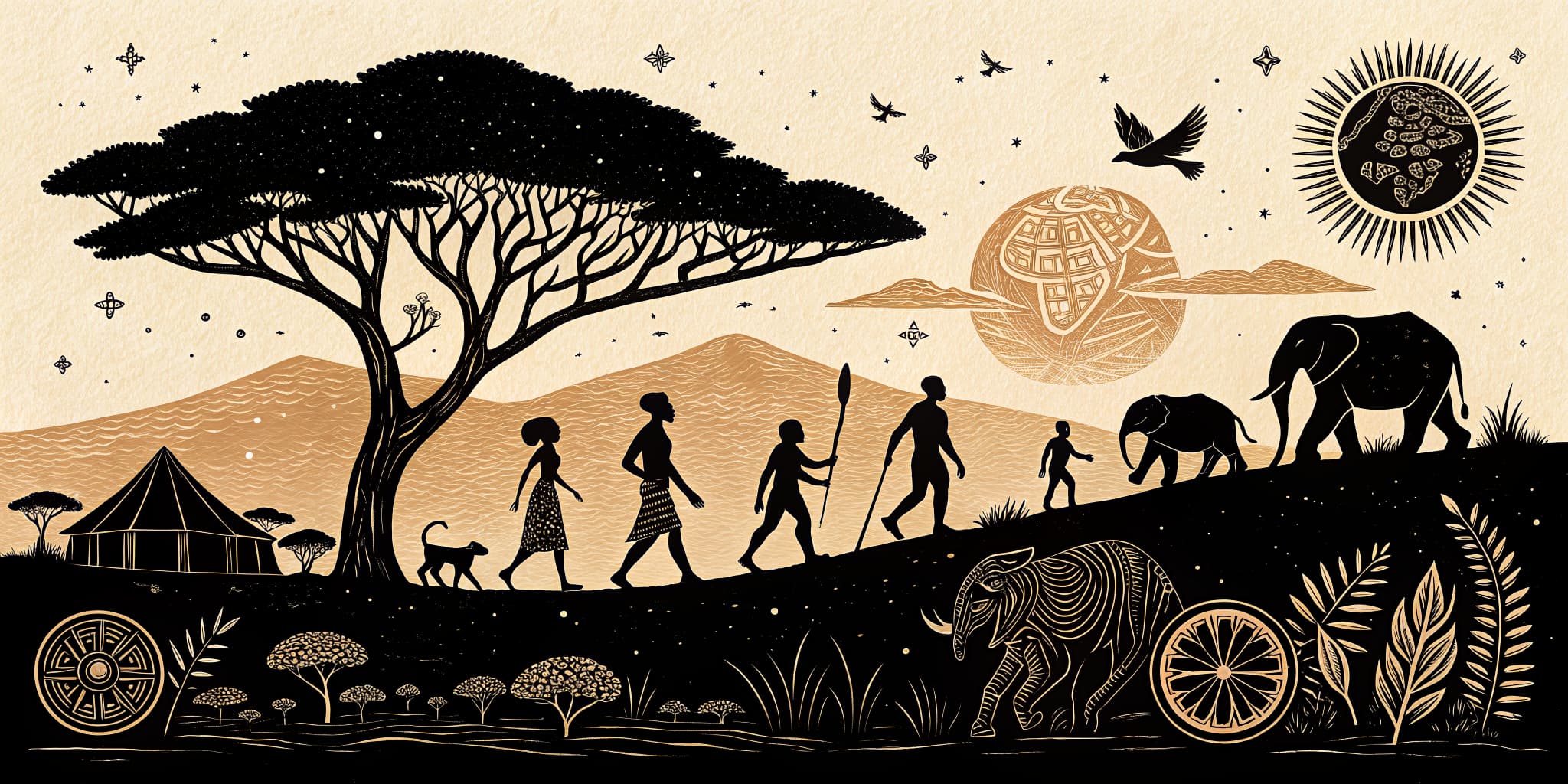
01Foundations of Human Society
Exploring the origins of humankind in Africa, the migration across the globe, and the monumental shift from nomadic life to settled agriculture.
Students will analyze how archaeologists and historians use evidence to reconstruct the past, differentiating between primary and secondary sources.
Students will examine the key stages of hominid evolution and the scientific evidence supporting human origins in East Africa.
Students will investigate the 'Out of Africa' theory and the environmental factors that influenced early human migration across continents.
Students will explore the daily life, social structures, and technological innovations of Paleolithic hunter-gatherer societies.
Students will interpret the meaning and purpose of Paleolithic cave paintings and other forms of early human artistic expression.
Students will investigate the causes and consequences of the Neolithic Revolution, focusing on the shift from foraging to farming.
Students will conduct a case study of Çatalhöyük to understand the architecture, social organization, and daily life of an early town.
Students will identify and analyze the essential characteristics that define a complex civilization, such as government, religion, and writing.
Students will examine the impact of early technological advancements, such as metallurgy and irrigation, on the development of complex societies.
Students will explore the emergence of social hierarchies, specialized labor, and the role of different social classes in early complex societies.
Students will compare and contrast different forms of early governance, from tribal councils to the beginnings of centralized authority.
Students will investigate the origins and purposes of early writing systems, such as pictographs and ideograms, and their impact on society.
Students will explore the common themes and practices of early religious beliefs, including animism, polytheism, and ancestor worship.
02Mesopotamia: The Land Between Two Rivers
The birth of urban life in the Fertile Crescent, from the Sumerian city-states to the rise of the first empires.
Students will analyze the geographical features of Mesopotamia and how the Tigris and Euphrates rivers shaped its development.
Students will investigate the political structure of independent Sumerian city-states and the central role of the ziggurat.
Students will trace the evolution of cuneiform writing and its impact on record-keeping, administration, and literature in Mesopotamia.
Students will analyze themes from the Epic of Gilgamesh to understand Sumerian values, beliefs about heroism, and the afterlife.
Students will critically analyze Hammurabi's Code to understand Babylonian legal principles, social hierarchy, and daily life.
Students will examine the rise of the Akkadian Empire under Sargon the Great, the first empire in Mesopotamia, and its innovations in governance.
Students will investigate the Assyrian Empire's military innovations, strategies for imperial control, and the impact of their rule.
Students will explore the Neo-Babylonian Empire, focusing on King Nebuchadnezzar II and the architectural marvels of Babylon.
Students will examine the maritime trade empire of the Phoenicians and their revolutionary contribution of the phonetic alphabet.
Students will explore the social hierarchy, economic activities, and daily routines of people living in ancient Mesopotamia.
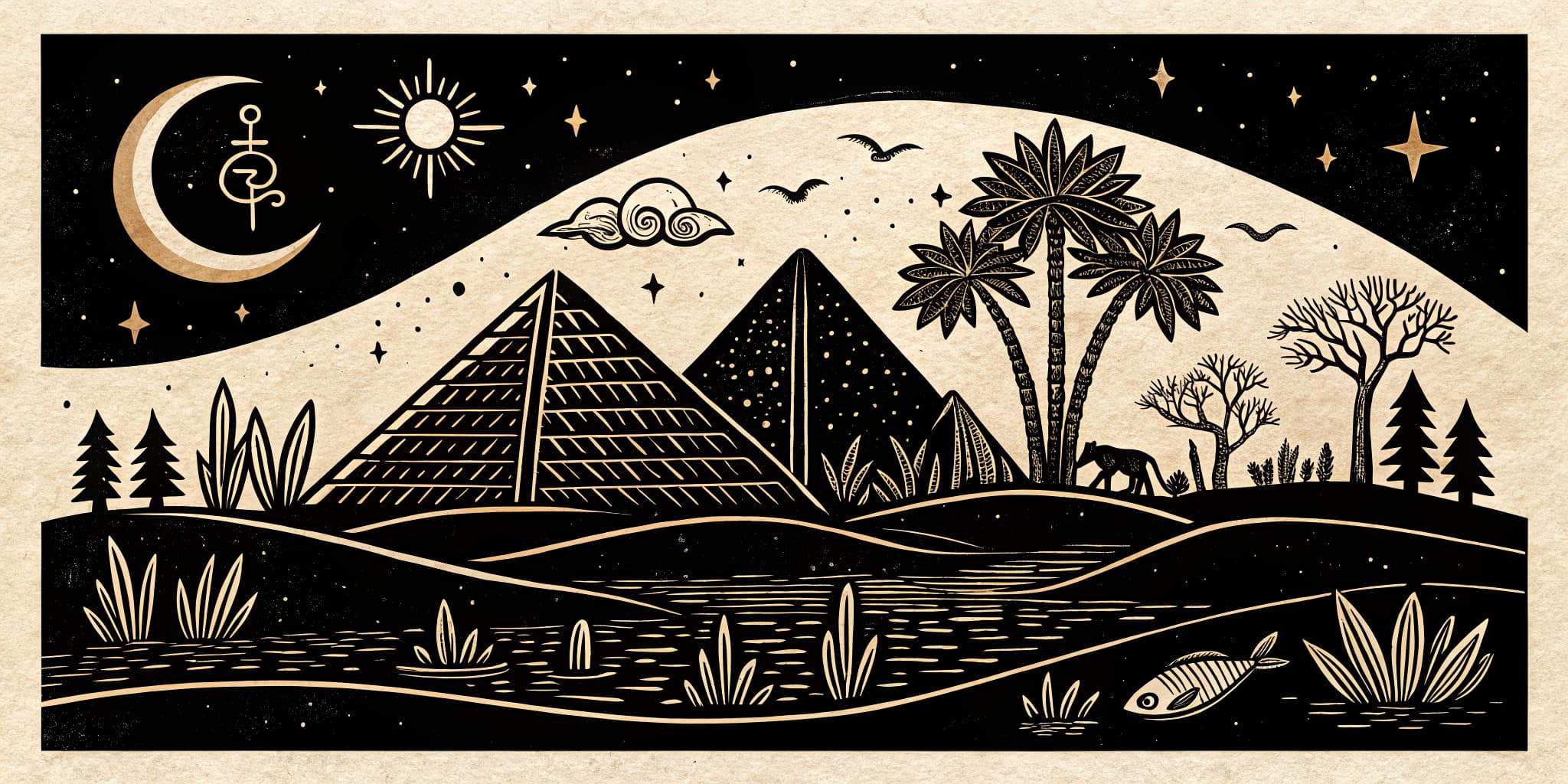
03Ancient Egypt & Kush
The 'Gift of the Nile': exploring the stability of Egyptian dynasties, their religious devotion, and the neighboring Kingdom of Kush.
Students will analyze the unique geography of the Nile River and its profound impact on the development and stability of ancient Egypt.
Students will investigate the Old Kingdom, focusing on the role of the Pharaoh as a divine ruler and the monumental construction of the pyramids.
Students will explore the complex Egyptian belief system, including polytheism, the concept of the afterlife, and the process of mummification.
Students will examine the Middle Kingdom, focusing on its expansion, trade, and the flourishing of Egyptian literature and art.
Students will investigate the New Kingdom, highlighting famous rulers like Hatshepsut, Akhenaten, and Ramses II, and Egypt's imperial ambitions.
Students will explore the Egyptian writing system, hieroglyphics, and the historical significance of the Rosetta Stone in deciphering it.
Students will examine the Kingdom of Kush, its relationship with Egypt, and its development as a center for trade and ironworking.
Students will investigate the social hierarchy, roles of women, and daily lives of various social classes in ancient Egyptian society.
Students will explore the distinctive styles and purposes of ancient Egyptian art and architecture, from temples to tomb paintings.
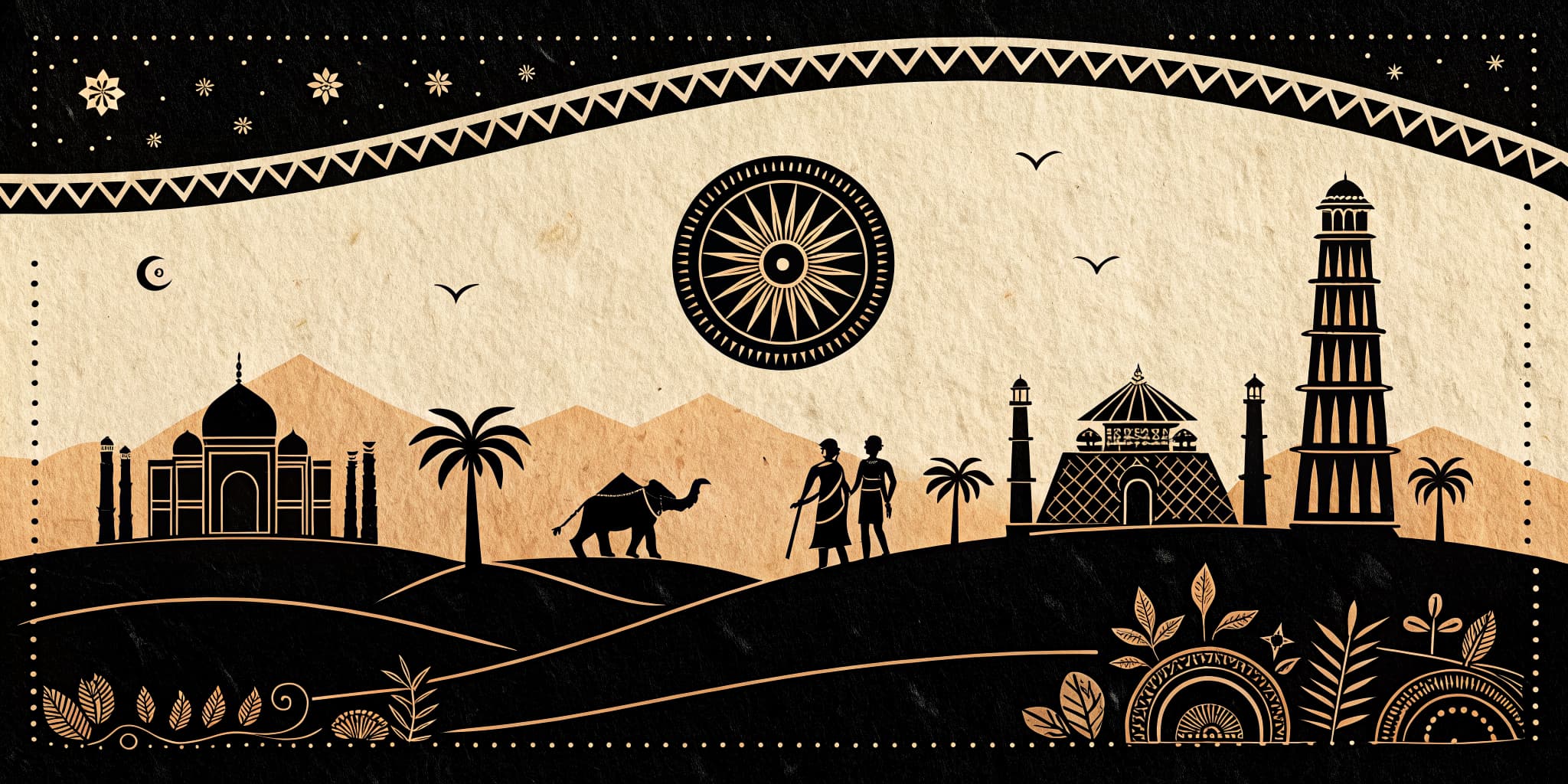
04Ancient India
From the mysterious Indus Valley civilization to the Mauryan and Gupta Empires, and the birth of major world religions.
Students will investigate the advanced urban planning, sanitation systems, and mysterious decline of Mohenjo-Daro and Harappa.
Students will explore the arrival of the Indo-Aryans, the Vedic texts, and the foundational concepts of Hinduism and the caste system.
Students will investigate the life of Siddhartha Gautama and the core principles of Buddhism, including the Four Noble Truths and the Eightfold Path.
Students will briefly explore other philosophical and religious traditions that emerged in ancient India, such as Jainism.
Students will examine the rise of the Mauryan Empire under Chandragupta Maurya, the first to unify much of India, and its administrative innovations.
Students will analyze Emperor Ashoka's conversion to Buddhism and his efforts to spread peace and dharma throughout his empire.
Students will explore the advancements in mathematics, science, and literature during India's Gupta Golden Age.
Students will investigate the economic systems and trade networks of ancient India, including its role in the Silk Road and maritime trade.
05Ancient China
The isolation and innovation of early Chinese dynasties, the philosophy of social order, and the impact of the Silk Road.
Students will analyze the geographical features of China and their influence on early Chinese civilization, focusing on the Yellow and Yangtze rivers.
Students will investigate the Shang Dynasty, examining its social structure, bronze technology, and the use of oracle bones for divination and writing.
Students will explore the Zhou Dynasty, the concept of the Mandate of Heaven, and the rise of feudalism in early China.
Students will analyze the core tenets of Confucianism, focusing on the 'Five Relationships' and its emphasis on social order and morality.
Students will compare Daoism's emphasis on nature and balance with Legalism's focus on strict laws and centralized power.
Students will investigate the Qin Dynasty, the unification of China under Shi Huangdi, and his controversial policies including the Great Wall and Terracotta Army.
Students will explore the Han Dynasty, its expansion, the establishment of the civil service exam, and its adoption of Confucianism.
Students will investigate the Silk Road, its routes, the goods traded, and its profound impact on cultural diffusion between East and West.
06Ancient Greece
The foundations of Western democracy, philosophy, and art in the city-states of the Mediterranean.
Students will explore the early seafaring cultures of the Aegean and analyze how Greece's rugged geography shaped its development into independent city-states.
Students will trace the evolution of Athenian government from monarchy to direct democracy, examining key reforms and leaders like Pericles.
Students will investigate the rigorous military lifestyle of Spartan citizens and the structure of their oligarchic government.
Students will examine the causes, key battles, and outcomes of the Persian Wars, highlighting Greek unity against a common enemy.
Students will investigate the causes and consequences of the Peloponnesian War, focusing on the conflict between Athens and Sparta and its impact on Greece.
Students will explore the contributions of key Greek philosophers—Socrates, Plato, and Aristotle—to Western thought and the pursuit of truth through reason.
Students will investigate the advancements made by ancient Greeks in fields such as mathematics (Pythagoras, Euclid), astronomy, and medicine (Hippocrates).
Students will examine Alexander the Great's conquests and the subsequent blending of Greek, Persian, Egyptian, and Indian cultures into Hellenism.
Students will explore the polytheistic religious beliefs of the ancient Greeks, their pantheon of gods, and the role of mythology in their culture.
Students will investigate the origins, rituals, and cultural importance of the ancient Olympic Games in Greek society.
07Ancient Rome & The Americas
The rise and fall of the Roman Republic and Empire, alongside the development of complex societies in the Western Hemisphere.
Students will examine the establishment of the Roman Republic, its representative government, and the struggle between Patricians and Plebeians.
Students will investigate the life and impact of Julius Caesar and the political turmoil that led to the collapse of the Roman Republic.
Students will explore the establishment of the Roman Empire under Augustus and the subsequent 200-year period of peace and prosperity known as the Pax Romana.
Students will investigate the impressive engineering feats and architectural innovations of the Roman Empire, such as aqueducts, roads, and the Colosseum.
Students will examine the origins of Christianity in Judea, its spread throughout the Roman Empire, and its eventual adoption as the official state religion.
Students will analyze the complex internal and external factors that contributed to the collapse of the Western Roman Empire in 476 CE.
Students will investigate the sophisticated city-states of the Maya, focusing on their advancements in astronomy, mathematics, and calendar systems.
Students will explore the rise of the Aztec Empire, the construction of Tenochtitlan, and the complex social and religious life of the Aztecs.
Students will investigate the Inca Empire, its vast road system, unique record-keeping (Quipu), and innovative agricultural techniques in the Andes.
Students will explore the diverse cultures of North America, including the Mississippian mound builders and the Ancestral Puebloans of the Southwest.
Students will reflect on the enduring legacies of ancient civilizations and their continued influence on modern law, language, technology, and culture.