Understanding Globalisation
Define globalisation as a complex process of increasing interconnectedness and analyse its various dimensions, including the flows of ideas, capital, and people.
TL;DR:Take a look at the clothes you're wearing or the phone in your hand. This topic explores the incredible global journey these items took to reach you, and how that journey defines our modern world.
About This Topic
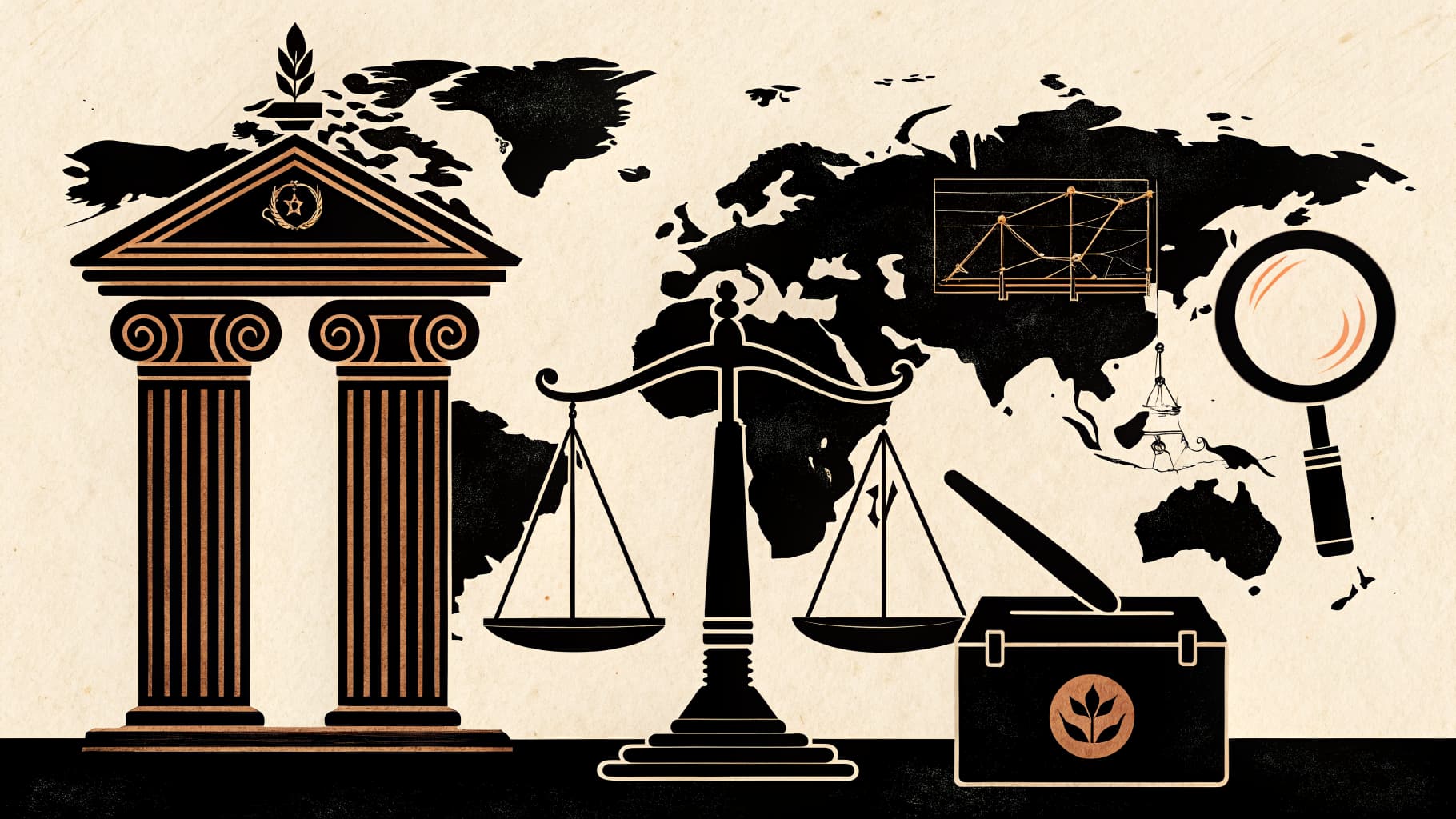
This topic introduces students to globalisation, a core concept in understanding contemporary world politics. As per the NCERT framework for Class 12, the focus is not just on defining globalisation but on appreciating its multi-dimensional character. It is crucial to move beyond a purely economic definition centred on markets and trade. The lesson should explore the political dimensions, such as the eroding authority of the state and the rise of international organisations, and the cultural dimensions, including both cultural homogenisation (the fear of a uniform global culture) and heterogenisation (the mixing of cultures to create unique new forms).
For the Indian context, it is vital to connect the discussion to the economic reforms of 1991, which opened India's economy to the world and accelerated its integration into global processes. The topic should encourage critical thinking, prompting students to analyse who benefits from globalisation and who is left behind. It also provides an opportunity to discuss India's role in the globalised world, not just as a recipient of global flows but also as a significant contributor, for instance, through its diaspora, its IT industry, and its cultural exports like yoga and cinema.
Key Questions
- Explain what is meant by globalisation and identify its key characteristics.
- Analyse the different types of global flows that constitute globalisation.
- Evaluate whether globalisation is a recent phenomenon or has historical roots.
Learning Objectives
- Define globalisation and describe its key characteristics, such as increased flows and interconnectedness.
- Differentiate between the political, economic, and cultural dimensions of globalisation with relevant examples.
- Analyse the major causes of globalisation, with a focus on technology and policy changes.
- Evaluate the impact of globalisation on India, considering both positive and negative consequences.
- Critically assess the arguments of both supporters and critics of globalisation.
Key Vocabulary
| Globalisation | The process of rapid integration or interconnection between countries, driven by increased trade, investment, and flows of ideas, capital, and people. |
| MNC (Multinational Corporation) | A company that owns or controls production of goods or services in more than one country. |
| Liberalisation | The process of removing government-imposed restrictions on trade and investment, allowing for greater economic freedom. |
| Cultural Homogenisation | The idea that globalisation leads to a reduction in cultural diversity, with a dominant global culture replacing local cultures. |
| Interconnectedness | The state of being connected or related to one another on a global scale, where events in one part of the world can have effects on people elsewhere. |
Watch Out for These Misconceptions
Common MisconceptionGlobalisation is only about economics, like MNCs and trade.
What to Teach Instead
Globalisation is a multi-dimensional process. It includes political aspects (like international treaties), cultural aspects (like the spread of Bollywood movies or K-pop), and the movement of people (migration and tourism), not just money and goods.
Common MisconceptionGlobalisation is a very new thing that started in the 1990s.
What to Teach Instead
While the speed and scale of globalisation are recent, the process of global interconnectedness has deep historical roots. The ancient Silk Route, for example, was a form of globalisation that connected Asia with Europe through trade and the exchange of ideas.
Common MisconceptionGlobalisation means Americanisation or Westernisation.
What to Teach Instead
While Western culture has a significant global influence, globalisation is not a one-way street. Ideas and products flow from many different parts of the world. For example, the global popularity of yoga from India or anime from Japan shows that cultural influence is multi-directional.
Active Learning Ideas
See all activities→Concept Mapping
The 'Made In...' Audit
Students examine the labels on their personal belongings (clothes, bags, phones) to find out where they were manufactured. They then plot these countries on a world map to visualise global supply chains and our daily connection to them.
Concept Mapping
Globalisation Debate: Boon or Bane for India?
Divide the class into two groups to debate the motion: 'Globalisation has been more beneficial than harmful for India'. Students must use examples related to economy, culture, and politics to support their arguments.
Concept Mapping
Mapping the Flows
In small groups, students choose one example of a global flow: a commodity (like coffee), an idea (like democracy), or capital (like foreign direct investment). They create a visual flowchart or map tracing its movement across the globe and its impact at different points.
Real-World Connections
- Using social media platforms like Instagram or X (formerly Twitter) to connect with people and trends from across the world.
- The availability of international food chains like McDonald's, Subway, and Starbucks in Indian cities, often with localised menu items.
- Working in or using services from India's IT and call centre industry, which serves clients globally.
- Following global sporting events like the FIFA World Cup or the Olympics, and supporting international teams or athletes.
- The global response to shared challenges like the COVID-19 pandemic or climate change, requiring international cooperation.
Assessment Ideas
A 'gallery walk' where students move around the classroom to view different images (e.g., an MNC logo, a protest, a cultural festival) and write down how each image relates to globalisation.
A research-based essay on the topic: 'Globalisation is a double-edged sword for developing countries like India.' Students must use evidence to support their arguments.
Students complete a K-W-L (What I Know, What I Want to Know, What I Learned) chart about globalisation at the beginning and end of the topic to reflect on their learning journey.
Frequently Asked Questions
How is globalisation different from internationalisation?
Has globalisation reduced the power of the government?
Is everyone in the world benefiting from globalisation?
More in Globalisation
Causes of Globalisation
Investigate the key technological, economic, and political factors that have accelerated the pace of globalisation in the contemporary era.
8 methodologies
Political Consequences
Examine the impact of globalisation on the sovereignty and functions of the nation-state, leading to both an erosion and an enhancement of state capacity.
8 methodologies
Economic Consequences
Assess the economic dimensions of globalisation, including the role of multinational corporations, international financial institutions, and the resulting debates on inequality.
8 methodologies
Cultural Consequences
Explore the effects of globalisation on cultures worldwide, focusing on the debate between cultural homogenisation (westernisation) and cultural heterogenisation.
8 methodologies
India and Globalisation
Analyse India's experience with globalisation since the economic reforms of 1991, considering its economic, social, and cultural impacts.
8 methodologies
Resistance to Globalisation
Examine the critiques of globalisation from different ideological perspectives and the rise of anti-globalisation movements and alternative forums like the World Social Forum.
8 methodologies