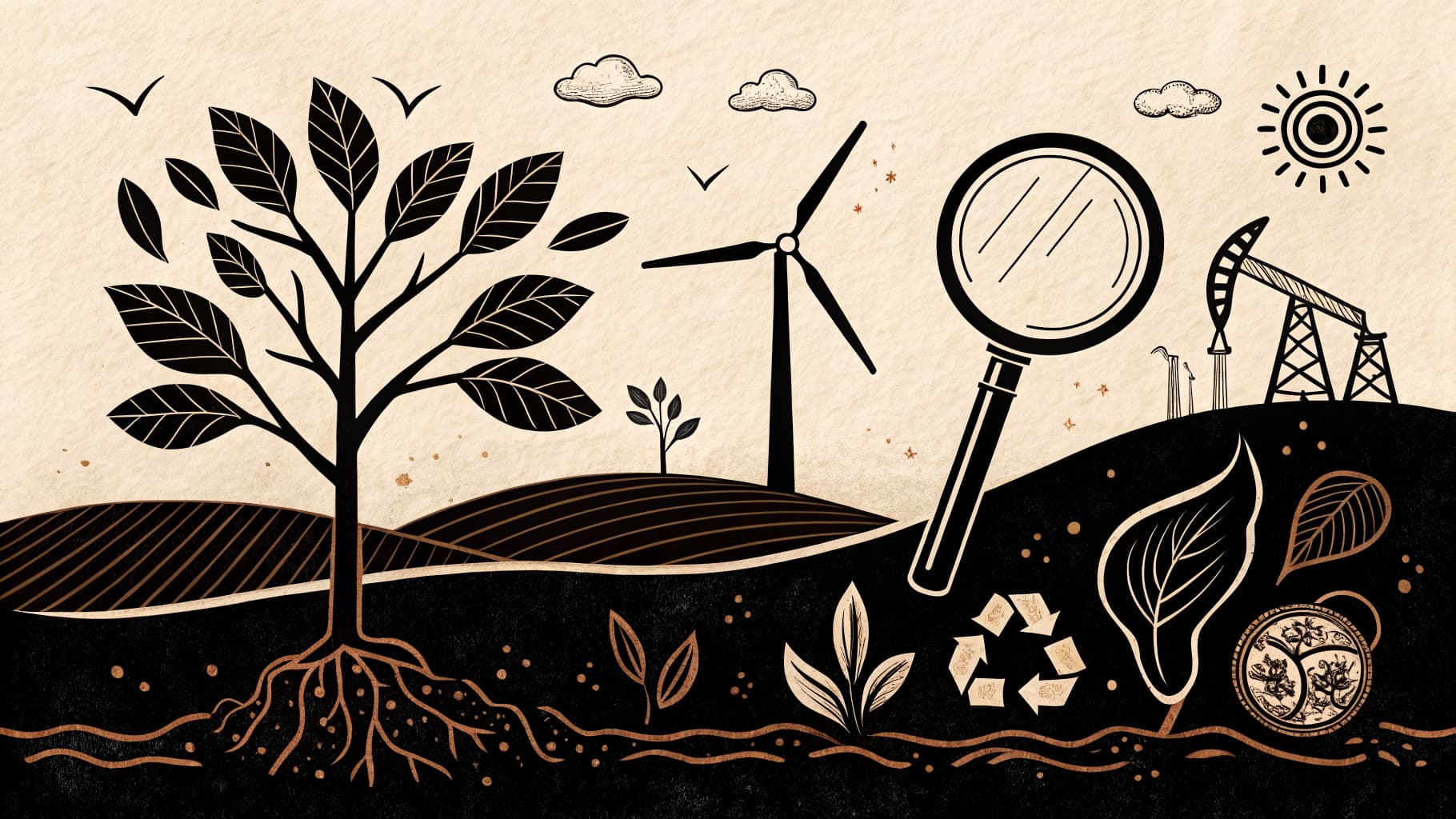
Energy Resources: 'What if It Finishes?'
Discussing the finite nature of fossil fuels (petrol, diesel), their origin, and the urgent need to explore and adopt renewable energy sources.
TL;DR:Active learning helps students grasp the finite nature of fossil fuels by moving beyond abstract facts to concrete experiences. When students model formation, audit usage, and simulate shortages, they internalise the concept of depletion as a tangible reality rather than a distant possibility.
About This Topic
Fossil fuels such as petrol, diesel, and coal form over millions of years from ancient plants and animals buried under layers of earth, subjected to heat and pressure. These resources power vehicles, generate electricity, and support industries, but their supplies are finite and depleting rapidly due to heavy use. The topic 'What if It Finishes?' prompts students to consider the consequences of running out, like disruptions in transport, higher costs, and shifts in daily life.
In the CBSE Class 5 EVS curriculum, this connects water and natural resources to sustainable living, encouraging predictions of societal changes without petrol, explanations of oil formation, and practical conservation ideas. Students grasp the urgency of switching to renewables like solar and wind energy, fostering responsibility towards Earth's limited gifts.
Active learning suits this topic well. Role-plays of fuel-scarce scenarios, fuel-use audits, and simple renewable models make abstract finiteness concrete. Students internalise conservation through real-world simulations, building habits and critical thinking for a sustainable future.
Key Questions
- Predict the societal and economic changes if petrol were unavailable for an extended period.
- Explain the geological process by which crude oil forms beneath the Earth's surface.
- Propose practical methods for conserving fuel in daily life.
Learning Objectives
- Analyze the dependence of modern transportation and industry on fossil fuels like petrol and diesel.
- Evaluate the long-term economic and societal impacts of depleting non-renewable energy resources.
- Propose and justify at least three practical methods for conserving fuel in daily household activities.
- Explain the geological conditions required for the formation of crude oil over millions of years.
- Compare the environmental benefits of renewable energy sources (solar, wind) against fossil fuels.
Before You Start
Why: Students need to understand the basic classification of natural resources into renewable and non-renewable categories before discussing the specific case of fossil fuels.
Why: Understanding that the Earth has layers and that processes like heat and pressure occur beneath the surface is foundational for explaining oil formation.
Key Vocabulary
| Fossil Fuels | Natural fuels such as coal or gas, formed in the geological past from the remains of living organisms. They are a major source of energy but are non-renewable. |
| Non-renewable Resources | Natural resources that cannot be readily replaced by natural means at a pace quick enough to keep up with consumption. Fossil fuels are examples. |
| Renewable Energy | Energy from a source that is not depleted when used, such as solar power or wind power. These sources are naturally replenished. |
| Crude Oil | A naturally occurring, yellowish-black liquid found beneath Earth's surface, which can be refined into various types of fuels. It is formed from ancient marine organisms. |
| Conservation | The careful preservation and protection of something; in this context, it refers to saving fuel resources by using them wisely and reducing waste. |
Watch Out for These Misconceptions
Common MisconceptionFossil fuels regenerate quickly like plants.
What to Teach Instead
These fuels take millions of years to form from buried organic matter under extreme conditions. Hands-on models with layers and pressure demonstrate the vast timescales, while group discussions clarify non-renewal unlike solar energy.
Common MisconceptionRunning out of petrol will not affect daily life much.
What to Teach Instead
Society depends heavily on petrol for transport and goods movement, leading to economic shifts and lifestyle changes. Role-plays simulate shortages, helping students predict real impacts through peer debates and shared scenarios.
Common MisconceptionRenewable sources like wind cannot replace fossil fuels reliably.
What to Teach Instead
Renewables provide consistent energy with technology, though variable. Experiments with solar models and wind pinwheels show practical output, building confidence via data collection and class analysis.
Active Learning Ideas
See all activities→Simulation Game
Role-Play: Life Without Petrol
Divide class into groups representing families, shops, and transport workers. Groups plan daily routines without petrol for vehicles, discussing alternatives like cycling or public buses. Conclude with a class share-out on predicted changes.
Simulation Game
Model Building: Fossil Fuel Formation
Students layer sand, clay, and decayed leaves in jars, add weight with books, and heat gently. Observe changes over days, drawing parallels to geological processes. Discuss time scales involved.
Simulation Game
Fuel Audit: School Conservation Challenge
Track vehicle idling, electricity use, and fuel for generators over a week using checklists. Brainstorm and implement three conservation steps, like carpooling reminders. Review impact in follow-up class.
Real-World Connections
- Logistics companies like Blue Dart or Delhivery constantly monitor fuel prices, as a significant increase in petrol and diesel costs directly impacts their operational expenses and delivery charges across India.
- Farmers in Punjab often use diesel-powered tractors for tilling fields. A shortage or extreme price hike of diesel could delay planting seasons and affect crop yields, impacting food security.
- The automotive industry in India is exploring hybrid and electric vehicles, partly in response to concerns about the finite supply and rising costs of petrol and diesel.
Assessment Ideas
Provide students with a slip of paper. Ask them to write down: 1. One way their family uses petrol or diesel daily. 2. One alternative they could suggest to reduce its use. 3. One question they still have about energy resources.
Pose the question: 'Imagine all the petrol stations in your city closed for a month. What are the top three problems our community would face?' Facilitate a class discussion, encouraging students to justify their answers with specific examples related to transport, daily needs, and economy.
Show images of different energy sources (coal, solar panel, wind turbine, petrol pump). Ask students to quickly sort them into two groups: 'Will run out' and 'Won't run out'. Follow up by asking a few students to explain their reasoning for one item in each category.
Frequently Asked Questions
How to explain fossil fuel formation to Class 5 students?
What activities teach fuel conservation effectively?
How can active learning help students grasp finite energy resources?
Why switch to renewable energy sources now?
More in Water and Natural Resources
Water Conservation: Ancient Indian Systems
Studying historical water management systems like the 'Ghadsisar' lake and the architectural marvels of 'Baolis' (stepwells) in Rajasthan.
8 methodologies
Water Properties: Buoyancy and Density
Conducting experiments to understand the principles of buoyancy, why objects float or sink, and the concept of density.
8 methodologies
Water Properties: Solubility and Evaporation
Exploring the concepts of solubility (what dissolves in water) and evaporation through hands-on experiments.
8 methodologies
Water-Borne Diseases: Mosquitoes and Malaria
Understanding the life cycle of mosquitoes, the diseases they transmit (Malaria, Dengue), and preventive measures.
8 methodologies
Water Scarcity and Pollution
Discussing the causes and effects of water scarcity and pollution in India, and the importance of responsible water usage.
8 methodologies
Mountaineering: Challenges and Leadership
Exploring the physical and mental challenges of mountain climbing, the role of leadership, and the inspiring story of Bachendri Pal.
8 methodologies