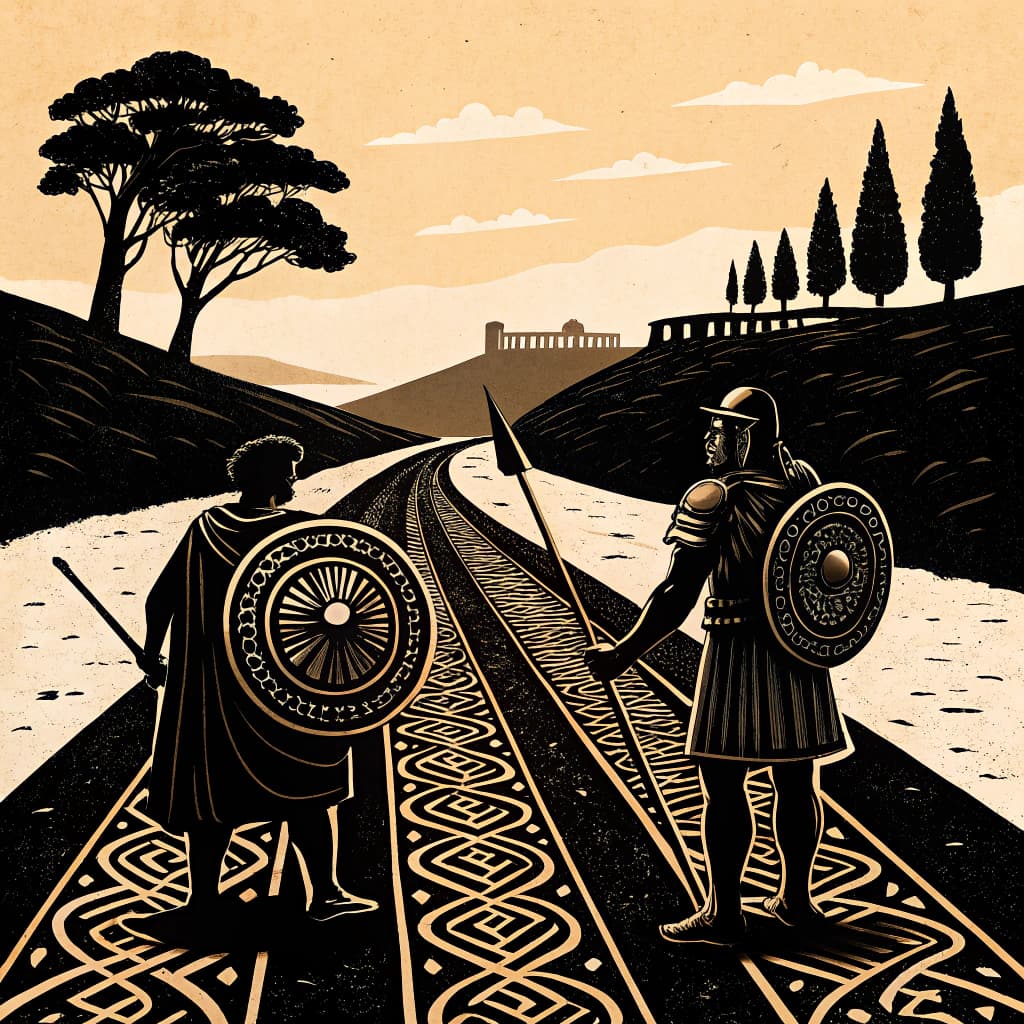
Lindisfarne: The First Raid
The shocking attack on the Holy Island and its impact on Christian Europe.
About This Topic
The Lindisfarne raid of 793 AD stands as the first major Viking attack on England, targeting the wealthy monastery on Holy Island off Northumberland. Scandinavian warriors arrived by sea, plundered gold and silver treasures, killed monks, and desecrated the church. Chronicled in the Anglo-Saxon Chronicle as a fiery omen from the north, the raid sent shockwaves through Christian Europe, prompting fears of apocalypse or divine judgment.
Year 4 students tackle key questions from the Viking and Anglo-Saxon struggle unit: why Vikings chose undefended, riches-filled monasteries; how Anglo-Saxons viewed the assault as God's punishment for sins; and its ripple effects, including heightened defenses, prayer vigils, and the onset of sustained Viking pressure on England. Source analysis fosters skills in causation, perspective, and significance, aligning with KS2 History standards.
Active learning excels with this topic because its human drama suits immersive methods. When students reenact the raid through role-play or debate interpretations from monk diaries, they connect emotionally to past fears and strategies, transforming distant events into vivid, relatable narratives that deepen retention and critical thinking.
Key Questions
- Explain why the Vikings targeted monasteries like Lindisfarne.
- Analyze how the Anglo-Saxons interpreted the sudden Viking attacks.
- Assess the immediate and long-term impact of the Lindisfarne raid on England.
Learning Objectives
- Explain the primary motivations for Viking raids on wealthy, undefended monasteries.
- Analyze Anglo-Saxon primary source accounts to interpret their understanding of the Lindisfarne raid.
- Evaluate the immediate and long-term consequences of the Lindisfarne raid on Viking-Anglo-Saxon relations.
- Compare the vulnerability of monastic communities to other settlements in Anglo-Saxon England.
Before You Start
Why: Students need a basic understanding of Anglo-Saxon life and the role of religious centers before learning about their destruction.
Why: Familiarity with who the Vikings were and their general reputation for seafaring and raiding is necessary context for the specific raid on Lindisfarne.
Key Vocabulary
| Monastery | A building or complex of buildings occupied by a community of monks or nuns living under religious vows. Monasteries were often centers of wealth and learning. |
| Plunder | To steal goods violently and carry them away, especially during wartime. Viking raiders often took gold, silver, and other valuables. |
| Desecrate | To treat a sacred place or object with violent disrespect. The Vikings are described as having desecrated the church at Lindisfarne. |
| Viking | A Scandinavian seafaring warrior or pirate who raided and settled in many parts of Europe from the late 8th to the 11th centuries. They are known for their longships and fierce attacks. |
Watch Out for These Misconceptions
Common MisconceptionVikings raided randomly without strategy.
What to Teach Instead
Vikings selected rich, isolated targets like Lindisfarne for quick plunder. Mapping activities reveal calculated sea routes and weak defenses, helping students see raiders as opportunistic planners through collaborative route-planning tasks.
Common MisconceptionAnglo-Saxons saw the raid as just bad luck.
What to Teach Instead
They interpreted it as divine wrath or end times, per chronicles. Role-plays of chronicler reactions let students debate religious views, correcting modern secular assumptions via peer discussions.
Common MisconceptionThe raid had little lasting effect on England.
What to Teach Instead
It sparked fear, fortified churches, and invited more invasions. Timeline builds show chain reactions, with groups linking short-term panic to Viking kingdoms, building chronological understanding.
Active Learning Ideas
See all activities→Stations Rotation
Source Perspectives
Prepare four stations with excerpts from the Anglo-Saxon Chronicle, monk accounts, Viking sagas, and maps. Small groups spend 8 minutes at each, noting motivations, reactions, and impacts in journals. Conclude with a whole-class share-out to synthesize views.
Document Mystery
Role-Play: Raid Council
Divide class into Viking planners and monastery defenders. In pairs, Vikings justify targeting Lindisfarne while defenders argue vulnerabilities. Perform short debates, then switch roles to explore both sides.
Document Mystery
Map Quest: Viking Approach
Provide blank maps of Britain and Scandinavia. Small groups trace sea routes to Lindisfarne, mark key sites, and annotate raid advantages like surprise. Discuss as a class why geography mattered.
Real-World Connections
- Museum curators, like those at the British Museum, study artifacts from the Viking age, such as coins and religious objects, to understand the wealth and culture of the time, similar to how historians interpret the treasures stolen from Lindisfarne.
- Archaeologists excavating sites in Northumberland might uncover evidence of defensive structures built after the raid, illustrating the long-term impact of the Viking threat on Anglo-Saxon settlements.
- Historians specializing in medieval Europe analyze monastic records to understand the economic and social role of monasteries, providing context for why they were targets for raids.
Assessment Ideas
Give students a card with the question: 'Why was Lindisfarne a target for Viking raiders?' Ask them to write two specific reasons, citing evidence from the lesson. Collect these to check understanding of motivation.
Pose the question: 'How might an Anglo-Saxon monk have felt after the raid on Lindisfarne?' Encourage students to share their ideas, referencing the descriptions of fear and divine judgment mentioned in historical accounts. Listen for empathetic responses and historical reasoning.
Display a short, simplified quote from an Anglo-Saxon Chronicle entry about the raid. Ask students to identify one word that describes the Anglo-Saxon reaction to the attack and explain its meaning in their own words. This checks comprehension of perspective.
Frequently Asked Questions
Why did Vikings target Lindisfarne monastery?
How did Anglo-Saxons interpret the Lindisfarne raid?
What was the impact of the Lindisfarne raid?
How does active learning help teach the Lindisfarne raid?
Planning templates for History
5E Model
The 5E Model structures lessons through five phases (Engage, Explore, Explain, Elaborate, and Evaluate), guiding students from curiosity to deep understanding through inquiry-based learning.
Unit PlannerThematic Unit
Organize a multi-week unit around a central theme or essential question that cuts across topics, texts, and disciplines, helping students see connections and build deeper understanding.
RubricSingle-Point Rubric
Build a single-point rubric that defines only the "meets standard" level, leaving space for teachers to document what exceeded and what fell short. Simple to create, easy for students to understand.
More in Viking Raids and the Struggle for England
The Viking Homeland and Culture
Exploring the origins of the Vikings, their Norse mythology, and their seafaring culture.
3 methodologies
Viking Longships: Technology and Exploration
Investigating the design and capabilities of the Viking longship and its role in their expansion.
3 methodologies
The Great Heathen Army
The shift from small raids to a full-scale invasion of the English kingdoms by a large Viking force.
3 methodologies
Alfred the Great and the Battle of Edington
How Alfred saved Wessex and made a peace treaty with the Vikings, establishing the Danelaw.
3 methodologies
Viking Jorvik: Trade and Life
Exploring the Viking city of York (Jorvik) and its role as a global trading hub and settlement.
3 methodologies