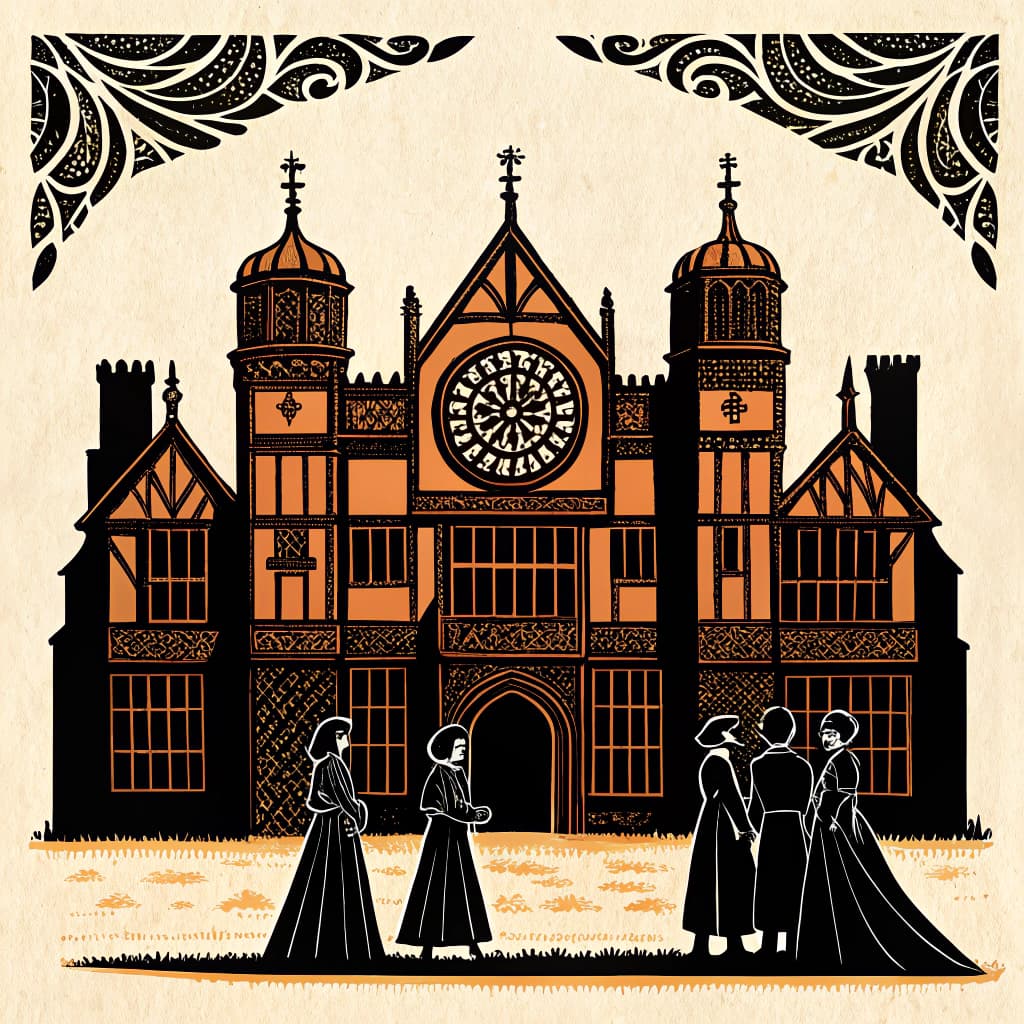
The Tudor Legacy: 1485-1603
An overview of the century's changes in monarchy, religion, and the state.
About This Topic
The Tudor Legacy: 1485-1603 traces the transformation of England from a war-torn kingdom under Henry VII to a cultural powerhouse under Elizabeth I. Students examine how monarchs navigated dynastic challenges, enforced religious changes through the Reformation, and strengthened central authority via councils and parliaments. Key events include the Wars of the Roses' aftermath, Henry VIII's break with Rome, and Elizabeth's defeat of the Armada.
This unit aligns with A-Level standards on Tudor government and society, addressing key questions about the most successful monarch in consolidating power, changes in ordinary lives, and the creation of a modern English state. Students analyze primary sources on enclosure, Poor Laws, and court politics to evaluate continuity and change across the century.
Active learning suits this topic well. Role-plays of royal councils or debates on monarch success encourage students to weigh evidence and perspectives, making abstract power dynamics concrete. Group source sorting on social changes fosters collaborative evaluation, deepening understanding of historical complexity.
Key Questions
- Evaluate which Tudor monarch was the most successful in consolidating royal power.
- Analyze how much the lives of ordinary people changed over the Tudor century.
- Assess the extent to which the Tudors created a modern English state.
Learning Objectives
- Evaluate the effectiveness of different Tudor monarchs in centralizing royal authority, citing specific policies and events.
- Analyze the extent to which religious reforms under the Tudors impacted the daily lives and social structures of common people.
- Compare the economic policies of the Tudor period, such as enclosure and the Poor Laws, and their consequences for different social classes.
- Synthesize evidence from primary sources to assess the development of a more modern English state by 1603.
- Explain the significance of key events like the break with Rome and the Spanish Armada in shaping Tudor England.
Before You Start
Why: Students need to understand the context of dynastic instability and the establishment of the Tudor dynasty by Henry VII to grasp the challenges faced by subsequent monarchs.
Why: Familiarity with feudal structures and the role of the monarchy in the medieval period provides a baseline for analyzing the changes and continuities introduced by the Tudors.
Key Vocabulary
| Royal Supremacy | The assertion of the English monarch's authority over the Church in England, established by Henry VIII, ending papal jurisdiction. |
| Reformation | A religious movement in 16th-century Europe that led to the establishment of Protestant churches, significantly altering religious practice and church-state relations in England. |
| Enclosure Movement | The process of consolidating small landholdings into larger farms, often by fencing off common lands, which had significant social and economic consequences for rural populations. |
| Poor Laws | Legislation enacted by the Tudors to address poverty and vagrancy, establishing a system of parish relief funded by local taxation. |
| Act of Union | Legislation that formally incorporated Wales into the Kingdom of England, strengthening administrative and legal control. |
Watch Out for These Misconceptions
Common MisconceptionTudor monarchs held absolute power without opposition.
What to Teach Instead
Challenges like pretenders, rebellions, and noble factions limited authority. Group debates on evidence from sources help students identify constraints and appreciate monarch strategies. Role-plays reveal negotiation needs.
Common MisconceptionThe Elizabethan Golden Age brought prosperity to all.
What to Teach Instead
Enclosures and inflation worsened rural poverty despite cultural flourishing. Station activities with contrasting sources prompt students to compare elite and commoner experiences. Collaborative analysis uncovers social divides.
Common MisconceptionReligious changes occurred smoothly under the Tudors.
What to Teach Instead
Dissolution of monasteries and recusancy fines sparked resistance. Timeline builds show oscillations between Catholicism and Protestantism. Discussions in pairs clarify enforcement difficulties.
Active Learning Ideas
See all activities→Socratic Seminar
Debate Carousel: Monarch Success
Divide class into groups, each assigned a Tudor monarch. Groups prepare 3 key arguments with evidence on consolidating power, then rotate to defend or challenge others' cases. Conclude with whole-class vote and reflection on criteria for success.
Socratic Seminar
Source Stations: Lives of Ordinary People
Set up 4 stations with sources on farming, trade, religion, and poverty across Tudor reigns. Pairs spend 8 minutes per station noting changes or continuities, then share findings in a class gallery walk.
Socratic Seminar
Timeline Build: Path to Modern State
In small groups, students sequence 15 events and reforms on a shared timeline, adding annotations on impacts. Groups present one innovation, like Justices of the Peace, explaining its role in state-building.
Real-World Connections
- Historians specializing in governance at institutions like the National Archives analyze Tudor administrative records to understand the evolution of parliamentary power and bureaucratic structures, informing modern debates on state capacity.
- Museum curators at the Victoria and Albert Museum or the British Museum interpret Tudor artifacts, from royal portraits to everyday objects, to illustrate the social stratification and cultural shifts of the era for public education.
- Legal scholars examine the development of English common law and statutory legislation during the Tudor period, tracing precedents that continue to influence legal systems in the UK and Commonwealth countries.
Assessment Ideas
Pose the question: 'Which Tudor monarch, Henry VII, Henry VIII, Edward VI, Mary I, or Elizabeth I, was most successful in consolidating royal power?' Ask students to select a monarch and provide two specific pieces of evidence from their reign to support their choice, referencing at least one policy or event.
Provide students with a short primary source excerpt describing life for a peasant or artisan in 1500 and another from 1600. Ask them to identify two specific ways life may have changed or stayed the same, citing details from both texts.
Students write a brief paragraph answering: 'To what extent did the Tudors create a modern English state?' They then exchange paragraphs with a partner. Each partner checks for the inclusion of at least one specific example of state development (e.g., legal reform, administrative centralization) and one counterargument or limitation.
Frequently Asked Questions
How to evaluate Tudor monarch success in consolidating power?
What active learning strategies work for the Tudor Legacy?
How much did ordinary lives change in the Tudor century?
To what extent did Tudors create a modern English state?
Planning templates for History
5E Model
The 5E Model structures lessons through five phases (Engage, Explore, Explain, Elaborate, and Evaluate), guiding students from curiosity to deep understanding through inquiry-based learning.
Unit PlannerThematic Unit
Organize a multi-week unit around a central theme or essential question that cuts across topics, texts, and disciplines, helping students see connections and build deeper understanding.
RubricSingle-Point Rubric
Build a single-point rubric that defines only the "meets standard" level, leaving space for teachers to document what exceeded and what fell short. Simple to create, easy for students to understand.
More in Elizabethan Society, Economy, and the Golden Age
The Rise of the Gentry
The social and economic ascent of the landowning class below the nobility.
2 methodologies
Poverty and the Poor Laws (Early Responses)
The distinction between the 'deserving' and 'undeserving' poor and early attempts at poor relief.
3 methodologies
The 1601 Elizabethan Poor Law
The landmark legislation establishing a national system of poor relief.
3 methodologies
Trade, Exploration, and the New World
The voyages of Drake, Hawkins, and Raleigh and the birth of English maritime power.
3 methodologies
The Elizabethan Renaissance: Theatre and Literature
The impact of Shakespeare, Marlowe, and the growth of London's playhouses.
3 methodologies
The Catholic Threat: Jesuits and Seminary Priests
The mission of Campion and Parsons and the government's repressive response.
3 methodologies