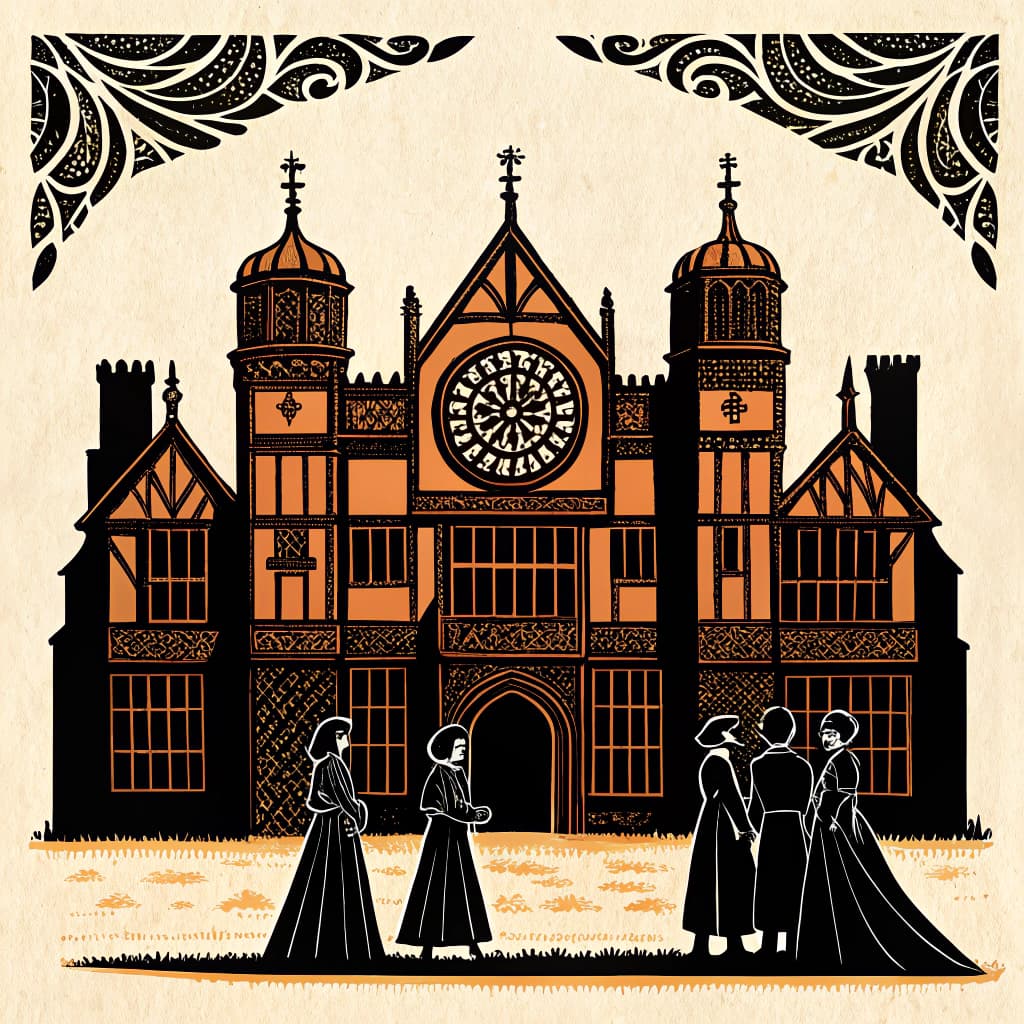
The Accession and the Religious Settlement
The 1559 Acts of Supremacy and Uniformity and the creation of the 'Middle Way'.
About This Topic
The accession of Elizabeth I in 1558 was a moment of profound uncertainty. Facing a divided nation and a hostile Catholic Europe, Elizabeth's first priority was to establish a stable religious settlement. This topic examines the 1559 Acts of Supremacy and Uniformity, which created the 'Via Media' (Middle Way), a church that was Protestant in doctrine but retained many traditional Catholic structures and rituals. Students analyze how Elizabeth balanced the demands of 'radical' Protestants with the need to avoid a Catholic rebellion.
For Year 12 students, this is a study in 'political pragmatism' and the birth of the modern Church of England. It connects to themes of religious identity and the 'Elizabethan Settlement'. This topic comes alive when students can physically model the patterns of 'compromise', analyzing the specific wording of the 1559 Prayer Book to see how it was designed to be 'all things to all people'.
Key Questions
- Analyze how Elizabeth's personal beliefs shaped the Settlement.
- Explain why the 'Puritan Choir' in Parliament opposed the Settlement.
- Evaluate whether the Settlement was intended to be a permanent solution or a temporary fix.
Learning Objectives
- Analyze the key provisions of the 1559 Act of Supremacy and the 1559 Act of Uniformity.
- Explain the motivations behind the creation of the 'Via Media' or 'Middle Way' in religious doctrine and practice.
- Evaluate the extent to which Elizabeth I's personal religious views influenced the religious settlement.
- Compare the demands of Puritan reformers with the compromises offered in the Elizabethan Settlement.
- Critique the effectiveness of the 1559 Religious Settlement in achieving national religious stability.
Before You Start
Why: Students need to understand the initial break with Rome and the establishment of royal supremacy to grasp the context of Elizabeth's subsequent religious policies.
Why: Knowledge of the religious shifts during these reigns, from Protestantism to Catholicism and back, is essential for understanding the divided nation Elizabeth inherited.
Key Vocabulary
| Act of Supremacy (1559) | Legislation that re-established the monarch as the Supreme Governor of the Church of England, defining the relationship between the Crown and the Church. |
| Act of Uniformity (1559) | Legislation that mandated a revised Book of Common Prayer and established the structure and worship of the Church of England, aiming for consistency. |
| Via Media | Latin for 'Middle Way,' referring to the Elizabethan Religious Settlement's attempt to find a moderate path between Catholic tradition and radical Protestantism. |
| Puritan Choir | A term used to describe the more zealous Protestant members of Parliament who advocated for further reforms and a more Calvinist doctrine within the Church of England. |
| Book of Common Prayer (1559) | The official liturgical book of the Church of England, revised under Elizabeth I to incorporate elements acceptable to both moderate Protestants and Catholics. |
Watch Out for These Misconceptions
Common MisconceptionElizabeth I was a 'radical' Protestant who hated Catholicism.
What to Teach Instead
Elizabeth actually liked many aspects of the old religion, such as church music, vestments, and the use of a crucifix. Active analysis of her 'personal chapel' helps students see that her religious policy was driven by a desire for 'order' and 'tradition' as much as by Protestant theology.
Common MisconceptionThe 1559 Settlement was accepted by everyone immediately.
What to Teach Instead
It was actually very unpopular with many people; all but one of the Catholic bishops refused to take the Oath of Supremacy and had to be replaced. Peer discussion of the 'Recusancy' problem helps students see the ongoing resistance to the new church.
Active Learning Ideas
See all activities→Inquiry Circle
The 1559 Settlement Audit
In small groups, students analyze the clauses of the Acts of Supremacy and Uniformity. They must identify the 'Protestant' elements (e.g., the English Bible) and the 'Catholic' elements (e.g., the structure of bishops) and discuss why Elizabeth chose this 'mix'.
Simulation Game
The Parliamentary Battle of 1559
Students role-play the debates in the House of Lords and the House of Commons. They must represent the 'Puritan Choir' who want a more radical reform and the 'Catholic Bishops' who want to keep the old ways, while Elizabeth's ministers try to push through a compromise.
Think-Pair-Share
A Permanent Solution?
Students analyze Elizabeth's famous quote that she did not want to 'make windows into men's souls'. They discuss in pairs whether the 1559 Settlement was intended to be a 'permanent' solution or just a 'temporary fix' to keep the peace.
Real-World Connections
- Modern parliamentary debates over religious freedom and the role of established churches in countries like the United Kingdom or Canada echo the compromises Elizabeth I navigated.
- The ongoing discussions within denominations about adapting traditional practices to contemporary societal values, such as those seen in the Church of England's General Synod, reflect the challenges of maintaining unity through compromise, similar to the 1559 Settlement.
Assessment Ideas
Provide students with two short primary source quotes, one from a conservative Catholic and one from a radical Puritan, reacting to the 1559 Settlement. Ask them to write one sentence explaining how each quote demonstrates opposition to the 'Middle Way'.
Pose the question: 'Was the 1559 Religious Settlement a triumph of political skill or a temporary measure destined for future conflict?' Facilitate a class debate, asking students to cite specific evidence from the Acts and contemporary reactions to support their arguments.
Present students with a list of key features of the 1559 Settlement (e.g., monarch as Supreme Governor, use of Book of Common Prayer, vestments required). Ask them to categorize each feature as primarily Catholic-leaning, Protestant-leaning, or deliberately ambiguous, explaining their reasoning for each.
Frequently Asked Questions
What was the 'Via Media'?
How did the 1559 Act of Supremacy differ from her father's?
Who were the 'Puritan Choir'?
How can active learning help students understand the Elizabethan Settlement?
Planning templates for History
5E Model
The 5E Model structures lessons through five phases (Engage, Explore, Explain, Elaborate, and Evaluate), guiding students from curiosity to deep understanding through inquiry-based learning.
Unit PlannerThematic Unit
Organize a multi-week unit around a central theme or essential question that cuts across topics, texts, and disciplines, helping students see connections and build deeper understanding.
RubricSingle-Point Rubric
Build a single-point rubric that defines only the "meets standard" level, leaving space for teachers to document what exceeded and what fell short. Simple to create, easy for students to understand.
More in Elizabeth I: The Early Years and the Via Media
Elizabeth's Ministers: Cecil and Dudley
The roles of William Cecil and Robert Dudley in the early Elizabethan court.
3 methodologies
The Challenge of Mary Queen of Scots (Arrival)
Mary's arrival in England in 1568 and the dilemma she posed for Elizabeth.
3 methodologies
The Northern Earls' Rebellion
The last major feudal uprising and the first serious attempt to depose Elizabeth.
3 methodologies
Excommunication and the Ridolfi Plot
The Pope's Regnans in Excelsis and the shift towards a more defensive policy.
3 methodologies
Foreign Policy: Scotland and France
Intervention in the Scottish Reformation and the Treaty of Edinburgh.
3 methodologies