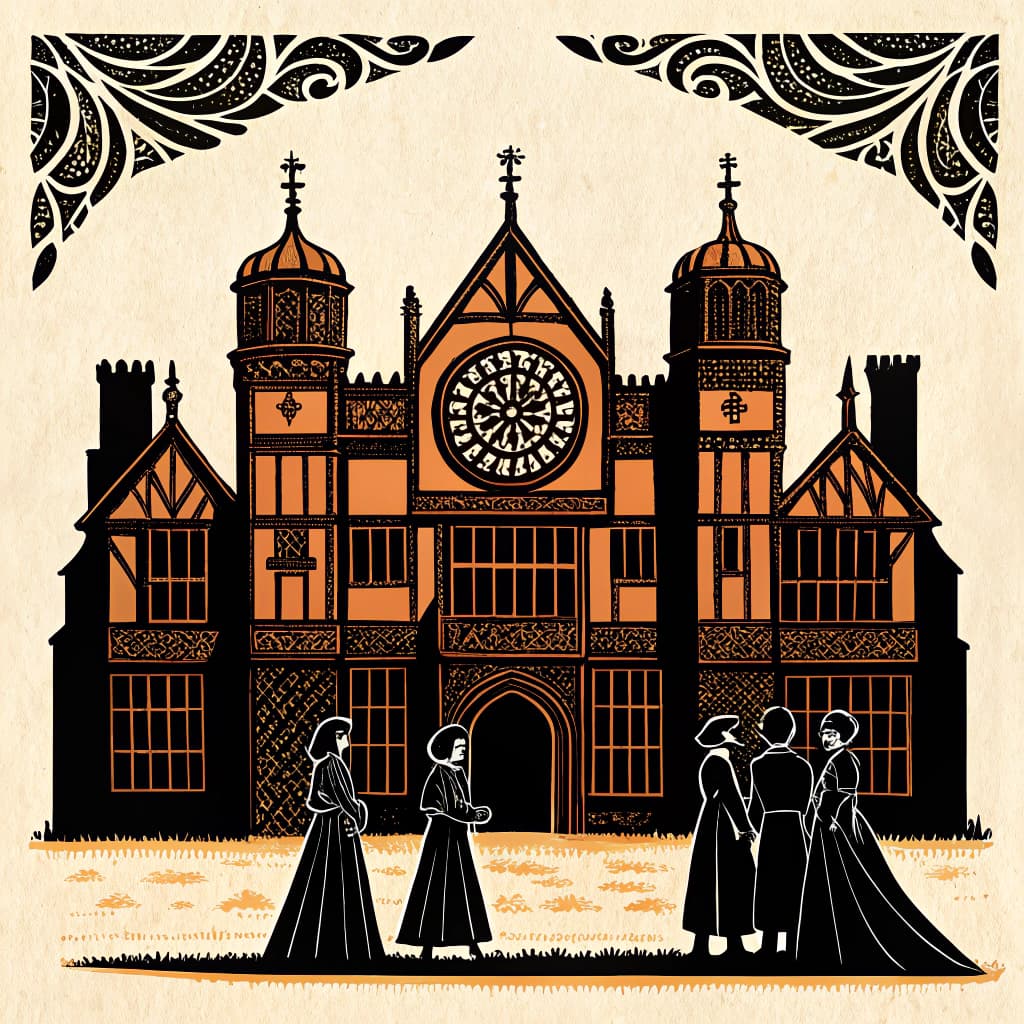
Society and Economy in Henry VII's England
Exploring the social structure, economic conditions, and daily life at the turn of the 16th century.
TL;DR:Active learning works especially well for this topic because it helps students grasp the rigid yet nuanced social structures and economic realities of Henry VII’s England through tangible, relatable tasks. Group activities like role-plays and source analysis make abstract hierarchies and policies come alive, while individual tasks like diary writing deepen empathy for lived experiences across classes.
About This Topic
Society and Economy in Henry VII's England reveals a rigidly hierarchical structure, with nobility holding vast lands and influence at the top, clergy wielding spiritual authority, and commoners like yeomen, husbandmen, and laborers forming the base. Economic conditions around 1500 show recovery from the Wars of the Roses through wool trade exports, cloth production, and royal policies like the Act of Apparel regulating social display. Daily life varied sharply: nobles feasted in stone manors, while peasants endured thatched hovels, subsistence farming, and high mortality from disease and famine.
This topic anchors the A-Level study of Tudor England, 1485-1603, developing skills in source analysis, causation, and comparison. Students examine how Henry's fiscal prudence stabilized the economy yet exacerbated inequalities, fostering debates on continuity from medieval to early modern society.
Active learning suits this topic well. When students engage in role-plays of social ranks or analyze primary sources in collaborative groups, they grasp inequalities viscerally and connect abstract structures to human experiences, making historical analysis more engaging and memorable.
Key Questions
- Analyze the main characteristics of English society under Henry VII.
- Explain the economic challenges and opportunities facing England in 1500.
- Compare the lives of the nobility and the common people in this period.
Learning Objectives
- Analyze the hierarchical structure of English society under Henry VII, identifying the roles and privileges of different social strata.
- Explain the primary economic activities and challenges in England during Henry VII's reign, including trade, agriculture, and taxation.
- Compare and contrast the daily lives, living conditions, and opportunities available to the nobility versus commoners in early 16th-century England.
- Evaluate the impact of Henry VII's fiscal policies on the English economy and social structure.
Before You Start
Why: Understanding the instability and devastation caused by the Wars of the Roses is crucial for appreciating Henry VII's efforts to restore order and economic stability.
Why: Familiarity with feudalism and the general social hierarchy of the Middle Ages provides a foundation for understanding the continuities and changes in early Tudor society.
Key Vocabulary
| Nobility | The highest social class, comprising dukes, marquesses, earls, viscounts, and barons, who held significant land, wealth, and political influence. |
| Yeoman | A social class of small landowners, often farmers, who occupied a position between the gentry and the peasantry, possessing a degree of independence. |
| Subsistence Farming | Agricultural practices focused on producing just enough food for the farmer and their family, with little surplus for trade. |
| Act of Apparel | Legislation passed to regulate the wearing of certain fabrics and styles of clothing according to social rank, intended to maintain social hierarchy and curb excessive spending. |
| Crown Lands | Land directly owned by the monarch, which formed a significant source of royal income and power for Henry VII. |
Watch Out for These Misconceptions
Common MisconceptionSociety was entirely static with no social mobility.
What to Teach Instead
While hierarchy dominated, some yeomen rose through trade or service, and gentry expanded via marriages. Group source analysis helps students identify mobility evidence, challenging rigid views through peer comparison of cases like the Pastons.
Common MisconceptionEngland's economy was uniformly prosperous by 1500.
What to Teach Instead
Recovery brought wool trade gains, but enclosures and inflation hit peasants hard. Active debates on sources reveal regional variations, as students weigh royal policies against commoner hardships in structured discussions.
Common MisconceptionDaily life for all was grim and unchanging from the medieval period.
What to Teach Instead
Nobles enjoyed Renaissance influences, while peasants faced familiar agrarian toil with emerging cloth industry jobs. Role-plays make contrasts vivid, helping students differentiate class experiences and note early modern shifts.
Active Learning Ideas
See all activities→Jigsaw
Social Hierarchy Puzzle
Divide class into expert groups on nobility, gentry, yeomen, and laborers; each researches roles, privileges, and duties from sources. Experts then regroup to teach peers and reconstruct the hierarchy on a class chart. Conclude with a plenary discussion on mobility between ranks.
Gallery Walk
Source Stations: Economic Evidence
Set up stations with excerpts on wool trade, enclosures, and poor laws. Pairs rotate, noting evidence of challenges and opportunities, then share findings in a class timeline. Extend by debating Henry's economic policies.
Gallery Walk
Role-Play Debate: Nobles vs Commoners
Assign half the class as nobles arguing for sumptuary laws, the other as commoners protesting enclosures. Provide role cards with evidence; debate in character for 15 minutes, then vote and reflect on perspectives.
Real-World Connections
- Historians studying estate records from manors like those in Kent can reconstruct the economic output and social relationships of peasant families, similar to how modern agricultural economists analyze farm productivity.
- The legacy of the Act of Apparel can be seen in historical fashion and sumptuary laws in other cultures, which aimed to visually reinforce social distinctions and control conspicuous consumption.
Assessment Ideas
Provide students with two contrasting primary source excerpts: one describing a noble's manor and the other a peasant's dwelling. Ask them to write one sentence identifying the social rank depicted in each and one key difference in their daily lives.
Pose the question: 'To what extent did Henry VII's economic policies benefit all levels of society?' Facilitate a class discussion, encouraging students to cite specific evidence regarding taxation, trade, and land ownership to support their arguments.
Present students with a list of social roles (e.g., Duke, Husbandman, Bishop, Merchant). Ask them to categorize each role based on its position in the social hierarchy under Henry VII and briefly justify their placement.
Frequently Asked Questions
How can teachers address social structure in Henry VII's England?
What active learning strategies work for this topic?
What were the main economic challenges in 1500s England?
How do lives of nobility and commoners compare under Henry VII?
Planning templates for History
5E Model
The 5E Model structures lessons through five phases (Engage, Explore, Explain, Elaborate, and Evaluate), guiding students from curiosity to deep understanding through inquiry-based learning.
Unit PlannerThematic Unit
Organize a multi-week unit around a central theme or essential question that cuts across topics, texts, and disciplines, helping students see connections and build deeper understanding.
RubricSingle-Point Rubric
Build a single-point rubric that defines only the "meets standard" level, leaving space for teachers to document what exceeded and what fell short. Simple to create, easy for students to understand.
More in Henry VII: The First Tudor
The Battle of Bosworth and its Aftermath
Analysing the immediate steps Henry took to claim the throne and diminish Yorkist opposition.
8 methodologies
Consolidating Power: Royal Progresses & Patronage
Examining Henry VII's early strategies to secure loyalty and project authority across the kingdom.
8 methodologies
Threats to the Throne: Lambert Simnel
Examining the challenge posed by Lambert Simnel and the Battle of Stoke Field.
8 methodologies
Threats to the Throne: Perkin Warbeck
Investigating the prolonged challenge of Perkin Warbeck and its international dimensions.
8 methodologies
Government and the Council Learned in Law
The use of new administrative bodies to enforce royal authority and increase revenue.
8 methodologies
Financial Policy: Bonds and Recognisances
The controversial methods used to ensure the loyalty of the nobility through debt.
8 methodologies