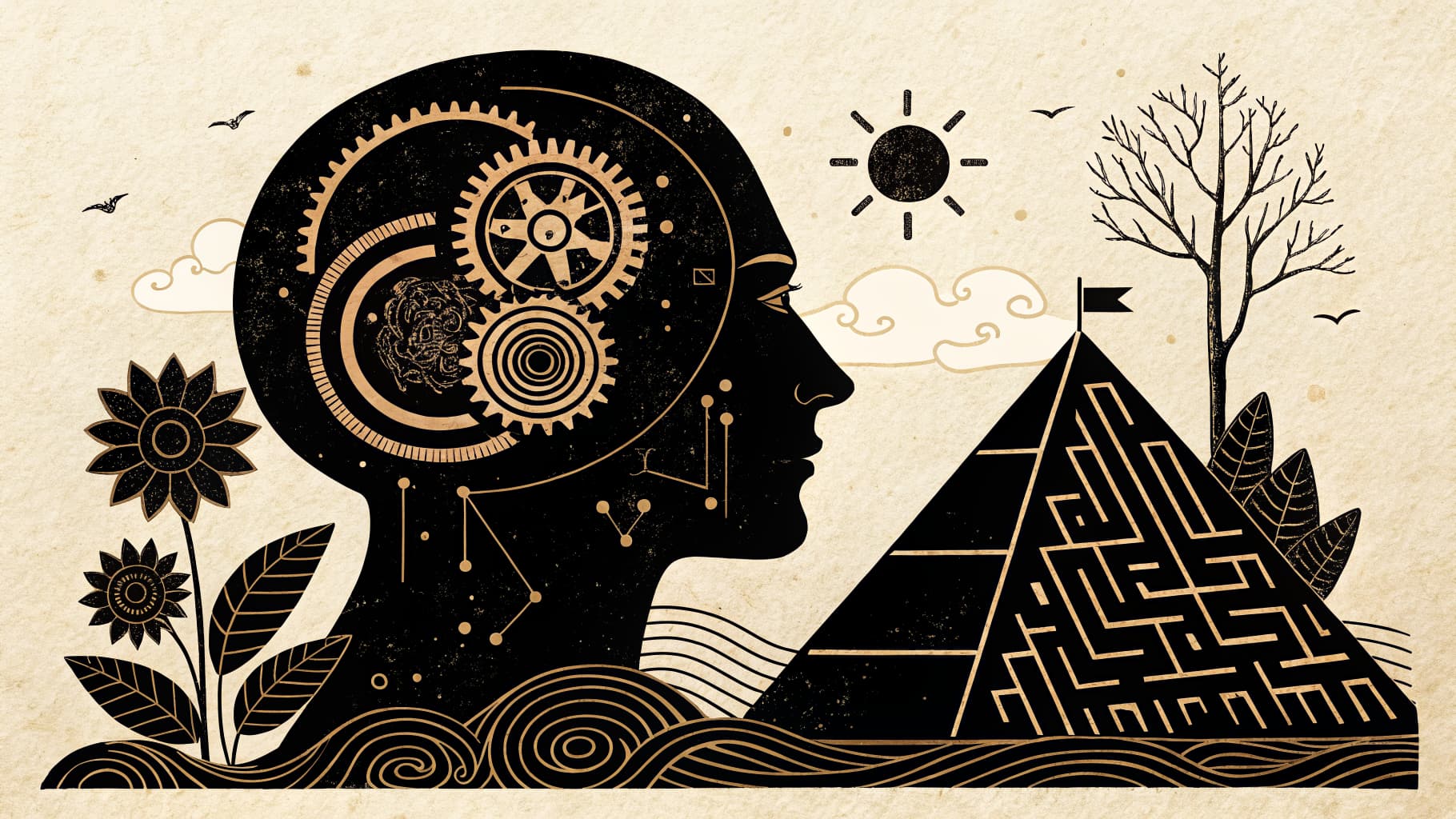
Memory and Learning
A study of the models of memory, the processes of encoding, storage, and retrieval, and the fundamental theories of classical and operant conditioning.
TL;DR:Memory and learning are the twin pillars of cognitive psychology. This topic examines how we acquire, store, and retrieve information, using models like the multi-store model of memory. Students also explore the mechanics of learning through classical and operant conditioning. These theories explain everything from why we develop phobias to how we train pets or learn classroom routines.
About This Topic
Memory and learning are the twin pillars of cognitive psychology. This topic examines how we acquire, store, and retrieve information, using models like the multi-store model of memory. Students also explore the mechanics of learning through classical and operant conditioning. These theories explain everything from why we develop phobias to how we train pets or learn classroom routines.
In Australia, this topic is often linked to practical applications, such as improving study habits or understanding how eyewitness testimony can be fallible in the legal system. It also provides an opportunity to discuss how oral traditions in First Nations cultures use specific mnemonic techniques to pass down complex knowledge over thousands of years. This topic comes alive when students can physically model the patterns of memory and conditioning through simulations.
Key Questions
- How is information stored and retrieved in the human brain?
- What factors influence the reliability of memory?
- How do we learn new behaviours through conditioning?
Watch Out for These Misconceptions
Common MisconceptionMemory works like a video camera, recording everything perfectly.
What to Teach Instead
Students often believe memories are exact replicas of events. Teachers should use 'false memory' demonstrations to show that memory is actually a reconstructive process prone to errors and suggestions.
Common MisconceptionNegative reinforcement is the same as punishment.
What to Teach Instead
This is the most common error in Year 11 Psychology. Using a 'sorting' activity where students categorise scenarios helps them see that reinforcement (even negative) always increases a behaviour, while punishment decreases it.
Active Learning Ideas
See all activities→Simulation Game
The Memory Factory
Students act as different 'stores' in the multi-store model (Sensory, Short-Term, Long-Term). They must pass 'information' (words or images) through the system, demonstrating how attention and rehearsal are necessary for storage.
Role Play
Conditioning in the Real World
Groups are given a scenario (e.g., a child afraid of the dentist or a student getting a gold star). They must role-play the scenario and then identify the Unconditioned Stimulus, Neutral Stimulus, and Reinforcers involved.
Inquiry Circle
Mnemonic Masterclass
Students research different memory techniques, including the 'Method of Loci' used in many cultures, including Indigenous Australian 'songlines'. They then teach their technique to the rest of the class.
Frequently Asked Questions
What are the three stages of the multi-store model of memory?
What is the difference between classical and operant conditioning?
How do Indigenous Australian cultures use memory techniques?
How can active learning help students understand conditioning?
More in Cognitive Processes and Development
Sensation and Perception
An analysis of how sensory information is received and processed, with a focus on the visual and gustatory systems and perceptual distortions.
8 methodologies
Cognitive and Social Development
An overview of psychological development across the lifespan, focusing on Piaget's theory of cognitive development and Erikson's psychosocial stages.
8 methodologies