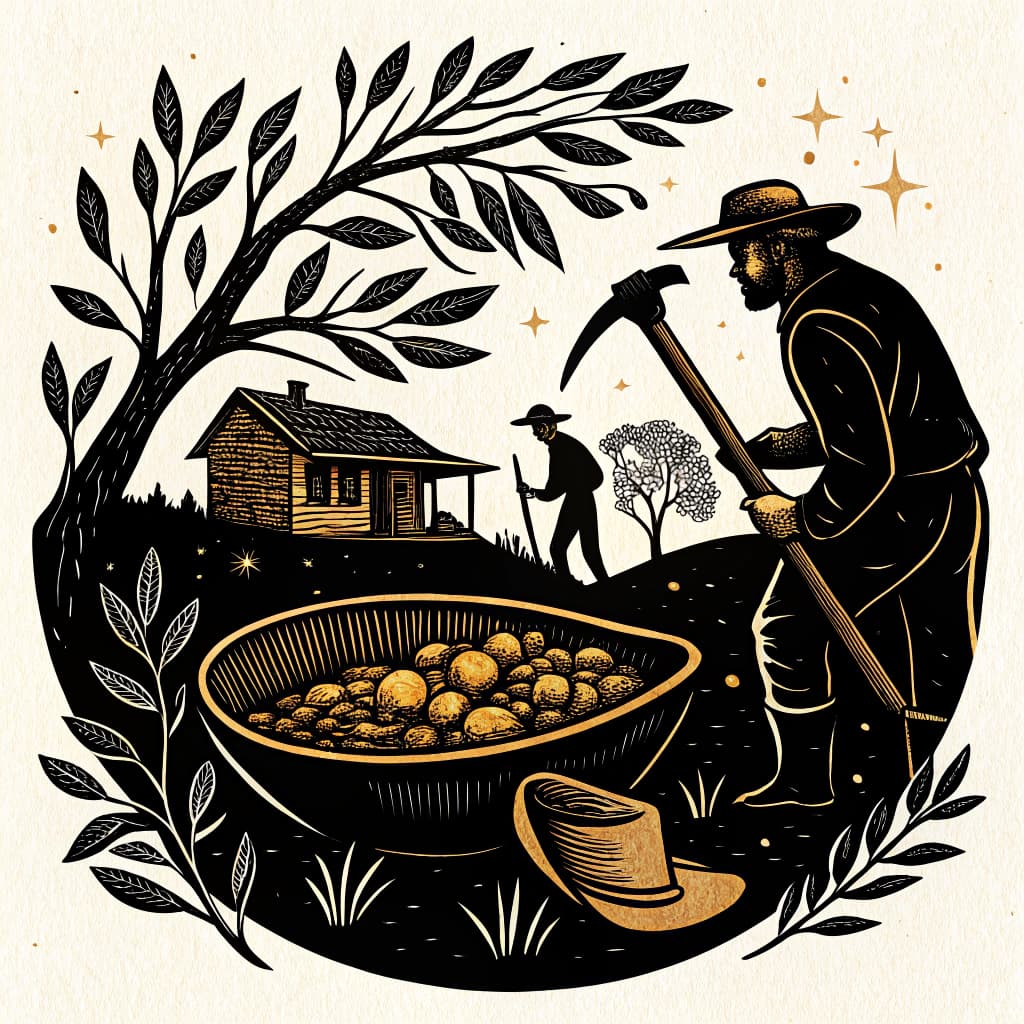
Adapting to the Australian Landscape
Investigate how early settlers adapted their lives and practices to the unique Australian environment.
TL;DR:Students absorb the harsh realities of Australia’s landscapes best when they interact with evidence rather than read about it. Active tasks let them feel the weight of drought, the glare of sun, and the gift of a single waterhole, so the adaptations settlers made become visible, tangible, and memorable.
About This Topic
Students investigate how early European settlers adapted to Australia's diverse landscapes, from arid inland regions to coastal areas with unpredictable weather. They examine practical changes in housing, such as slab huts with wide verandas for shade, and farming techniques like dryland cropping and pastoral runs along watercourses. These adaptations responded to challenges like droughts, bushfires, and poor soils, shaping settlement patterns around reliable water sources and fertile pockets.
This topic connects colonial history with geography and sustainability, as students compare European methods, which often cleared vast areas for sheep grazing, to Indigenous practices like fire-stick farming that maintained soil health and biodiversity. Key inquiries highlight environmental impacts, including erosion and salinisation, fostering critical evaluation of past decisions.
Active learning suits this topic well. When students map historical settlements or simulate farm decisions through role-play, they grasp cause-and-effect relationships firsthand. Collaborative comparisons of land management practices build empathy and analytical skills, making abstract historical concepts concrete and relevant to modern environmental stewardship.
Key Questions
- Explain how the Australian climate and geography shaped colonial settlement patterns.
- Compare European farming methods with traditional Indigenous land management practices.
- Assess the environmental impact of early European agricultural practices.
Learning Objectives
- Analyze how specific geographical features, such as rivers and coastlines, influenced the location of early colonial settlements.
- Compare the effectiveness and environmental consequences of European farming techniques with traditional Indigenous land management practices in Australia.
- Evaluate the long-term environmental impacts, such as soil degradation and altered watercourses, resulting from early European agricultural expansion.
- Explain the relationship between climate patterns, like drought and rainfall, and the challenges faced by early settlers in adapting their practices.
- Identify key adaptations in housing and farming made by early settlers to suit the Australian environment.
Before You Start
Why: Students need a foundational understanding of Australia's diverse climates, landforms, and water sources to analyze how settlers adapted.
Why: Understanding traditional land management practices provides a crucial point of comparison for European settlement methods.
Why: Students must have a basic knowledge of who the early settlers were and their motivations for coming to Australia.
Key Vocabulary
| Pastoral Run | A large area of land used for grazing sheep or cattle, often established by early European settlers in Australia. |
| Dryland Cropping | Farming methods used in areas with low rainfall, relying on techniques to conserve soil moisture for crop growth. |
| Fire-stick Farming | A traditional Indigenous Australian practice of using fire to manage landscapes, promoting new growth and clearing land for hunting. |
| Salinisation | The process by which salt accumulates in the soil, often a consequence of irrigation or land clearing, which can harm plant growth. |
Watch Out for These Misconceptions
Common MisconceptionEuropean farming methods were always superior to Indigenous practices.
What to Teach Instead
Indigenous land management sustained environments for millennia through controlled burns and rotations, while European clearing often led to degradation. Sorting activities and debates help students weigh evidence, revealing context-specific strengths. Peer discussions clarify that 'superior' depends on long-term sustainability.
Common MisconceptionAustralia's landscape required no adaptations from settlers.
What to Teach Instead
Settlers modified homes, crops, and routes to survive extremes unlike Europe. Mapping exercises show patterns tied to geography, helping students visualise necessities. Role-plays reinforce that ignoring local conditions caused failures.
Common MisconceptionEarly settlement had minimal environmental impact.
What to Teach Instead
Practices like overgrazing caused widespread erosion and loss of native species. Model-building simulations demonstrate these effects visually, prompting students to connect actions to consequences through observation and group analysis.
Active Learning Ideas
See all activities→Experiential Learning
Mapping Activity: Settlement Patterns
Provide historical maps of Australia. Students mark water sources, fertile lands, and early settlements, then draw lines for stock routes and explain adaptations to climate. Discuss as a class how geography influenced choices.
Experiential Learning
Card Sort: Farming Comparisons
Prepare cards describing European and Indigenous practices. In pairs, students sort them into categories like 'soil management' or 'fire use,' then debate advantages in Australia's context and note environmental effects.
Experiential Learning
Role-Play: Settler Challenges
Assign roles as settlers facing drought or flood. Groups plan adaptations using resource cards, present decisions, and assess impacts on land compared to Indigenous methods.
Real-World Connections
- Modern agricultural scientists and environmental consultants in Australia analyze soil and water data to advise farmers on sustainable practices, drawing lessons from historical land use patterns.
- Regional tourism operators in areas like the Flinders Ranges or the Hunter Valley often highlight the historical adaptations of early settlers, showcasing original slab huts and explaining how the landscape shaped early communities.
- Conservation groups work to restore degraded landscapes across Australia, addressing issues like soil erosion and salinity that originated from early colonial land management practices.
Assessment Ideas
Provide students with a map of a hypothetical early Australian settlement. Ask them to draw and label two adaptations settlers might have made to their housing or farming based on the climate and geography shown. Then, ask them to write one sentence explaining why one of these adaptations was necessary.
Pose the question: 'Imagine you are an early settler arriving in Australia. What is one major challenge the environment presents, and how would you adapt your farming methods to overcome it?' Facilitate a class discussion where students share their proposed adaptations and compare them to historical examples.
Present students with three images: one showing a traditional Indigenous land management technique, one showing a European farming method, and one showing an environmental consequence like soil erosion. Ask students to write a short caption for each image, explaining its connection to adapting to or impacting the Australian landscape.
Frequently Asked Questions
How did Australian geography shape colonial settlements?
What are key differences between European and Indigenous land management?
How can active learning engage students in this topic?
What environmental impacts resulted from early European agriculture?
More in Bushrangers and the Bush
Origins of Bushranging
Explore the social and economic conditions that led to the emergence of bushrangers in colonial Australia.
8 methodologies
Famous Bushrangers: Beyond Ned Kelly
Investigate the stories of bushrangers such as Ben Hall, Captain Thunderbolt, and Frank Gardiner, and their impact.
8 methodologies
The Life and Times of Ned Kelly
Examine the early life, family background, and formative experiences of Ned Kelly.
8 methodologies
The Kelly Gang and the Siege of Glenrowan
Investigate the crimes of the Kelly Gang, the events leading to Glenrowan, and Ned Kelly's final stand.
8 methodologies
Ned Kelly's Legacy and Mythology
Explore the enduring debate about Ned Kelly's status as a hero or villain in Australian culture.
8 methodologies
Squatters, Selectors, and Rural Life
Examine the lives of squatters and selectors, and the challenges of establishing farms in the Australian bush.
8 methodologies