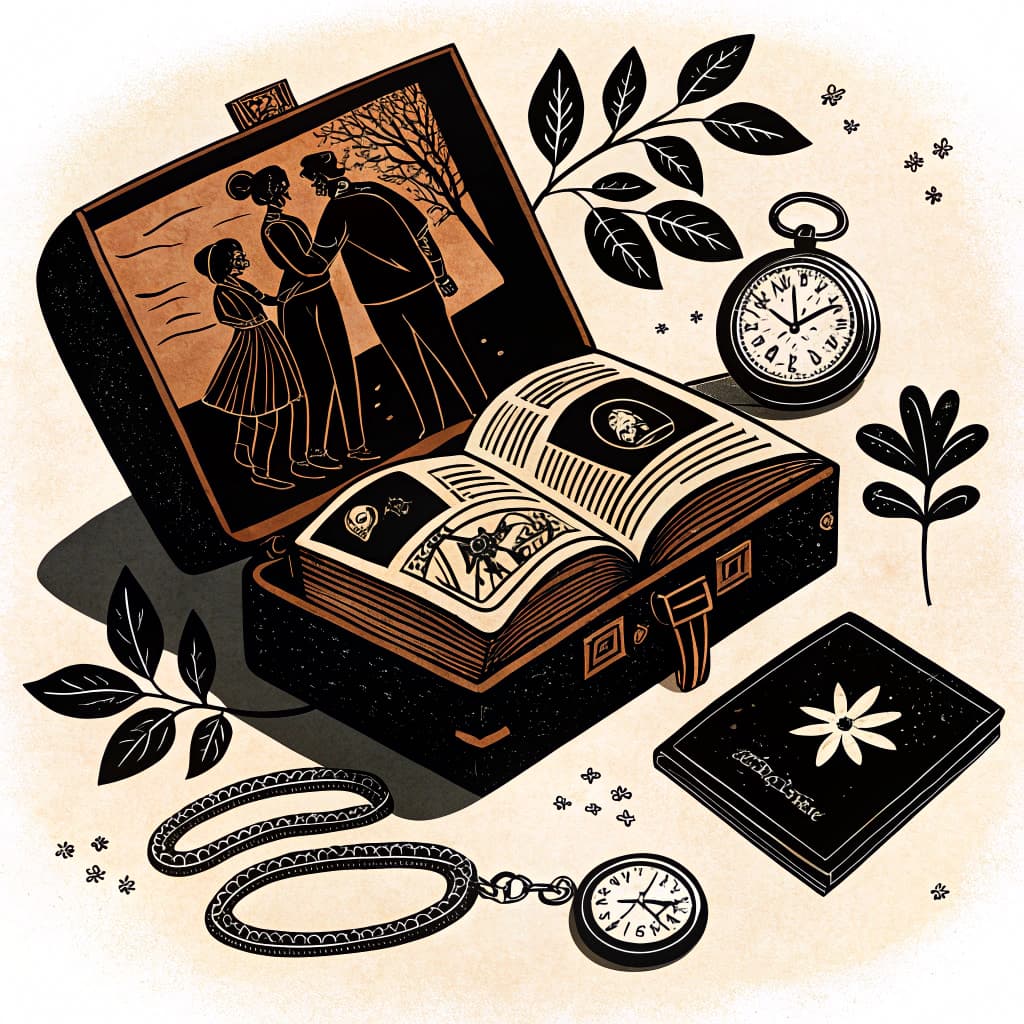
Identifying Primary Sources: Family Photos
Students examine old family photographs to identify clues about the past, such as clothing, objects, and settings.
TL;DR:Active learning works well for this topic because young learners make sense of abstract historical concepts through concrete, visual evidence. Examining family photos in small groups and pairs keeps children engaged while building observation and comparison skills they will use throughout their studies.
About This Topic
In this topic, students examine old family photographs as primary sources to spot clues about the past. They notice details such as clothing styles, hairstyles, toys, vehicles, and home settings that differ from today. Through guided observation, children answer key questions: What do you see? How is it different now? How can you tell its age? Why do these photos help us remember history?
This work meets AC9HASS1S02 by building skills in creating questions and interpreting everyday sources. Students connect personal family stories to concepts of change over time, developing descriptive language and evidence-based reasoning. It lays groundwork for historical inquiry while valuing diverse family backgrounds.
Family photos spark curiosity because they are personal and tangible. Active learning benefits this topic most: when students handle, share, and discuss their own photos in pairs or groups, they spot subtle clues collaboratively, build confidence in sharing evidence, and link abstract ideas of 'the past' to concrete, emotional experiences that stay with them.
Key Questions
- What can you see in an old family photo? How does it look different from photos taken today?
- How can you tell if a photo was taken a long time ago or recently?
- Why are old photos and pictures important for helping us remember the past?
Learning Objectives
- Identify specific details within family photographs, such as clothing, objects, and settings.
- Compare and contrast visual elements in historical family photographs with contemporary photographs.
- Explain how visual clues in photographs indicate the time period in which they were taken.
- Articulate why historical photographs serve as valuable sources for understanding the past.
Before You Start
Why: Students need to be able to look closely at objects and describe what they see before they can identify clues in photographs.
Why: Basic identification of common people and places is necessary to understand the context of a photograph.
Key Vocabulary
| Primary Source | An original object or document created at the time under study. Family photos are primary sources because they are direct evidence from the past. |
| Clue | A piece of evidence or information that helps solve a mystery or understand something. In photos, clues are details like clothing or cars. |
| Setting | The place or type of surroundings where something is situated or takes place. The background of a photo shows its setting. |
| Object | A material thing that can be seen and touched. Objects visible in a photo, like toys or furniture, can tell us about the past. |
Watch Out for These Misconceptions
Common MisconceptionAll old photos are black and white, so colour photos must be new.
What to Teach Instead
Early colour photos exist from the mid-1900s. Hands-on sorting activities with mixed photo sets help students identify multiple clues like clothing and objects, reducing reliance on one feature. Group discussions reveal varied evidence types.
Common MisconceptionPhotos always show exactly what life was like, without changes.
What to Teach Instead
Photos capture moments, often posed or selected. Comparing family photos in pairs prompts students to question what might be missing, building critical source evaluation. Peer sharing uncovers diverse family stories.
Common MisconceptionOnly photos of famous events count as important sources.
What to Teach Instead
Personal photos document everyday history. Student-led show-and-tell with their own photos shows the value of individual stories. This active sharing fosters respect for all family histories.
Active Learning Ideas
See all activities→Mystery Object
Small Groups: Photo Clue Hunt
Provide each group with 3-5 old family photos. Students list five visual clues indicating age, such as long dresses or old cars. Groups compare clues and vote on the oldest photo, then share with the class.
Mystery Object
Pairs: Then and Now Comparison
Pair students to match old photos with modern equivalents, like past toys to today's. They draw one difference and one similarity. Pairs present drawings on a class chart.
Mystery Object
Whole Class: Photo Timeline
Collect class photos and arrange them chronologically on a wall timeline. Students justify positions based on clues. Add labels for shared discussion.
Real-World Connections
- Museum curators, like those at the National Museum of Australia, use historical photographs as primary sources to interpret and display past events and ways of life for the public.
- Genealogists, individuals who research family histories, rely heavily on old photographs to find visual records of ancestors and their environments, helping to piece together family stories.
Assessment Ideas
Provide students with a printed old family photo (or project one). Ask them to write down three specific 'clues' they see in the photo and one sentence explaining what each clue tells them about the past.
Ask students to bring in an old family photo (if comfortable). In small groups, have them share their photo and point out one detail that looks different from today. Prompt: 'What does this difference tell us about how things have changed?'
Show students two photos, one clearly old and one modern. Ask them to hold up one finger for 'old' clues and two fingers for 'new' clues as you point to different elements (e.g., clothing, car, building). This checks their ability to differentiate.
Frequently Asked Questions
How do family photos teach primary sources in Year 1 HASS?
What active learning strategies work best for this topic?
How to include students without family photos?
How does this topic connect to family history unit goals?
More in Family History and Traditions
Constructing Family Trees
Students create simple family trees, identifying immediate and extended family members and their relationships.
8 methodologies
Sharing Family Stories
Students share and listen to stories about their family's past, focusing on significant events or memories.
8 methodologies
Exploring Family Traditions
Students identify and describe various family traditions, including celebrations, customs, and daily routines.
8 methodologies
Origins of Family Migration
Students investigate where their families originated and the reasons for their journeys to Australia or other locations.
8 methodologies
Commemorating Special Events
Students learn about how families and communities commemorate important events through holidays, anniversaries, and memorials.
8 methodologies
Understanding Personal Timelines
Students create simple personal timelines, marking significant events in their own lives from birth to the present.
8 methodologies