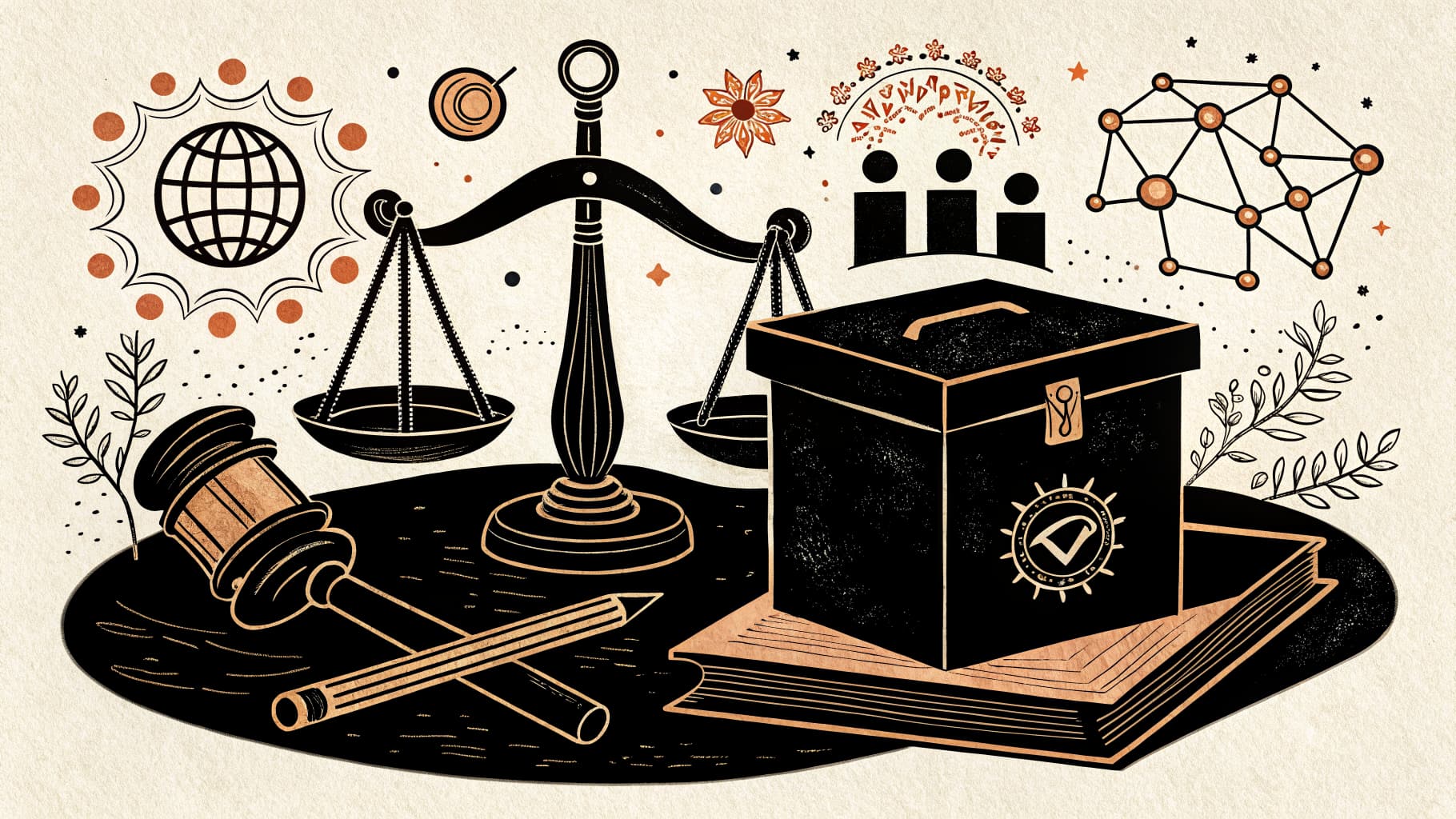
Separation of Powers: Legislature, Executive, Judiciary
Students will explore the principle of separation of powers and its application in the Australian system.
TL;DR:Active learning helps students grasp the separation of powers because these roles are dynamic rather than abstract. When students act out passing a bill or analyze real cases, they see how each branch’s work depends on the others, making the system’s purpose and protections clearer and more memorable.
About This Topic
The principle of separation of powers divides authority in Australia's parliamentary democracy among three independent branches: the legislature, Parliament, which makes laws through debate and voting; the executive, the Prime Minister, Cabinet, and public service, which implements laws and manages government operations; and the judiciary, courts led by the High Court, which interprets laws and ensures justice. Year 8 students differentiate these roles, analyze how separation prevents power concentration, and evaluate checks and balances such as Parliament's approval of budgets or judicial review of executive actions.
Aligned with AC9C8K01, this topic builds on prior learning about democratic processes and connects to real-world examples like High Court challenges to legislation. Students develop skills in critical analysis by examining how these branches interact within the Constitution, promoting understanding of Australia's rule of law and federal structure.
Active learning excels for this abstract concept. Role-plays where students simulate bill passage or court rulings clarify overlaps and tensions between branches. Collaborative debates on case studies like the Mabo decision make checks and balances tangible, helping students internalize how separation safeguards democracy.
Key Questions
- Differentiate between the roles of the legislature, executive, and judiciary.
- Analyze how the separation of powers prevents the abuse of authority.
- Evaluate the effectiveness of checks and balances in Australian democracy.
Learning Objectives
- Differentiate the distinct functions of the legislature, executive, and judiciary in Australia's parliamentary system.
- Analyze how the separation of powers, as outlined in the Australian Constitution, prevents the concentration of governmental authority.
- Evaluate the effectiveness of specific checks and balances, such as parliamentary oversight or judicial review, in safeguarding Australian democracy.
- Compare the roles and responsibilities of the Prime Minister, the High Court, and the Parliament of Australia.
- Explain how the High Court interprets laws and resolves disputes between government branches.
Before You Start
Why: Students need a foundational understanding of how Australia is governed, including the roles of Parliament and the Prime Minister, before exploring the division of powers.
Why: Understanding that laws govern society and are created through a formal process is essential for grasping how different branches interact with the law.
Key Vocabulary
| Legislature | The branch of government responsible for making laws. In Australia, this is the Parliament, comprising the House of Representatives and the Senate. |
| Executive | The branch of government responsible for implementing and administering the laws passed by the legislature. This includes the Prime Minister, Cabinet, and public service. |
| Judiciary | The branch of government responsible for interpreting laws and administering justice through the court system. In Australia, this is headed by the High Court. |
| Separation of Powers | A principle of government that divides state power among distinct branches to prevent any one branch from becoming too powerful and to ensure accountability. |
| Checks and Balances | Mechanisms within a government system that allow each branch to limit the powers of the other branches, ensuring a balance of authority. |
Watch Out for These Misconceptions
Common MisconceptionThe three branches operate in complete isolation with no interaction.
What to Teach Instead
Branches constantly check each other, such as courts overturning laws or Parliament questioning ministers. Role-play simulations help students experience these overlaps, revealing how interdependence strengthens democracy rather than weakens it.
Common MisconceptionThe executive branch, led by the Prime Minister, holds ultimate power over the others.
What to Teach Instead
The Prime Minister leads the executive but faces constraints from legislation and judicial oversight. Debates and card sorts prompt students to map these limits, correcting views of unchecked authority through peer discussions.
Common MisconceptionJudges make new laws rather than interpret existing ones.
What to Teach Instead
Judiciary applies and interprets laws via precedent, not creates them. Analyzing real cases in groups helps students distinguish interpretation from legislation, building accurate mental models of judicial restraint.
Active Learning Ideas
See all activities→Simulation Game
Role-Play Simulation: Passing a Bill
Assign students to roles in legislature, executive, or judiciary. Legislature debates and votes on a sample bill; executive proposes amendments; judiciary reviews for constitutionality. Groups present outcomes and reflect on interactions. Debrief as a class.
Simulation Game
Card Sort: Branch Responsibilities
Prepare cards with actions like 'declare war' or 'interpret Constitution.' Students sort into legislature, executive, judiciary piles, then justify placements in pairs. Discuss edge cases like Governor-General's role.
Simulation Game
Checks and Balances Debate
Divide class into three teams, one per branch. Present scenarios like executive overreach; teams argue checks they can apply. Vote on most effective balance and record in shared chart.
Real-World Connections
- Lawyers working in government departments, such as the Attorney-General's Department, draft legislation for the Parliament and advise the executive on legal matters, directly engaging with the legislature and executive functions.
- Journalists reporting on political events often analyze High Court cases, explaining to the public how judicial decisions impact government policy and the interpretation of laws, connecting the judiciary to the other branches.
- Citizens can observe parliamentary question time, where members of the legislature scrutinize the actions of the executive government, demonstrating a key check and balance in action.
Assessment Ideas
Present students with three brief scenarios describing government actions. Ask them to identify which branch (legislature, executive, or judiciary) is primarily responsible for each action and briefly explain why. For example: 'The Parliament passes a new tax law.' or 'The High Court rules on the constitutionality of a government regulation.'
Pose the question: 'Imagine a situation where the Prime Minister also had the power to interpret laws. What problems could arise from this concentration of power?' Facilitate a class discussion, guiding students to connect their answers to the principle of separation of powers and the role of the judiciary.
On a small slip of paper, ask students to write down one example of a check and balance in the Australian system. Then, ask them to explain in one sentence how this check and balance helps prevent the abuse of power.
Frequently Asked Questions
How does separation of powers work in Australian government?
What are checks and balances in Australian democracy?
How can active learning help teach separation of powers?
Why is separation of powers important for Year 8 Civics?
More in The Machinery of Democracy
Historical Roots of Australian Constitution
Students will analyze the historical influences and key principles that shaped the Australian Constitution.
8 methodologies
Structure and Division of Powers
Students will explore the chapters and sections of the Constitution, focusing on the division of powers.
8 methodologies
Amending the Constitution: Referendums
Students will investigate the process of constitutional change through referendums and historical examples.
8 methodologies
Federal Government: Powers and Responsibilities
Students will identify the distinct responsibilities and services provided by the federal government.
8 methodologies
State and Territory Governments: Roles
Students will identify the distinct responsibilities and services provided by state and territory governments.
8 methodologies
Local Government: Community Services
Students will identify the distinct responsibilities and services provided by local governments.
8 methodologies