Checks and Balances in Australian Government
Students will analyze how the legislative, executive, and judicial branches provide checks and balances on government power.
TL;DR:Active learning helps students grasp checks and balances because the concept relies on interaction between roles and processes. Acting out scenarios, sorting mechanisms, and debating outcomes make abstract constitutional powers visible and memorable for learners.
About This Topic
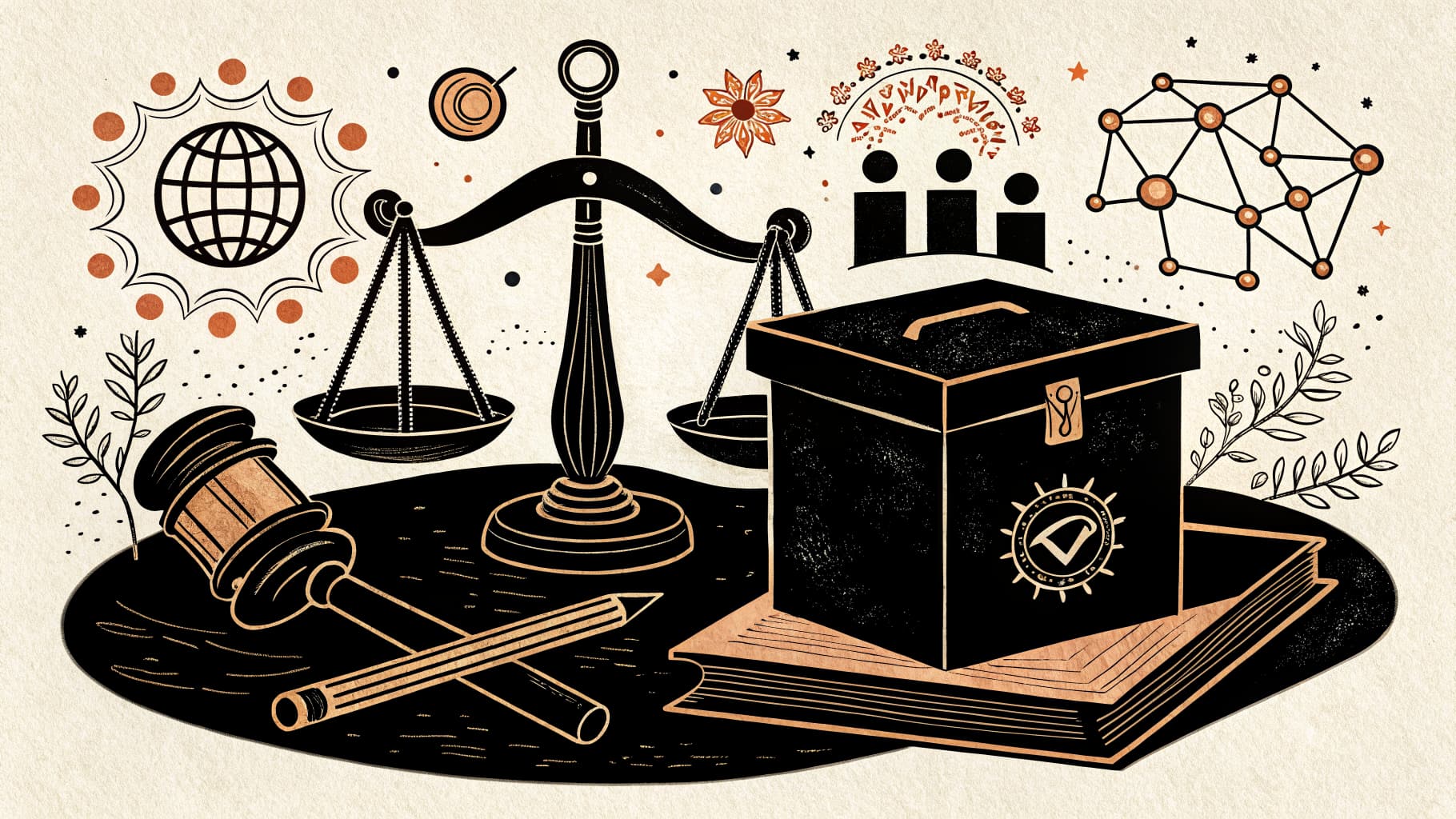
Australia's government divides power among three branches to prevent any one from dominating: the legislative branch, Parliament, makes laws; the executive branch, led by the Prime Minister and Cabinet, implements them; and the judicial branch, including the High Court, interprets laws and resolves disputes. Checks and balances operate through mechanisms like Parliament scrutinising executive actions, courts reviewing laws for constitutionality, and the Governor-General's role in royal assent. Students explore how these features, rooted in the Australian Constitution, protect citizen rights and maintain democratic stability.
This content supports AC9C7K01 and the unit on the Australian Constitution and Parliament. It addresses key questions by clarifying branch roles, explaining separation of powers, and evaluating system effectiveness. Students connect abstract ideas to real events, such as High Court challenges to legislation, fostering civic awareness.
Active learning suits this topic well. Role-plays and simulations allow students to enact branch interactions, revealing tensions and resolutions in practice. Collaborative tasks build skills in analysis and debate, while hands-on models make constitutional principles concrete and relevant to everyday citizenship.
Key Questions
- Explain how the separation of powers prevents the concentration of authority.
- Differentiate the specific roles and responsibilities of each branch of government.
- Assess the effectiveness of checks and balances in protecting citizen rights.
Learning Objectives
- Analyze the distinct functions of the legislative, executive, and judicial branches of the Australian government.
- Compare and contrast how the High Court and Parliament exercise checks and balances on government power.
- Evaluate the effectiveness of specific constitutional mechanisms in preventing the concentration of governmental authority.
- Explain how the separation of powers, as established by the Constitution, protects individual liberties.
- Identify instances where the executive branch's actions are scrutinised by the legislative branch.
Before You Start
Why: Students need a foundational understanding of the existence of different levels and branches of government in Australia before analysing their specific roles and interactions.
Why: Understanding that Parliament makes laws is essential for grasping how other branches check this legislative power.
Key Vocabulary
| Separation of Powers | The division of governmental responsibilities into distinct branches: legislative, executive, and judicial. This structure aims to prevent any single branch from accumulating too much power. |
| Legislative Branch | The branch responsible for making laws, which in Australia is Parliament (including the House of Representatives and the Senate). |
| Executive Branch | The branch responsible for implementing and administering laws, led by the Prime Minister and Cabinet. |
| Judicial Branch | The branch responsible for interpreting laws and administering justice, headed by the High Court of Australia. |
| Checks and Balances | Constitutional mechanisms that allow each branch of government to limit the powers of the other branches, ensuring no single branch becomes too dominant. |
Watch Out for These Misconceptions
Common MisconceptionThe Prime Minister controls all branches.
What to Teach Instead
The executive proposes but Parliament must approve laws, and courts can overturn actions. Role-plays demonstrate these limits, as students experience vetoes and reviews, correcting overestimations of executive power through direct enactment.
Common MisconceptionJudges make new laws.
What to Teach Instead
Courts interpret existing laws and check constitutionality, not create them. Card sorts and discussions help students distinguish roles, with peer teaching reinforcing accurate boundaries via collaborative clarification.
Common MisconceptionChecks and balances make government too slow.
What to Teach Instead
Delays protect against hasty decisions harming rights. Debates reveal trade-offs, as students argue pros and cons, building nuanced views through evidence-based group exchanges.
Active Learning Ideas
See all activities→Concept Mapping
Role-Play: Bill Through Branches
Divide class into three groups representing legislative, executive, and judicial branches. Groups draft, amend, and review a sample bill, applying checks like vetoes or judicial review. Debrief with whole-class discussion on power limits.
Concept Mapping
Checks and Balances Card Sort
Provide cards listing actions, people, and powers. Students in pairs sort them into branch categories and identify checks between branches. Follow with sharing examples on a class chart.
Jigsaw
Branch Roles
Assign expert roles within small groups for one branch's responsibilities and checks. Experts then regroup to teach peers, creating a class mural of interactions. End with quiz on key examples.
Real-World Connections
- Citizens can observe checks and balances when the High Court reviews a new law passed by Parliament to ensure it aligns with the Australian Constitution. For example, the High Court might rule a law invalid if it oversteps Parliament's constitutional powers.
- The Senate's role in scrutinising government legislation provides a check on the executive. For instance, Senate committees frequently hold inquiries into proposed bills, questioning ministers and public servants, which can lead to amendments before a bill becomes law.
Assessment Ideas
Present students with three scenarios, each describing an action by one branch of government. Ask students to identify which branch is acting and to explain what specific check or balance might be applied to that action. For example, 'The Prime Minister announces a new policy without consulting Parliament.' Students should identify the executive branch and suggest parliamentary scrutiny.
Pose the question: 'Imagine a situation where the executive government wants to pass a law that significantly limits freedom of speech. How could the legislative and judicial branches, through their roles and checks and balances, prevent this from happening?' Facilitate a class discussion, guiding students to reference specific constitutional powers.
Ask students to write down one specific example of a check or balance in the Australian system and briefly explain how it prevents the concentration of power. For instance, 'The Governor-General must give Royal Assent to bills passed by Parliament. This is a check because it ensures Parliament's laws are formally approved.'
Frequently Asked Questions
What are the roles of Australia's three government branches?
How does separation of powers work in Australia?
How can active learning help students understand checks and balances?
What are common misconceptions about Australian checks and balances?
More in The Australian Constitution and Parliament
Origins of the Australian Constitution
Students will explore the historical context, key figures, and foundational ideas that led to the drafting of the Australian Constitution.
8 methodologies
Constitutional Principles: Rule of Law & Democracy
Students will examine the core principles embedded in the Constitution, such as the rule of law, democracy, and federalism.
8 methodologies
Structure of the Legislative Branch: Parliament
Students will analyze the structure and primary functions of the legislative branch (Parliament) in Australia.
8 methodologies
Roles in Parliament: Members and Senators
Students will investigate the specific roles and responsibilities of elected members in the House of Representatives and Senators.
8 methodologies
Structure of the Executive Branch: Cabinet & PM
Students will investigate the roles and responsibilities of the executive branch, including the Prime Minister and Cabinet.
8 methodologies
Structure of the Judicial Branch: Courts
Students will be introduced to the general function of courts in resolving disputes and interpreting laws at a basic level.
8 methodologies