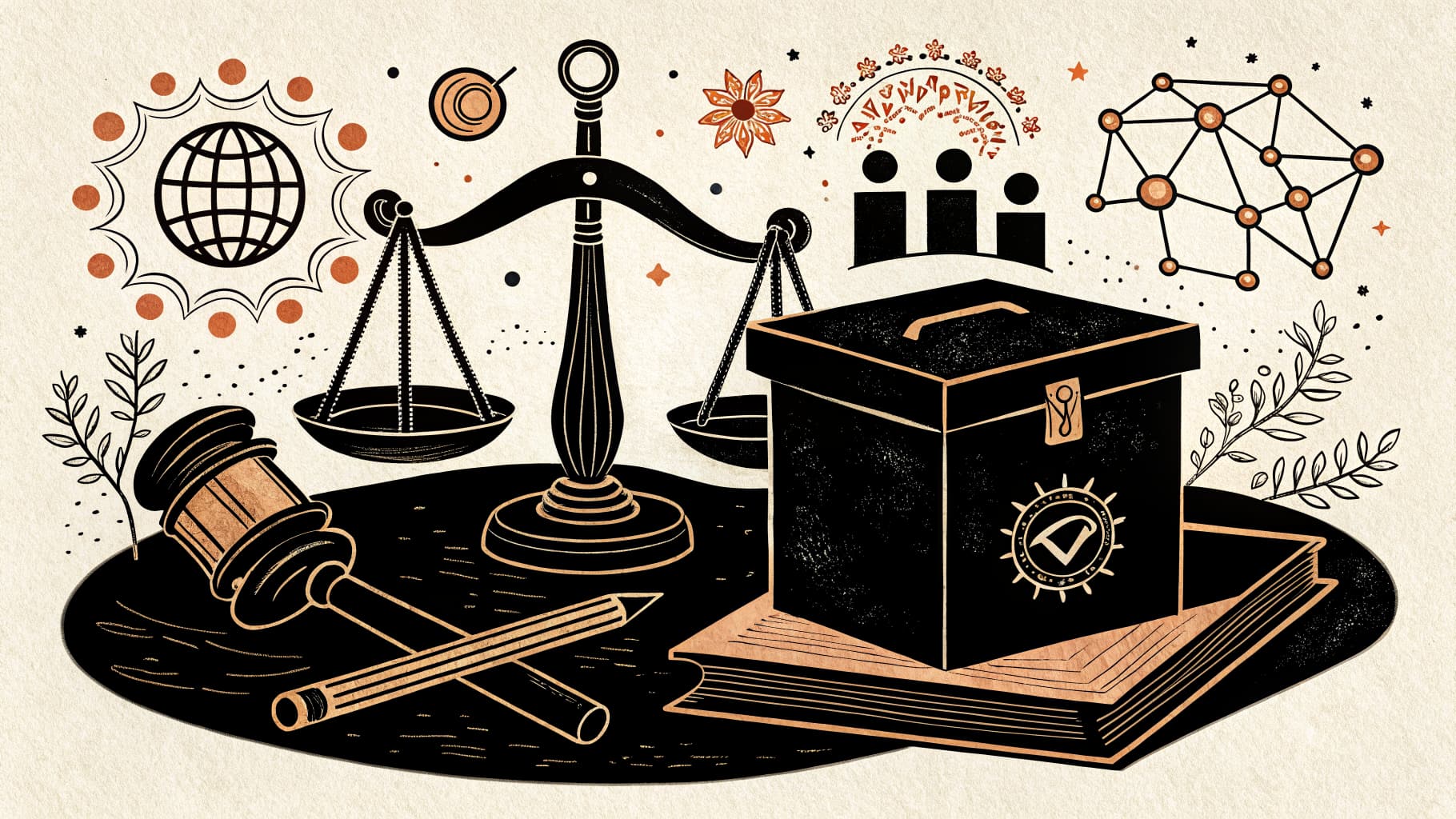
Why Rules Matter: School & Community
Students explore why rules and laws are important in their school and local community, and how they help everyone live together safely and fairly.
TL;DR:Active learning works because Year 6 students grasp abstract governance ideas best when they experience them firsthand. Simulations and discussions make the Constitution’s role tangible, helping students see how rules shape fairness and order in both school and society.
About This Topic
The Australian Constitution serves as the foundational rule book for our nation, establishing the framework for how Australia is governed. For Year 6 students, this topic is about understanding the 'DNA' of our democracy, including the roles of the Queen's representative, the Senate, and the House of Representatives. It explains how power is shared between the Commonwealth and the states, ensuring that no single body has absolute control. This study aligns with AC9HASS6K01, focusing on the key institutions of Australia’s democratic system.
By exploring the Constitution, students begin to see how historical decisions from the 1890s still impact their lives today. It provides a vital lens through which to view contemporary debates about constitutional recognition for First Nations peoples and the potential for Australia to become a republic. This topic comes alive when students can physically model the patterns of power and debate the merits of changing the rules through a referendum simulation.
Key Questions
- Explain the primary reasons for having rules in school and laws in the community.
- Analyze how rules and laws contribute to safety and fairness for all individuals.
- Predict the societal impact if rules and laws were consistently ignored.
Learning Objectives
- Explain the primary purposes of rules within a school setting and laws within a community.
- Analyze how specific rules and laws contribute to the safety and fairness experienced by individuals in their local community.
- Predict the potential consequences for a community if its rules and laws were consistently disregarded.
- Identify examples of rules in school and laws in the community that promote fairness and safety.
Before You Start
Why: Students need a foundational understanding of how people interact in groups and the basic concept of having responsibilities within those groups.
Why: Recognizing adults who have authority (parents, teachers) helps students understand the concept of those who create and enforce rules.
Key Vocabulary
| Rule | A guideline or instruction that tells people how to behave in a particular situation or place, often set by a school or organization. |
| Law | A system of rules created and enforced by social or governmental institutions to regulate behavior, ensuring order and justice. |
| Fairness | The quality of treating people equally and without prejudice, ensuring everyone has the same opportunities and is subject to the same standards. |
| Safety | The condition of being protected from harm or danger, often achieved through adherence to rules and laws. |
| Community | A group of people living in the same place or having a particular characteristic in common, such as a neighborhood or town. |
Watch Out for These Misconceptions
Common MisconceptionThe Constitution is a list of all Australian laws.
What to Teach Instead
The Constitution is actually a framework that explains how laws can be made and who has the power to make them, rather than a list of every individual law. Using a 'rule book for the rule makers' analogy in peer discussions helps clarify this distinction.
Common MisconceptionThe Prime Minister can change the Constitution alone.
What to Teach Instead
Only the Australian people can change the Constitution through a referendum. Active simulations of the voting process quickly show students that the executive branch is bound by the will of the voters.
Active Learning Ideas
See all activities→Simulation Game
The Referendum Process
Students propose a simple change to a school rule and follow the formal referendum process. They must achieve a 'double majority' by winning the overall vote and a majority of 'states' (table groups) to see how difficult it is to change the Constitution.
Stations Rotation
Constitutional Powers
Set up stations representing different sections of the Constitution, such as Section 51 (Legislative Powers) and Section 128 (Mode of Altering the Constitution). Students move in groups to decode what each section means for everyday Australians using simplified legal text.
Think-Pair-Share
The Rule Book
Students consider why a country needs a written set of rules rather than just letting leaders decide as they go. They share their ideas with a partner before discussing as a class how the Constitution protects the rights of smaller states.
Real-World Connections
- Local council members, like those in the City of Sydney, regularly debate and vote on new bylaws regarding public spaces, such as park opening hours or waste disposal regulations, to ensure community safety and amenity.
- School principals and teachers create and enforce school rules, such as the 'no running in the corridors' policy at Melbourne Grammar School, to prevent accidents and maintain an orderly learning environment.
- Police officers in Perth uphold traffic laws, like speed limits on Kwinana Freeway, to prevent accidents and ensure the safety of all road users.
Assessment Ideas
Pose the question: 'Imagine our school had no rules about using the playground equipment. What might happen during recess?' Guide students to discuss specific safety risks and fairness issues that could arise.
Ask students to write on a slip of paper: One rule at school and why it matters for safety or fairness. One law in our community and why it matters for safety or fairness.
Present students with a scenario, e.g., 'A student is consistently taking other students' pencils without asking.' Ask them to identify if this is a rule or law violation, and explain how addressing it promotes fairness.
Frequently Asked Questions
How can active learning help students understand the Constitution?
Why is the Constitution important for Year 6 students?
Does the Australian Constitution include a Bill of Rights?
What is the role of the High Court regarding the Constitution?
More in The Pillars of Democracy
Making Rules: Home & Classroom
Students investigate how rules are made in their school and at home, identifying who makes them and why they are important.
8 methodologies
Three Levels of Government: An Overview
Students map the distinct responsibilities and services provided by each of the three levels of government in Australia.
8 methodologies
Government in Action: Interacting Levels
Students explore how federal, state, and local governments interact and resolve disputes.
8 methodologies
Freedom and Equality: Core Democratic Values
Students explore the core values of freedom and equality, examining their meaning and application in Australian society.
8 methodologies
The Rule of Law: Fairness for All
Students investigate the principle of the rule of law and its role in ensuring a fair and just society.
8 methodologies
Government's Main Jobs: Making Decisions
Students identify the main jobs of different parts of government (e.g., making laws, running services, making decisions) in a simplified way.
8 methodologies