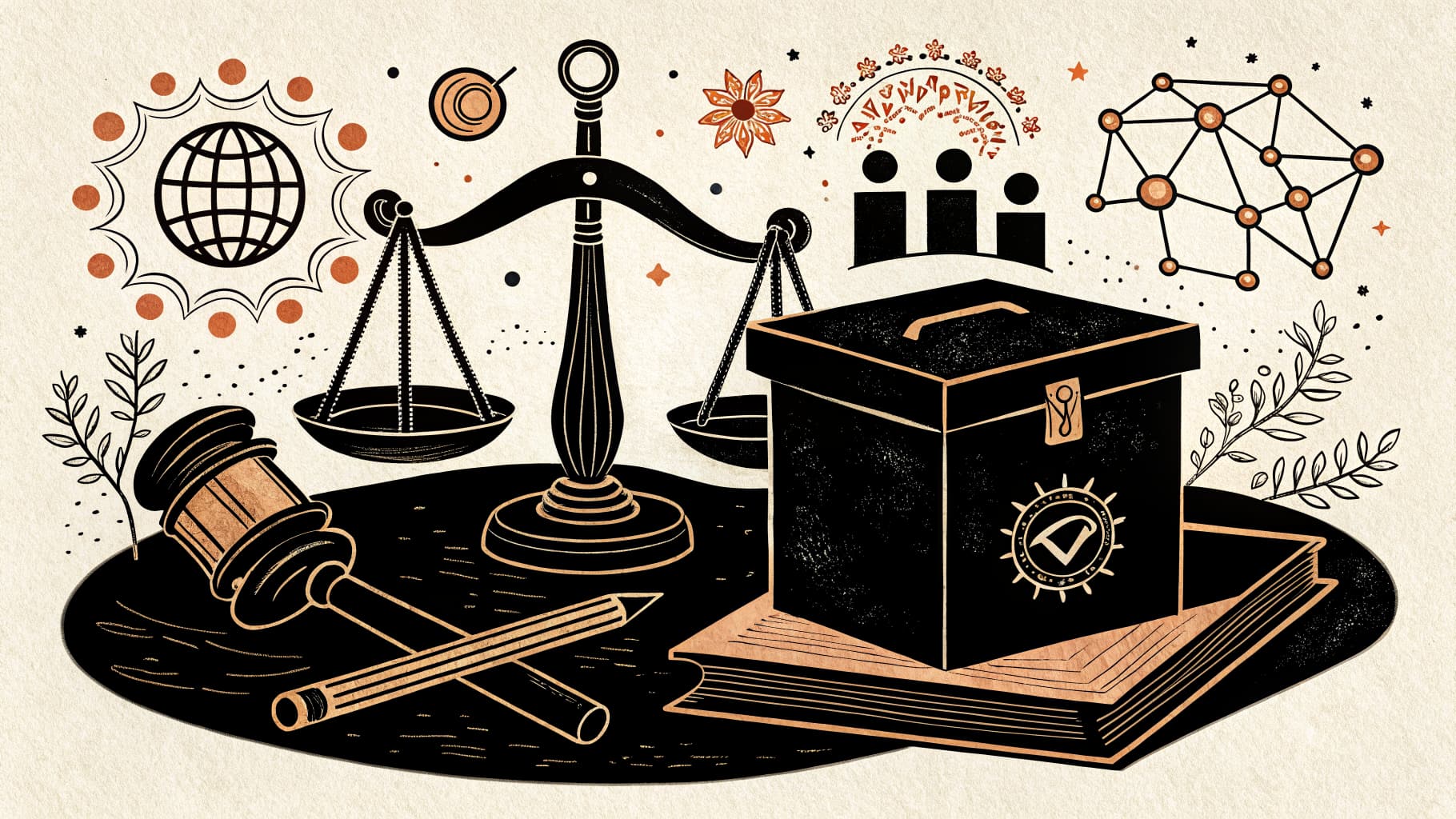
Voting: Our Democratic Responsibility
Students learn about the importance of voting in a democracy as a way for citizens to choose their leaders and have a say in how their community is run.
TL;DR:Active learning works because voting is a lived experience, not just an idea. When students simulate real processes like the UN Model Committee, they feel the weight of collective decision-making. This builds empathy and clarifies why their role as citizens matters beyond the classroom.
About This Topic
Global citizenship involves understanding that Australia is part of a wider world and that our actions have international impacts. This topic covers Australia's participation in global organizations like the United Nations and the Commonwealth, as well as our role in international agreements on climate change, trade, and human rights. For Year 6 students, it is about developing a global perspective and recognizing their shared responsibility for the planet. This aligns with AC9HASS6K04, focusing on Australia’s international obligations.
Students explore how global issues like plastic pollution or regional security require countries to work together. They also look at Australia's relationship with our Asia-Pacific neighbors and how we provide aid and support during regional crises. This topic is best taught through collaborative investigations and simulations where students represent different countries trying to solve a common problem.
Key Questions
- Explain the significance of voting as a civic responsibility in a democracy.
- Analyze how individual votes contribute to collective decision-making.
- Justify the importance of citizen participation in elections.
Learning Objectives
- Explain the function of voting as a core responsibility in a democratic society.
- Analyze how individual votes aggregate to influence collective decision-making processes.
- Justify the importance of citizen participation in electoral processes.
- Compare the roles of citizens and elected officials in a representative democracy.
Before You Start
Why: Students need a foundational understanding of Australia's system of government before exploring the specific responsibility of voting within it.
Why: Prior knowledge of general rights and responsibilities helps students understand voting as a specific civic duty.
Key Vocabulary
| Democracy | A system of government where citizens hold power, typically by electing representatives to make decisions on their behalf. |
| Civic Responsibility | An obligation or duty that citizens have towards their community and country, such as voting or obeying laws. |
| Suffrage | The right to vote in political elections. |
| Electorate | All the people who are entitled to vote in an election. |
| Representation | The action of speaking or acting on behalf of someone or the state of being so represented. |
Watch Out for These Misconceptions
Common MisconceptionGlobal citizenship means you don't care about your own country.
What to Teach Instead
Global citizenship is about having 'nested identities', being a proud Australian while also caring about the world. 'Identity Circles' activities help students see how these different roles can coexist.
Common MisconceptionAustralia is too small to make a difference in the world.
What to Teach Instead
Australia is a significant regional power and a leader in many international forums. Investigating Australia's role in specific global treaties helps students see our actual influence.
Active Learning Ideas
See all activities→Simulation Game
UN Model Committee
Students are assigned different countries and must work together to draft a 'resolution' on a global issue like protecting the oceans. They must negotiate and find a solution that most countries can agree on.
Inquiry Circle
Australia's Neighbors
Groups research Australia's relationship with one Asia-Pacific neighbor (e.g., Indonesia, Fiji, Japan). They create a digital presentation showing how the two countries help each other through trade or aid.
Think-Pair-Share
Global Problems, Local Actions
Students identify a global problem (like climate change) and brainstorm one thing they can do at school that helps solve it. They share how local actions contribute to global citizenship.
Real-World Connections
- Local council elections determine who represents your community on issues like park maintenance, library services, and local road repairs. Your vote helps choose the individuals who make these decisions.
- The Australian Electoral Commission (AEC) manages federal elections, ensuring fair and free voting processes. Understanding voting is crucial for participating in the selection of members of parliament who create national laws.
- Historical movements, like the fight for women's suffrage, demonstrate the long and ongoing struggle for the right to vote. Learning about these events highlights the value and responsibility associated with this democratic right.
Assessment Ideas
Pose the question: 'Imagine our class needs to decide on a new rule for the playground. How could we use voting to make this decision fairly? What makes voting a good way to decide?' Facilitate a brief class discussion, guiding students to connect classroom voting to democratic principles.
Provide students with a short scenario: 'A new community centre is being planned. Citizens can vote for one of three proposed designs. Why is it important for citizens to vote on this?' Ask students to write one or two sentences explaining the significance of their vote in this scenario.
On a small card, ask students to write: 1. One reason voting is a civic responsibility. 2. One way their vote contributes to the community's decisions. Collect these as students leave to gauge understanding of the core concepts.
Frequently Asked Questions
What are the best hands-on strategies for teaching global citizenship?
What is the United Nations (UN)?
How does Australia help other countries?
What does it mean to be a 'Global Citizen'?
More in Rights and Responsibilities
Understanding Basic Human Rights
Students identify and discuss basic human rights and freedoms that all people should have, such as the right to an education, safety, and a voice.
8 methodologies
The Universal Declaration of Human Rights
Students explore the UDHR as a foundational document for international human rights standards.
8 methodologies
Jury Service: A Cornerstone of Justice
Students learn about the importance of jury service as a civic responsibility and its role in the justice system.
8 methodologies
Taxation: Funding Our Future
Students explore why citizens pay taxes and how these funds contribute to public services and infrastructure.
8 methodologies
Australia's Place in the World
Students explore how Australia connects with and helps other countries, especially those in our region, through trade, aid, and cultural exchange.
8 methodologies
Global Challenges: Australia's Role
Students explore how Australia contributes to solving global issues such as climate change, poverty, and human rights abuses.
8 methodologies