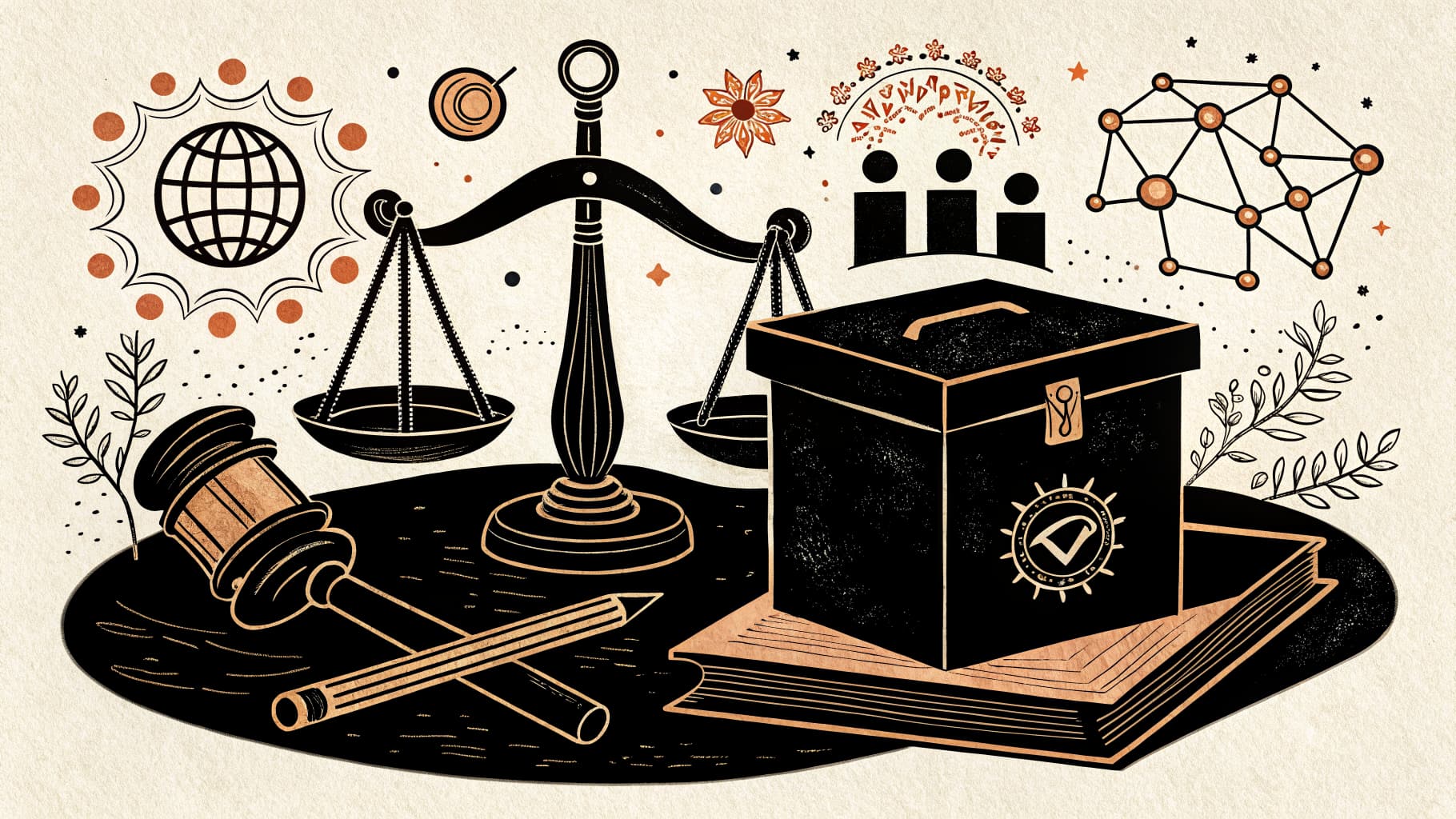
Balancing Rights and Responsibilities
Reflecting on the inherent tension between individual rights and collective responsibilities in a democratic society.
TL;DR:Active learning turns abstract tensions between rights and responsibilities into concrete civic skills students can practice. Role-plays and debates let students feel the push-and-pull of democracy instead of just reading about it. When students step into roles and defend positions, the balance becomes visible and memorable.
About This Topic
Balancing rights and responsibilities forms a core principle of Australian democracy, where individual freedoms meet collective needs. Year 5 students explore scenarios like freedom of speech conflicting with rules against hate speech, or personal choices in public health measures versus community safety. They analyze how these tensions arise in everyday civic life and connect to laws shaped by community values.
Aligned with AC9HASS5K04, this topic builds analytical skills as students evaluate government roles, such as parliament passing laws or courts interpreting them to protect vulnerable groups. Real Australian examples, including anti-discrimination acts or emergency powers during bushfires, help students justify decisions that sometimes prioritize the common good. Discussions reveal how citizens influence this balance through voting and advocacy.
Active learning excels with this topic because role-plays and debates let students embody conflicting perspectives. They practice negotiation and empathy in safe settings, turning abstract civic concepts into personal insights that stick long-term and prepare them for active citizenship.
Key Questions
- Analyze scenarios where individual rights might conflict with community responsibilities.
- Evaluate the role of government in balancing competing rights and responsibilities.
- Justify decisions that prioritize collective well-being over individual freedoms in specific contexts.
Learning Objectives
- Analyze scenarios to identify conflicts between individual rights and community responsibilities.
- Evaluate the role of government in mediating competing rights and responsibilities using Australian examples.
- Justify decisions that balance individual freedoms with the collective well-being in specific civic contexts.
- Compare the impact of different laws on balancing rights and responsibilities within Australian society.
Before You Start
Why: Students need a basic understanding of how Australia is governed and the concept of citizen participation to grasp the nuances of rights and responsibilities.
Why: A foundational understanding of why rules exist and how they apply to behavior is necessary before analyzing the tension between individual freedoms and societal obligations.
Key Vocabulary
| Right | A freedom or entitlement that is protected by law, allowing individuals to act or be treated in a certain way. |
| Responsibility | A duty or obligation that individuals have towards others or society, often involving actions or behaviors. |
| Democracy | A system of government where citizens hold power, typically through elected representatives, and where rights and freedoms are generally protected. |
| Common Good | The welfare or interests of all members of a community or society, often requiring individuals to consider collective needs. |
| Compromise | An agreement reached by each side making concessions, often necessary when rights and responsibilities conflict. |
Watch Out for These Misconceptions
Common MisconceptionIndividual rights are absolute and override all responsibilities.
What to Teach Instead
Rights in Australia come with limits to protect others, as outlined in laws like the Racial Discrimination Act. Role-playing scenarios helps students see trade-offs, as they negotiate outcomes and realize no right exists in isolation. Group discussions clarify how courts balance these daily.
Common MisconceptionGovernment always favors individual freedoms over community needs.
What to Teach Instead
Governments mediate through democratic processes, often prioritizing collective well-being in crises like pandemics. Simulations of policy-making show students how public input shapes decisions. Active debates reveal the nuance, reducing black-and-white views.
Common MisconceptionResponsibilities only apply to adults, not children.
What to Teach Instead
All Australians, including students, share civic responsibilities like respecting rules at school. Analyzing school scenarios in groups builds ownership. Peer teaching during sorts reinforces that rights and duties start young.
Active Learning Ideas
See all activities→Philosophical Chairs
Role-Play: Civic Conflict Scenarios
Distribute scenario cards describing rights-responsibilities clashes, such as protesting noisily near a hospital. In small groups, students assign roles to individuals involved, act out the scenario for 5 minutes, then negotiate a resolution. Groups share outcomes with the class for comparison.
Philosophical Chairs
Debate Pairs: Collective vs Individual
Pair students and assign positions on prompts like 'Should schools mandate uniforms to promote equality?' Each pair prepares 2-minute arguments using fact sheets on rights. Hold a rotating debate where pairs face off, then vote on the best balance.
Philosophical Chairs
Policy Proposal Stations
Set up stations with issues like social media rules or park usage. Small groups review evidence at each, propose a government policy balancing rights and responsibilities, and post on a class chart. Rotate stations and refine proposals based on peer feedback.
Real-World Connections
- During bushfire season in Australia, governments may implement fire bans (a community responsibility) that restrict individual actions like barbecuing, balancing public safety with personal freedoms.
- The Australian Parliament debates and passes laws, such as the Racial Discrimination Act 1975, to protect individual rights while also setting community standards for behavior.
- Local councils in cities like Melbourne might set noise restrictions for events, balancing the right to public gathering with residents' right to peace and quiet.
Assessment Ideas
Present students with a scenario: 'A student wants to wear a costume to school that some other students find frightening. What right does the student have? What responsibility does the school have? What might be a fair compromise?' Facilitate a class discussion, guiding students to articulate both sides and potential solutions.
Provide students with a worksheet listing 3-4 short scenarios (e.g., loud music late at night, protesting in a public park, choosing not to vaccinate). Ask students to identify the potential right and the potential responsibility in each case, and briefly explain who might need to balance them.
Ask students to write down one example of a right they have in Australia and one responsibility they have as a member of their community. Then, ask them to explain in one sentence why balancing these two is important for society.
Frequently Asked Questions
What Australian examples illustrate balancing rights and responsibilities?
How does the government balance competing rights in Australia?
What active learning strategies work best for this topic?
How can Year 5 students analyze rights-responsibilities conflicts?
More in Rights and Responsibilities
Universal Human Rights Principles
Identifying the core principles of human rights as outlined in international declarations and treaties.
8 methodologies
Our Rights in Australia: Being Fair to Everyone
Exploring basic rights that Australians have, such as the right to be treated fairly, to go to school, and to express opinions, focusing on practical examples rather than legal frameworks.
8 methodologies
Anti-Discrimination Laws
Investigating laws designed to prevent discrimination based on race, gender, religion, and other attributes.
8 methodologies
Civic Duties: Jury Service & Voting
Discussing the civic obligations of jury duty and voting, and their importance for a functioning democracy.
8 methodologies
Paying Taxes: Funding Public Services
Understanding the obligation to pay taxes and how these funds contribute to public services and infrastructure.
8 methodologies
Community Service & Volunteering
Exploring the importance of voluntary community service and its role in building a strong society.
8 methodologies