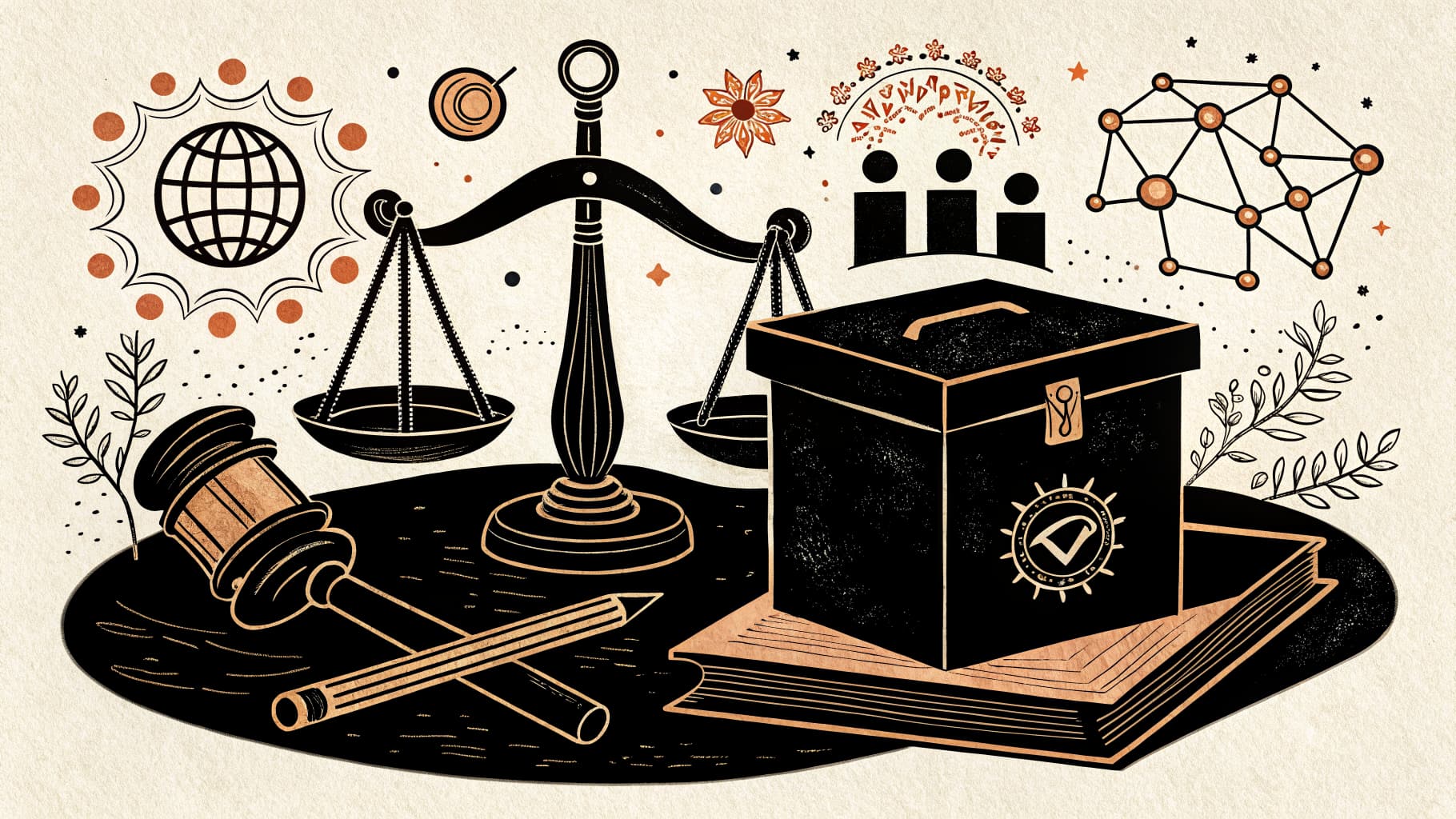
Voting and Elections: A Simple Introduction
Understanding the basic concept of voting and why it's important for choosing leaders in a democracy.
TL;DR:Active learning helps students grasp voting and elections because it turns abstract ideas into lived experiences. When Year 4 students role-play ballots or debate policies, they connect fairness and choice to their own school decisions, making democracy tangible and memorable.
About This Topic
Voting and elections provide the foundation for Australia's democracy, where citizens choose leaders through a fair, secret ballot process. Year 4 students learn the basics: candidates present policies, eligible voters mark preferences privately, and the candidate with the most votes wins representation. This topic builds on familiar class decisions, like choosing games, to show how voting ensures fair outcomes in larger communities.
Aligned with AC9HASS4K01, the content covers the purpose of voting in democratic societies, comparisons to methods like unanimous agreement or leader dictates, and the significance of every citizen's right to participate. Students explain why voting promotes accountability and representation, preparing them for deeper studies in civic institutions.
Active learning excels with this topic because simulations let students campaign, vote, and count ballots themselves. These experiences make abstract democratic principles concrete, encourage respectful debate, and reveal the impact of individual choices on group decisions.
Key Questions
- Explain the purpose of voting in a democratic society.
- Compare how decisions are made by voting versus other methods.
- Justify the importance of every citizen's right to vote.
Learning Objectives
- Explain the purpose of voting in a democratic society.
- Compare how decisions are made by voting versus other methods.
- Identify the key steps in the Australian voting process.
- Justify the importance of every citizen's right to vote.
Before You Start
Why: Students need to have experienced making group decisions, even simple ones, to understand the concept of collective choice.
Why: Understanding the concept of fairness and the need for rules helps students grasp why voting is a fair way to make decisions in a larger group.
Key Vocabulary
| Democracy | A system of government where citizens choose their leaders by voting. |
| Vote | To express a choice or opinion, usually by marking a ballot, in an election or decision-making process. |
| Election | A formal process where people choose individuals to hold public office or make decisions. |
| Candidate | A person who is nominated for or seeks an elected office or position. |
| Secret Ballot | A voting method where a voter's choice is anonymous, protecting them from pressure or intimidation. |
Watch Out for These Misconceptions
Common MisconceptionVoting is only for grown-ups and has no relevance to children.
What to Teach Instead
In Australia, citizens aged 18 and over vote, but young people build habits through school simulations. Active mock elections let students experience the process, showing how their future votes shape laws and leaders they care about.
Common MisconceptionThe candidate with the most money or popularity always wins fairly.
What to Teach Instead
Elections focus on ideas and majority support, not wealth; rules ensure fairness. Role-plays with limited resources help students prioritize policies over superficial traits during campaigns and voting.
Common MisconceptionVoting means the majority can ignore minority views.
What to Teach Instead
Democracy values all voices through representation and rights protections. Group decision stations reveal how voting balances interests, prompting discussions on compromise and inclusion.
Active Learning Ideas
See all activities→Simulation Game
Mock Election: Class Leader Vote
Students nominate two candidates for a class role, such as 'fun activities coordinator.' Candidates create simple posters outlining three ideas, then give 2-minute speeches. Class members vote secretly using ballot boxes made from shoeboxes, followed by group tallying and result announcement.
Simulation Game
Decision Stations: Voting vs Other Methods
Set up three stations for group decisions on a playground rule: station 1 uses hand-raising vote, station 2 requires full consensus, station 3 follows teacher choice. Groups rotate, record pros and cons on charts, then share comparisons in a class debrief.
Simulation Game
Polling Booth Role-Play
Pairs build mini polling booths from cardboard. One student acts as election official, guiding the other through ID check, ballot marking, and folding. Switch roles, then discuss secrecy and fairness in pairs before whole-class reflections.
Real-World Connections
- Local council elections in your town or city determine who will make decisions about parks, libraries, and local services. Residents vote for candidates they believe will best represent their community's needs.
- The Australian Electoral Commission (AEC) manages federal elections, where citizens vote for members of parliament who will make laws for the entire country. This process ensures representation for all Australians.
- School captains and prefects are often chosen through a school-based election, similar to a national election. Students campaign and then vote for the person they think will be a good leader for the school.
Assessment Ideas
Present students with three scenarios: 1. A class votes on a game to play. 2. A teacher decides the game. 3. The whole class must agree unanimously on the game. Ask students to write one sentence explaining which scenario is most like a democratic election and why.
Pose the question: 'Why is it important for everyone to have the right to vote, even if their choice is different from most people?' Facilitate a class discussion, encouraging students to share their ideas about fairness and representation.
Give each student a slip of paper. Ask them to draw a simple picture representing one step of the voting process (e.g., marking a ballot, a candidate speaking) and write one sentence explaining what their picture shows.
Frequently Asked Questions
How do I teach voting basics for Year 4 Australian Curriculum?
What activities work best for elections in Civics Year 4?
How to correct common voting misconceptions in primary civics?
How can active learning help students grasp voting and elections?
More in Australian Democracy and Government
Three Levels of Government
Differentiating between local, state/territory, and federal governments in Australia and their responsibilities.
8 methodologies
The Federal Government: An Overview
An introduction to the Australian Parliament, including the House of Representatives and the Senate.
8 methodologies
State and Territory Governments
Understanding the roles and responsibilities of state and territory governments in Australia.
8 methodologies
How Rules Become Laws
A simplified overview of how important rules are discussed and decided upon to become laws that everyone follows.
8 methodologies
The Big Rule Book for Australia
An introduction to the idea that Australia has a very important 'rule book' that helps our country run smoothly and fairly.
8 methodologies
Symbols of Australian Democracy
Exploring national symbols and their significance to Australian identity and democratic values.
8 methodologies