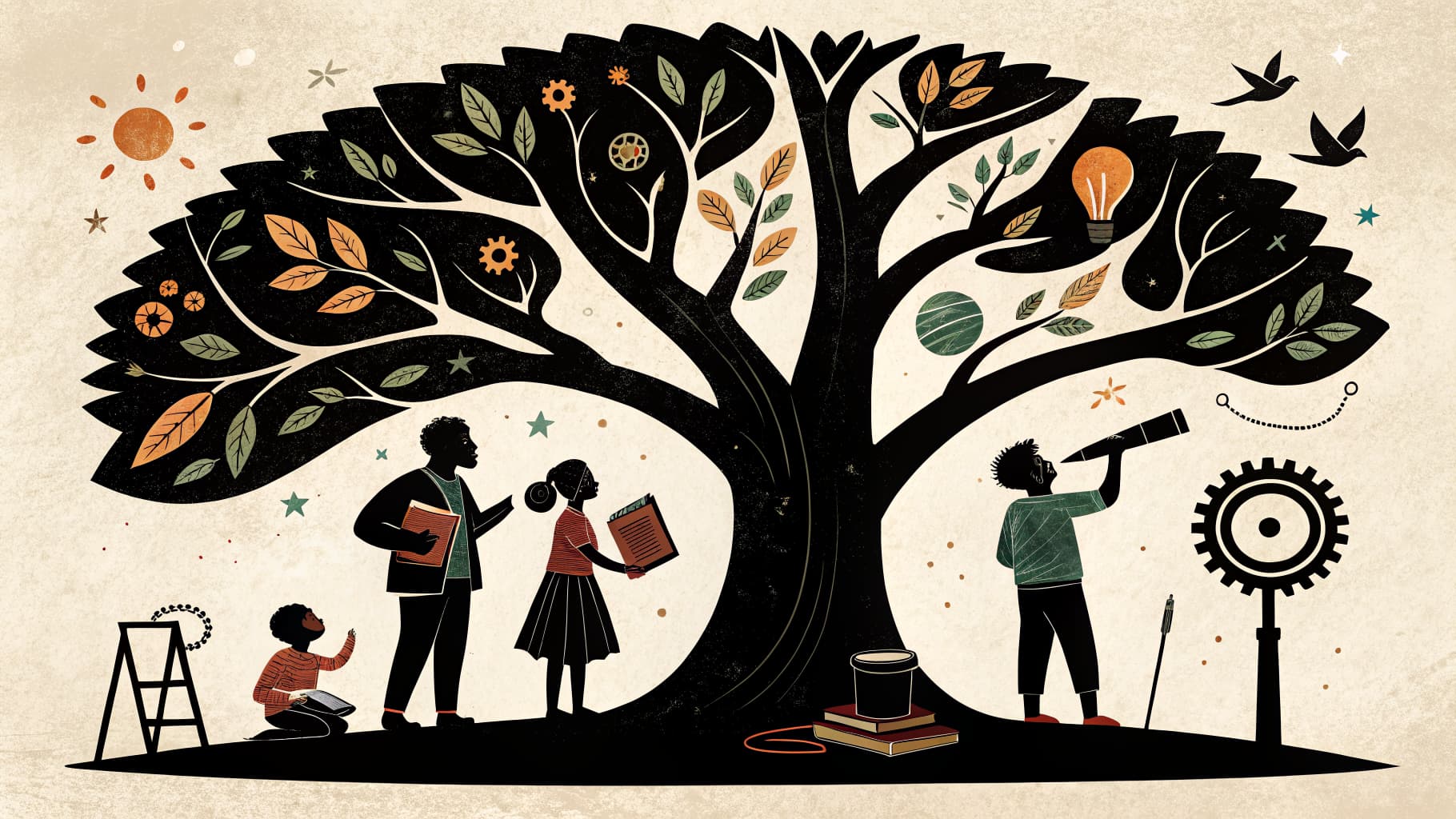
Walk into most American classrooms and you'll find something striking: the students are more diverse than ever, but the curriculum often tells a narrower story. More than half of US public school students identify as students of color, yet the textbooks, examples, and reference points in many classrooms still reflect a much more homogeneous world. That mismatch has real consequences for engagement, for motivation, and for academic outcomes.
Culturally responsive teaching strategies exist precisely to close that gap. Not as an add-on or a feel-good gesture, but as a research-backed pedagogical framework that makes instruction more effective for every student in the room.
What Is Culturally Responsive Teaching (CRT)?
Gloria Ladson-Billings, now emerita professor at the University ofWisconsin-Madison, introduced the concept of "culturally relevant pedagogy" in 1994. Her core argument: effective teaching draws on students' cultural knowledge, prior experiences, and frames of reference rather than treating those things as obstacles to overcome.
Culturally responsive teaching is built on three pillars: academic success, cultural competence, and critical consciousness. Students should master rigorous academic content and develop a strong sense of their own cultural identity and learn to critique the social structures around them. Strip out any one of those pillars, and the framework collapses.
Zaretta Hammond, author of Culturally Responsive Teaching and the Brain, extended Ladson-Billings' work by connecting CRT to cognitive science. Hammond distinguishes between teachers who are "culturally aware" (knowing students' backgrounds) and teachers who are "culturally responsive" (using those backgrounds as active instructional tools). Awareness is a starting point; responsiveness is the practice.
Geneva Gay at the University of Washington added another dimension: culturally responsive teaching is not just about representation in texts. It encompasses the teaching strategies, communication patterns, and relationship structures teachers use every single day.
Traditional vs. Culturally Responsive Teaching: Key Differences
| Dimension | Traditional Model | Culturally Responsive Model |
|---|---|---|
| Teacher role | Expert delivering content | Co-learner and relationship-builder |
| Student knowledge | Starts at zero; teacher fills gaps | Students bring prior knowledge that shapes instruction |
| Curriculum design | Single canonical narrative | Multiple perspectives; student experience as text |
| Assessment | Standardized tests measure compliance | Multiple modalities honor varied ways of knowing |
| Classroom climate | Order and compliance-focused | Belonging and psychological safety-focused |
| Language | Standard English only | Linguistic diversity valued and built upon |
| Error correction | Errors signal deficiency | Errors are data; productive struggle is honored |
12 Core Culturally Responsive Teaching Strategies for Every Classroom
The most effective CRT strategies center on activating prior knowledge, making learning contextual, and helping students use their cultural capital as cognitive tools. Here are twelve strategies grounded in that evidence.
1. Build Authentic Learning Partnerships
Before any content instruction, invest time in genuinely knowing your students. That means going beyond demographic data to understand their interests, family structures, community roles, and aspirations. Hammond calls this "building community," and it creates the trust necessary for intellectual risk-taking.
Practical move: Use structured "cultural biography" interviews at the start of the year. Ask students to describe a time someone in their family solved a hard problem. Their answers will tell you more about cognitive strengths than any pre-assessment.
2. Apply the "Funds of Knowledge" Framework
Anthropologists Luis Moll and Norma González developed the "funds of knowledge" concept at the University of Arizona: every household contains deep bodies of practical knowledge, including farming, cooking, construction, commerce, and medicine, that schools routinely ignore. CRT teachers deliberately draw on that knowledge as instructional content.
A math teacher in a community with many families in the construction trades, for example, might frame geometry through blueprint reading and load-bearing calculations rather than abstract coordinate grids.
3. Activate Prior Knowledge Systematically
Every lesson should begin by connecting new content to what students already know and have experienced. This is not just good pedagogy in general; it is especially critical for students whose existing knowledge is rarely reflected in standard curricula.
Practical move: Use a "Know/Experience/Wonder" chart instead of a standard KWL chart. The "Experience" column specifically surfaces cultural and personal knowledge before instruction begins.
4. Make Content Contextually Relevant
Many teachers find that students engage more deeply when they can see themselves and their communities in the content. That requires deliberate curriculum choices: not just swapping in diverse names on word problems, but redesigning the contexts themselves.
A history unit on economic systems hits differentlywhen students examine their own neighborhood's economic history alongside national trends.
5. Use Flexible Grouping and Student- Led Discussion
Traditional whole-class instruction privileges students who are already comfortable performing in mainstream academic environments. Rotating small groups, fishbowl discussions, and Socratic seminars create more equitable participation structures. They also allow students to process ideas through collaborative dialogue, a learning mode that aligns with many students' home cultures.
6. Incorporate Multicultural Texts and Primary Sources
Representation in texts is widely recognized as one of the clearest levers for student engagement and identity affirmation. This means actively seeking out authors, scientists, mathematicians, and historical figures from underrepresented groups, not just during heritage months, but woven into the full-year curriculum.
When students encounter people who look like them doing serious intellectual work, it shifts what they believe is possible for themselves.
7. Affirm Identity Without Essentializing It
There is a meaningful difference between affirming a student's cultural background and reducing them to a stereotype of it. CRT asks teachers to hold complexity: a student may be Mexican-American, bilingual, into hip-hop, and also deeply interested in astrophysics. Effective culturally responsive instruction affirms all of that, resisting the urge to treat any student as a representative of their ethnic group.
8. Teach Through a Critical Lens
Ladson-Billings' third pillar, critical consciousness, requires teachers to create space for students to analyze power, inequity, and social structures. This does not mean politicizing every lesson; it means asking rigorous analytical questions. Who benefits from this policy? Whose perspective is absent from this account? What assumptions does this data set make?
These are the same questions that historians, scientists, and journalists ask. Teaching students to ask them is teaching rigorous disciplinary thinking.
9. Honor and Build on Home Language
Research in linguistics is unambiguous: a student's home language is a cognitive asset, not a deficit. Teachers who allow students to process new ideas in their home language before translating into academic English are not lowering standards. They are using students' full cognitive toolkit to build deeper understanding.
10. Set High Expectations Without Deficit Framing
One of the most damaging patterns in American education is lowering standards under the guise of "meeting students where they are." CRT explicitly rejects that trade-off. The goal is to hold rigorous academic expectations while providing the scaffolding and culturally relevant contexts that make meeting those expectations achievable. High expectations plus strong support is the CRT equation.
11. Design Multiple Assessment Modalities
Standardized tests capture one narrow slice of student knowledge. CRT teachers design assessments that allow students to demonstrate mastery in different ways: oral presentations, community research projects, visual representations, performance tasks. This is not about lowering the bar. It is about widening the door through which students can demonstrate they have cleared it.
12. Practice Ongoing Self- Reflection
Hammond is emphatic on this point: CRT begins with the teacher examining their own cultural lens, assumptions, and biases. Without that internal work, teachers will replicate the same inequitable patterns even while using the right vocabulary. This requires ongoing professional practice, not a one-time diversity training.
CRT in STEM: Beyond ELA and Social Studies
Culturally responsive teaching is most commonly discussed in English and social studies contexts. That is a significant content gap, because the achievement gap in STEM is where its effects are most consequential.
Ethnomathematics, the study of how different cultures use mathematical reasoning, offers one concrete entry point. Ron Eglash at the University of Michigan has documented fractal geometry in African architecture, exponential patterns in Native American beadwork, and proportional reasoning in Andean weaving. When a geometry teacher uses these examples alongside the standard Euclidean curriculum, students from those backgrounds encounter their heritage as mathematically sophisticated, not as decorative background noise.
In science, culturally responsive pedagogy looks like connecting biology to students' agricultural or ecological knowledge, framing chemistry through food systems and environmental justice, or grounding earth science in students' own geographic regions. The Next Generation Science Standards framework explicitly calls for "phenomena-based" science instruction, and culturally responsive teachers ensure those phenomena are drawn from students' actual communities, not just idealized suburban contexts.
, Gloria Ladson-Billings, University of Wisconsin-Madison"Culturally relevant pedagogy rests on three criteria or propositions: (a) students must experience academic success; (b) students must develop and/or maintain cultural competence; and (c) students must develop a critical consciousness through which they challenge the status quo."
The Role of Neuroscience in Culturally Responsive Instruction
Hammond's contribution to CRT is connecting it directly to brain science, and the mechanism she identifies is important: when students perceive threat (whether from social exclusion, feeling unseen, or fear of judgment), the amygdala activates a threat response that redirects cognitive resources away from the prefrontal cortex. That's the part of the brain responsible for higher-order thinking, memory consolidation, and complex problem-solving.
In plain terms: students who don't feel safe, seen, or respected in a classroom are neurologically less equipped to learn in that classroom. Culturally responsive teaching is not just culturally considerate; it is neurologically strategic. It creates the psychological safety that allows the prefrontal cortex to do its job.
This is why belonging is not a soft outcome or a secondary priority. Research consistently shows that when students experience a sense of belonging in school, their engagement and motivation increase substantially, outcomes that track directly with academic performance.
Measuring Success: A Rubric for Culturally Responsive Curricula Use this checklist to evaluate any existing lesson plan or unit:
Representation
- Do texts, examples, and images include people from multiple racial, ethnic, and cultural backgrounds, throughout the unit, not only in isolated lessons?
- Are non-white figures represented as intellectual leaders and problem-solvers, not only as subjects of historical injustice?
Relevance
- Does the lesson connect to students' lived experiences or community contexts?
- Are the real-world applications of the content drawn from contexts students recognize?
Rigor
- Are all students held to the same high cognitive expectations?
- Does the lesson ask students to analyze, evaluate, or create, not just recall?
Student Voice
- Do students have opportunities to bring their own knowledge and experience into the lesson?
- Are assessment options flexible enough to allow different modes of demonstrating mastery?
Critical Consciousness
- Does the lesson create space for students to examine whose perspective is centered and whose is absent?
- Are students invited to ask questions about power, equity, or social structures relevant to the content?
A lesson plan that checks all five categories is doing the work. One that checks two or three has room to grow. The rubric is a diagnostic tool, not a judgment.
Navigating Challenges and Policy Restrictions
Many educators find that the biggest barriers to CRT are institutional, not conceptual. Rigid standardized curricula leave little instructional space. Professional development on CRT is often superficial or one-time. Culturally relevant materials are scarce, especially in STEM subjects.
Add to that the current political environment: several US states have passed legislation restricting discussions of race, identity, and systemic inequity in K-12 classrooms. For teachers committed to inclusive practice, this creates real professional risk.
A few principles for navigating this tension:
**Focus on pedagogy, not only content.**Many CRT strategies, including activating prior knowledge, flexible grouping, multiple assessment modalities, and high expectations, are defensible as standard evidence-based practice regardless of political context. Implement them on those grounds.
Document everything. Keep records of your instructional rationale, the research you're drawing on, and the learning outcomes you're targeting. This protects you professionally and makes the case that your practice is grounded in evidence.
Build a professional community. Teacher beliefs and access to peer support are among the strongest predictors of successful CRT implementation. Find colleagues, within your school or via professional networks, who are doing this work and learn alongside them.
Start with relationships. Even in the most restrictive policy environments, no law prohibits knowing and caring about your students. That is where CRT begins, and it is also where the measurable outcomes start.
What This Means for Your Classroom
Research is consistent that culturally responsive teaching increases student engagement and motivation, and that its benefits extend to all students, not only those from historically marginalized backgrounds. When students encounter multiple perspectives and learn to think across cultural frameworks, they develop the analytical flexibility that rigorous academic and civic life demands.
The twelve culturally responsive teaching strategies outlined here are not a checklist to complete and move past. They are an ongoing practice: of relationship-building, curriculum revision, self-reflection, and professional learning. The evidence says that practice makes classrooms more effective. It also makes them more just.
Start with one strategy. Build a relationship. Bring a student's community knowledge into a lesson this week. Those are not small moves.