A useful mission is specific before a teacher starts editing it. It reflects the local curriculum, gives the class a clear way to learn, and produces materials that fit the task.
This update makes missions more specific in those three places: more local curriculum coverage, 8 more active-learning methods, and 5 new structured handout types for lessons where the page format matters.
The practical result is less generic planning. You start closer to the curriculum you teach, choose from a wider set of classroom routines, and get materials that better match what students are meant to do.
The promise is local: the generator keeps getting better at starting from India, the stage, subject, and topic you choose.
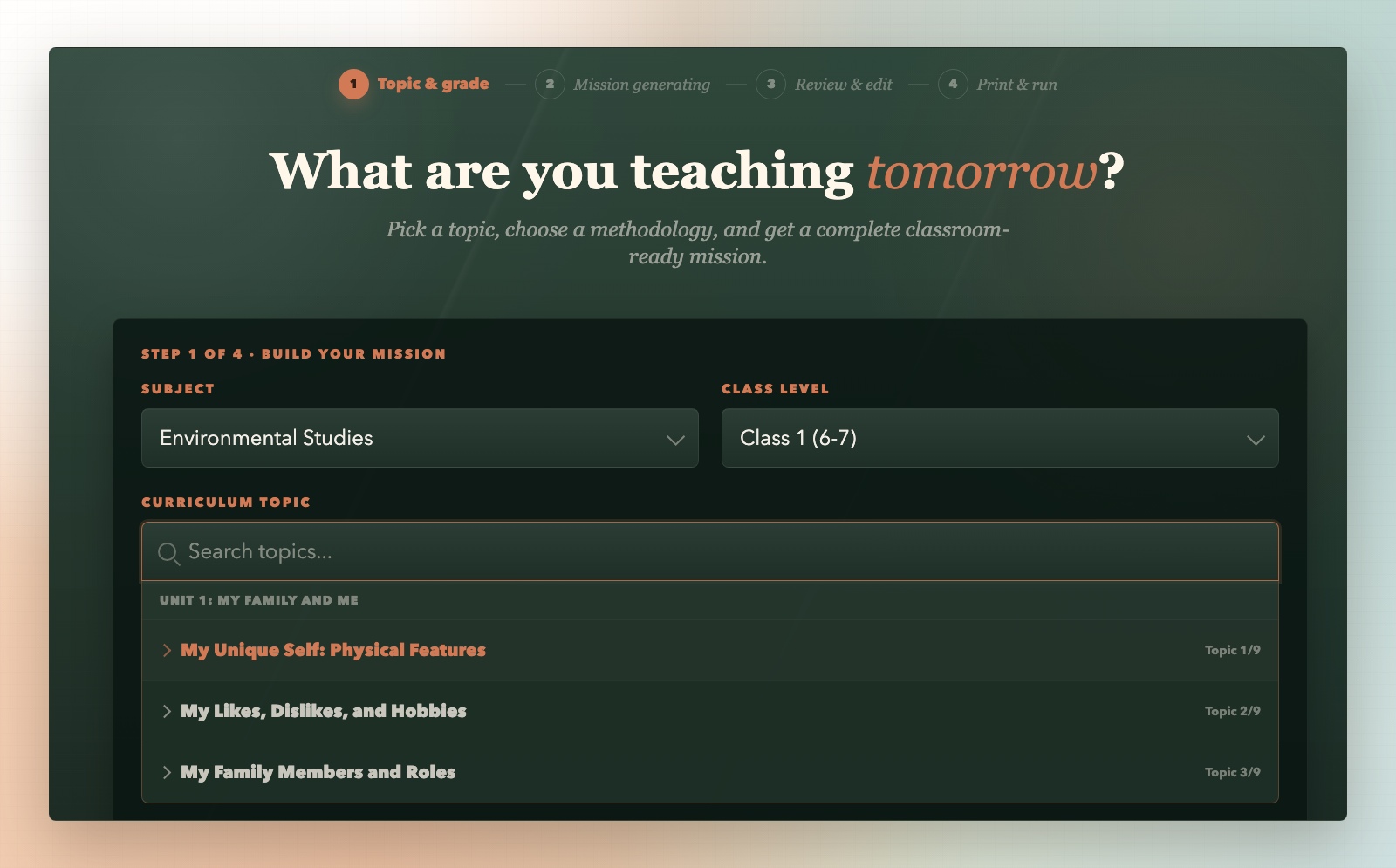
More local curriculum depth
We have added more local curriculum depth where it matters for planning.
For you, the practical effect is a mission that begins closer to what you selected for class, with less bending of a near-match into shape.
8 more active-learning methods
The methodology library is expanding from 56 to 64 methods, with two new active-learning categories: Community & Civic and Literacy & Reading.
The new methods are:
- Inquiry-Based Learning: students investigate a question, gather evidence, and build an explanation.
- Service Learning: classroom work connects to a real community need and a structured reflection.
- Reciprocal Teaching: students lead reading through predicting, questioning, clarifying, and summarising.
- Maker Learning: students sketch, build, test, and improve a tangible solution.
- Socio-Scientific Issues: students reason through science-linked public questions using evidence and values.
- Numbered Heads Together: every student prepares because any group member may be called to answer.
- Reciprocal Questioning: students write and exchange questions to deepen discussion.
- Mystery Object: students infer meaning from an unfamiliar object, image, source, or artefact.
More structured handout types
Missions are also getting more structured material formats for lessons where the shape of the page matters.
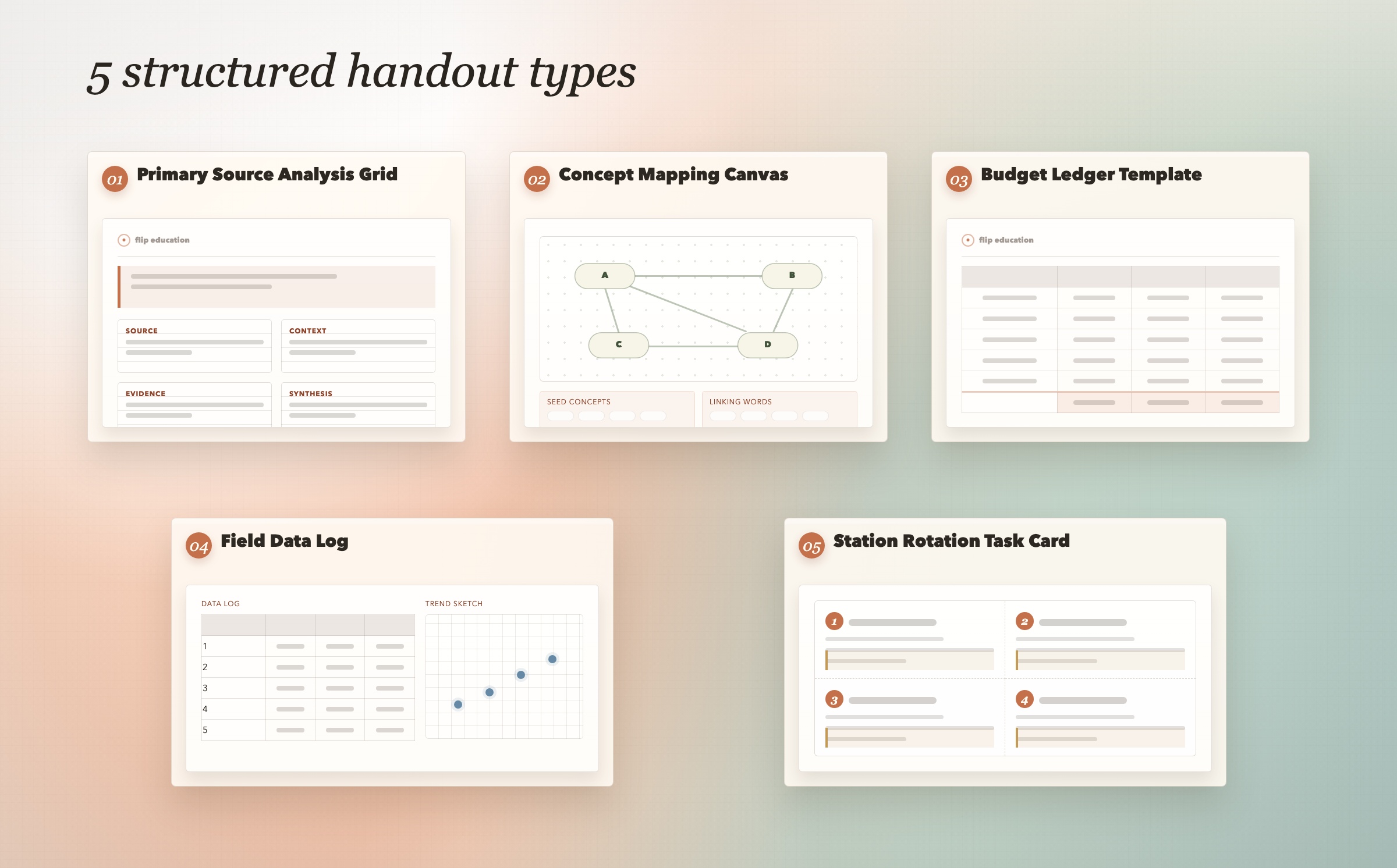
The new formats are:
- Primary Source Analysis Grid: source-reading frames for history, civics, document mysteries, case studies, and Socratic seminars.
- Concept Mapping Canvas: a large blank canvas with seed ideas and linking words for mapping relationships between concepts.
- Budget Ledger Template: a line-item table for economics, business, simulations, and other lessons involving money decisions.
- Field Data Log: observation tables for science, geography, and other evidence-gathering work.
- Station Rotation Task Card: clearer station-by-station instructions for rotation lessons.
These formats help most when the structure is part of the learning: reading a source, mapping relationships, comparing budgets, recording observations, or moving through stations.
Smarter topic search in the generator
We have also improved how you find topics in the generator.
Topic search is better at finding useful curriculum topics when teachers use the everyday words they already use in the staff room and classroom.
Built with teachers
The first Portugal group in the Flip Education Teacher Network is now under way. Nearly 20 teachers are testing Flip Education for five weeks, across planning, generation, materials, and classroom use, so we can build a better product for teachers. Schools in Latin America and North America are coming up next.
If a handout would help your class run more smoothly, tell Flo or write to us.