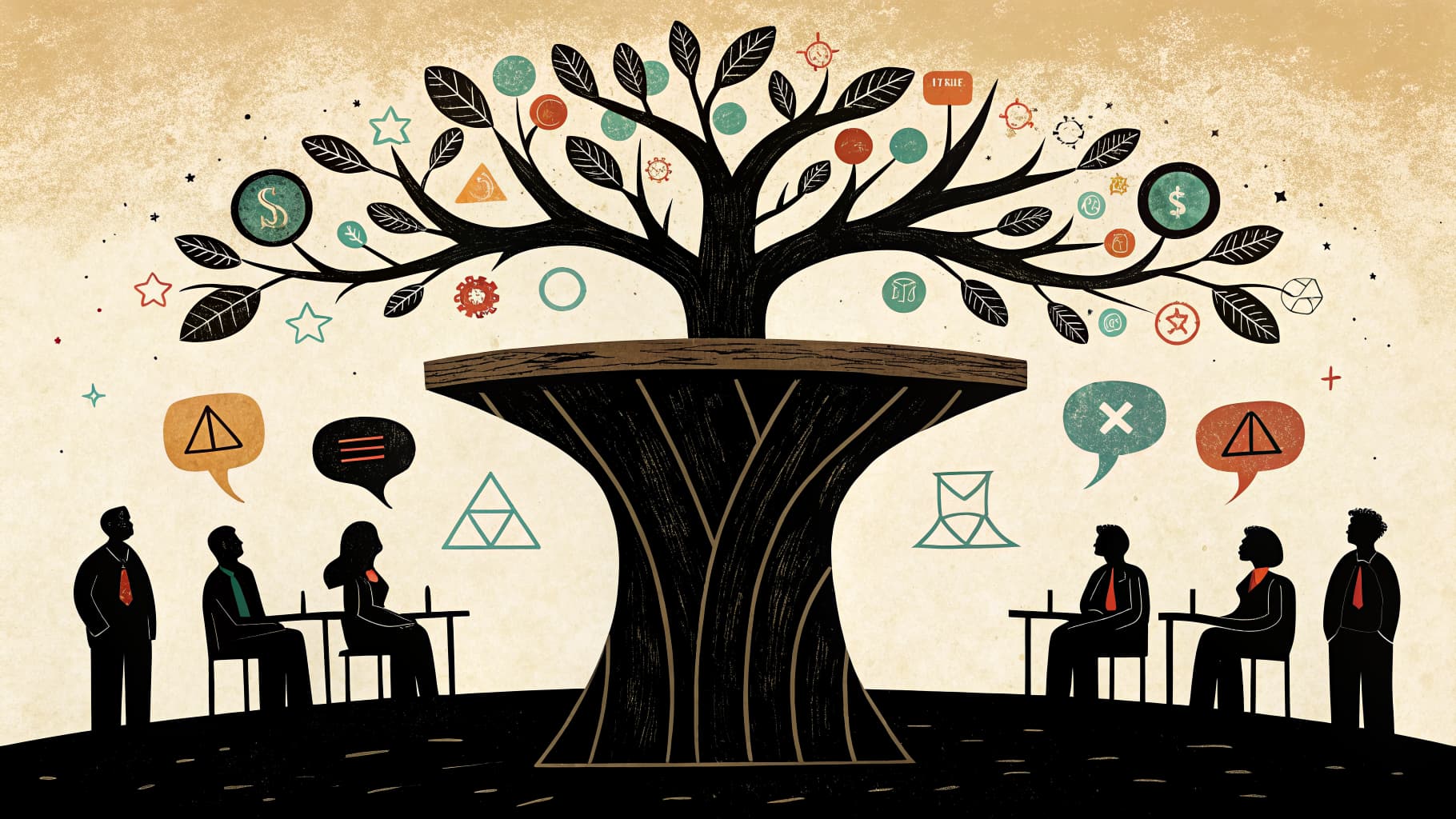
Picture this: three students sit at a table at the front of your classroom. They've spent the last twenty minutes becoming, in their own minds, Harriet Tubman, Frederick Douglass, and Sojourner Truth. The rest of the class, divided into "news outlets" with names they invented themselves, leans forward with notebooks open. One student raises her hand. "Ms. Truth, there are people who say your methods were too radical. How do you respond?"
That moment, when a twelve-year-old is forced to synthesize an abolitionist's moral framework on the spot, is the press conference strategy doing exactly what it's designed to do.
What Is the Press Conference Strategy?
The press conference activity adapts one of journalism's core formats for classroom use. A small group of students becomes an "expert panel", representing historical figures, scientific perspectives, literary characters, or any content-specific role. The remaining students form a "press corps" and ask investigative questions. The teacher acts as moderator, not lecturer.
What makes this format pedagogically distinct is the cognitive division it creates. Speakers must develop genuine mastery, not just surface familiarity, because they'll face questions they haven't anticipated. Reporters must develop evaluative capacity: can they tell when an answer is evasive, incomplete, or factually wrong? These are different intellectual skills, and the press conference develops both at the same time.
Research consistently supports the underlying principle. Michael Prince's 2004 review of active learning research in the Journal of Engineering Education found that introducing structured student-led discourse significantly improves long-term knowledge retention compared to passive lecture. Students are also 1.5x more likely to fail in lecture-only courses than in active learning environments (Freeman et al., PNAS, 2014).
The press conference works best in grades 6-12 and is particularly strong in ELA, social studies, and SEL, any subject where multiple perspectives, accountability, and oral argument matter. It can work in science when students represent different research findings or competing hypotheses.
How It Works
Step 1: Assign Roles and Topics
Divide the class into expert panels of three to four students each, and assign the remaining students to the press corps. Each panel receives a specific perspective, persona, or position to represent, a historical figure, a character from a novel, a scientific school of thought, a policy position.
Be specific with assignments. "You are Frederick Douglass in 1852, one week after delivering 'What to the Slave is the Fourth of July?'" gives students something concrete to research. "You are an abolitionist" leaves too much undefined.
Step 2: Conduct the Research Phase
Give experts fifteen to twenty minutes to master their content. This isn't time to skim a handout. Require a structured deliverable: a one-page factual summary of their position, five anticipated questions with written answers, and at least three pieces of evidence they can cite during the conference (page numbers, dates, direct quotes).
Simultaneously, reporters draft their investigative questions. Require each reporter to prepare at least three unique questions aligned to the lesson's learning objectives. The British Council's TeachingEnglish resource recommends giving journalists a framework (who, what, when, where, why, how) to push beyond surface questions. For advanced classes, add a layer: reporters must explain, in one sentence, why their question matters.
Assign two to three students as fact-checkers at this stage. Give them the same source material the experts are using. Their job is to listen during the conference and flag any claims that don't match the evidence.
Step 3: Set the Stage
Rearrange the classroomphysically. The expert panel sits at a table at the front, facing the press corps in rows. This isn't just aesthetic, the spatial setup signals a shift in norms. Students behave differently when the room looks like a real event. Environmental framing is one of the factors most associated with student buy-in.
Consider small additions: nameplates, a podium, a visible "outlet" sign for each reporter group. The more the setting signals "this is real," the more students invest.
Step 4: Deliver Opening Statements
Before questions begin, each expert panel delivers a two-minute prepared statement, their position, key findings, or a summary of their perspective. This serves two purposes: it gives speakers a warm start before fielding unpredictable questions, and it gives reporters a chance to refine their questions based on what the panel has already said.
Set a timer. Two minutes is firm.
Step 5: Facilitate the Q&A
Open the floor. As moderator, your job is to keep things moving and equitable, not to answer questions yourself. Ensure that different panel members respond to different questions; speakers who dominate while their partners go silent aren't demonstrating shared mastery.
Encourage follow-up questions. When a reporter asks "Why did you support that policy?" and the answer is vague, prompt: "Would the press like a follow-up?" The accountability dimension, a reporter pressing for precision, asking "But what evidence supports that?", is one of the most valuable skills this format develops. In most classroom contexts, students accept answers at face value. Here, skeptical follow-up is good journalism.
Keep the session to ten to fifteen minutes. After that, questions and answers begin to repeat.
Step 6: Conduct the Fact-Check Debrief
After the Q&A, your fact-checkers report. What claims were accurate? Where did the evidence get stretched or misrepresented? What was left out?
This is where the activity tends to generate the highest cognitive load, students must compare what was said against what the evidence shows, identify discrepancies, and articulate them clearly. That's analysis and evaluation in Bloom's taxonomy, activated simultaneously.
Close the debrief by asking speakers: "What question caught you off guard? What would you prepare differently?" That metacognitive step is what separates a fun class activity from a genuine learning experience.
Tips for Success
Require Written Preparation, Not Just Research Time
Speakers who arrive knowing only what they've read, without having wrestled with hard questions in advance, will produce vague or invented answers under pressure. That misleads their classmates and undermines the activity. Before the conference begins, collect the preparation card: factual summary, five anticipated Q&As, three pieces of cited evidence. If the card isn't complete, the speaker isn't ready.
Stop Question Redundancy Before It Starts
Unprepared reporters default to the first obvious question, and when five reporters ask the same thing, the conference flatlines. Use a visible "question board" before the session begins, reporters write their topic or question keyword in a shared space, and duplicates get redirected. This takes three minutes and saves the activity.
Protect the Fact-Checking Role
Without designated fact-checkers, incorrect answers go unchallenged. Students hear a confident-sounding claim and accept it. The fact-checker role forces the class to treat the press conference as accountable communication, not performance. Two or three students with the source material and a simple checklist ("Did the speaker cite evidence? Was the claim accurate?") is enough.
Plan for Multiple Short Conferences
If you have multiple panels, don't run one long conference with panel swaps. Run several shorter conferences, ten to twelve minutes each, with fresh reporters for each. Reporters who have already asked their questions become disengaged; new reporters come in with new questions and higher energy.
Don't Skip Shy Students on the Panel
The expert panel role, counterintuitively, often works better for anxious students than the reporter role does. Speaking as a character (Harriet Tubman, Marie Curie, a DNA strand) provides psychological cover. Students who would freeze answering a direct question about themselves often become surprisingly articulate in role. Place hesitant students in panels rather than in front of the room solo, and they frequently surprise you.
, Barkley, Cross & Major, [Collaborative Learning](/blog/25-student-engagement-strategies-a-research-backed-guide-for-modern-k-12-classrooms) Techniques (2014)Role-play activities are essential for developing perspective-taking and the ability to apply abstract theories to concrete, real-world scenarios.
Using Flip Education to Run a Press Conference
Setting up a press conference from scratch requires preparation materials for two distinct groups of students (speakers and reporters), plus a facilitation script, a fact-checker framework, and a debrief structure. Flip Education generates all of this from your lesson topic and curriculum standard in one step.
Specifically, Flip produces printable speaker prep cards and reporter question cards formatted for immediate classroom use. The roles and scenarios are mapped to your curriculum, whether you're exploring the causes of World War I, the themes of The Great Gatsby, or competing models of the atom. The facilitation script includes numbered steps for managing the Q&A, coaching cues for encouraging reporters to press for follow-up, and an exit ticket to assess individual understanding after the conference closes.
If you run press conferences regularly, the consistency in structure matters, students know what to expect, which means they can focus on content rather than logistics.