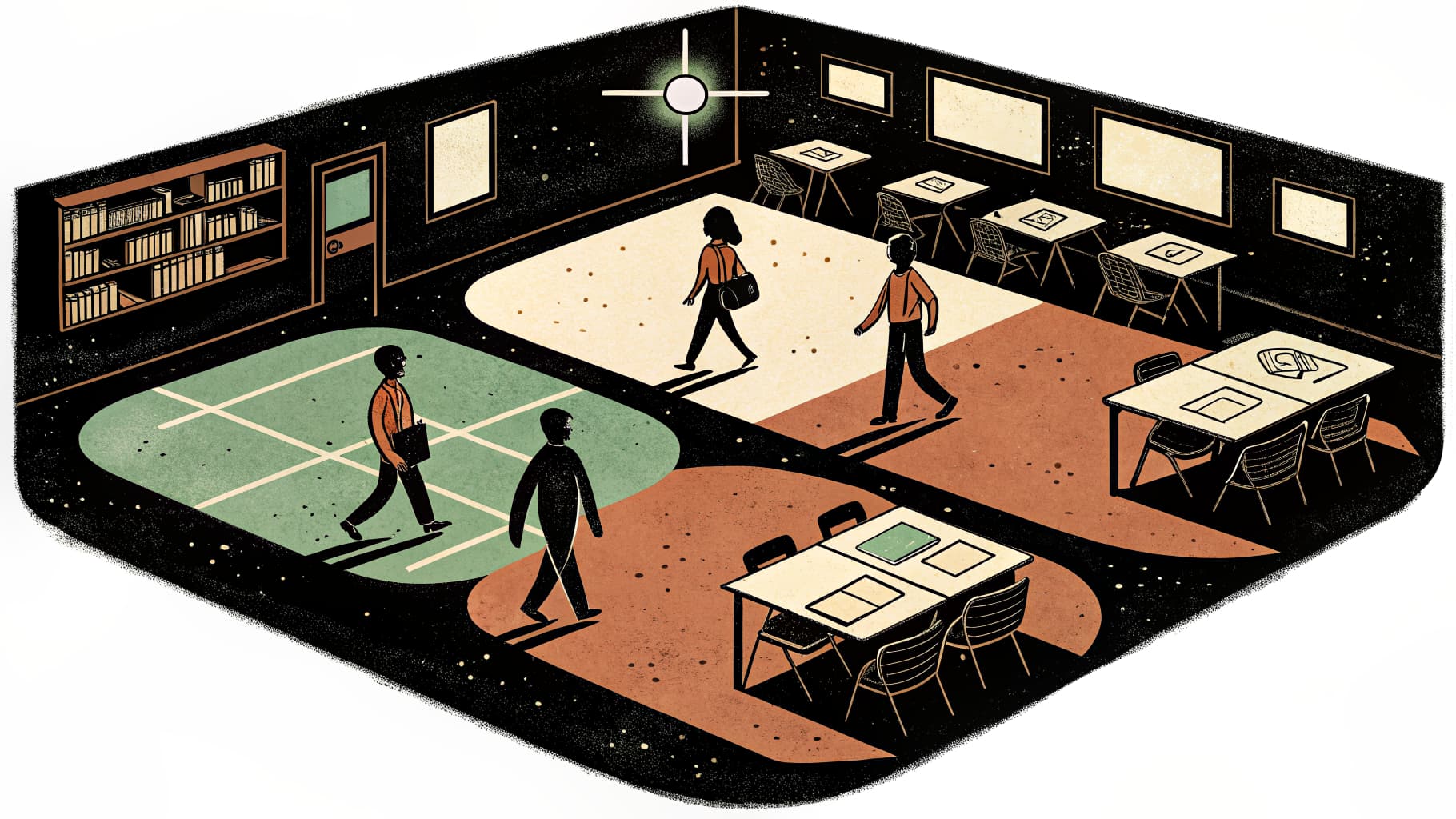
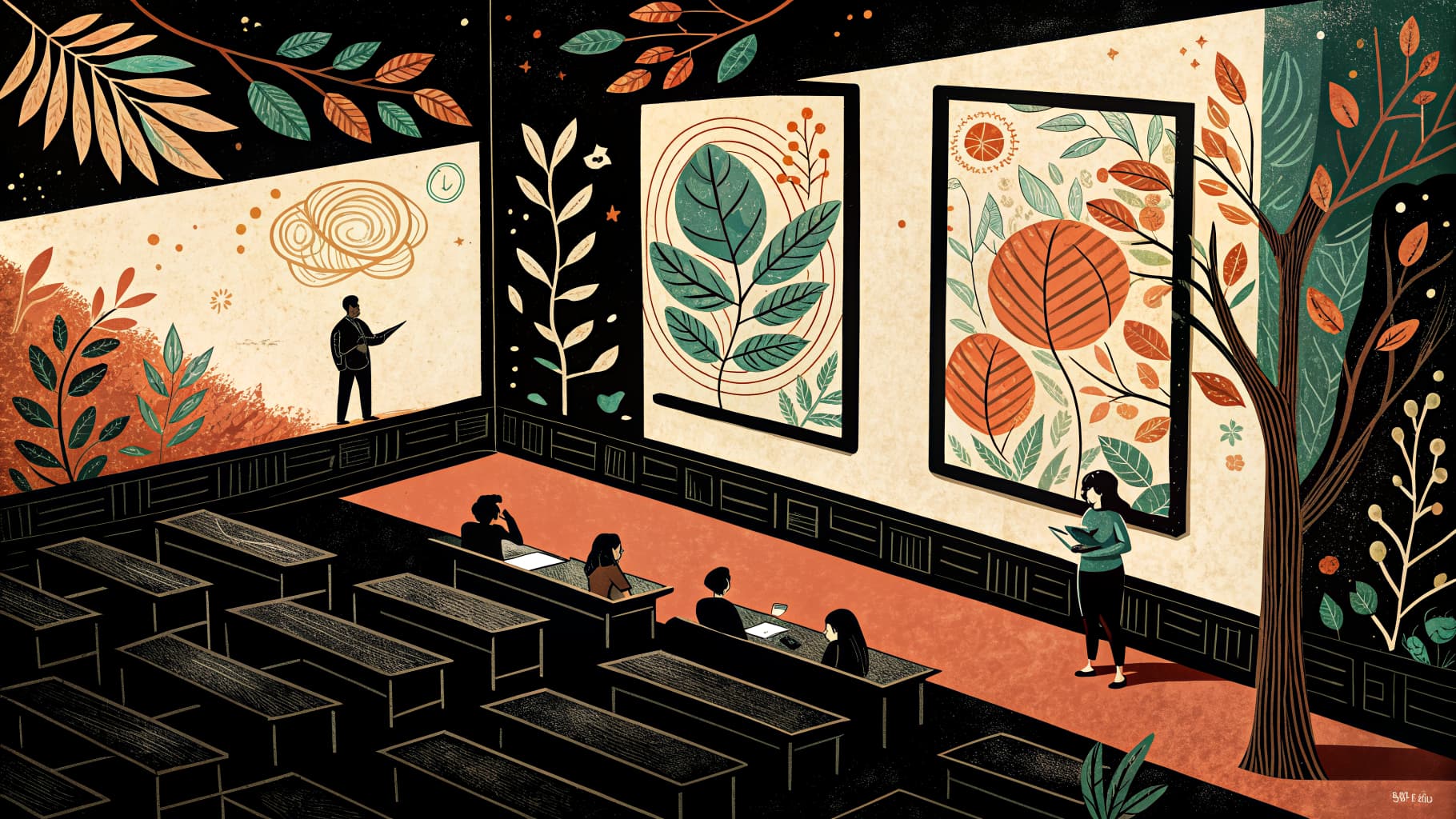
Picture a 7th-grade history class the day before a new unit begins. Instead of a quiz or a review sheet, the teacher tapes six sheets of butcher paper around the room, each labeled with a different ancient civilization. Students grab markers and start writing: facts, questions, half-formed comparisons, a sketch, a direct response to something a classmate already added. In fifteen minutes, those sheets fill with more genuine student thinking than a week of hand-raising could produce.
That's graffiti wall in action. Once you see it work, the quiet, one-voice-at-a-time alternative starts to feel limiting.
What Is Graffiti Wall?
Graffiti Wall is a collaborative brainstorming strategy in which students simultaneously write, draw, and respond to prompts on large shared surfaces posted around the classroom. Each surface (typically chart paper, whiteboard sections, or butcher paper) carries a different open-ended question or prompt. Students circulate freely, adding their own ideas and reacting to what others have written before them.
The name is intentional. Street graffiti is simultaneous, layered, and responsive , each mark reacts to what came before. The classroom version borrows those features and gives them an academic direction. Content connects to curriculum, partial accountability comes from marker color, and the accumulating layers of contribution are the whole point.
Read Write Think documents the approach particularly for literature response, where the strategy helps students externalize interpretation before formal discussion. The Collaborative for Teaching and Learning notes its broader value as a tool for making collective understanding visible in real time. That visibility is precisely what John Hattie, in his 2012 synthesis Visible Learning for Teachers, identifies as a high-leverage condition for peer learning and meaningful teacher feedback.
Why It Works
The defining structural advantage of Graffiti Wall is simultaneity. In a conventional class discussion, one student speaks while twenty-nine wait. A class of thirty writing at the same time for ten minutes generates a volume and variety of ideas that sequential discussion simply cannot match , in quantity, in range, and in who gets heard.
That last part matters most. Students who hesitate to share tentative or unconventional ideas in front of the group will frequently write them down when the physical distance from the paper, combined with the visual noise of many contributions around them, creates enough psychological safety for honest expression. Teachers who read the completed wall carefully often encounter ideas students never verbalize. That gap is diagnostically useful.
The research foundation for collaborative, active formats is strong. David Johnson and Roger Johnson at the University of Minnesota, in their 2009 review of Social Interdependence Theory published in Educational Researcher, found that collaborative learning environments consistently produce higher achievement and greater productivity than individualistic learning efforts across age groups and subject areas. Graffiti Wall makes that collaboration structural rather than optional.
The accumulated wall also functions as formative assessment data in a form most strategies don't offer. The clusters of related ideas, the conversational threads where one contribution responds directly to another, the ideas that appear once and are never engaged with , all of these patterns tell a skilled teacher what the class collectively understands, where misconceptions live, and which connections students are building on their own.
According to eduTOOLBOX, the strategy's support for symbols, drawings, and color alongside text is what makes it accessible to diverse learners, including students who think visually or who struggle to express ideas in full sentences. That's not just an accommodation , it often surfaces the most creative thinking in the room.
How It Works
Prepare Your Prompts
Write open-ended questions, provocative quotes, or problem statements on large sheets of chart paper (one prompt per sheet) and post them at different locations around the room before students arrive. Good prompts don't have single correct answers; they invite thinking, comparison, and disagreement. "What do you already know about this topic?" works for activation. "What connections do you see between these two ideas?" works for mid-unit consolidation.
Avoid yes/no questions and anything with a definitive factual answer. The goal is to generate thinking, not retrieve stored information.
Distribute Markers and Set Expectations
Give each student or small group a different colored marker. This preserves accountability while keeping the activity low-stakes: there's no public spotlight on any individual contribution, but the teacher can trace who wrote what when reviewing the wall afterward.
Before students leave their seats, state the ground rules explicitly: all responses must connect to the prompt; building on or responding to a classmate's idea counts as a strong contribution; writing too small to read from two feet away wastes everyone's effort. If your class needs it, briefly model the difference between "connecting" and "repeating" a peer's idea , this prevents the wall from filling with restatements.
Facilitate the Rotation
Allow 10 to 15 minutes for students to circulate. Encourage them to spend time reading a station before adding to it. That reading pause matters: the richest contributions come from students who have absorbed what's already on the paper before layering their own thinking on top.
If students cluster at one station, redirect quietly. Some teachers assign a starting station for the first two minutes, then open free movement after that. The goal is relatively even coverage across prompts, not regimented clockwise rotation.
Run a Read-Only Gallery Walk
Once writing time ends, have students do one final circuit without markers. This read-only pass gives everyone the chance to take in what the group produced as a whole. It primes the synthesis discussion and slows the room down after the energy of the writing phase.
Synthesize Together
This step separates a Graffiti Wall that produces learning from one that produces paper covered in ink. Reserve at least ten minutes for a whole-class debrief. Ask questions that require students to treat the wall as a complete artifact: What themes appear across multiple stations? Which idea surprised you most? Where do contributions cluster, and where are there gaps? What misconception would you want to correct?
The synthesis is where individual contributions become collective understanding. Without it, you've run a writing exercise. With it, you've built genuine collaborative knowledge.
Tips for Success
Require Legibility Before Anyone Picks Up a Marker
If students write in small, cramped script, contributions can't be read during the gallery walk or the debrief. Brief this once, clearly, before they start: large enough to read from two feet away, markers not pens.
Set a Focused-Contribution Rule
Without constraints, some students write a paragraph on every sheet while others write nothing. A short, focused addition per visit distributes responsibility and keeps writing quality higher than open-ended quantity would produce. One idea, clearly stated, is more useful to the group than four overlapping ones.
Spread Students Out Before Opening Movement
Students gravitate toward each other and toward whichever station is most populated. If you assign starting positions for the first rotation, you distribute energy across the room before organic movement takes over and prevents any single station from becoming overwhelming.
Use It Beyond Activation
Graffiti Wall is often introduced as a prior-knowledge check , which it does well. But it's equally valuable for mid-unit application ("What connections are you making between today's reading and last week's?") and for end-of-unit synthesis. Using it only at the beginning of a unit undersells the method significantly.
Protect Synthesis Time in Your Plan
The most common implementation failure is running out of time before the debrief. When that happens, students have generated data but haven't processed it, and the formative assessment value is lost. If the period is short, shorten the writing rotation to protect the ten minutes at the end.
Where It Works Best
Graffiti Wall fits naturally in ELA, social studies, SEL, and arts , subjects that center interpretation, discussion, and perspective-taking. In science, it works well for open-ended observation or reflection prompts ("What do you notice? What do you wonder?") but less well for content areas requiring precise, formula-based answers. Math applications are limited for the same reason.
By grade band, the strategy reaches its full potential with students in 3rd grade and up, when independent reading and writing make circulating and responding to peers' contributions viable.K-2 students can participate with scaffolding (teacher-written prompts, drawing encouraged, shorter rotation time), but the depth of the synthesis discussion scales with literacy.
FAQ
Plan Your Next Graffiti Wall with Flip Education
Flip Education generates complete Graffiti Wall session materials from your curriculum standards and lesson topic , printable prompt cards designed for station posting, response scaffolds that help students write analytically rather than superficially, a facilitation script with numbered movement instructions, and individual exit tickets for post-activity assessment.
Everything is ready to print. Set it up, run the session, use the exit tickets to plan what comes next.