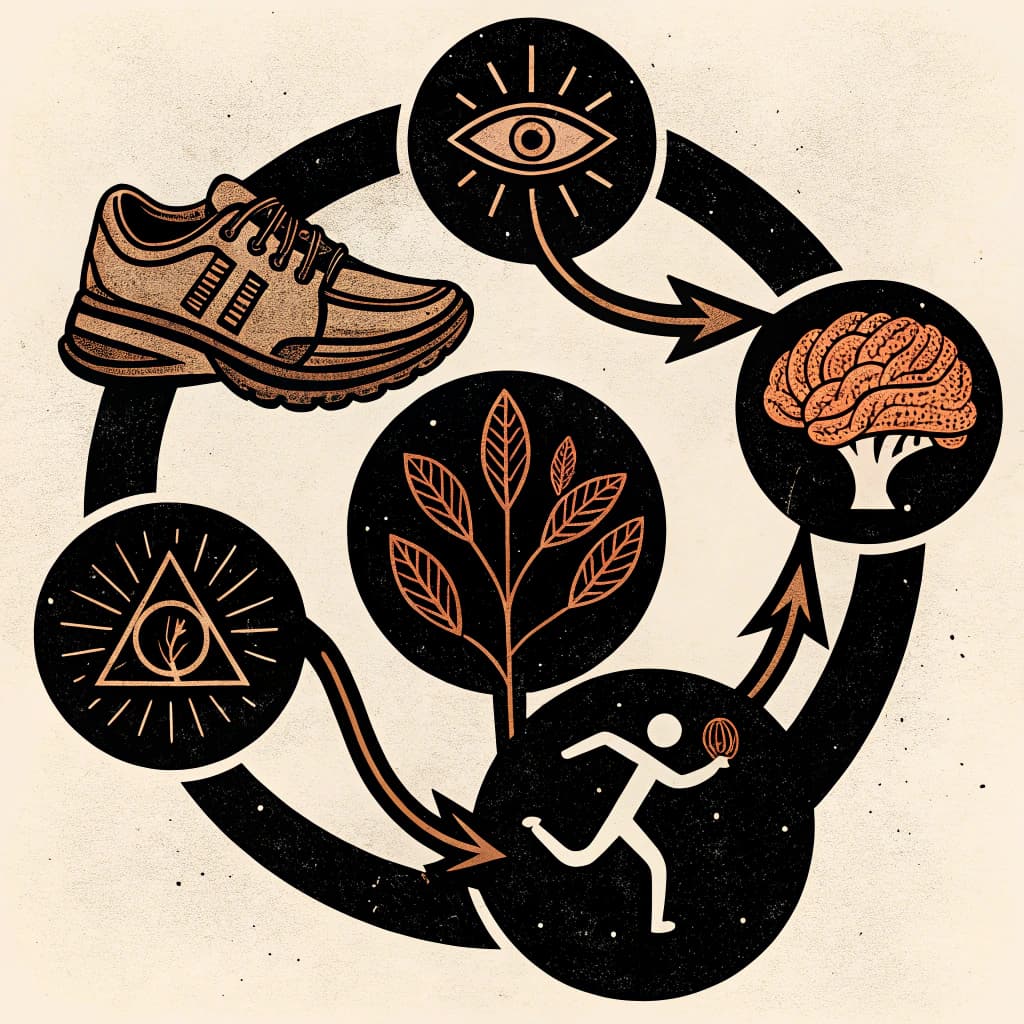
Hands-on learn-by-doing with structured reflection
Experiential Learning
Students learn through direct experience followed by structured reflection. Based on Kolb's cycle: concrete experience → reflective observation → abstract conceptualization → active experimentation. Can involve field work, hands-on activities, simulations, or community engagement. The key is the intentional reflection that transforms experience into learning.
What is Experiential Learning?
Experiential Learning as a formal educational theory was developed by David Kolb, who published his foundational work in 1984 drawing on the earlier contributions of John Dewey (experience as the basis of education), Kurt Lewin (action research and feedback loops), and Jean Piaget (developmental stages of cognition). Kolb's contribution was to synthesize these influences into a four-stage cycle that describes how learning from experience works, and, implicitly, what instruction must include to make experience educationally productive.
Kolb's cycle begins with Concrete Experience: doing something, encountering something, having an experience. But the experience alone, as Kolb was careful to specify, does not produce learning. Learning requires Reflective Observation: stepping back from the experience to examine it, noticing what happened, questioning why it happened the way it did. This reflection produces Abstract Conceptualization: drawing general principles from the specific experience, creating theory from practice. Finally, the cycle returns to action through Active Experimentation: testing the newly formed concepts in new situations, generating new experiences that complete the cycle.
The crucial pedagogical insight of Kolb's model is that instruction must include all four stages, not just one. A school that provides only experiences without structured reflection produces students who are engaged but not conceptually developed. A school that provides only conceptual instruction without experience produces students who can define but cannot apply. The experiential learning cycle insists on the full spiral: experience, reflection, conceptualization, and application, repeated and deepened with each iteration.
Different learners enter the learning cycle at different points and prefer different stages. Kolb identified four learning styles associated with preferences for different cycle stages: Divergers (preferring experience and reflection), Assimilators (preferring reflection and conceptualization), Convergers (preferring conceptualization and experimentation), and Accommodators (preferring experimentation and experience). Good experiential learning design provides for all four preferences by moving through the full cycle rather than dwelling in any single stage.
The reflection phase is the most commonly shortchanged element of experiential learning, and its absence is the most common reason for the persistent gap between rich experiences and genuine learning. Students who have a powerful experience, such as a field trip, a simulation, a service learning project, or a laboratory investigation, and are then asked "What did you learn?" often produce answers that describe the experience rather than extracting principles from it. Structured reflection prompts that push beyond description to analysis and principle extraction are what make the difference between an enjoyable experience and a learning experience.
Kolb's cycle is frequently misunderstood as a linear sequence that begins with experience. In practice, effective instructional design often begins at the Concrete Experience stage but can begin at any point and move in either direction. Students who are presented with a concept (Abstract Conceptualization) before experiencing it may actively experiment (Active Experimentation) and then reflect on their experimental results (Reflective Observation) before encountering the phenomenon in a more controlled form (Concrete Experience). The cycle's pedagogical power lies not in its direction but in its completeness: learning is deepened by traversing all four stages, regardless of entry point.
How to Run Experiential Learning: Step-by-Step
Design a Concrete Experience
7 min
Create a hands-on activity, simulation, or field-based task that aligns with your learning objectives and forces students to interact with the core concept.
Facilitate the Activity
7 min
Launch the experience while acting as a coach or observer, resisting the urge to provide answers or intervene unless safety or total disengagement occurs.
Conduct Reflective Observation
7 min
Lead a debrief session using open-ended questions that ask students to describe what they saw, felt, and did during the experience.
Guide Abstract Conceptualization
8 min
Help students connect their observations to formal theories or academic concepts, identifying the 'why' behind the patterns they noticed.
Plan Active Experimentation
8 min
Assign a new, slightly different task where students must use the theories they just developed to solve a new problem.
Assess Through Performance
8 min
Evaluate student growth based on their ability to apply concepts to the new situation and the depth of their reflective insights, rather than a multiple-choice test.
BEFORE YOU TEACH THIS
Read the Teacher's Guide first.
Flip Education's Teacher's Guide walks you through how to facilitate any active learning lesson: mindset, pre-class checklist, phase-by-phase facilitation, and a Quick Reference Card you can print and bring to class.
Read the Teacher's Guide →Common variants
Kolb-cycle experiential learning
Concrete experience, reflective observation, abstract conceptualization, active experimentation. The original four-stage cycle, run in full.
Field-based experiential learning
The experience happens outside the classroom (field site, community, workplace). Reflection structures are what turn the trip into learning.
Research Evidence for Experiential Learning
Kolb, A. Y., Kolb, D. A. (2005, Academy of Management Learning & Education, 4(2), 193-212)
The study validates the four-stage experiential learning cycle and emphasizes that creating 'learning spaces' for reflection is critical for converting experience into higher-order knowledge.
Burch, G. F., Giambatista, R. C., Batchelor, J. H., Hoover, J. G., & Heller, N. A. (2019, Decision Sciences Journal of Innovative Education, 17(3), 239-273)
Experiential learning pedagogies have a significant positive effect on both knowledge acquisition and the development of practical 21st-century skills across various disciplines.
Common Experiential Learning Mistakes and How to Avoid Them
Experience without structured reflection
Kolb's cycle makes clear that an experience without reflection produces nothing transferable. No matter how powerful the experience, students won't extract learning without guided reflection structured in the four phases: describe, reflect, generalize, apply. Reserve at least as much time for reflection as for the experience itself.
Reflection that stays superficial
Students asked 'What did you learn?' often give the answer they think you want to hear. Deepen reflection with specific prompts: 'What surprised you?' 'What did you assume going in that turned out to be wrong?' 'What would you do differently?' 'Where else does this principle appear in your life?'
Experiences with no connection to curriculum standards
Powerful experiences that aren't tied to explicit learning objectives are good for students but aren't teaching the curriculum. Before the experience, identify the 2-3 standards or conceptual objectives you'll connect to in the reflection phase. State these explicitly after the experience.
Not accounting for students who process differently
Kolb notes that different learners enter the cycle at different points. Some students want to conceptualize before experiencing; others need to act before reflecting. Offer structured options: journaling, sketching, talking with a partner, or writing a structured note before the full-class debrief.
Single experiences without application back to real contexts
The 'active experimentation' phase of Kolb's cycle asks: how will you use this? Without an application phase, the experience remains an isolated memory. Ask students specifically: When could you use this principle? What would you do differently in a real situation based on what you experienced?
How Flip Education Helps
Printable reflection protocol cards and activity guides
Get a set of printable reflection protocol cards and activity guides designed to help students process a hands-on experience related to your topic. These materials provide a structured way for students to connect their actions to curriculum concepts. Everything is ready to print and use for a single session.
Standards-based experiences for any subject area
Flip generates an experiential activity that is directly mapped to your curriculum standards and lesson topic, ensuring the hands-on work is academically purposeful. The activity is designed for a single session, focusing on active engagement and reflection. This alignment keeps the focus on your learning goals.
Facilitation script and numbered experience steps
The generation includes a briefing script to set the stage and numbered action steps with teacher tips for managing the experience and the subsequent reflection. You receive intervention tips for helping students who struggle to connect the activity to the curriculum goals. This structure keeps the activity focused and productive.
Reflection debrief and individual exit tickets
End the session with debrief questions that ask students to reflect on what they learned through the experience and how it relates to the core topic. The printable exit ticket provides a way to assess individual understanding. A final note links the activity to your next curriculum goal.
Tools and Materials Checklist for Experiential Learning
- Journals or notebooks for reflection
- Pens/pencils
- Whiteboard or large paper for group brainstorming
- Digital cameras or smartphones for documenting experiences (optional)
- Simulation props or materials (varies by activity)
- Measurement tools (rulers, tape measures, scales)
- Online collaboration tools (e.g., Google Docs, Padlet) (optional)
- Rubrics for assessing participation and reflection
- Access to outdoor space or specialized lab equipment
Frequently Asked Questions About Experiential Learning
What is the definition of experiential learning in education?
Experiential learning is the process of learning through reflection on doing, specifically defined as knowledge created through the transformation of experience. It requires students to engage in a cycle of experiencing, reflecting, thinking, and acting. This approach prioritizes the learner's direct engagement with the subject matter over passive instruction.
What are the four stages of the experiential learning cycle?
The cycle consists of Concrete Experience, Reflective Observation, Abstract Conceptualization, and Active Experimentation. Students first participate in an activity, then look back on the experience to identify patterns or problems. They use these insights to form new theories and finally test those theories in a new, practical context.
How do I implement experiential learning in my classroom?
Start by designing an authentic task or simulation that requires students to apply specific curriculum standards to a real-world problem. Facilitate the experience without over-instructing, then provide structured time for students to journal or discuss what occurred. Finally, challenge them to apply their new insights to a different but related scenario to solidify understanding.
What are the benefits of experiential learning for students?
This methodology increases long-term retention and student engagement by making abstract concepts tangible and relevant. It fosters critical thinking and problem-solving skills as students must navigate real-world complexities and failures. Additionally, it builds social and emotional competencies like empathy and collaboration through shared group experiences.
Is experiential learning the same as hands-on learning?
No, experiential learning is broader than hands-on learning because it requires a specific phase of cognitive reflection and conceptualization. While hands-on learning involves physical activity, experiential learning ensures that the activity leads to new mental models through deliberate analysis. Without the reflection and abstraction stages, a hands-on activity is just 'doing' rather than 'learning.'
Classroom Resources for Experiential Learning
Free printable resources designed for Experiential Learning. Download, print, and use in your classroom.
Experiential Learning Cycle Tracker
Students document each stage of Kolb's learning cycle as they move through the experience.
Download PDFExperiential Learning Reflection
Students reflect on how the hands-on experience connected to deeper learning through Kolb's cycle.
Download PDFExperiential Learning Group Roles
Assign roles aligned with each stage of Kolb's experiential learning cycle.
Download PDFExperiential Learning Cycle Prompts
Prompts aligned with each stage of Kolb's experiential learning cycle.
Download PDFSEL Focus: Self-Awareness
A card focused on developing self-awareness through the reflective observation stage of experiential learning.
Download PDFRelated
Methodologies Similar to Experiential Learning
Ready to try this?
- Read the Teacher's Guide →
- Generate a mission with Experiential Learning →
- Print the toolkit after generating
Generate a Mission with Experiential Learning
A complete lesson plan, aligned to your curriculum.