Colonial Trade & Economy
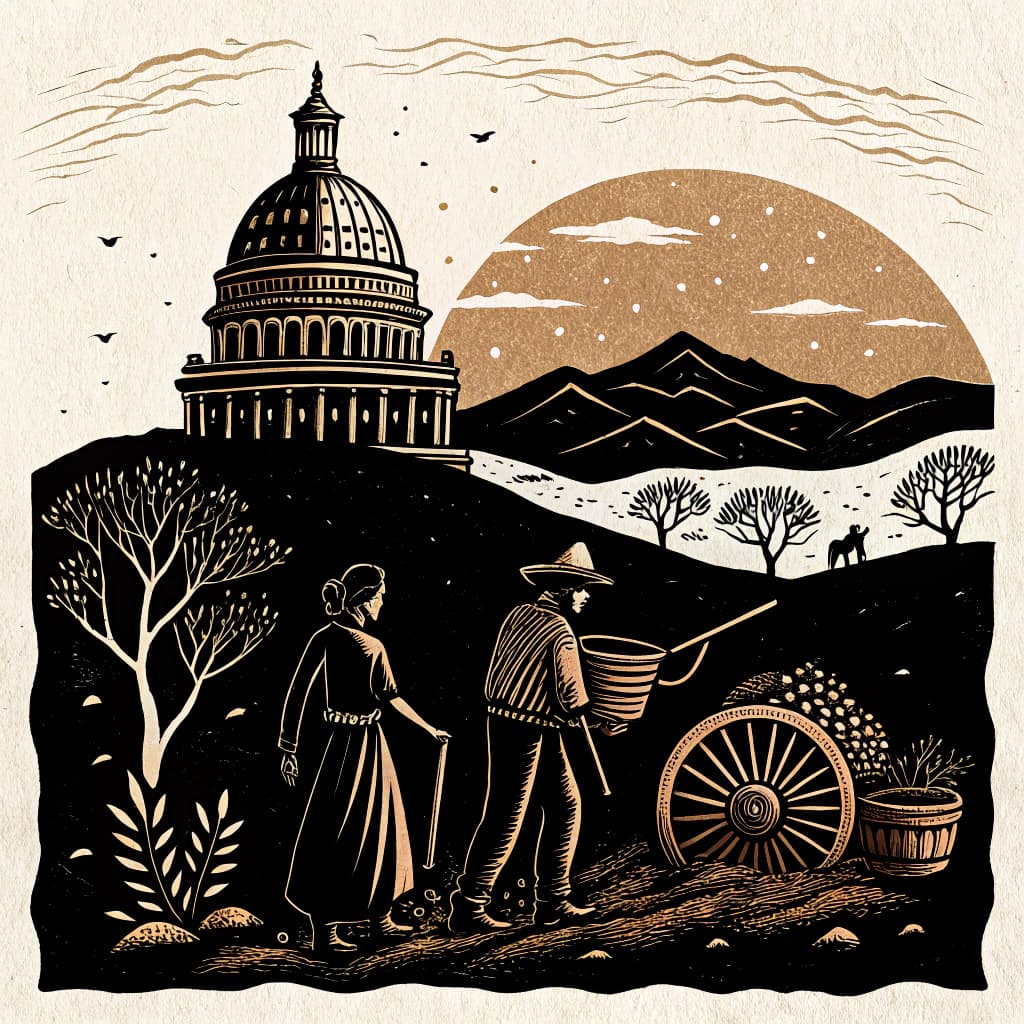
Students explore the economic activities of early colonial settlements, including agriculture, crafts, and trade networks with other colonies and Europe.
TL;DR:This topic comes alive when students experience the pressures and opportunities colonists faced rather than memorizing facts about crops or ports. Active learning lets students feel the weight of market decisions, the limits of geography, and the human cost of specialization, which builds deeper understanding than a lecture could achieve.
About This Topic
The colonial economies of early North America were built on the resources each region had in abundance. New England colonies developed fishing, shipbuilding, and trade networks because their rocky soil limited large-scale farming. The Middle Colonies became known as the 'breadbasket' because their fertile valleys produced wheat and grain. Southern colonies built their economies on tobacco, rice, and indigo , crops that required intensive labor and eventually drove the expansion of enslaved labor.
These regional economic patterns are essential context for understanding US history, and 4th graders studying their own state's colonial period examine which economic activities took root locally and why. C3 standards D2.Eco.1.3-5 and D2.Eco.13.3-5 ask students to explain how specialization and trade connect communities to a broader economy.
Trade also connected colonial settlements to one another and to Europe in complex networks. Students who understand these trade relationships can begin to see why colonists cared about taxation policies , and why economic grievances eventually became political ones. Simulation activities that let students make trade decisions make these abstract relationships concrete and memorable.
Key Questions
- Explain the primary economic activities that sustained early colonial life.
- Analyze the role of trade in connecting our state's early settlements to a wider world.
- Predict the economic challenges faced by early colonists and how they overcame them.
Learning Objectives
- Identify the primary agricultural products and craft industries that sustained early colonial settlements in our state.
- Analyze how trade routes connected our state's colonial settlements to other colonies and to Europe.
- Compare the economic challenges faced by different colonial regions within our state and explain how colonists addressed them.
- Explain the role of natural resources in shaping the economic activities of early colonial settlements.
- Evaluate the impact of European demand for colonial goods on local economies.
Before You Start
Why: Students need a basic understanding of the state's geography, including its natural resources and waterways, to understand why certain economic activities developed in specific locations.
Why: Students should have a foundational knowledge of what daily life was like for early colonists, including their housing, food, and basic needs, to understand the economic activities that supported them.
Key Vocabulary
| Subsistence Farming | Growing only enough food to feed one's own family, with little or no surplus for trade. |
| Cash Crop | A crop grown primarily for sale in a market, rather than for the farmer's own use. |
| Artisan | A skilled craftsperson who makes goods by hand, such as a blacksmith, weaver, or cooper. |
| Mercantilism | An economic theory where a country's power is increased by increasing exports and accumulating wealth, often through colonies supplying raw materials and buying finished goods. |
| Trade Network | A system of routes and relationships used to exchange goods and services between different places or groups. |
Watch Out for These Misconceptions
Common MisconceptionColonial trade was mostly about survival.
What to Teach Instead
While early settlements did focus on subsistence, colonial economies quickly became tied to profit and the Atlantic market. Tobacco planters closely watched London commodity prices. A trade simulation reveals how quickly market forces shaped colonial decisions, far beyond immediate survival.
Common MisconceptionAll colonists benefited equally from the colonial economy.
What to Teach Instead
Wealth in the colonial economy was deeply unequal. Merchants and large landowners accumulated significant capital while indentured servants and enslaved people provided the labor that generated it. Tracing a trade good back to its production helps students see this distribution of benefit and burden clearly.
Common MisconceptionColonies were economically isolated from each other.
What to Teach Instead
Colonial trade networks were extensive and interdependent. New England ships carried Middle Colony grain to Southern plantations and then to the Caribbean. This interconnection between colonies , and between the colonies and Europe , is one of the most important structural facts of early American history.
Active Learning Ideas
See all activities→Simulation Game
Colonial Trade Fair
Groups represent different colonial regions (New England, Middle Colonies, Southern Colonies). Each group starts with resource cards representing what their region produces and must trade to meet a list of basic needs. The activity reveals that no single region can be fully self-sufficient.
Think-Pair-Share
Why Did Colonists Specialize?
Give students a map showing colonial agricultural and economic zones. Ask why New Englanders built fishing fleets instead of large farms. Students pair up to explain using geographic evidence, then share with the class.
Inquiry Circle
Tracing a Trade Good
Groups trace the journey of one colonial product (tobacco, cod, beaver pelts) from its source to a European market, identifying who produced it, who transported it, who profited, and at whose expense. Groups present their findings on a simple flow map.
Real-World Connections
- Farmers today still specialize in certain crops based on climate and soil, similar to how colonial farmers focused on cash crops like tobacco or wheat for market sale.
- Local craft breweries and artisan bakeries in our state today reflect a modern version of the specialized craft production that was essential for colonial economies, providing goods not easily made at home.
- The global supply chains that bring goods from overseas to our local stores are a modern parallel to the transatlantic trade routes that connected colonial America to Europe, bringing manufactured goods and taking raw materials.
Assessment Ideas
Provide students with a map of the colonial period. Ask them to draw one trade route originating from our state's colonial settlements and label two types of goods that might have been traded along that route. Then, ask them to write one sentence explaining why that trade was important.
Present students with three scenarios: a farmer growing only enough food to eat, a blacksmith making tools for the community, and a merchant sending barrels of salted fish to England. Ask students to identify which scenario represents subsistence farming, craft production, and participation in a wider trade network, explaining their reasoning for each.
Pose the question: 'If you were a colonist in our state, what one resource or skill would you offer to trade, and what one item would you most want to receive in return?' Encourage students to think about local resources and the needs of the time.
Frequently Asked Questions
What were the main economic activities in early American colonial settlements?
How did colonial trade connect the colonies to Europe?
What challenges did early colonists face economically?
How does active learning help students understand colonial economics?
Planning templates for State History & Geography
5E Model
The 5E Model structures lessons through five phases (Engage, Explore, Explain, Elaborate, and Evaluate), guiding students from curiosity to deep understanding through inquiry-based learning.
Unit PlannerThematic Unit
Organize a multi-week unit around a central theme or essential question that cuts across topics, texts, and disciplines, helping students see connections and build deeper understanding.
RubricSingle-Point Rubric
Build a single-point rubric that defines only the "meets standard" level, leaving space for teachers to document what exceeded and what fell short. Simple to create, easy for students to understand.
More in Exploration & Settlement
Motives & Encounters of European Exploration
Students examine the motives of European exploration in North America and analyze the perspectives of both explorers and Indigenous peoples.
8 methodologies
Daily Life in Colonial Settlements
Students explore daily life in early settlements, covering farming, trade, religion, and family life, and how colonists adapted to new environments.
8 methodologies
Development of Early Communities
Students explore how geography, resources, and culture shaped the diverse communities that developed in our region, from farming villages to trading posts.
8 methodologies
Slavery and Indentured Servitude
Students examine the role of enslaved people and indentured servants in the early development and economy of the state.
8 methodologies
Colonial Governance & Laws
Students investigate the early forms of government established in colonial settlements and the laws that governed daily life.
8 methodologies
Colonial Conflicts & Alliances
Students examine instances of conflict and cooperation between European settlers and Indigenous peoples, as well as inter-colonial rivalries.
8 methodologies