United States · Common Core State Standards
12th Grade Government & Economics
An intensive study of the American political and economic systems. This course prepares students for civic life by exploring the foundations of democracy, the mechanics of federal institutions, civil liberties, and the principles of micro and macroeconomics.
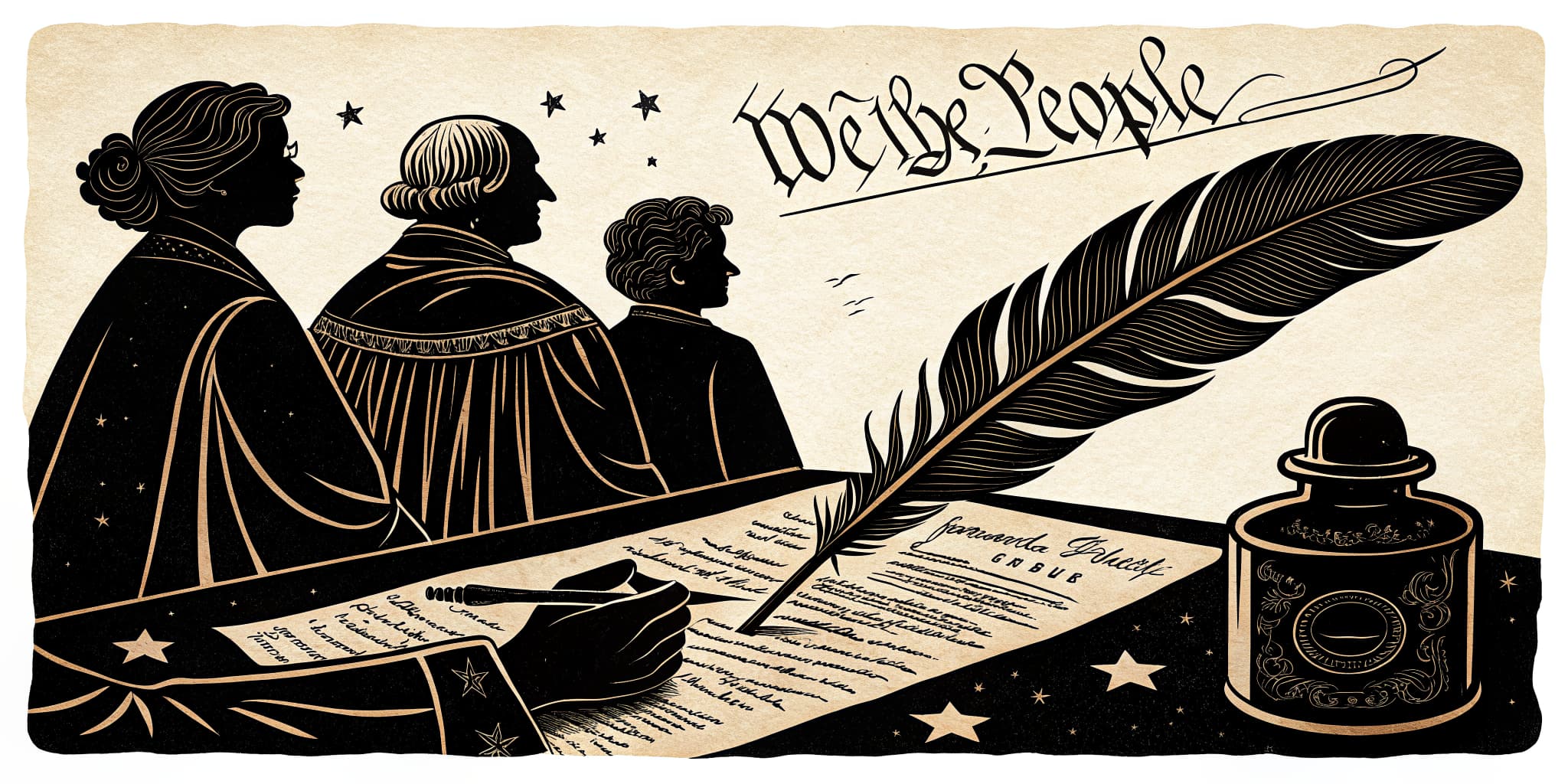
01Foundations of American Democracy
The philosophical origins, revolutionary impulses, and constitutional frameworks that established the United States government.
Analyzing Locke, Montesquieu, and Rousseau's influence on the Declaration of Independence and the concept of the social contract.
Examining the causes of the American Revolution, including British policies and colonial responses, leading to independence.
Examining the weaknesses of the first US government and the crises, like Shays' Rebellion, that led to the Constitutional Convention.
Exploring the key debates at the Constitutional Convention, including representation, slavery, and executive power.
The debate between Federalists and Anti-Federalists regarding representation, slavery, and the necessity of a Bill of Rights.
Detailed study of popular sovereignty, limited government, and the rule of law as foundational constitutional principles.
Examining how the division of governmental authority and mutual restraints prevent the concentration of power.
The evolution of federalism from Dual to Cooperative, and the impact of the 10th Amendment and the Necessary and Proper Clause.
The formal and informal ways the Constitution changes over time to reflect a changing society.
An introduction to the first ten amendments and their role in safeguarding individual liberties against government intrusion.
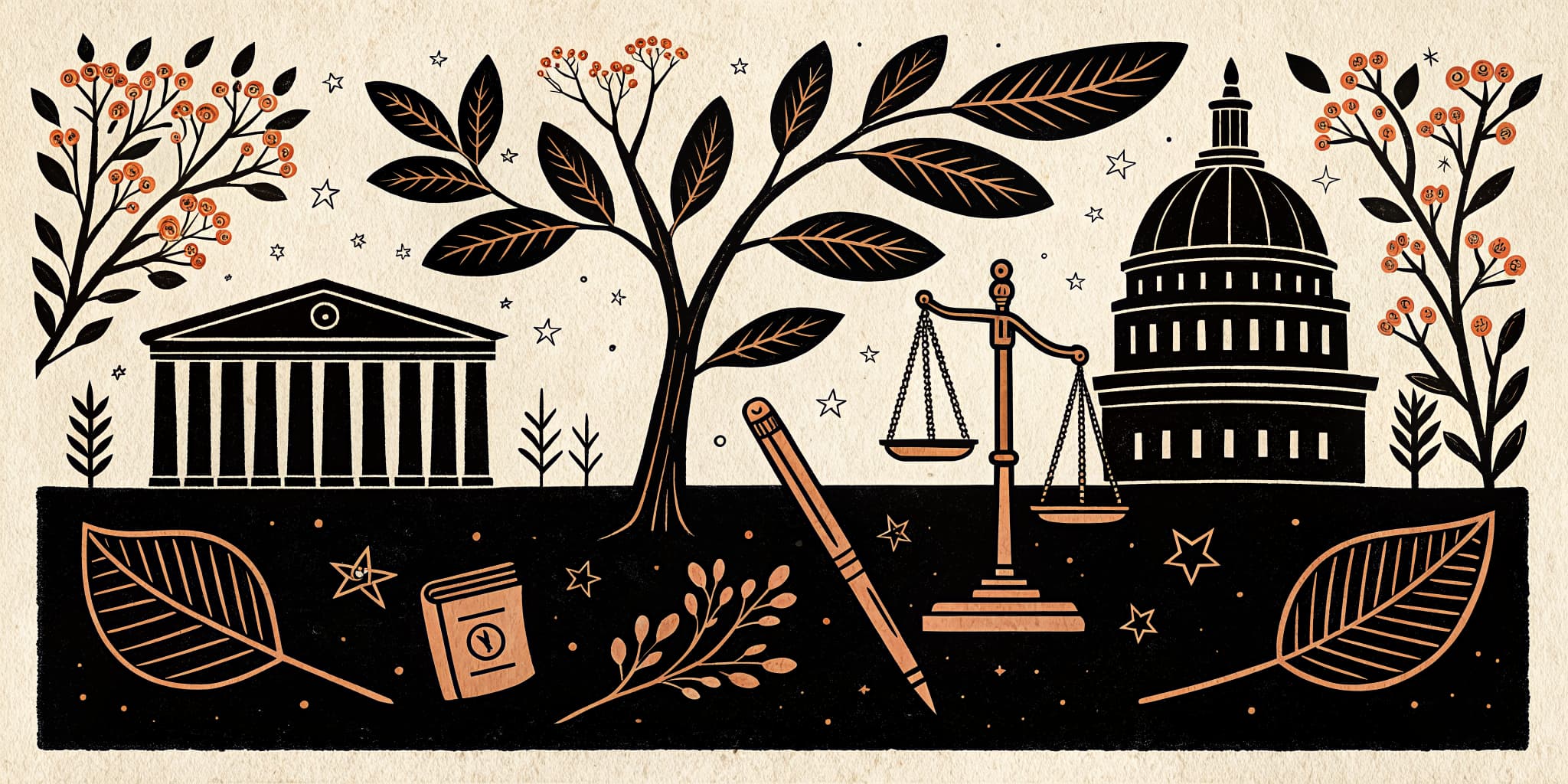
02The Three Branches of Government
An in-depth look at the institutions of power: Congress, the Presidency, and the Federal Judiciary.
Comparing the structures, powers, and functions of the two chambers of Congress.
How a bill actually becomes a law, focusing on the role of committees, subcommittees, and floor debate.
The politics of Census data, reapportionment, and the drawing of district lines for political advantage.
The expansion of executive power from George Washington to the current administration.
The 'Fourth Branch' of government: cabinet departments, independent agencies, and the civil service.
The structure of the federal courts and the power established in Marbury v. Madison.
The mechanisms by which the branches restrain one another during times of conflict.
The tension between the President as Commander-in-Chief and Congress's power to declare war.
Exploring different approaches to constitutional interpretation and their impact on judicial decisions.
Analyzing the impact of pivotal Supreme Court decisions on American law and society.
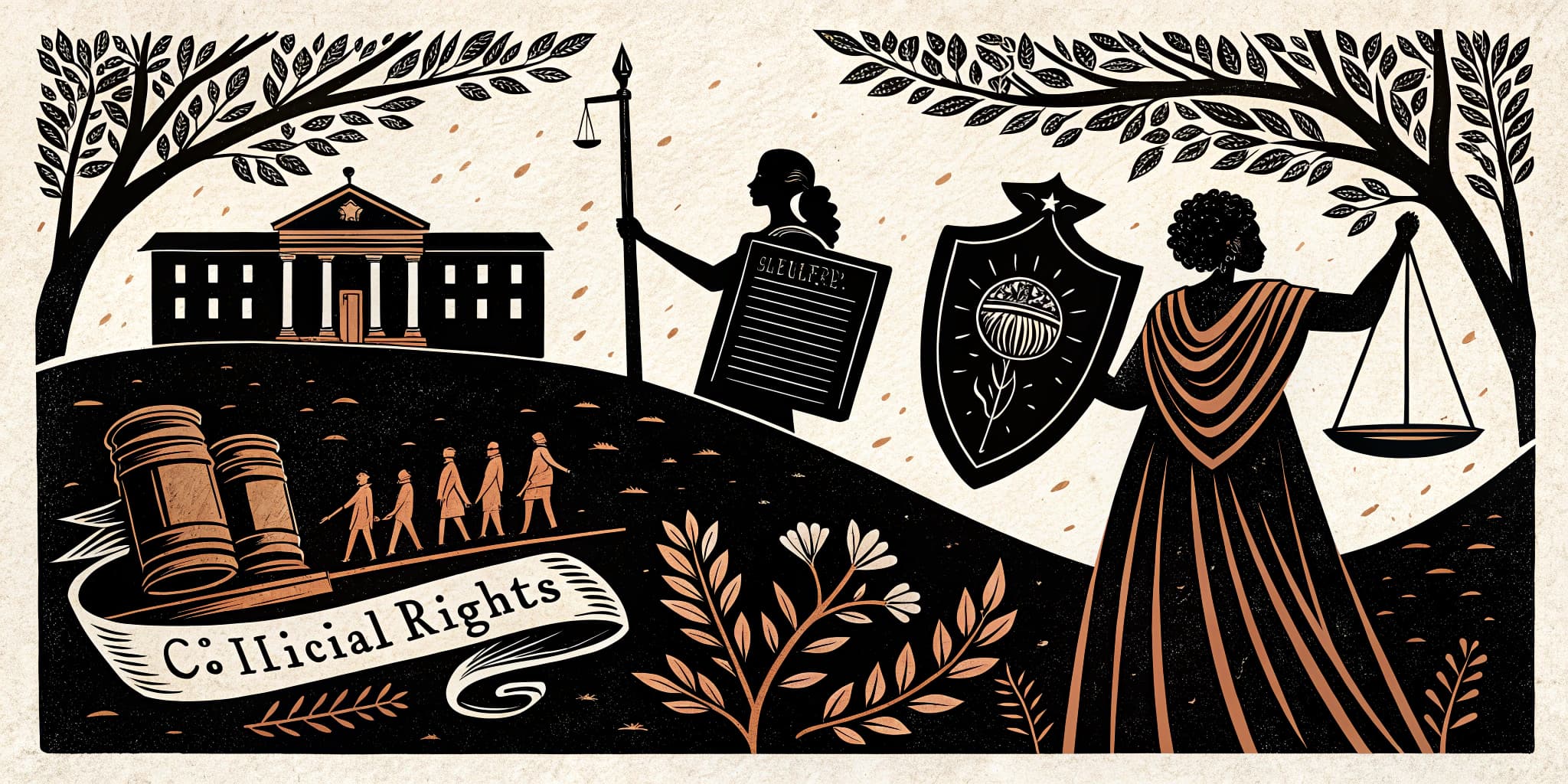
03Civil Liberties & Civil Rights
The legal protections of individuals against government overreach and the struggle for equality under the law.
Exploring the boundaries of protected speech, including 'clear and present danger' and symbolic speech.
The 'wall of separation' between church and state and the limits of practicing one's faith.
Examining the Fourth Amendment's protection against unreasonable searches and seizures, including the exclusionary rule.
Due process, protection against self-incrimination, and the right to a fair trial.
How the Bill of Rights was applied to the states through the Due Process and Equal Protection clauses.
The legal battle against Jim Crow, culminating in the Civil Rights Act of 1964 and Voting Rights Act of 1965.
The history of the women's suffrage movement and the ongoing legal battles over Title IX and the ERA.
Debating the use of race-conscious policies in admissions and hiring to remedy historical injustice.
The 'penumbra' of rights not specifically listed in the Constitution, including reproductive rights and data privacy.
Exploring the history and legal battles for LGBTQ+ equality, including landmark Supreme Court cases.
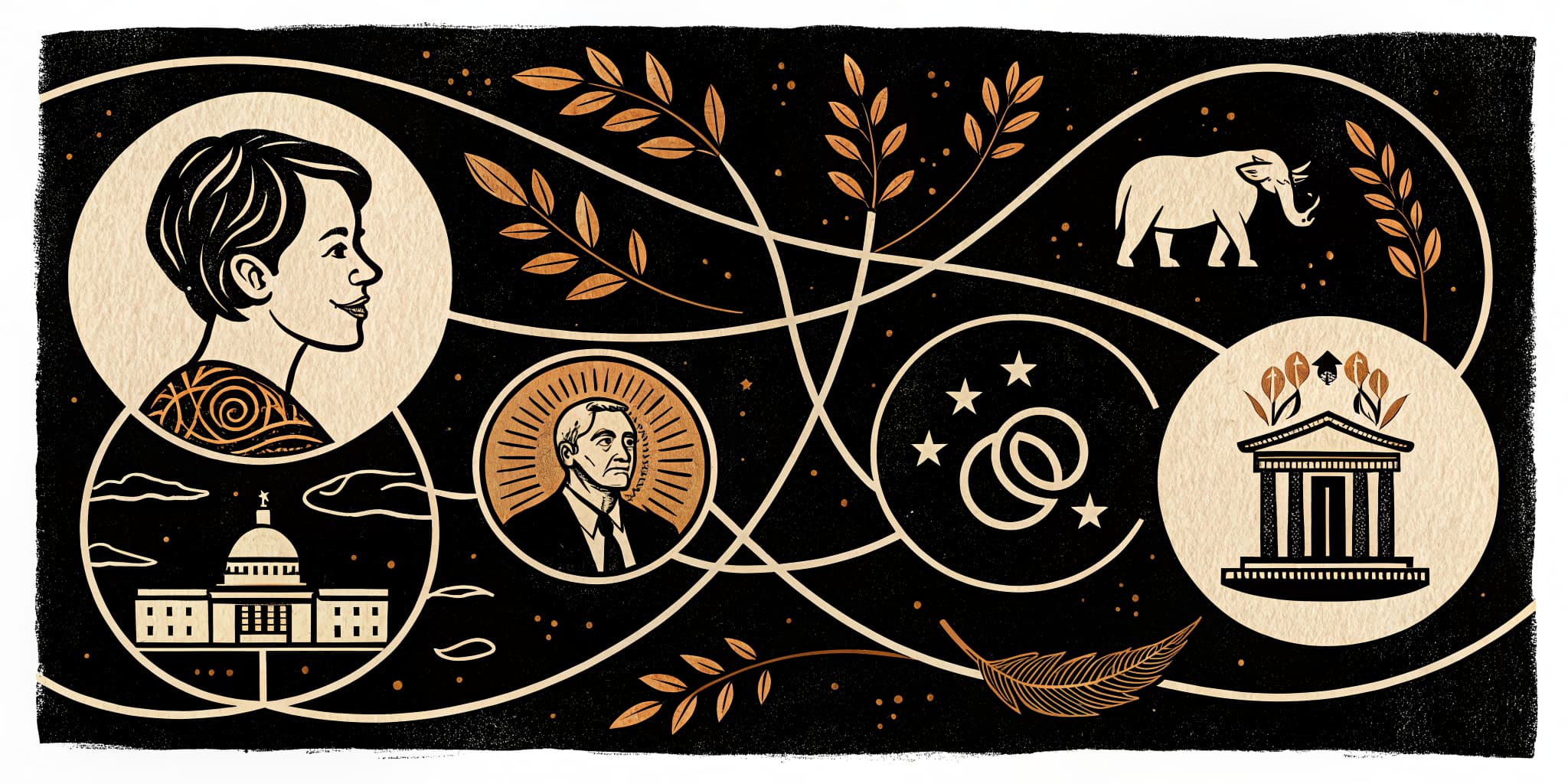
04Citizen Participation & Political Ideology
How individuals form political beliefs and interact with the government through parties, elections, and interest groups.
Factors that shape political identity: family, education, media, and peer groups.
Why the US maintains a winner-take-all system and the role of third parties as 'spoilers' or 'innovators.'
The methods used by organized groups to influence public policy and the 'revolving door' between government and lobbying.
The impact of money in politics, PACs, Super PACs, and the debate over corporate personhood.
Analyzing who votes, who doesn't, and the demographic trends that predict election outcomes.
The evolution of media from the 'Penny Press' to 24-hour news cycles and social media algorithms.
The science of polling, including sampling error, question wording, and how polls influence political strategy.
Examining the history, function, and controversies surrounding the Electoral College in presidential elections.
Analyzing the evolution of major political parties and the key differences in their platforms and ideologies.
05Fundamental Economic Concepts
The basic principles of economics, including scarcity, opportunity cost, and how markets function.
The fundamental economic problem that resources are limited while wants are unlimited.
Comparing how different societies answer the three basic economic questions: what, how, and for whom to produce.
The mechanics of the price system and how markets reach a state of balance.
Understanding how responsive quantity demanded or supplied is to changes in price, income, or other factors.
From sole proprietorships to corporations, and from perfect competition to monopolies.
How wages are determined and the importance of education and training in a global economy.
Visualizing the flow of money, resources, and products between households and firms.
When the market doesn't produce the optimal outcome, such as pollution (negative) or education (positive).
Exploring the reasons for and effects of government intervention in markets, including antitrust laws and consumer protection.
06Macroeconomics: Measuring the Economy
How we track the health of the national economy using indicators like GDP, inflation, and unemployment.
The total value of all final goods and services produced within a country in a year.
Measuring who is working, who isn't, and the different types of unemployment (frictional, structural, cyclical).
The causes and effects of rising prices and the eroding purchasing power of money.
The recurring patterns of expansion, peak, contraction, and trough in economic activity.
Understanding the total demand and supply for all goods and services in an economy and their interaction.
The role of the central bank in controlling the money supply and interest rates.
The use of government spending and revenue collection to influence the economy.
The accumulation of yearly deficits and the debate over the debt ceiling.
07Global Economics & Trade
How nations interact through trade, exchange rates, and international organizations.
The economic logic behind trade: why nations benefit from specialization.
The tools of protectionism and their impact on domestic industries and consumers.
How the value of the dollar is determined and how it affects international purchasing power.
The roles of the World Bank, IMF, and WTO in the global economy.
The integration of world markets and the migration of manufacturing to low-cost regions.
Analyzing why some nations are wealthy and others remain in a cycle of poverty.
Exploring the economic challenges and policies related to environmental protection and resource management.
08Personal Finance & Civic Duty
The practical application of economic and political knowledge to the life of a citizen.
Analyzing the costs, benefits, and student loan implications of post-secondary education.
Understanding interest rates, credit scores, and the risks of predatory lending.
Developing personal budgets, understanding different saving strategies, and setting financial goals.
How to read a paystub, file a tax return, and understand the difference between progressive and regressive taxes.
Exploring the stock market, mutual funds, 401(k)s, and the future of Social Security.
The importance of city councils, school boards, and local ordinances in daily life.
Understanding different forms of civic participation, from voting to grassroots activism and advocacy.
Final synthesis of the course, looking at emerging challenges like AI, climate change, and global shifts in power.