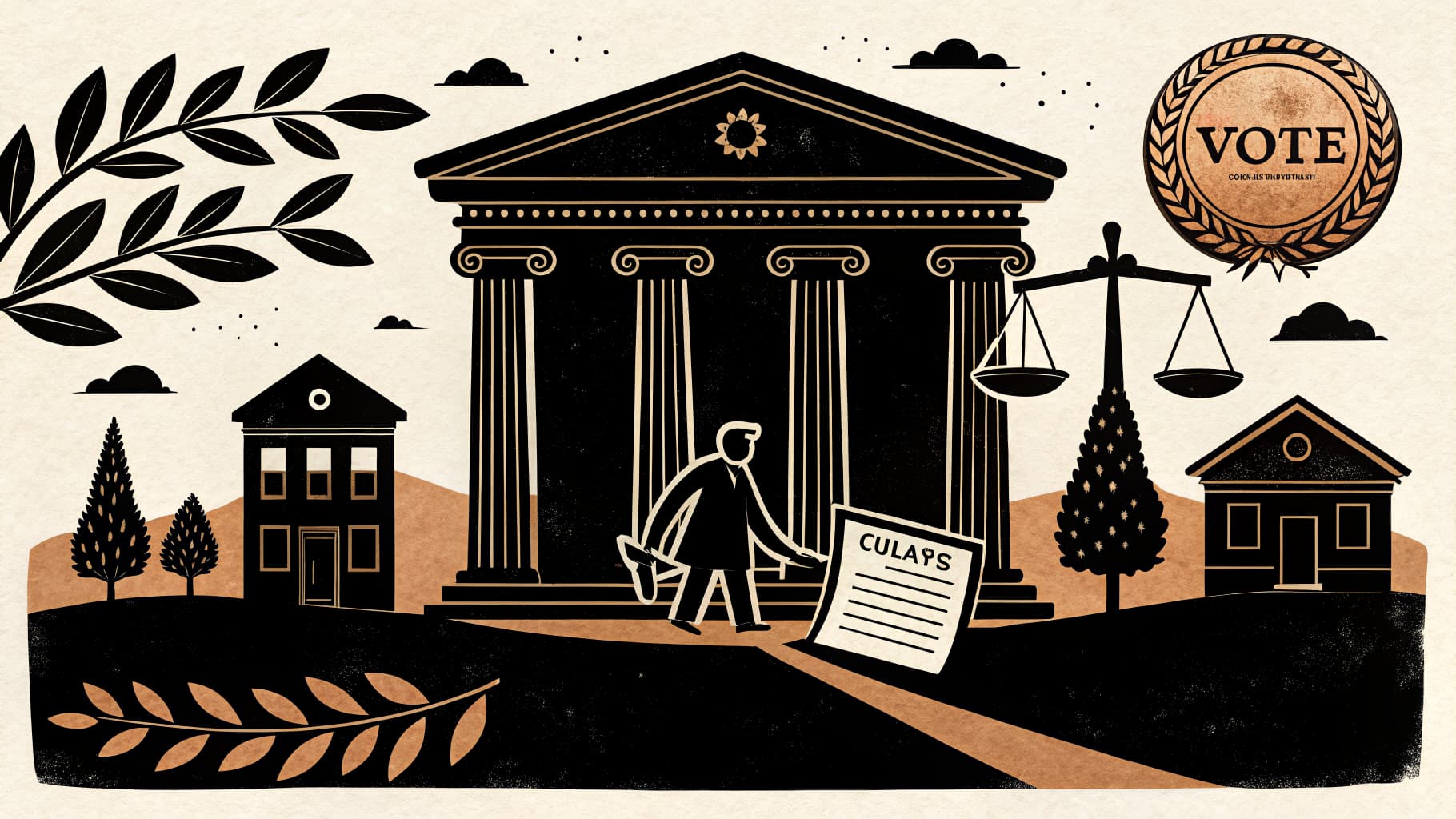
The Social Contract and Modern Challenges
Revisit the social contract theory in the context of contemporary issues, such as surveillance, public health, and environmental regulations.
TL;DR:Active learning works for this topic because students need to test abstract theories against real-world conflicts. When they debate surveillance, analyze pandemic policies, or walk through contemporary cases, they see how social contract ideas meet modern governance challenges directly. This hands-on approach turns 17th-century philosophy into a living framework for civic decision-making.
About This Topic
The social contract theories of Locke, Hobbes, and Rousseau were developed to explain why individuals surrender certain freedoms to live under government authority. These frameworks remain useful for analyzing contemporary governance challenges, including mass digital surveillance, mandatory public health measures, and environmental regulations that restrict private property use. For 12th graders, this topic builds directly on earlier units by asking whether the theoretical framework still holds under conditions the Founders never anticipated.
The tension between individual liberty and collective security runs through all three modern challenges. A government that tracks digital communications may be protecting public safety, but it is also exercising a form of power that neither Locke nor Jefferson envisioned when writing about the limits of state authority. Similarly, pandemic-era vaccine mandates and stay-at-home orders tested the boundaries of what citizens can be required to surrender for collective welfare. Students should engage with these as genuine dilemmas, not as cases with obvious answers on either side.
Active learning is particularly well-suited here because the social contract cannot simply be recited; it needs to be applied to messy, contested real-world situations. Structured debates and case study analysis push students to test the theory against evidence and discover both its explanatory power and its limits.
Key Questions
- Critique how modern technology challenges the traditional understanding of the social contract.
- Explain the tension between individual liberty and collective security in public health crises.
- Assess whether current government actions uphold the principles of the social contract.
Learning Objectives
- Critique the extent to which modern surveillance technologies, such as facial recognition or data mining, align with or contradict the foundational principles of the social contract as articulated by Locke and Hobbes.
- Analyze the ethical dilemmas presented by mandatory public health interventions, like vaccine requirements or lockdowns, by evaluating the balance between individual liberties and the government's responsibility for collective security.
- Assess the legitimacy of government-imposed environmental regulations, such as emissions standards or land-use restrictions, by applying social contract theory to determine if they serve the common good and respect individual rights.
- Synthesize arguments from historical social contract theorists and contemporary political philosophers to construct a reasoned position on whether current government actions in areas of technology, public health, or environmental policy uphold the implicit agreement between the governed and the government.
Before You Start
Why: Students need a basic understanding of the structure and purpose of the US government, including concepts like separation of powers and checks and balances, before analyzing its relationship to social contract theory.
Why: Familiarity with the core ideas of Enlightenment thinkers like Locke, Hobbes, and Rousseau, including their definitions of natural rights and the state of nature, is essential for understanding social contract theory.
Key Vocabulary
| Social Contract Theory | A philosophical concept that political legitimacy arises from an agreement among individuals to surrender certain freedoms to a government in exchange for protection and order. |
| Natural Rights | Inherent rights possessed by individuals, such as life, liberty, and property, which are believed to exist prior to and independent of government. |
| State of Nature | A hypothetical condition of humanity before the establishment of organized society and government, used by philosophers to explore the basis of political authority. |
| Collective Security | A principle where an attack on one state is considered an attack on all, extended in this context to mean measures taken for the safety and well-being of the entire population. |
| Sovereignty | The supreme authority within a territory, referring to the power of the state to govern itself and make its own decisions, often debated in relation to individual rights. |
Watch Out for These Misconceptions
Common MisconceptionThe social contract justifies any government action taken for public safety.
What to Teach Instead
Social contract theorists, especially Locke, placed firm limits on state authority. Citizens surrender only enough freedom to secure their natural rights; any government action beyond that violates the contract. Active case analysis helps students apply these limits rather than treating collective security as an open-ended justification for government power.
Common MisconceptionEnvironmental regulations violate the social contract by restricting property rights.
What to Teach Instead
Social contract theorists did recognize property rights, but within a community context. Locke's proviso holds that appropriation of resources is legitimate only if enough and as good remains for others. This provides a theoretical basis for some environmental regulation. Working through specific cases where property rights and environmental protection conflict helps students see the nuance in Locke's own framework.
Common MisconceptionThe social contract was a one-time historical agreement.
What to Teach Instead
The social contract is a philosophical framework describing an ongoing, implicit relationship between government and governed, not a historical event or signed document. It is renegotiated continuously through elections, legislation, protest, and judicial review. Group discussion of how contemporary events constitute forms of renegotiation helps students understand the framework as dynamic rather than fixed.
Active Learning Ideas
See all activities→Formal Debate
Post-9/11 Surveillance and the Social Contract
Present the NSA's post-9/11 metadata collection program. Half the class argues it represents a legitimate collective security trade-off consistent with social contract theory. The other half argues it exceeds the state's legitimate authority under the same framework. Each side must ground its argument in Locke's theory specifically, and debrief identifies where the two sides' interpretations diverge.
Case Study Analysis
COVID-19 Policy
Give student pairs three specific pandemic-era policies: a stay-at-home order, a vaccine mandate for healthcare workers, and a mask requirement in public schools. For each, students complete a structured analysis: Which social contract theory best supports this policy? Which challenges it? Where does individual obligation end? Pairs share their most contested analysis with the class.
Gallery Walk
The Social Contract in Contemporary Governance
Set up five stations, each addressing a current issue: mass surveillance, climate regulations, public health mandates, eminent domain, and social media content moderation. Each station includes a short primary source and a guiding question. Students annotate with their assessment of how each social contract theorist would respond.
Real-World Connections
- The debate over the National Security Agency's (NSA) data collection programs, revealed by Edward Snowden, directly questions whether mass surveillance violates the privacy rights implied in a social contract, impacting citizens' trust in government oversight.
- During the COVID-19 pandemic, state governments across the US, such as California and New York, implemented mask mandates and business closures, forcing citizens to weigh personal freedom against public health imperatives and the government's duty to protect its populace.
- The Environmental Protection Agency's (EPA) regulations on industrial emissions, like those affecting the air quality in major cities such as Los Angeles or Houston, represent government action that restricts private property use for the purported benefit of collective environmental health.
Assessment Ideas
Pose the following to students: 'Imagine a new technology allows the government to predict and prevent all major crimes with 100% accuracy, but requires constant monitoring of all digital communications. Does entering into this 'contract' uphold or violate the spirit of the social contract? Justify your answer using specific principles from Locke or Hobbes.'
Provide students with three brief scenarios: 1) a mandatory quarantine for a contagious disease, 2) a ban on gasoline-powered cars to reduce pollution, and 3) a law requiring all citizens to share their social media activity with law enforcement. Ask students to write one sentence for each scenario explaining which aspect of the social contract (individual liberty or collective security) is most challenged and why.
Students write a short paragraph arguing whether a specific modern government action (e.g., a public health mandate, a surveillance law) is a legitimate exercise of power under the social contract. Partners then read each other's paragraphs and provide written feedback on whether the argument clearly references social contract principles and uses specific examples to support its claim.
Frequently Asked Questions
How does the social contract apply to modern surveillance programs?
Did the COVID-19 pandemic challenge the social contract?
What are the best active learning approaches for teaching the social contract in relation to current events?
How do I help students evaluate whether a government action upholds the social contract?
Planning templates for Civics & Government
More in Foundations of American Democracy
Enlightenment Roots of American Government
An investigation into Enlightenment thought and how it shaped the American concept of limited government and natural rights.
8 methodologies
Colonial Grievances and Revolutionary Ideals
Examine the specific grievances listed in the Declaration of Independence and their connection to Enlightenment principles.
8 methodologies
Weaknesses of the Articles of Confederation
Analyze the structural flaws of the Articles of Confederation and the challenges they posed for the new nation.
8 methodologies
The Constitutional Convention: Compromise & Conflict
Investigate the key debates and compromises that shaped the U.S. Constitution, including the Great Compromise and the 3/5 Compromise.
8 methodologies
Federalist vs. Anti-Federalist Debates
An analysis of the core disagreements regarding the size of the republic and the necessity of a Bill of Rights.
8 methodologies
Principles of the U.S. Constitution
Explore the foundational principles embedded in the Constitution: popular sovereignty, limited government, separation of powers, checks and balances, and judicial review.
8 methodologies