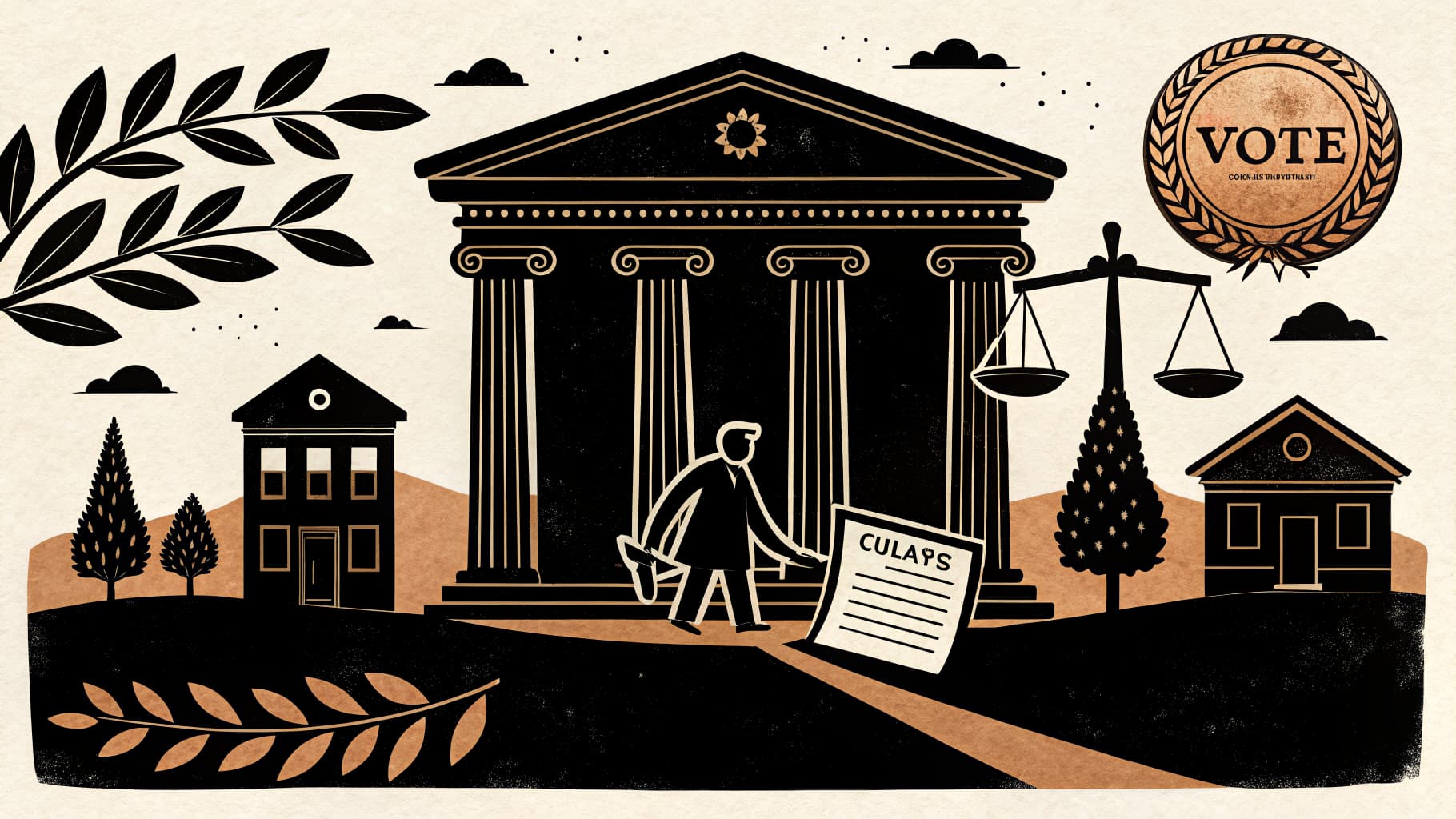
Access to Justice and Legal Aid
Discuss the challenges of ensuring equal access to legal representation and the role of legal aid services.
TL;DR:Active learning works well for this topic because the gap between legal rights and access to justice is not an abstract concept. When students role-play intake interviews or analyze real case outcomes, they see how scarcity, procedure, and power shape people’s lives in tangible ways.
About This Topic
The Sixth Amendment guarantees the right to counsel in criminal cases, but civil legal matters -- evictions, custody disputes, immigration hearings -- carry no such guarantee. For millions of Americans, the gap between legal rights on paper and the ability to enforce those rights in practice is enormous. Low-income individuals facing landlords, employers, or government agencies with attorneys on the other side navigate a system designed by and for those with resources.
Legal aid organizations, funded partly through the Legal Services Corporation (LSC), serve as a partial remedy. But LSC funding has been politically contested for decades, and restrictions on which cases legal aid lawyers can take leave many needs unmet. Pro bono requirements for lawyers vary by state, and public defenders in the criminal system remain under-resourced in many jurisdictions. Research consistently shows that representation dramatically improves outcomes, making the absence of counsel a structural inequality issue that the justice system has not resolved.
Active learning is especially effective here because the topic resists passive engagement. Students gain far more from simulated legal consultations, mock intake interviews, or case analysis than from reading statistics about the justice gap alone.
Key Questions
- Analyze the barriers to equal access to justice for all citizens.
- Evaluate the ethical obligation of the legal system to provide legal aid.
- Design policy solutions to improve access to legal representation for underserved communities.
Learning Objectives
- Analyze the primary legal and economic barriers that prevent low-income individuals from accessing legal representation in civil cases.
- Evaluate the ethical arguments for and against mandatory pro bono service or increased public funding for legal aid organizations.
- Design a community-based program proposal to increase access to legal information and services for a specific underserved population in the US.
- Compare the effectiveness of different legal aid models, such as staff attorneys, pro bono referrals, and self-help centers, in addressing specific legal needs.
Before You Start
Why: Students need to understand foundational rights, such as the Sixth Amendment's guarantee of counsel in criminal cases, to analyze its limitations in civil matters.
Why: Understanding the roles of the legislative, executive, and judicial branches is necessary to discuss policy solutions and the funding of legal aid services.
Key Vocabulary
| Access to Justice | The principle that all individuals, regardless of their financial status, should have equal opportunity to seek and receive legal remedies and representation. |
| Legal Aid | Free or low-cost legal services provided to individuals who cannot afford an attorney, often focusing on civil matters like housing, family law, and public benefits. |
| Pro Bono | Legal work performed voluntarily and without payment as a public service, typically by lawyers for those who cannot afford legal assistance. |
| Public Defender | An attorney appointed by the court to represent criminal defendants who cannot afford to hire their own lawyer. |
| Justice Gap | The disparity between the civil legal needs of low-income individuals and the resources available to meet those needs. |
Watch Out for These Misconceptions
Common MisconceptionEveryone in the United States has the right to a lawyer.
What to Teach Instead
The Sixth Amendment right to counsel applies only in criminal cases where imprisonment is possible. In civil cases -- including evictions, child custody, and immigration hearings -- there is no constitutional right to an attorney. Active role-play exercises make this distinction tangible rather than abstract.
Common MisconceptionLegal aid is free, so anyone who qualifies can get help.
What to Teach Instead
Legal aid organizations serve only a fraction of eligible low-income clients due to limited funding, staffing shortages, and restrictions on case types. Many people who qualify are turned away. Simulations that mirror intake interviews help students understand the scarcity problem firsthand.
Common MisconceptionIf you cannot afford a lawyer, the judge will guide you through the process.
What to Teach Instead
Judges must remain neutral and cannot advise self-represented parties, even in informal courts. Pro se litigants face steep procedural disadvantages. Analyzing real case outcomes shows students how the absence of counsel shapes results in concrete ways.
Active Learning Ideas
See all activities→Role Play
Legal Aid Intake Interview
Students work in pairs -- one as a legal aid attorney, one as a client with a civil legal problem (eviction, wage theft, custody dispute). The attorney must assess the case and explain options within a five-minute intake window. Debrief focuses on what information matters and what systemic constraints the legal aid office faces.
Problem-Based Learning
Case Sort: Rights to Counsel
Small groups receive scenario cards and sort them into three categories: right to counsel guaranteed, right to counsel contested, and no right to counsel. Groups then discuss where they think the right should extend and why. Discussion connects the sorting exercise to Gideon v. Wainwright and debates over its civil law analog.
Problem-Based Learning
Policy Design Workshop: Closing the Justice Gap
Groups select one underserved population (undocumented immigrants, domestic violence survivors, rural residents) and design a policy proposal to improve their access to legal representation. Proposals must address funding, scope, and likely political opposition. Groups present to the class for peer feedback.
Real-World Connections
- Legal Services Corporation (LSC) funded organizations, like Legal Aid Chicago or Legal Aid Society of Hawaii, provide direct representation to low-income families facing eviction or domestic violence.
- Law school clinics, such as those at Georgetown University Law Center or UCLA School of Law, offer students practical experience while assisting clients with immigration issues, tenant rights, or veterans' benefits.
- State bar associations, like the State Bar of California or the New York State Bar Association, often run pro bono programs that connect volunteer attorneys with individuals needing help in areas such as family law or consumer protection.
Assessment Ideas
Pose the following question to small groups: 'Imagine you are a legislator considering a budget increase for legal aid. What are the three strongest arguments you would make to justify this funding, and what are two potential counterarguments you anticipate?' Have groups share their key points.
Ask students to respond to these prompts: 1. Name one specific type of civil legal problem where representation is crucial but often unavailable to low-income individuals. 2. Briefly explain one way legal aid organizations attempt to bridge the 'justice gap'.
Present students with a hypothetical scenario of a person needing legal help (e.g., facing foreclosure, seeking custody). Ask them to identify: 1. Whether this case likely falls under the Sixth Amendment right to counsel. 2. What types of legal aid resources might be available to this person.
Frequently Asked Questions
What is the difference between a public defender and a legal aid lawyer?
Why is the civil justice gap considered an equity issue?
How does active learning help students understand access to justice problems?
What is the Legal Services Corporation and why is its funding controversial?
Planning templates for Civics & Government
More in The Judiciary and the Protection of Rights
Structure and Jurisdiction of the Federal Courts
Examine the hierarchy of the federal court system, from district courts to the Supreme Court, and their respective jurisdictions.
8 methodologies
Judicial Review and Constitutional Interpretation
Analyzing the power of the courts to strike down laws and the different philosophies of interpretation.
8 methodologies
Judicial Appointments and Politics
Investigate the process of appointing federal judges and Supreme Court justices, and the political factors involved.
8 methodologies
Civil Liberties: First Amendment Freedoms
Evaluate the ongoing tension between individual freedoms and the collective needs of society, focusing on speech, religion, press, assembly, and petition.
8 methodologies
Rights of the Accused: Due Process
Examine the Fourth, Fifth, Sixth, and Eighth Amendments and their protections for individuals accused of crimes.
8 methodologies
The Right to Privacy
Investigate the implied right to privacy, its origins in Supreme Court jurisprudence, and its application to modern issues.
8 methodologies