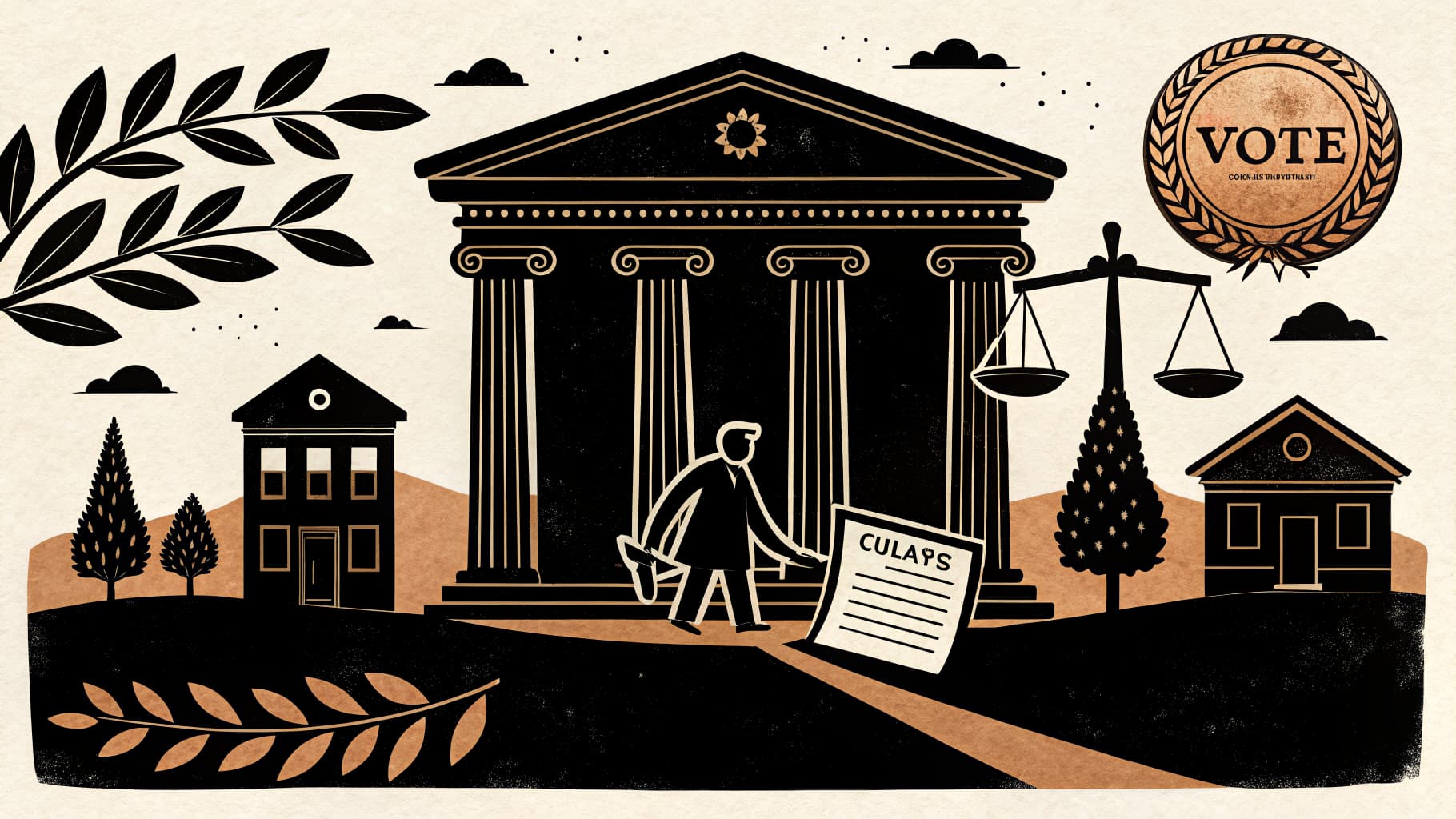
Principles of the Constitution: Popular Sovereignty & Limited Government
Students explore the foundational principles of popular sovereignty and limited government as enshrined in the Constitution.
TL;DR:Active learning works because these principles are abstract but shape every citizen’s daily experience with government. When students analyze real cases, debate scenarios, and simulate constraints, they see how ideas like ‘We the People’ translate into institutions and laws that protect rights even when majorities disagree.
About This Topic
Popular sovereignty and limited government are two foundational principles that together define the American constitutional framework. Popular sovereignty holds that all legitimate governmental authority derives from the consent of the governed. The Constitution's Preamble -- 'We the People of the United States...do ordain and establish this Constitution' -- makes this claim explicit. The principle is also embedded in regular elections, the ratification process, and the amendment procedure, each of which requires the active participation and approval of citizens or their representatives.
Limited government means that no government actor, however democratically elected, possesses unlimited authority. The Constitution limits government in two directions: horizontally (separating authority among three branches so none can act alone) and vertically (federalism distributes power between national and state governments). The Bill of Rights adds a third type of limit -- specific prohibitions on what government may do to individuals, even if a majority favors the action.
Students often conflate popular sovereignty with direct or unlimited democracy, missing the deliberate constraints the Founders built in. These distinctions carry practical consequences: a majority cannot vote to remove First Amendment protections, and a popular referendum cannot override a constitutional right. Students benefit from concrete case studies where popular will and constitutional limits conflict, which makes the distinction operational rather than abstract.
Key Questions
- Explain how popular sovereignty is reflected in the U.S. Constitution.
- Analyze the mechanisms by which the Constitution limits governmental power.
- Differentiate between popular sovereignty and direct democracy.
Learning Objectives
- Explain how the Preamble and amendment process demonstrate popular sovereignty in the U.S. Constitution.
- Analyze how the separation of powers and federalism serve as mechanisms for limited government.
- Compare and contrast popular sovereignty with direct democracy, identifying key differences in citizen participation and outcomes.
- Evaluate the role of the Bill of Rights in placing specific limits on governmental power, even when popular will supports an action.
- Differentiate between horizontal and vertical limits on government authority as established by the Constitution.
Before You Start
Why: Students need a basic understanding of the legislative, executive, and judicial branches to analyze how their separation limits government power.
Why: Familiarity with the Constitution's structure and purpose is necessary to understand its foundational principles like popular sovereignty and limited government.
Key Vocabulary
| Popular Sovereignty | The principle that the authority of a state and its government are created and sustained by the consent of its people, who are the source of all political power. |
| Limited Government | The principle that the government's powers are restricted by law or a constitution, preventing absolute rule and protecting individual rights. |
| Separation of Powers | The division of governmental responsibilities into distinct branches (legislative, executive, judicial) to limit any one branch from exercising excessive power. |
| Federalism | A system of government where power is divided between a national (federal) government and various regional (state) governments. |
| Bill of Rights | The first ten amendments to the U.S. Constitution, which guarantee specific individual liberties and place limits on government power. |
Watch Out for These Misconceptions
Common MisconceptionPopular sovereignty means the majority always gets what it wants.
What to Teach Instead
Constitutional limits protect minority rights even against majority preference. Courts can strike down laws that a majority supports if they violate constitutional protections. Using examples where popular opinion and court rulings have diverged helps students see the structural check on majority will.
Common MisconceptionLimited government means a small or weak government.
What to Teach Instead
Limited government means government whose authority has defined boundaries -- it can be large and powerful within those limits. The U.S. federal government employs millions of people and spends trillions of dollars, but it is still 'limited' because specific constitutional rules govern what it may and may not do.
Common MisconceptionPopular sovereignty and direct democracy are the same thing.
What to Teach Instead
Direct democracy allows citizens to vote on every issue themselves. Popular sovereignty is a broader principle about the source of political authority, which can be exercised through elected representatives, ratifying conventions, or referenda. The U.S. uses a representative republic -- a form of popular sovereignty that is deliberately not direct democracy.
Active Learning Ideas
See all activities→Case Study Analysis
When Majority Will Conflicts with Constitutional Limits
Groups receive two or three historical or hypothetical scenarios (e.g., a majority votes to ban a religious practice; a legislature passes a popular law suppressing protests). Students must identify which constitutional principle limits the government's action, cite the relevant clause, and explain why that limit exists. Groups share their analysis in a structured class discussion.
Think-Pair-Share
What Does 'We the People' Actually Mean?
Students read the Preamble alongside a short excerpt from a Federalist Paper and a contemporary argument about whose voice is actually represented in government decisions. Pairs discuss: Does popular sovereignty mean what the Preamble says it means? What mechanisms translate 'the people's' will into law? Each pair shares one insight with the class.
Simulation Game
The Constitutional Limits Game
Students are assigned roles as legislators who want to pass a popular bill. At each stage, they encounter a constitutional obstacle (the bill violates the First Amendment; it exceeds enumerated powers; the states have reserved authority in this area). Groups must revise their proposal to work within constitutional limits, learning through iteration what 'limited government' actually restricts.
Real-World Connections
- When citizens vote in local, state, or federal elections, they are directly exercising popular sovereignty by choosing their representatives and influencing government policy.
- The U.S. Supreme Court's rulings, such as those protecting freedom of speech or religion, exemplify limited government by enforcing constitutional restrictions on what the government can do, even if a majority disagrees.
- Debates over states' rights versus federal authority, such as those concerning environmental regulations or education standards, highlight the principle of federalism and how power is divided.
Assessment Ideas
Present students with two scenarios: Scenario A describes a town where citizens vote directly on every law. Scenario B describes the U.S. system of electing representatives. Ask students to identify which scenario best reflects popular sovereignty and explain why, referencing the Constitution.
Pose the question: 'Can a majority vote to take away a constitutional right?' Facilitate a class discussion where students must use the concepts of popular sovereignty and limited government, citing the Bill of Rights, to support their arguments.
Ask students to write one sentence defining popular sovereignty and one sentence defining limited government. Then, have them provide one specific example from the U.S. Constitution that illustrates each principle.
Frequently Asked Questions
What does popular sovereignty mean in practice for American government?
How does the Constitution limit government power?
What is the difference between popular sovereignty and direct democracy?
How can active learning help students understand limited government?
Planning templates for Civics & Government
More in Foundations of American Governance
Enlightenment Roots of Self-Government
Students analyze key Enlightenment thinkers and their contributions to democratic ideals and social contract theory.
8 methodologies
Colonial Grievances and Revolutionary Ideals
Students examine the causes of the American Revolution, focusing on colonial grievances and the articulation of revolutionary principles.
8 methodologies
The Articles of Confederation: Strengths & Weaknesses
Students evaluate the first U.S. government, identifying its successes and critical failures that led to the call for a new constitution.
8 methodologies
Constitutional Convention: Compromise & Conflict
Students explore the major debates and compromises that shaped the U.S. Constitution, including representation and slavery.
8 methodologies
Federalist Arguments for a Strong Republic
Students analyze key Federalist Papers to understand the arguments for a strong central government and the structure of the new republic.
8 methodologies
Anti-Federalist Concerns and the Bill of Rights
Students examine the Anti-Federalist critiques of the Constitution and the demand for a Bill of Rights to protect individual liberties.
8 methodologies