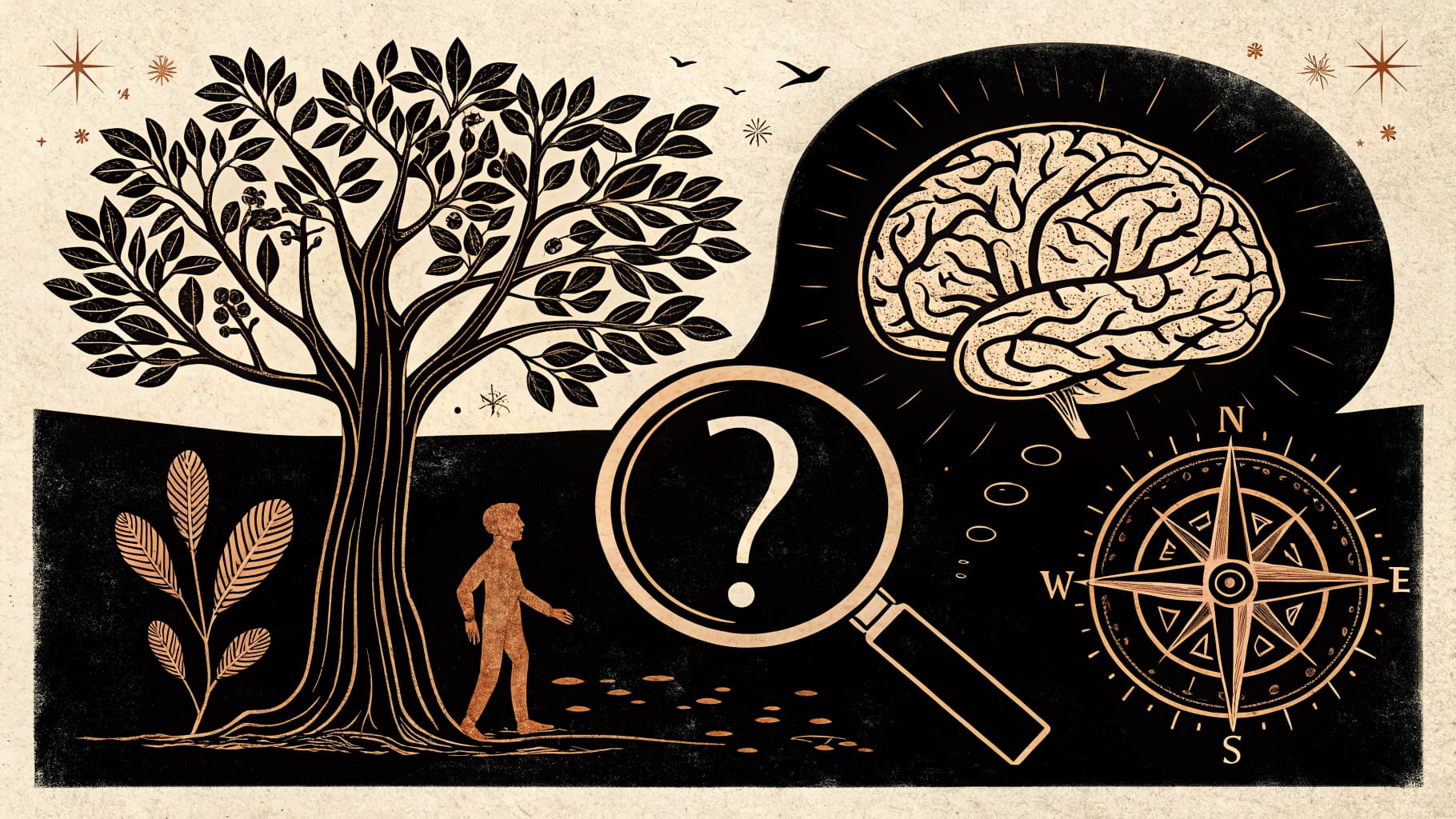
The Nature of Mathematical Truth
Debate whether mathematical concepts are discovered in nature or invented by the human mind.
TL;DR:Mathematics is often seen as the pinnacle of certainty, but its philosophical foundations are deeply debated. This topic asks: Is math a 'discovery' of universal truths that exist independently of us (Platonism), or is it an 'invention' of the human mind, a useful tool or language we created (Formalism/Constructivism)?
About This Topic
Mathematics is often seen as the pinnacle of certainty, but its philosophical foundations are deeply debated. This topic asks: Is math a 'discovery' of universal truths that exist independently of us (Platonism), or is it an 'invention' of the human mind, a useful tool or language we created (Formalism/Constructivism)?
This unit is a favorite for students who enjoy the 'purity' of math, as it forces them to consider the nature of the numbers they use every day. It connects to the SEAB syllabus outcomes regarding the nature of mathematical truth and its relationship to the physical world. This topic comes alive when students can physically model the patterns of mathematical logic through collaborative investigations into 'impossible' shapes or universal constants.
Key Questions
- Is mathematics a universal language?
- Are mathematical truths absolute?
- How does mathematics relate to the physical world?
Watch Out for These Misconceptions
Common MisconceptionMathematics is just 'counting' and 'calculating.'
What to Teach Instead
Math is the study of abstract structures and relationships. Using 'Gallery Walks' of complex proofs or fractals can help students see math as a conceptual landscape rather than just a set of operations.
Common MisconceptionMathematical truths are only true because we agree on the rules.
What to Teach Instead
While the *symbols* are agreed upon, the *relationships* (like the ratio of a circle's circumference to its diameter) seem to hold regardless of our rules. Peer discussion helps students distinguish between 'notation' and 'truth.'
Active Learning Ideas
See all activities→Formal Debate
Discovery vs. Invention
Students are assigned to the 'Platonist' (Discovery) or 'Formalist' (Invention) side. They must argue their case using examples like the Golden Ratio, prime numbers, or imaginary numbers.
Inquiry Circle
The 'Unreasonable Effectiveness' of Math
Groups research a mathematical concept that was 'invented' for pure logic but later found to perfectly describe a physical phenomenon (e.g., non-Euclidean geometry and General Relativity). They present why this supports 'discovery.'
Think-Pair-Share
If Humans Disappeared...
Students consider the question: 'If all sentient life vanished, would 2+2=4 still be true?' They discuss in pairs and then share how their answer reveals their stance on the nature of math.