Singapore · MOE Syllabus Outcomes
Secondary 1 History
Secondary 1 History: Southeast Asian history, early civilisations, the maritime empires of Srivijaya and Majapahit, and the story of early Singapura. Students build a foundation in the region's deep past.

01The Historian's Craft & Early SE Asia
Introduction to historical inquiry and the geographical foundations of the Southeast Asian region.
Students will learn the fundamental principles of historical inquiry, distinguishing between primary and secondary sources and understanding the historian's role.
Students will explore the physical geography of Southeast Asia and its impact on early human settlement and interaction.
Students will investigate archaeological techniques and interpret artifacts to understand prehistoric life in Southeast Asia.
Students will examine the transition from hunting and gathering to settled agriculture, focusing on rice cultivation and early tool development.
Students will explore the spread of Indian religions, political ideas, and artistic styles into Southeast Asia through trade and cultural exchange.
Students will investigate the impact of Chinese trade, political systems, and cultural elements on early Southeast Asian kingdoms.
Students will study the rise and characteristics of Funan, one of the earliest known maritime kingdoms in mainland Southeast Asia.
Students will explore the history and cultural distinctiveness of the Champa kingdom, focusing on its maritime activities and Indianized culture.
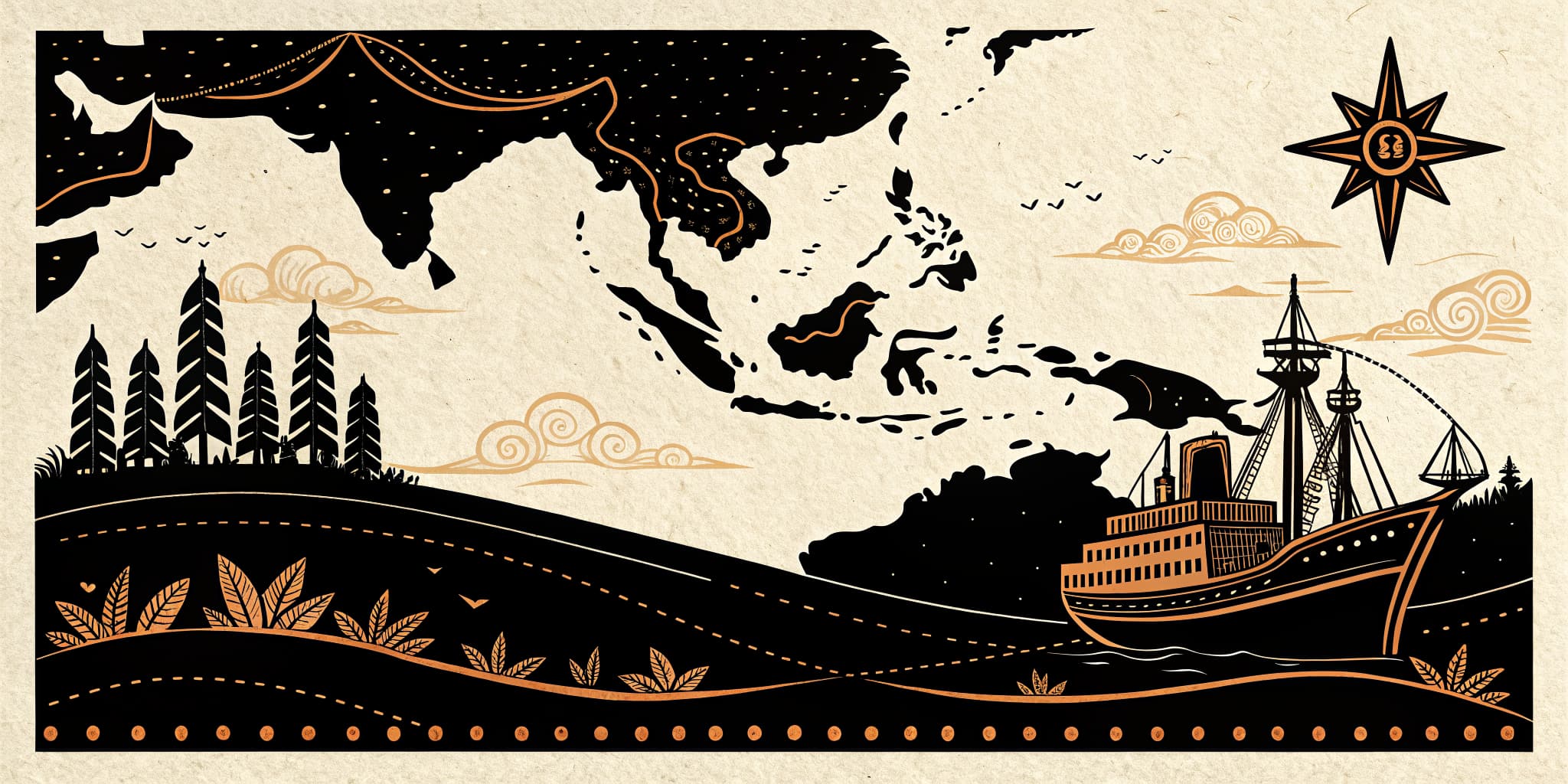
02Srivijaya: A Maritime Empire
The study of the powerful maritime state based in Sumatra that controlled the Straits of Malacca.
Students will investigate the geographical and economic factors that led to Srivijaya's rise as a dominant maritime power.
Students will explore Srivijaya's role as a renowned hub for Buddhist scholarship and pilgrimage, and its cultural impact.
Students will examine the social, economic, and cultural aspects of daily life within Srivijaya's bustling international port cities.
Students will investigate Srivijaya's diplomatic and economic relationship with the powerful Tang and Song dynasties of China.
Students will analyze the various internal and external factors that contributed to the eventual decline of the Srivijaya Empire.
Students will trace the long-term cultural, linguistic, and political impact of Srivijaya on the broader Malay world.

03The Majapahit Empire
The study of the Majapahit Empire of Java, one of the largest states in regional history.
Students will investigate the origins of the Majapahit Empire in Java and its initial expansion across the Indonesian archipelago.
Students will examine the failed Yuan dynasty invasion of Java and its unexpected role in the founding of the Majapahit Empire.
Students will study the life and achievements of Gajah Mada, Majapahit's legendary Prime Minister, and the significance of his Palapa Oath.
Students will explore the unique blend of Hindu-Buddhist traditions, monumental architecture, and literary achievements of the Majapahit Empire.
Students will investigate the dual economic system of Majapahit, emphasizing wet-rice cultivation and its extensive maritime trade networks.
Students will examine the distinctive Javanese artistic styles that emerged during the Majapahit period, including the development of shadow puppetry.
Students will investigate the arrival and spread of Islam in Southeast Asia and its role in the transformation and eventual decline of the Majapahit Empire.
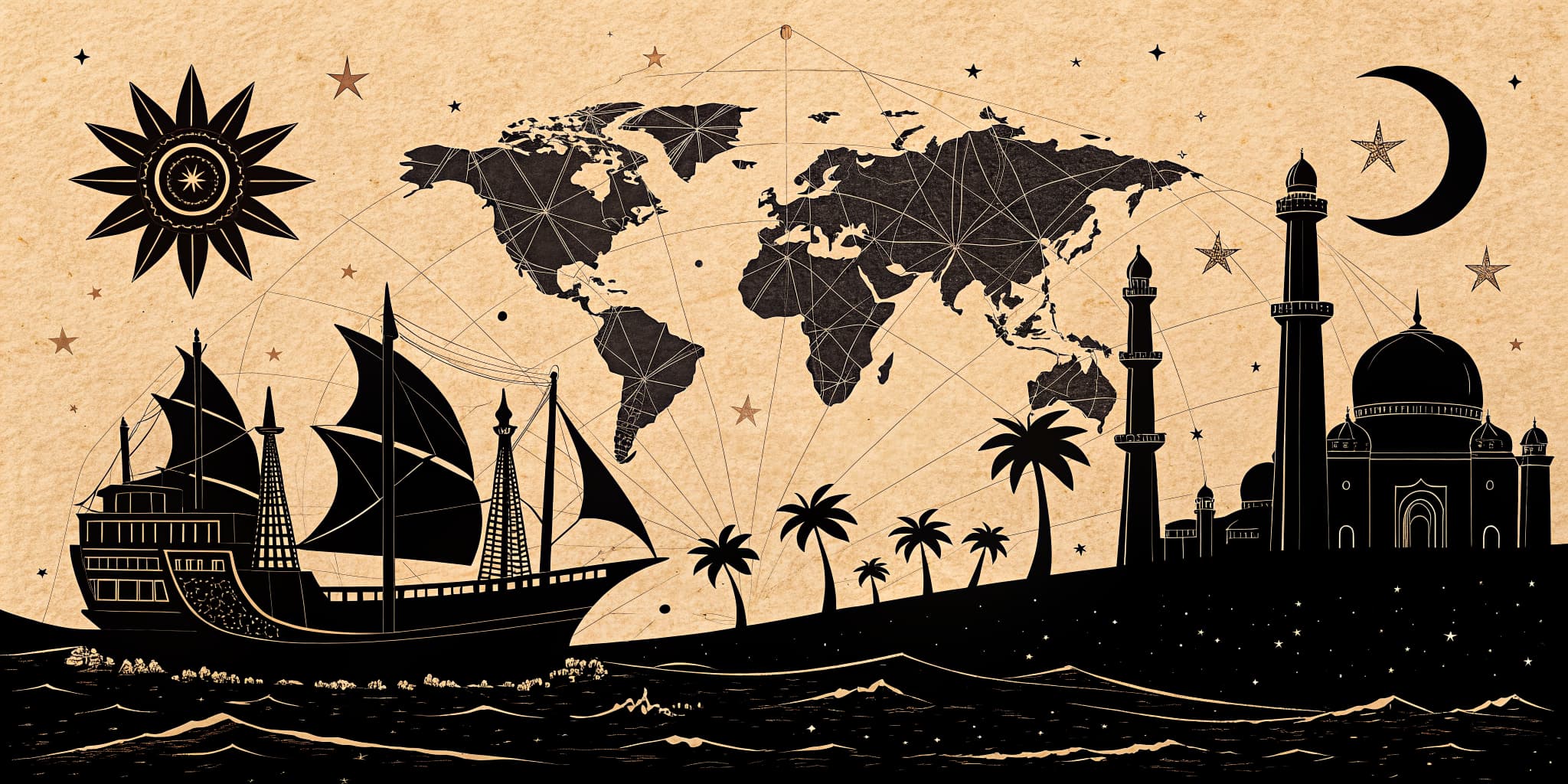
04The Malacca Sultanate
The powerful Islamic trading state that dominated the Straits and shaped the Malay world.
Students will explore the legendary founding of Malacca by Parameswara and the initial factors contributing to its rapid growth as a port.
Students will investigate the conversion of Malacca's rulers to Islam and its profound impact on the sultanate's laws, administration, and regional influence.
Students will examine the vibrant trade networks and the diverse, multicultural society that characterized Malacca as a global entrepot.
Students will study the reign of Sultan Mansur Shah, marking the zenith of Malaccan power, diplomatic prowess, and territorial expansion.
Students will investigate the sophisticated administrative system of Malacca, focusing on the role of the Shahbandars in managing its global trade hub.
Students will examine the motivations behind the Portuguese conquest of Malacca in 1511 and its immediate and long-term consequences for the region.
Students will trace the continuation of the Malaccan royal lineage and the founding of the Johor-Riau Sultanate in the aftermath of Malacca's fall.

05Early Singapura
The history of Singapore before 1819, from Temasek to the Johor-Riau Sultanate.
Students will examine archaeological findings and historical records to understand Temasek as an ancient settlement on Singapore island.
Students will critically analyze the 'Malay Annals' (Sejarah Melayu) and the legendary account of Singapura's founding by Sang Nila Utama.
Students will explore the archaeological significance of Bukit Larangan (Fort Canning) as a historical seat of ancient royalty in Singapura.
Students will investigate Singapura's political and economic connections to the Johor-Riau Sultanate and the role of the Temenggong.
Students will study the Orang Laut ('Sea People') and their crucial role in the maritime history and security of early Singapura and regional ports.
Students will examine the social, economic, and political conditions of Singapore just prior to the arrival of the British in 1819.

06European Expansion in SE Asia
The arrival of European powers and the shift in regional trade dynamics.
Students will investigate the motivations behind European exploration and the immense value of spices in shaping global trade routes.
Students will study the rise of the VOC as the world's first multinational corporation and its strategies for establishing a spice monopoly in the East Indies.
Students will examine the expansion of British commercial and political interests from India into the Malay Archipelago through the EIC.
Students will explore the Spanish colonization of the Philippines, focusing on its impact on local society and the significance of the Manila Galleon Trade.
Students will investigate the intense competition between the Dutch and British for control over strategic trade routes in the Straits of Malacca.
Students will examine how advancements in shipbuilding, navigation, and weaponry facilitated European colonial expansion in Southeast Asia.
Students will analyze diverse viewpoints on the initial stages of European colonial presence, considering both European and local perspectives.

07The Founding of Modern Singapore
The 1819 treaty, the role of Raffles and Farquhar, and the early years of the settlement.
Students will investigate Stamford Raffles' strategic reasons for seeking a new British trading post in the Malay Archipelago.
Students will examine the political negotiations and legal framework that led to the establishment of the British factory in Singapore.
Students will explore the practical challenges faced by William Farquhar, Singapore's first Resident, and his crucial contributions to the settlement's initial growth.
Students will investigate how the policy of 'free trade' became the cornerstone of Singapore's rapid transformation into a thriving entrepot.
Students will examine the diplomatic agreement between Britain and the Netherlands that formally divided their spheres of influence in Southeast Asia.
Students will study the treaty that resulted in the full cession of Singapore to the British by the Sultan and Temenggong of Johor.
Students will investigate the urban planning principles of the 1822 Raffles Town Plan and its lasting impact on Singapore's social and physical layout.
Students will examine the contributions of John Crawfurd, Singapore's second Resident, in consolidating British rule and shaping the early settlement.

08Life in 19th-Century Singapore
The social history of the early settlement, immigration, and the diverse communities.
Students will analyze the 'push' and 'pull' factors that drove significant immigration from China, India, and the Malay Archipelago to early Singapore.
Students will investigate the social organization of the Chinese community, including the role of clan associations and the challenges posed by secret societies.
Students will explore the diverse Indian population in 19th-century Singapore and the significant contributions of Indian convict laborers to the island's infrastructure.
Students will examine the roles of the Malay aristocracy and the influence of Arab traders and scholars in shaping 19th-century Singapore.
Students will investigate the challenging living conditions, prevalent diseases, and the nascent social services in early 19th-century Singapore.
Students will study the administrative union of Singapore, Malacca, and Penang in 1826, forming the Straits Settlements.
Students will examine the development of the police force and the challenges of maintaining law and order in a rapidly growing, diverse frontier settlement.
Students will investigate the reasons behind Singaporean merchants' desire for direct rule from London and the implications of becoming a Crown Colony.
Students will reflect on the historical journey of Singapore from an ancient settlement to a thriving British Crown Colony in the 19th century.