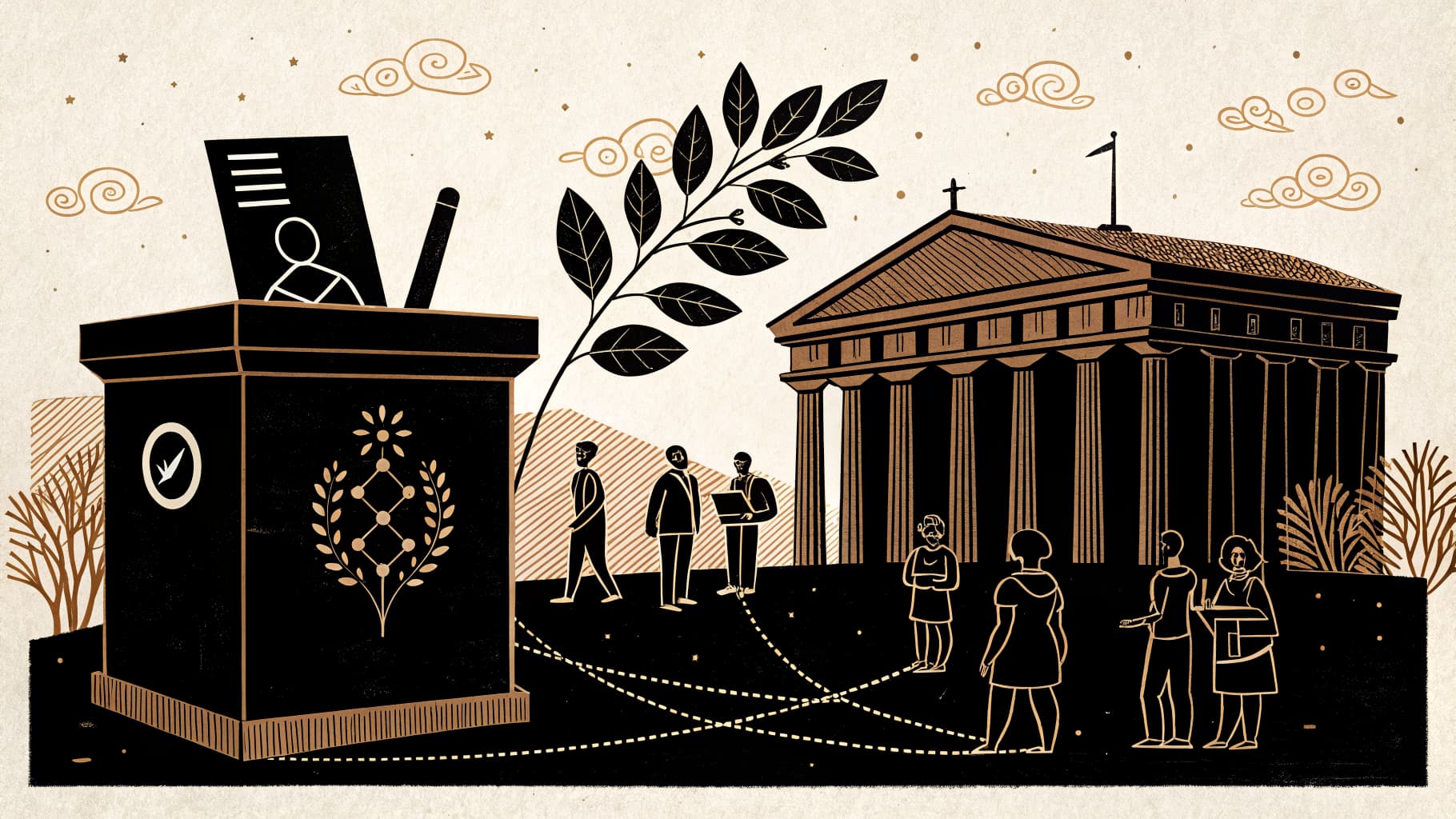
Courts and Justice: Solving Problems Fairly
An introduction to the idea of courts as places where problems are solved fairly and laws are upheld, focusing on the role of a judge.
TL;DR:Active learning works well for this topic because students need to experience the roles and processes of a courtroom to truly grasp how justice is administered fairly. By participating in a mock trial or collaborative tasks, students move from abstract ideas to concrete understanding of legal procedures and fairness.
About This Topic
This topic introduces first-year students to the fundamental concept of courts as institutions designed for fair problem-solving and upholding laws within a society. It focuses on demystifying the court system by explaining its purpose and highlighting the crucial role of a judge. Students will explore why fairness is paramount in judicial proceedings, understanding that courts provide a structured environment to resolve disputes impartially and ensure that legal principles are applied consistently. This foundational knowledge is essential for developing an understanding of the rule of law and its significance in a democratic society.
The exploration of courts and justice directly supports the NCCA's Junior Cycle curriculum in Law and Democracy. By learning about the functions of courts and the responsibilities of judges, students gain insight into how societal rules are enforced and how conflicts are managed peacefully. The emphasis on fairness encourages critical thinking about justice and equity, prompting students to consider the principles that underpin a just legal system. Understanding these concepts helps students become more informed and engaged citizens, capable of participating thoughtfully in civic life.
Active learning methods are particularly beneficial for this topic because they transform abstract legal concepts into relatable experiences. When students engage in role-playing or simulated court scenarios, they directly experience the dynamics of a courtroom and the importance of judicial fairness. This hands-on approach fosters deeper comprehension and retention compared to passive learning, making the principles of justice more tangible and meaningful.
Key Questions
- Explain what a court is for.
- Identify the role of a judge in a court.
- Discuss why it's important for courts to be fair.
Watch Out for These Misconceptions
Common MisconceptionJudges just make up the rules as they go along.
What to Teach Instead
Judges apply existing laws and precedents to specific cases. Active learning through mock trials helps students see how judges follow established procedures and legal principles, rather than arbitrary decisions.
Common MisconceptionCourts are only for very serious crimes.
What to Teach Instead
Courts handle a wide range of disputes, from minor disagreements to major legal cases. Role-playing simple disputes, like those between siblings or friends, can illustrate that courts are problem-solving forums for many issues.
Active Learning Ideas
See all activities→Hot Seat
Format Name: Mock Trial Simulation
Students are assigned roles such as judge, jury, plaintiff, defendant, and lawyers. They use a simplified case scenario to present evidence and arguments, practicing the basic structure of a court proceeding.
Hot Seat
Format Name: Judge's Role Play
In pairs, students take turns acting as a judge. One student presents a simple dispute (e.g., a disagreement over a shared toy), and the other must listen, ask clarifying questions, and propose a fair solution based on established rules.
Hot Seat
Format Name: Fairness Debate
Pose scenarios where fairness is challenged (e.g., a student getting extra playtime unfairly). Students discuss in small groups what makes a situation unfair and brainstorm ways a judge or mediator could ensure a just outcome.
Frequently Asked Questions
What is the main purpose of a court?
What does a judge do in a court?
Why is it important for courts to be fair?
How can role-playing activities help students understand courts?
More in Law and the Justice System
Moral vs. Legal Rules
Analyzing the difference between legal and moral rules and their impact on society.
8 methodologies
People Who Help with Justice: Judges and Gardaí
Learning about the key people who work in the justice system, such as judges and An Garda Síochána, and their roles in keeping us safe and fair.
8 methodologies
An Garda Síochána: Role and Responsibilities
Understanding the role of the police force in maintaining order and protecting rights.
8 methodologies
Being Safe and Respecting Others' Space
Discussing the importance of feeling safe while also respecting everyone's personal space and privacy in daily interactions.
8 methodologies
Restorative Justice
An introduction to restorative justice practices as an alternative to traditional punitive measures.
8 methodologies
Local Government and Civic Participation
Exploring the structure and functions of local government in Ireland and how citizens can engage.
8 methodologies