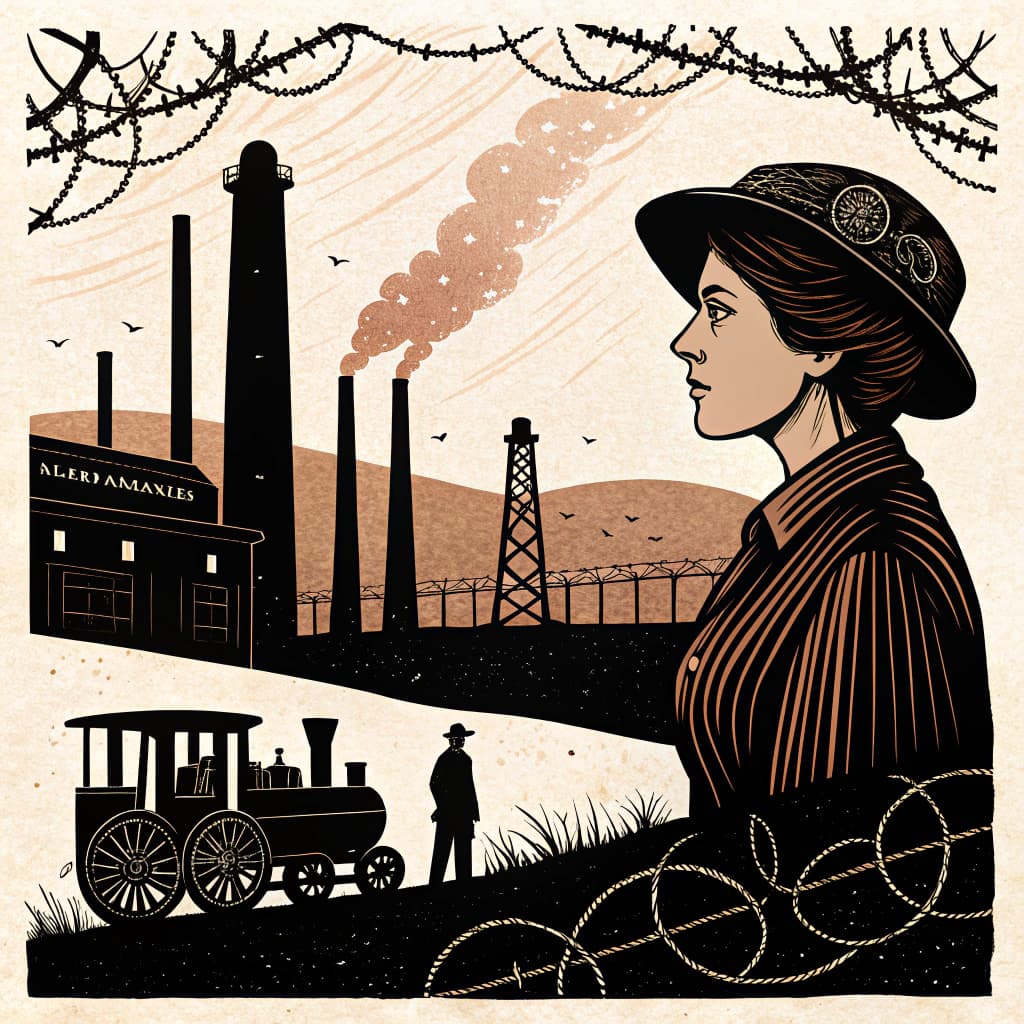
Life Under the British Raj
Students will explore the social, economic, and cultural impacts of direct British rule in India, both positive and negative.
TL;DR:Active learning helps students grasp the complexity of the British Raj by moving beyond textbook summaries. Through debate, role-play, and source analysis, students confront contradictory evidence and practice evaluating cause-and-effect relationships in history.
About This Topic
Life under the British Raj covers direct rule in India from 1858 to 1947, focusing on social, economic, and cultural changes. Students examine how British policies reshaped society through English education and railways, boosted cash crops like cotton at the expense of food security leading to famines, and altered culture by favoring Western dress and suppressing traditions. Key questions guide analysis of transformations in administration via the Indian Civil Service, the 'divide and rule' strategy that deepened Hindu-Muslim tensions, and debates over benefits like legal reforms versus exploitation through taxation and resource drain.
This topic fits KS3 History on the British Empire, encouraging critical evaluation of imperial power and its legacies. Students weigh evidence from primary sources such as Viceroy reports, Indian nationalist writings, and economic data to form balanced arguments, fostering skills in causation, significance, and interpretation.
Active learning suits this topic well. Role-plays of policy decisions, source sorting into positive and negative impacts, and structured debates help students grapple with complexity, confront biases in sources, and develop empathy for diverse perspectives, making abstract historical forces concrete and memorable.
Key Questions
- Explain how British rule transformed Indian society, economy, and administration.
- Analyze the concept of 'divide and rule' and its application in the British Raj.
- Critique the arguments for and against the 'benefits' of British colonial rule in India.
Learning Objectives
- Analyze the economic consequences of British policies on Indian agriculture and industry.
- Evaluate the effectiveness of the Indian Civil Service in administering the British Raj.
- Critique the long-term impact of the 'divide and rule' policy on inter-communal relations in India.
- Compare the stated aims of British rule with the lived experiences of various Indian social groups.
- Synthesize evidence from primary sources to construct an argument about the overall legacy of the British Raj.
Before You Start
Why: Students need to understand the transition from company rule to direct Crown rule to grasp the context of the British Raj.
Why: Understanding industrialization helps students analyze the economic motivations and impacts of British rule in India, such as the demand for raw materials and markets.
Key Vocabulary
| Sepoy Mutiny | Also known as the Indian Rebellion of 1857, this was a major uprising against the rule of the British East India Company, leading to direct British Crown rule. |
| Indian Civil Service (ICS) | The elite administrative body of British India, responsible for governing the territory and implementing British policies. |
| Cash crops | Crops grown primarily for sale on the market, such as cotton, indigo, and opium, often replacing food crops under colonial rule. |
| Doctrine of Lapse | A policy introduced by the British East India Company that denied succession rights to adopted heirs of Indian rulers, leading to annexation of states. |
| Swaraj | A concept meaning 'self-rule' or 'independence' that became a central goal of the Indian nationalist movement. |
Watch Out for These Misconceptions
Common MisconceptionBritish rule brought only benefits like railways and education to a backward India.
What to Teach Instead
India had advanced textiles and education systems pre-Raj; British policies prioritized exports, causing deindustrialization and famines. Source comparison activities reveal selective evidence, helping students balance narratives through peer critique.
Common MisconceptionThe Raj was uniformly oppressive with no positive changes.
What to Teach Instead
Infrastructure like railways aided connectivity but served extraction; legal codes introduced equality ideas. Debates expose nuance, as students weigh evidence and refine arguments via group feedback.
Common Misconception'Divide and rule' invented religious conflict in India.
What to Teach Instead
Tensions existed but were exacerbated by census and electorates. Role-plays simulate policies, allowing students to trace causation and challenge oversimplifications through structured discussion.
Active Learning Ideas
See all activities→Formal Debate
Debate Carousel: Benefits of the Raj
Divide class into groups assigned 'for' or 'against' statements on railways, education, or famines. Groups prepare evidence from sources, then rotate to defend or rebut at four stations. Conclude with whole-class vote and reflection on evidence strength.
Formal Debate
Source Stations: Divide and Rule
Set up stations with cartoons, letters, and census data showing Hindu-Muslim policies. Pairs analyze one source per station, noting techniques and biases, then share findings in a class gallery walk. Teacher circulates to prompt deeper questions.
Formal Debate
Timeline Mapping: Economic Impacts
Individuals or pairs create timelines linking events like 1876 famine to policies, plotting on maps with cash crop regions. Groups compare and discuss causation chains. Display for peer feedback.
Real-World Connections
- The legacy of administrative structures established during the Raj can still be observed in the civil services of modern India and Pakistan, influencing bureaucratic practices and governance.
- Debates about the economic impact of colonialism, including resource extraction and the disruption of local industries, continue to inform discussions among development economists and historians studying post-colonial nations.
- The partition of India and Pakistan in 1947, a direct consequence of tensions exacerbated during the Raj, remains a critical historical event studied by political scientists and sociologists examining national identity and conflict.
Assessment Ideas
Pose the question: 'Was the British Raj ultimately a force for progress or exploitation in India?' Ask students to select one specific area (e.g., education, economy, law) and use evidence from the lesson to support their initial viewpoint, preparing to defend it against counterarguments.
Provide students with three short primary source excerpts: one from a British official, one from an Indian nationalist, and one from a common citizen. Ask them to identify the author's perspective and list one piece of evidence that supports their conclusion about the impact of British rule.
On a slip of paper, have students write down one significant change brought about by the British Raj and one way in which Indian society resisted or adapted to that change. Collect these to gauge understanding of cause and effect.
Frequently Asked Questions
How can I teach the 'divide and rule' policy effectively?
What sources show positive and negative economic impacts?
How does active learning benefit teaching the British Raj?
How to link the Raj to modern India?
Planning templates for History
5E Model
The 5E Model structures lessons through five phases (Engage, Explore, Explain, Elaborate, and Evaluate), guiding students from curiosity to deep understanding through inquiry-based learning.
Unit PlannerThematic Unit
Organize a multi-week unit around a central theme or essential question that cuts across topics, texts, and disciplines, helping students see connections and build deeper understanding.
RubricSingle-Point Rubric
Build a single-point rubric that defines only the "meets standard" level, leaving space for teachers to document what exceeded and what fell short. Simple to create, easy for students to understand.
More in The British Empire and Slavery
The Middle Passage and Plantation Life
Students will explore the brutal realities of the Middle Passage and the harsh conditions of plantation slavery in the Caribbean.
8 methodologies
Resistance to Slavery: Rebellions & Runaways
Students will investigate various forms of resistance by enslaved people, from individual acts to large-scale rebellions.
8 methodologies
The Abolitionist Movement in Britain
Students will examine the campaign to end slavery, focusing on key figures, arguments, and strategies of British abolitionists.
8 methodologies
The 1857 Indian Rebellion
Students will study the causes, events, and consequences of the 1857 Rebellion, and its impact on British rule in India.
8 methodologies
Scramble for Africa
Students will investigate the motivations and methods behind the European 'Scramble for Africa' and its impact on the continent.
8 methodologies
Imperialism in China: Opium Wars
Students will examine British imperial ambitions in China, focusing on the Opium Wars and their impact on Chinese sovereignty.
8 methodologies