Early Anglo-Saxon Life: Villages and Farming
Students will investigate the daily lives, homes, and agricultural practices of the early Anglo-Saxon settlers.
TL;DR:Active learning turns abstract history into something students can touch and see. For topics like Anglo-Saxon villages and farming, students need to move beyond facts and experience the past through artefacts and roles. This hands-on approach makes the sophistication of Anglo-Saxon craftsmanship and daily life real in ways that worksheets never can.
About This Topic
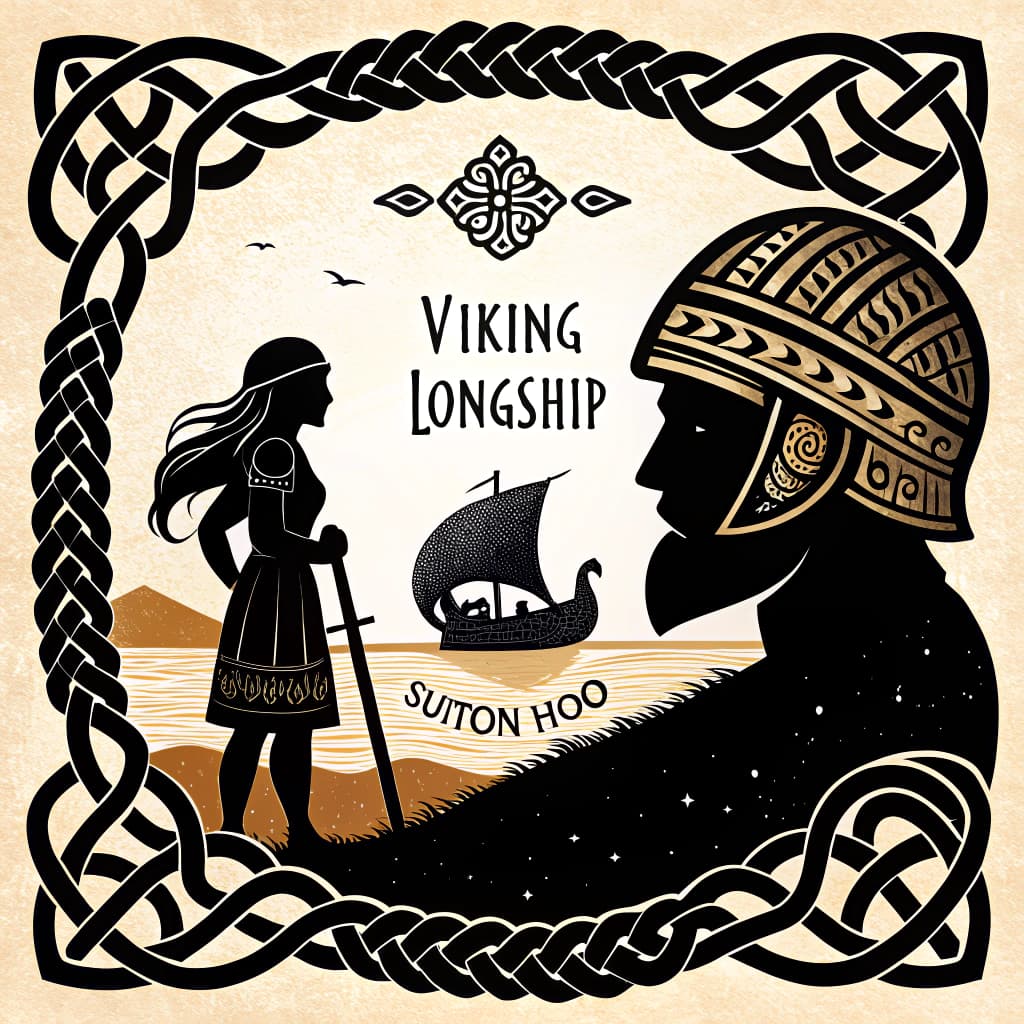
The 1939 discovery of the Sutton Hoo ship burial revolutionized our understanding of the Anglo-Saxon period, proving it was a time of immense wealth and sophisticated craftsmanship rather than a 'Dark Age'. This topic allows Year 5 students to act as historical detectives, analysing artefacts like the iconic helmet, the gold belt buckle, and the Byzantine silver. It directly addresses National Curriculum targets for historical interpretation and using evidence to make deductions about the past.
By studying Sutton Hoo, students explore the concept of a 'warrior culture' and the importance of status and ritual in early Anglo-Saxon society. The burial of a 27-metre ship filled with treasures suggests a king of great significance, likely Raedwald of East Anglia. This topic comes alive when students can physically model the layout of the burial or handle replicas of the finds to deduce their purpose and origin.
Key Questions
- Describe the typical layout and features of an early Anglo-Saxon village.
- Explain the importance of farming and animal husbandry to Anglo-Saxon survival.
- Compare the daily routines of an Anglo-Saxon child to your own.
Learning Objectives
- Describe the typical layout and key features of an early Anglo-Saxon village, classifying structures by their function.
- Explain the importance of farming and animal husbandry to early Anglo-Saxon survival, identifying key crops and livestock.
- Compare and contrast the daily routines and responsibilities of an early Anglo-Saxon child with their own daily life.
- Analyze visual or textual evidence to infer the types of tools and techniques used in early Anglo-Saxon agriculture.
Before You Start
Why: Understanding the end of Roman rule provides essential context for the arrival and settlement of the Anglo-Saxons.
Why: Students need foundational map skills to understand village layouts and the organization of agricultural land.
Key Vocabulary
| Longhouse | A large, rectangular building, often housing both people and animals, that was a common dwelling in Anglo-Saxon villages. |
| Arable land | Land suitable for growing crops, which was essential for the survival and sustenance of Anglo-Saxon communities. |
| Animal husbandry | The practice of breeding, raising, and caring for farm animals, such as cattle, sheep, and pigs, for food, labor, and materials. |
| Wattle and daub | A building material used for walls, made by weaving thin branches (wattle) and then coating them with a sticky material of mud, clay, and straw (daub). |
| Crop rotation | A farming method where different crops are grown in the same area in sequenced seasons to improve soil health and yield, a practice understood by Anglo-Saxons. |
Watch Out for These Misconceptions
Common MisconceptionThe Anglo-Saxons were primitive and had no art.
What to Teach Instead
The intricate 'interlace' patterns and cloisonné enamel at Sutton Hoo show they were world-class goldsmiths. A hands-on activity where students try to draw or recreate these complex patterns helps them appreciate the high level of skill involved.
Common MisconceptionA body was found inside the Sutton Hoo helmet.
What to Teach Instead
No body was found because the acidic soil dissolved the bones over 1,300 years. However, chemical traces of a body were detected. Discussing this 'missing' evidence helps students understand how archaeologists use science to find what the eye cannot see.
Active Learning Ideas
See all activities→Gallery Walk
The Treasures of the Mound
Place high-quality images or replicas of Sutton Hoo artefacts around the room. Students move in pairs with 'archaeologist notebooks', recording what each object is made of and what it tells us about the person buried there (e.g., the coins suggest trade with Europe).
Inquiry Circle
Who was in the Ship?
Provide groups with 'evidence cards' about different possible kings (e.g., Raedwald, Sigeberht). They must match the artefacts found in the burial to the life and status of the kings to build a case for who they think was buried at Sutton Hoo.
Role Play
The Discovery of 1939
Students take on the roles of Edith Pretty (the landowner), Basil Brown (the self-taught archaeologist), and the British Museum experts. They act out the moment the first rivets were found and the subsequent tension over who should lead the dig and where the treasure should go.
Real-World Connections
- Modern archaeologists, like those working at archaeological sites such as West Stow in Suffolk, reconstruct Anglo-Saxon villages to understand ancient building techniques and daily life.
- Farmers today still rely on animal husbandry and crop cultivation for food production, though modern technology has significantly changed the methods compared to Anglo-Saxon times.
- Living history museums, such as Butser Ancient Farm, recreate Iron Age and Anglo-Saxon environments, allowing visitors to see how people farmed and lived thousands of years ago.
Assessment Ideas
Provide students with a simple map outline of a village. Ask them to draw and label at least three key features of an Anglo-Saxon village (e.g., longhouse, fields, well) and write one sentence explaining the importance of farming to the village's survival.
Pose the question: 'Imagine you are an Anglo-Saxon child living in a village. What would your typical day be like, and how would it be different from a child's day today?' Encourage students to share specific tasks, chores, and play activities, comparing them to their own routines.
Show students images of different Anglo-Saxon artefacts related to farming (e.g., a sickle, a quern stone, a pottery storage jar). Ask them to identify the object and explain its purpose in the context of village life and agriculture.
Frequently Asked Questions
What was the most famous object found at Sutton Hoo?
Why was a ship buried on land?
How can active learning help students understand Sutton Hoo?
Where can you see the Sutton Hoo treasures today?
Planning templates for History
5E Model
The 5E Model structures lessons through five phases (Engage, Explore, Explain, Elaborate, and Evaluate), guiding students from curiosity to deep understanding through inquiry-based learning.
Unit PlannerThematic Unit
Organize a multi-week unit around a central theme or essential question that cuts across topics, texts, and disciplines, helping students see connections and build deeper understanding.
RubricSingle-Point Rubric
Build a single-point rubric that defines only the "meets standard" level, leaving space for teachers to document what exceeded and what fell short. Simple to create, easy for students to understand.
More in The End of Roman Britain and the Anglo-Saxon Arrival
The Departure of the Romans
Exploring why the Roman legions left Britain in AD 410 and the immediate impact on the British people.
8 methodologies
Britain After Rome: Chaos or Opportunity?
Students will examine the immediate aftermath of Roman withdrawal, considering the challenges and potential for new leadership.
8 methodologies
Invaders or Settlers? The Germanic Tribes
Examining the arrival of the Angles, Saxons, and Jutes and their motivations for crossing the North Sea.
8 methodologies
The Seven Kingdoms (The Heptarchy)
Mapping the emergence of the seven major Anglo-Saxon kingdoms and their shifting boundaries.
8 methodologies
Sutton Hoo: Evidence of a Warrior Culture
Analysing the 1939 discovery of the ship burial and what it reveals about early Anglo-Saxon royalty.
8 methodologies
The Legend of King Arthur
Debating the historical reality versus the myth of the British leader who resisted the Saxon advance.
8 methodologies