The Letter of Honorius: Rome Withdraws
The moment in AD 410 when Emperor Honorius told Britain to 'look to its own defences'.
TL;DR:Active learning turns a dramatic historical moment into a tangible experience. For Year 4 students, embodying roles and handling artifacts makes the abstract concrete. They remember that empires don’t disappear overnight, but people do adapt, decide, and survive.
About This Topic
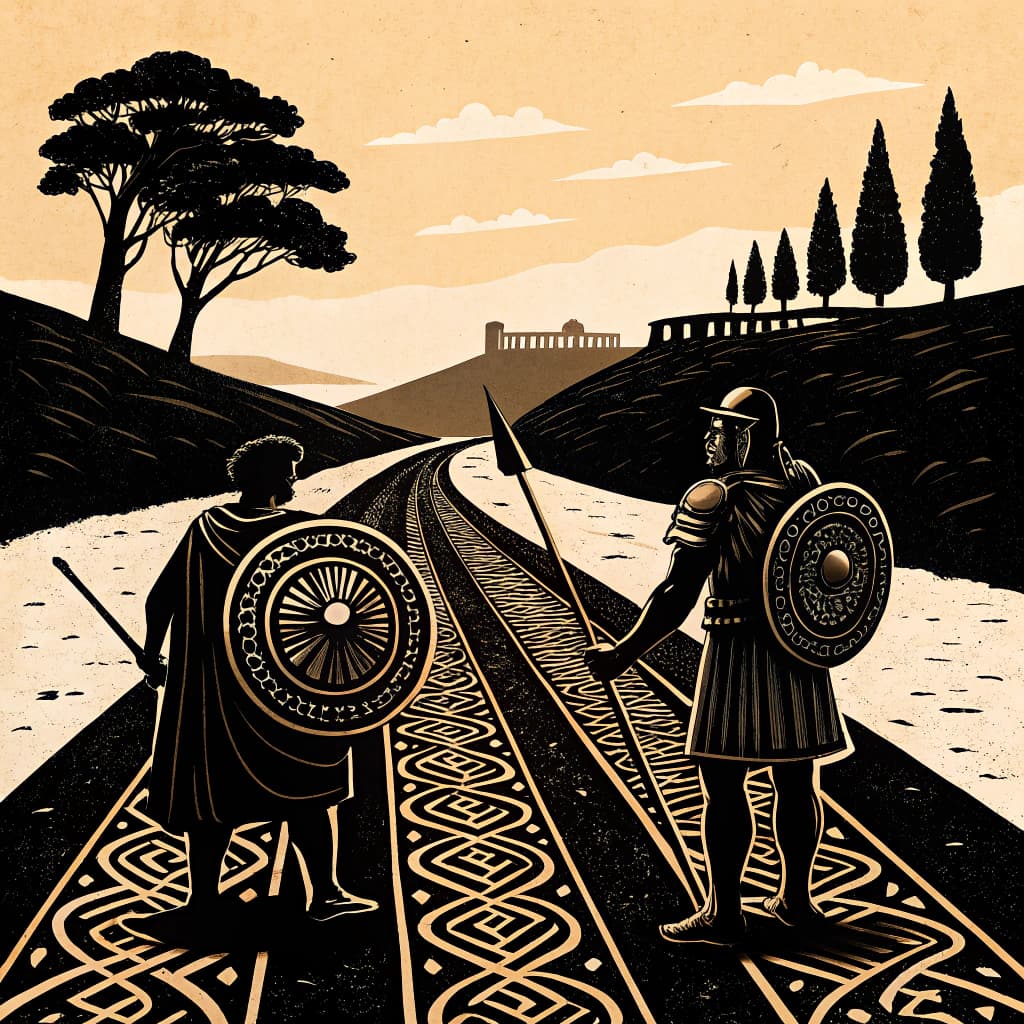
The year AD 410 marks the official end of Roman administration in Britain. This topic focuses on the 'Letter of Honorius', a message from the Emperor in Rome telling the British cities that the legions were not coming back and they must 'look to their own defences'. For Year 4 students, this is a dramatic turning point, the moment a superpower leaves and a society is left to fend for itself.
Students will explore the immediate consequences: the collapse of the money economy, the disappearance of central law, and the fear of the raiding tribes. This aligns with the KS2 History requirement to understand the transition from Roman to Anglo-Saxon Britain. It encourages students to think about what makes a society function and what happens when those systems break down. This topic particularly benefits from role plays and collaborative problem-solving as students imagine life in a post-Roman world.
Key Questions
- Explain why Rome withdrew its last legions from Britain.
- Analyze how the British people might have felt when the Roman army left.
- Predict what happens to a society when its central government and law disappear.
Learning Objectives
- Explain the reasons behind Emperor Honorius's decision to withdraw Roman legions from Britain.
- Analyze the potential emotional responses of British people upon learning of the Roman army's departure.
- Predict the immediate societal changes in Britain following the disappearance of central government and law.
- Classify the types of defenses Britain might have needed to establish after Roman withdrawal.
- Compare the structure of Roman Britain with the likely structure of post-Roman Britain.
Before You Start
Why: Students need to understand the established Roman systems, like roads, law, and military presence, to grasp what was lost.
Why: A basic understanding of Rome as a powerful empire helps students comprehend the significance of its withdrawal.
Key Vocabulary
| Legions | Large, organized units of the Roman army, essential for maintaining order and defending territory. |
| Withdrawal | The act of pulling back or removing troops or administration from a place. |
| Defences | Measures taken to protect a place or person against attack or damage. |
| Central Government | The main governing authority of a country, responsible for laws and administration. |
Watch Out for These Misconceptions
Common MisconceptionAll the Romans left Britain in 410.
What to Teach Instead
The 'Romans' were mostly British people who lived in a Roman way. Only the army and the top officials left; the people stayed. Role-playing as 'Romano-British' citizens helps students understand that the culture didn't vanish overnight.
Common MisconceptionBritain became a desert after the Romans left.
What to Teach Instead
Life continued, but it became more local and rural. Peer discussion about 'survival' helps students see that people adapted to a simpler, more dangerous life.
Active Learning Ideas
See all activities→Role Play
The Town Council Meeting
Students act as leaders of a British town in AD 410 who have just received the Letter of Honorius. They must decide how to pay for soldiers, how to fix the walls, and what to do now that Roman coins are worthless.
Inquiry Circle
The Vanishing Coins
In small groups, students examine 'hoards' of Roman coins found in Britain. They must discuss why people were burying their money in AD 410 and why they never came back to dig it up.
Think-Pair-Share
What would you miss most?
Students pair up to list five things the Romans provided (e.g., clean water, protection, roads, shops). They must rank them in order of which would be the hardest to lose and explain why.
Real-World Connections
- Imagine a small island nation today suddenly losing its primary military protection and all national governance. How would local communities organize for safety and essential services?
- Consider historical instances where colonial powers have withdrawn from territories, leaving behind new political and social challenges for the local populations to manage.
Assessment Ideas
On a slip of paper, students write two reasons why Rome left Britain and one worry a British person might have had after the legions departed.
Pose the question: 'If you were a Roman-British citizen in AD 410, what would be your biggest fear and your first priority after hearing the Emperor's message?' Facilitate a brief class discussion, noting student responses on the board.
Ask students to hold up one finger if they can name a reason for Roman withdrawal, two fingers for a consequence of their departure, and three fingers if they can name a type of defense Britain might need. Review responses to gauge understanding.
Frequently Asked Questions
What did the Letter of Honorius say?
Why did the Roman money stop working?
How can active learning help students understand the end of Roman Britain?
Did the British try to get the Romans to come back?
Planning templates for History
5E Model
The 5E Model structures lessons through five phases (Engage, Explore, Explain, Elaborate, and Evaluate), guiding students from curiosity to deep understanding through inquiry-based learning.
Unit PlannerThematic Unit
Organize a multi-week unit around a central theme or essential question that cuts across topics, texts, and disciplines, helping students see connections and build deeper understanding.
RubricSingle-Point Rubric
Build a single-point rubric that defines only the "meets standard" level, leaving space for teachers to document what exceeded and what fell short. Simple to create, easy for students to understand.
More in The End of Rome and the Anglo-Saxon Arrival
The Great Conspiracy of 367
The coordinated attacks by Picts, Scots, and Saxons that weakened Roman Britain.
8 methodologies
Who Were the Anglo-Saxons?
Identifying the Angles, Saxons, and Jutes and their reasons for migration to Britain.
8 methodologies
Sutton Hoo: A King's Burial
Analysing the ship burial at Sutton Hoo to understand Anglo-Saxon wealth, craftsmanship, and beliefs.
8 methodologies
The Anglo-Saxon Village and the Hall
Daily life in an Anglo-Saxon settlement and the importance of the Lord's Mead Hall as a community hub.
8 methodologies
Anglo-Saxon Kingdoms: Heptarchy
Learning about the seven main Anglo-Saxon kingdoms (Heptarchy) and their constant struggles for dominance.
8 methodologies