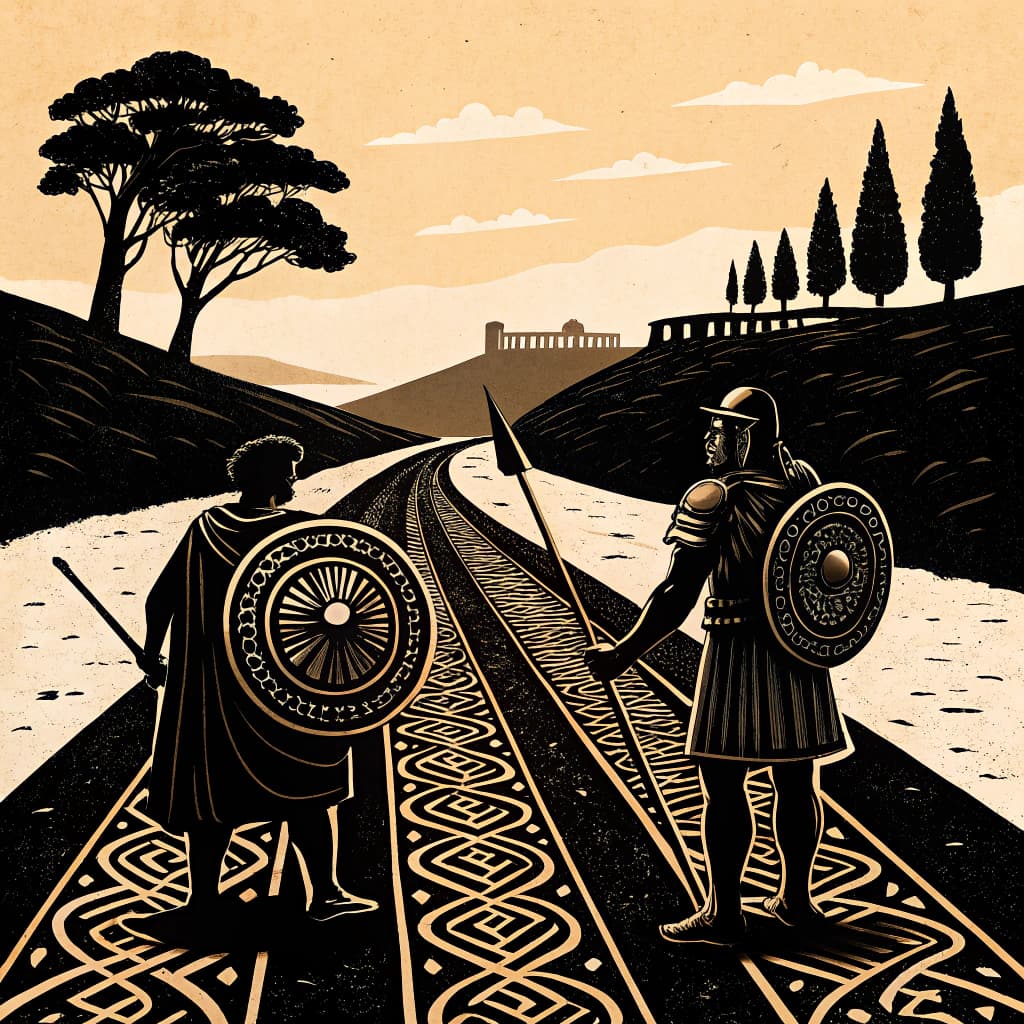
Romanization: Blending Cultures
Exploring how Roman and Celtic cultures blended in Britain, creating a unique Romano-British identity.
TL;DR:Active learning works well for this topic because students must physically and creatively engage with artifacts, symbols, and perspectives to grasp how two cultures merged. Handling materials and debating viewpoints builds empathy and critical thinking, helping students move beyond abstract facts to see real-world complexity in cultural change.
About This Topic
Romanization describes the process by which Roman culture blended with existing Celtic traditions in Britain after the invasion in AD 43. Students examine how Romans introduced new building styles, roads, baths, and central heating, which Britons adopted alongside their farms and roundhouses. This fusion created a distinctive Romano-British identity, seen in mosaics combining geometric Roman patterns with Celtic motifs, gods like Sulis Minerva merging local and imperial deities, and Latin loanwords entering the Celtic language.
This topic aligns with KS2 History standards on the Roman Empire's impact and Roman life. It builds skills in comparing sources, such as villa excavations and inscriptions, to analyze cultural change. Students evaluate whether Romanization brought benefits like improved infrastructure or drawbacks like loss of traditions, fostering critical thinking about empire and identity.
Active learning suits this topic well. When students handle replica artifacts, recreate blended mosaics, or debate Romanization's effects in character, they grasp cultural blending through direct engagement. These methods make historical processes vivid and help students connect past changes to modern multicultural Britain.
Key Questions
- Explain how Roman culture influenced the daily lives of Britons.
- Analyze examples of cultural blending in art, religion, and language.
- Evaluate whether Romanization was a positive or negative development for the native Britons.
Learning Objectives
- Explain how Roman architectural styles and infrastructure, such as aqueducts and roads, were adopted and adapted by Britons.
- Analyze examples of syncretism in Romano-British religious practices, identifying deities that merged Roman and Celtic traditions.
- Compare and contrast daily life in a Celtic village with a Roman town in Britain, identifying specific changes introduced by Romanization.
- Evaluate the extent to which Romanization led to the loss of native Celtic traditions versus the creation of a new, blended identity.
Before You Start
Why: Students need a basic understanding of pre-Roman Celtic society and culture to effectively compare it with the changes brought by Romanization.
Why: Knowledge of the initial Roman conquest and presence is essential for understanding the context in which Romanization occurred.
Key Vocabulary
| Romanization | The process by which Roman culture, language, and way of life were adopted by people in conquered territories, including Britain. |
| Syncretism | The merging or blending of different religious beliefs, cultures, or schools of thought, as seen in the combination of Roman and Celtic gods. |
| Villa | A large country house in Roman Britain, often with advanced features like mosaic floors and underfloor heating, representing a blend of Roman luxury and local resources. |
| Loanword | A word adopted from one language into another, such as Latin words that entered the Brittonic language during the Roman occupation. |
| Aqueduct | An artificial channel constructed to convey water, typically over a long distance, demonstrating Roman engineering influence in Britain. |
Watch Out for These Misconceptions
Common MisconceptionRomans completely replaced Celtic culture.
What to Teach Instead
Romanization involved blending, not erasure; many Celts kept farms and deities while adopting villas and baths. Sorting activities reveal hybrid artifacts, helping students see continuity through hands-on classification and discussion.
Common MisconceptionAll Britons resisted Romans equally.
What to Teach Instead
Responses varied; some elites Romanized quickly for status. Role-plays let students explore diverse viewpoints, building empathy and nuanced understanding via peer performances.
Common MisconceptionCultural blending only affected art.
What to Teach Instead
It spanned religion, language, and daily life too. Debate prep with evidence cards across categories shows breadth, as students actively connect examples.
Active Learning Ideas
See all activities→Formal Debate
Artifact Sort: Roman, Celtic, or Blended?
Provide replica items like fibulae, pottery, and mosaics. In small groups, students sort them into Roman-only, Celtic-only, or blended categories, then justify choices with evidence from labels. Conclude with a class share-out of surprises.
Formal Debate
Mosaic Creation: Cultural Fusion
Groups design and assemble mosaics using colored paper tiles, incorporating Roman patterns and Celtic symbols. Discuss choices and how they represent blending. Display and explain to the class.
Formal Debate
Debate Circle: Romanization Pros and Cons
Divide class into teams to argue if Romanization helped or harmed Britons, using evidence cards on roads, taxes, and religion. Rotate speakers and vote at end.
Real-World Connections
- Archaeologists at Hadrian's Wall continue to uncover artifacts that reveal the daily lives and cultural interactions of Roman soldiers and native Britons, providing tangible evidence of Romanization.
- The city of Bath, built around natural hot springs, showcases the Roman practice of building public baths and temples, with the Temple of Sulis Minerva being a prime example of religious syncretism still visible today.
- Linguistic historians study place names across Britain, many of which have Latin roots or show evidence of Latin influence on local Celtic languages, illustrating the lasting impact of Romanization on communication.
Assessment Ideas
Pose the question: 'Imagine you are a young Briton living in AD 100. Would you rather your village adopt Roman ways or keep your Celtic traditions? Why?' Facilitate a class debate, encouraging students to use evidence from the lesson about new technologies, foods, and beliefs.
Provide students with images of Romano-British artifacts, such as a mosaic, a coin, or a piece of pottery. Ask them to write down one observation about how it shows a blend of Roman and Celtic elements, and one question they have about its creation or use.
On a slip of paper, have students complete these two sentences: 'One way Roman culture changed daily life in Britain was...' and 'A key example of cultural blending I learned about today is...' Collect these to gauge understanding of key concepts.
Frequently Asked Questions
What are examples of Romanization in Britain?
How did Roman culture change daily life in Britain?
Was Romanization positive or negative for Britons?
How can active learning help teach Romanization?
Planning templates for History
5E Model
The 5E Model structures lessons through five phases (Engage, Explore, Explain, Elaborate, and Evaluate), guiding students from curiosity to deep understanding through inquiry-based learning.
Unit PlannerThematic Unit
Organize a multi-week unit around a central theme or essential question that cuts across topics, texts, and disciplines, helping students see connections and build deeper understanding.
RubricSingle-Point Rubric
Build a single-point rubric that defines only the "meets standard" level, leaving space for teachers to document what exceeded and what fell short. Simple to create, easy for students to understand.
More in Life in Roman Britain
The Layout of a Roman Town
Studying the grid systems, forums, and amphitheatres of towns like Verulamium and Colchester.
8 methodologies
Roman Baths and Hygiene
A look at the social and health aspects of the public bathing ritual in Roman Britain.
8 methodologies
Food and Farming in Roman Britain
How the Romans introduced new crops, animals, and dining habits to Britain.
8 methodologies
Roman Villas and Country Life
Exploring the architecture and daily life within Roman villas, contrasting with urban living.
8 methodologies
Art and Mosaics in Roman Britain
Exploring Roman aesthetics and the stories told through mosaic floors and other decorative arts.
8 methodologies
Roman Roads and Communication
Understanding the network of Roman roads in Britain and their importance for trade, military, and administration.
8 methodologies