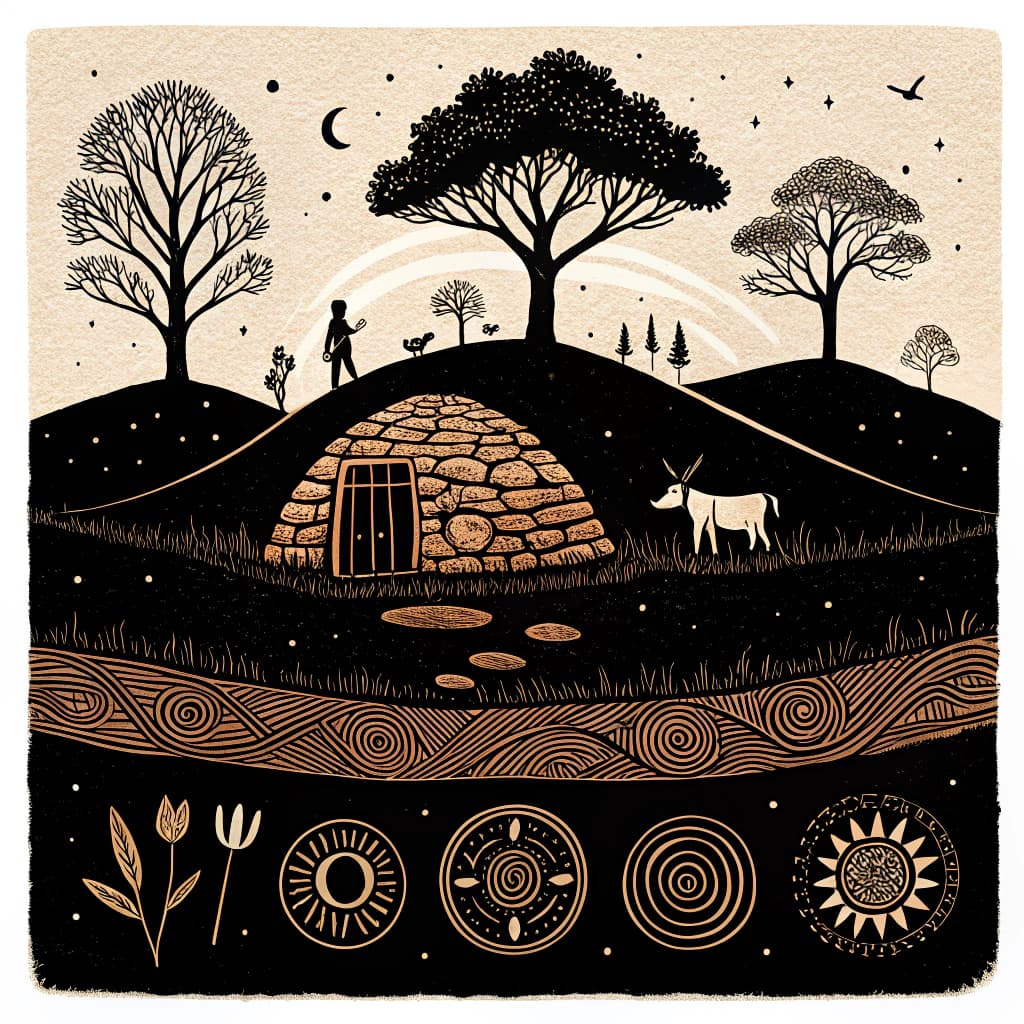
Our Area in Prehistory
Searching for evidence of Stone, Bronze, or Iron Age activity in the local region, using maps and local museum resources.
About This Topic
Year 3 students explore evidence of Stone, Bronze, and Iron Age activity in their local region. They study maps to analyze geographical features like rivers, hills, and soil types that would attract prehistoric settlers. Students evaluate archaeological clues such as flint tools, round barrows, hill forts, and field boundaries. Local museums offer artefacts, timelines, and expert insights that reveal regional prehistory.
This unit fits the KS2 Local History Study and Stone Age to Iron Age Britain requirements. It links history with geography, teaching students to interpret evidence and question sources. They learn how settlements changed over time due to new technologies like metalworking and farming improvements. This builds enquiry skills and a connection to their community's past.
Hands-on approaches make prehistory vivid. Students mark potential sites on maps, sort replica artefacts, or role-play archaeologists. Active learning benefits this topic because it turns distant eras into relatable discoveries, sparking curiosity and deepening understanding through direct engagement with local evidence.
Key Questions
- Analyze local geographical features for potential prehistoric settlement sites.
- Evaluate the types of archaeological evidence that might indicate prehistoric activity nearby.
- Explain how local museums contribute to our understanding of regional prehistory.
Learning Objectives
- Analyze local maps to identify geographical features that would have attracted prehistoric settlers.
- Evaluate the significance of different types of archaeological finds, such as flint tools or pottery fragments, as evidence of prehistoric activity.
- Explain how artifacts and displays in a local museum can help us understand the lives of people in the Stone, Bronze, or Iron Ages in our area.
- Compare the potential settlement patterns of the Stone Age with those of the Bronze or Iron Ages based on local geographical evidence.
Before You Start
Why: Students need to be able to read and interpret basic map symbols to identify geographical features relevant to settlement.
Why: Familiarity with local rivers, hills, and land types provides a foundation for analyzing potential prehistoric settlement sites.
Key Vocabulary
| Prehistory | The period of human history before written records began. In Britain, this includes the Stone Age, Bronze Age, and Iron Age. |
| Archaeological evidence | Physical remains from the past, such as tools, buildings, or bones, that archaeologists study to learn about ancient people. |
| Settlement site | A location where people lived or established a community in the past, often chosen for access to resources like water or shelter. |
| Artifact | An object made by a human being, typically an item of cultural or historical interest, such as a tool, pottery, or jewelry. |
| Chronology | The arrangement of events or dates in the order of their occurrence, helping us understand the sequence of different prehistoric periods. |
Watch Out for These Misconceptions
Common MisconceptionPrehistoric people only lived in caves everywhere.
What to Teach Instead
Most built homes from wood, earth, or stone suited to local landscapes. Model-building activities let students construct roundhouses or forts, showing variety and helping them visualize evidence on maps.
Common MisconceptionNo prehistoric evidence exists in modern built-up areas.
What to Teach Instead
Sites often survive under fields or parks; aerial photos reveal cropmarks. Map hunts and site visits challenge this by uncovering local barrows or tools, building confidence in regional history.
Common MisconceptionMuseums invent stories without real proof.
What to Teach Instead
Curators use dated artefacts and scientific methods. Handling replicas and museum talks demonstrate verification processes, with group discussions reinforcing trust in evidence-based history.
Active Learning Ideas
See all activities→Stations Rotation
Local Site Analysis
Prepare stations with Ordnance Survey maps, aerial photos, and topo models of local areas. Students identify settlement-friendly features like water sources and defenses, then sketch and justify one site per station. Groups rotate every 10 minutes and share findings.
Outdoor Investigation Session
Pairs: Artefact Evidence Sort
Provide cards or replica images of flint tools, pottery, and metalwork labeled by age. Pairs sort them into Stone, Bronze, or Iron Age piles and explain reasoning based on material and design. Discuss as a class to refine categories.
Outdoor Investigation Session
Whole Class: Museum Virtual Tour
Use a local museum website or video tour focused on prehistoric collections. Pause to note three pieces of evidence and their stories. Students contribute to a shared class map pinning regional finds.
Real-World Connections
- Local archaeologists from the county archaeological service regularly survey land before new building projects, using ground-penetrating radar and careful excavation to find and preserve prehistoric sites like flint mines or burial mounds.
- Museum curators at the [Insert Name of Local Museum] carefully research and display artifacts found within a 20-mile radius, explaining how discoveries of Bronze Age metalwork or Iron Age roundhouses inform our understanding of ancient farming and community life in our specific region.
Assessment Ideas
Provide students with a simple map of the local area showing a river, hills, and woodland. Ask them to circle two locations that would have been good for prehistoric settlement and write one sentence explaining why for each.
Show images of different types of prehistoric evidence (e.g., a flint arrowhead, a bronze axe head, a fragment of pottery, a hill fort outline on a map). Ask students: 'Which of these items do you think is the strongest evidence for people living nearby? Why?'
Ask students to name one way a local museum helps us learn about prehistory. Then, ask them to name one geographical feature that might attract a prehistoric settler.
Frequently Asked Questions
How do I find prehistoric evidence in our local area?
What geographical features attract Stone Age settlers?
How active learning helps teach local prehistory?
Why use local museums for Iron Age study?
Planning templates for History
5E Model
The 5E Model structures lessons through five phases (Engage, Explore, Explain, Elaborate, and Evaluate), guiding students from curiosity to deep understanding through inquiry-based learning.
Unit PlannerThematic Unit
Organize a multi-week unit around a central theme or essential question that cuts across topics, texts, and disciplines, helping students see connections and build deeper understanding.
RubricSingle-Point Rubric
Build a single-point rubric that defines only the "meets standard" level, leaving space for teachers to document what exceeded and what fell short. Simple to create, easy for students to understand.
More in Local History Study
How Our Settlement Began
Investigating the origins of the local town or village, exploring why people chose to settle in that specific location.
3 methodologies
Local Landmarks Through Time
Tracing the history of a specific local building or site, observing how it has changed and what stories it holds across different eras.
3 methodologies
Becoming a Local Historian
A practical lesson on the methods used by historians and archaeologists to uncover the past within our own community.
3 methodologies