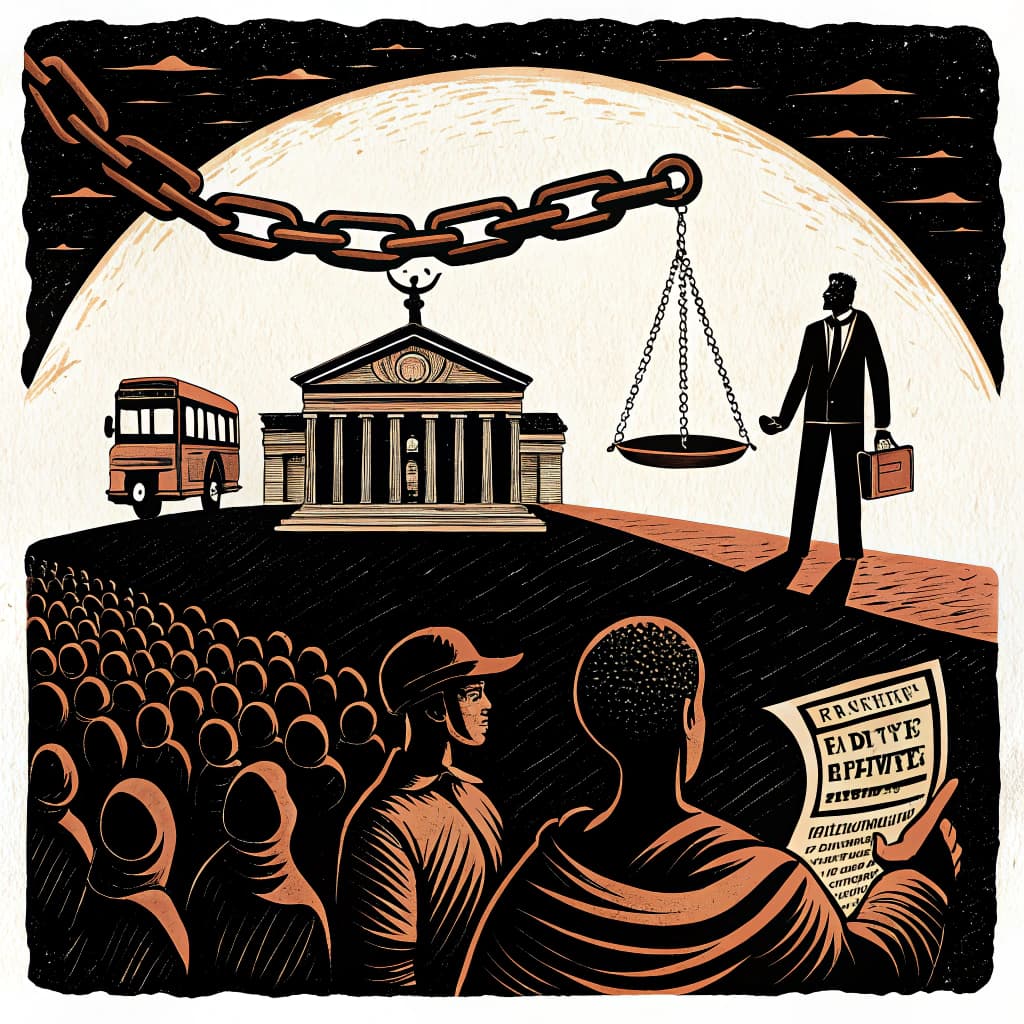
Post-Slavery Challenges in British Colonies
Students will explore the challenges faced by formerly enslaved people in British colonies after emancipation and the evolving nature of British colonial administration in the mid-19th century.
TL;DR:Active learning helps students grasp the complex realities of post-slavery challenges by moving beyond abstract dates and policies to analyze human experiences. When students examine primary sources, debate systemic continuities, and role-play historical roles, they confront the gap between abolitionist promises and lived conditions with deeper clarity.
About This Topic
Students examine the profound challenges confronted by formerly enslaved people in British colonies following the Slavery Abolition Act of 1833. Legal emancipation brought apprenticeships that extended coerced labor until 1838, alongside landlessness, wage poverty, vagrancy laws, and persistent racial violence. Colonial administrators adapted by importing indentured workers from India and China, preserving plantation profitability while projecting an image of humanitarian progress. This topic reveals the gap between abolitionist ideals and economic realities.
Set within the Victorian Empire from 1857 to 1914, the content connects to tensions between liberal democracy at home and authoritarian control abroad. Students assess how these colonial experiences fueled metropolitan debates on poverty, labor rights, and social reform, laying groundwork for twentieth-century welfare policies. Key skills include evaluating causation, continuity versus change, and source utility, drawing on letters, reports, and testimonies to interpret perspectives.
Active learning suits this topic well. Group-based source interrogations and role-play reconstructions of post-emancipation disputes make abstract injustices vivid, build empathy for marginalized voices, and sharpen debate skills essential for A-Level essays.
Key Questions
- Evaluate the extent to which industrialisation transformed British society and created the conditions for political reform between 1857 and 1914.
- Analyze the key tensions between liberal democracy at home and imperial authority abroad that characterised the Victorian era.
- Assess how far the period 1857–1914 laid the social and political foundations for the welfare reforms of the twentieth century.
Learning Objectives
- Analyze the economic and social structures that replaced chattel slavery in British colonies after 1833.
- Evaluate the effectiveness of indentured labor systems in meeting colonial labor demands while maintaining social control.
- Compare the experiences of formerly enslaved people with those of indentured laborers in British Caribbean colonies.
- Critique colonial administrative responses to post-emancipation social unrest and labor shortages.
Before You Start
Why: Students need a foundational understanding of the system of chattel slavery to comprehend the context and impact of its abolition.
Why: Knowledge of the efforts leading to the Slavery Abolition Act of 1833 provides context for the subsequent implementation and limitations of emancipation.
Key Vocabulary
| Apprenticeship System | A transitional period following legal emancipation, where formerly enslaved individuals were compelled to continue working for their former enslavers under regulated conditions, often extending forced labor. |
| Indentured Servitude | A system of labor where individuals contracted to work for a specified period, typically in exchange for passage to a colony, food, and shelter, often used to replace enslaved labor after abolition. |
| Vagrancy Laws | Legislation enacted in colonies that criminalized unemployment and homelessness among formerly enslaved people, used to compel them into low-wage labor or face punishment. |
| Colonial Administration | The system of governance and management of colonies by a ruling power, in this context, the British Empire's bureaucracy responsible for implementing policies after slavery's abolition. |
Watch Out for These Misconceptions
Common MisconceptionEmancipation granted immediate full freedom and equality.
What to Teach Instead
Apprenticeships bound workers until 1838, with vagrancy laws enforcing labor discipline. Group source analysis reveals these continuities, helping students confront romanticized views through peer comparison of testimonies.
Common MisconceptionIndentured labor was a humane alternative to slavery.
What to Teach Instead
Contracts often mimicked slavery's coercion, with high mortality and debt bondage. Role-play activities expose exploitative terms, prompting students to debate significance and develop nuanced causation arguments.
Common MisconceptionPost-slavery issues stayed isolated in colonies, uninfluencing Britain.
What to Teach Instead
Colonial poverty reports shaped reform debates at home. Collaborative timelines link events, showing students interconnections via shared evidence mapping.
Active Learning Ideas
See all activities→Jigsaw
Colonial Challenges
Assign small groups to specific colonies like Jamaica or Trinidad. Provide curated sources on apprenticeships, land issues, and resistance. Groups create summary posters, then experts regroup to teach peers and co-construct a class comparative chart.
Document Mystery
Debate Pairs: Continuity of Exploitation
Pairs prepare arguments for and against the motion 'Emancipation marked real change in colonial labor systems.' Use evidence from indenture contracts and planter petitions. Rotate partners for rebuttals, culminating in whole-class vote and reflection.
Document Mystery
Source Stations: Admin Evolution
Set up stations with documents on apprenticeship laws, Indian emigration reports, and missionary accounts. Small groups analyze one set for bias and intent, rotate twice, then debrief by pooling insights into a shared digital timeline.
Real-World Connections
- Historians specializing in post-colonial studies at institutions like the University of the West Indies analyze archival records from plantation owners and newly freed individuals to reconstruct the daily lives and struggles of those affected by emancipation.
- International labor rights organizations today draw parallels between historical indentured labor systems and contemporary forms of human trafficking and exploitative work contracts to advocate for worker protections globally.
Assessment Ideas
Pose the question: 'To what extent did the end of legal slavery in British colonies represent true freedom for formerly enslaved people?' Students should use specific examples of post-emancipation challenges like vagrancy laws or the apprenticeship system to support their arguments.
Provide students with short primary source excerpts, such as a letter from a plantation owner complaining about labor and a testimony from a freed person describing their difficulties finding work. Ask students to identify the perspective in each source and explain how it reflects the post-slavery challenges discussed.
Ask students to write down two significant challenges faced by formerly enslaved people after emancipation and one way colonial administrators attempted to address (or exploit) these challenges. This checks their recall and understanding of key issues.
Frequently Asked Questions
What challenges did formerly enslaved people face after emancipation in British colonies?
How did British colonial administration evolve post-slavery?
How can active learning improve teaching post-slavery challenges?
Why study post-slavery challenges for A-Level British Empire?
Planning templates for History
5E Model
The 5E Model structures lessons through five phases (Engage, Explore, Explain, Elaborate, and Evaluate), guiding students from curiosity to deep understanding through inquiry-based learning.
Unit PlannerThematic Unit
Organize a multi-week unit around a central theme or essential question that cuts across topics, texts, and disciplines, helping students see connections and build deeper understanding.
RubricSingle-Point Rubric
Build a single-point rubric that defines only the "meets standard" level, leaving space for teachers to document what exceeded and what fell short. Simple to create, easy for students to understand.
More in Victorian Britain and the Empire 1857–1914
Victorian Factory Acts and Public Health
Students will evaluate the impact of key Victorian social reforms, such as the Factory Acts and public health initiatives, on working-class conditions and the role of government intervention.
8 methodologies
Irish Home Rule Movement (Late 19th Century)
Students will investigate the political events surrounding the Irish Home Rule movement and the rise of Unionism, analyzing its profound implications for British politics and Anglo-Irish relations.
8 methodologies
British Imperial Expansion in Africa
Students will examine the motivations and methods of British imperial expansion in Africa during the late 19th century, setting the stage for colonial rule.
8 methodologies
Social Darwinism and Racial Ideologies
Students will critically examine the application of Social Darwinism and other racial ideologies to justify British imperial rule and its impact on colonial populations.
8 methodologies
The Boer Wars: Causes and Conduct
Students will analyze the causes, conduct, and consequences of the Boer Wars, focusing on their impact on British imperial policy and public opinion.
8 methodologies
Consequences of the Boer Wars
Students will evaluate the long-term consequences of the Boer Wars for British imperial policy, military reform, and the rise of anti-imperial sentiment.
8 methodologies