Consequences of the Falklands War
Students will analyze the political, social, and economic consequences of the Falklands War for Britain, including its impact on Thatcher's popularity and national identity.
TL;DR:Active learning works for this topic because students need to grapple with complex emotions and political responses to the Falklands War. Moving beyond passive reading helps them analyze how national identity shifts through media, public opinion, and cultural narratives. Students build empathy and critical thinking by engaging with primary sources and role-playing key perspectives.
About This Topic
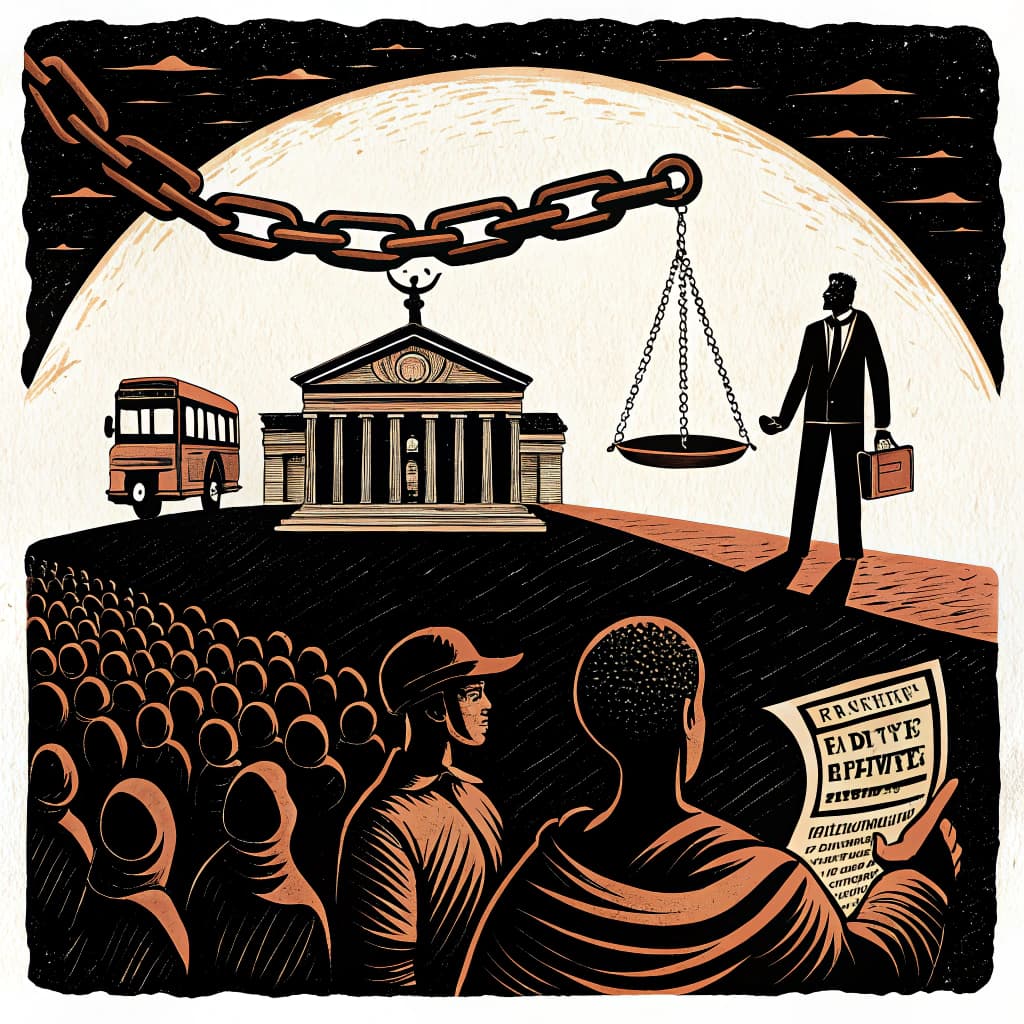
This topic assesses the immediate and long-term impact of the assassination of Martin Luther King Jr. on April 4, 1968. Students examine the wave of urban uprisings that followed his death, the largest period of social unrest in the US since the Civil War, and the passage of the 1968 Fair Housing Act as a legislative memorial. They also analyse how King's death marked the end of the 'classical' era of the movement and accelerated its fragmentation.
At Year 13, students evaluate the impact of the assassination on the 1968 presidential election and the rise of Richard Nixon's 'Southern Strategy'. They consider how the loss of King's unifying voice led to a shift toward more militant and localised forms of activism. This topic is best explored through collaborative analysis of the 1968 election results and by debating the 'death of the movement' thesis vs. its continued evolution in the 1970s.
Key Questions
- Evaluate the impact of the Falklands War on Margaret Thatcher's domestic political authority and the Conservative Party's subsequent electoral position.
- Analyze how Britain's military success in the South Atlantic affected its international standing and its relationship with the United States and NATO.
- Assess the extent to which the Falklands War marked a turning point in post-war British national identity and confidence.
Learning Objectives
- Evaluate the extent to which the Falklands War bolstered or damaged Margaret Thatcher's domestic political authority.
- Analyze the impact of the Falklands War on Britain's international relationships, particularly with the United States and NATO.
- Assess the significance of the Falklands War as a turning point in post-war British national identity and confidence.
- Compare the immediate political consequences of the Falklands War with its longer-term economic effects on Britain.
Before You Start
Why: Students need a foundational understanding of Thatcher's political context and the challenges facing Britain in the late 1970s to analyze the war's impact on her authority.
Why: Prior knowledge of Britain's role in international alliances like NATO and its relationship with the United States is necessary to assess the war's effect on its global standing.
Key Vocabulary
| Thatcherism | The political and economic policies promoted by Margaret Thatcher, characterized by privatization, deregulation, and a strong stance against trade unions. |
| Junta | A military or political group that rules a country after taking power by force, specifically referring to the Argentine military government during the conflict. |
| National Identity | A sense of belonging to one nation, often shaped by shared history, culture, and values, which can be influenced by significant national events. |
| Geopolitical Standing | A nation's position and influence in international affairs, determined by its political, economic, and military power relative to other countries. |
Watch Out for These Misconceptions
Common MisconceptionThe riots after King's death were a rejection of his message of non-violence.
What to Teach Instead
While violent, many saw the uprisings as an expression of grief and the feeling that non-violence had 'died' with King. Peer discussion of the 'Holy Week Uprisings' helps students see the riots as a complex emotional and political response to a national tragedy.
Common MisconceptionThe 1968 Fair Housing Act solved the problem of residential segregation.
What to Teach Instead
The Act lacked strong enforcement mechanisms and de facto segregation remained widespread for decades. Using a station rotation to look at modern housing maps helps students see the long-term limitations of the 1968 legislation.
Active Learning Ideas
See all activities→Inquiry Circle
The 1968 Fair Housing Act
Groups examine the provisions of the Act and the circumstances of its passage. They must explain why it had been stalled for years and how King's death provided the 'moral momentum' needed to finally pass it, then present on its effectiveness in ending redlining.
Think-Pair-Share
The End of an Era?
Students discuss whether King's death truly marked the 'end' of the civil rights movement. They brainstorm examples of continued activism in the 1970s and evaluate whether the movement's goals simply became more fragmented and localised.
Role Play
The 1968 Election Night
Students act as supporters of Richard Nixon, Hubert Humphrey, and George Wallace. They debate how the riots following King's death and the general sense of chaos in the country influenced the 'silent majority' to vote for 'law and order'.
Real-World Connections
- Historians specializing in post-war British political history utilize primary source documents, such as cabinet papers and parliamentary debates from 1982, to analyze the decision-making processes during the Falklands War.
- Political commentators and analysts frequently reference the Falklands War when discussing the resilience of leadership during times of international crisis and its impact on public opinion and electoral outcomes.
Assessment Ideas
Facilitate a class debate using the prompt: 'To what extent was the Falklands War a defining moment for British national identity in the late 20th century?' Encourage students to cite specific evidence related to public morale, media coverage, and cultural responses.
Present students with three short, contrasting newspaper headlines from 1982 about the war's outcome. Ask them to identify which headline most likely reflects a pro-Thatcher stance, an anti-war stance, or a neutral reporting style, and to justify their choices with reference to specific wording.
Students draft a short paragraph evaluating the impact of the war on Thatcher's popularity. They then exchange paragraphs with a partner, checking for the inclusion of at least one specific piece of evidence (e.g., election results, opinion poll data) and one clear statement of evaluation. Partners provide written feedback on clarity and evidence.
Frequently Asked Questions
What was the immediate reaction to King's assassination?
What was the Fair Housing Act of 1968?
How did King's death affect the 1968 election?
How can active learning help students understand the aftermath of King's death?
Planning templates for History
5E Model
The 5E Model structures lessons through five phases (Engage, Explore, Explain, Elaborate, and Evaluate), guiding students from curiosity to deep understanding through inquiry-based learning.
Unit PlannerThematic Unit
Organize a multi-week unit around a central theme or essential question that cuts across topics, texts, and disciplines, helping students see connections and build deeper understanding.
RubricSingle-Point Rubric
Build a single-point rubric that defines only the "meets standard" level, leaving space for teachers to document what exceeded and what fell short. Simple to create, easy for students to understand.
More in Thatcherism and the Crisis of British Politics 1975–1990
The Three-Day Week & Industrial Unrest
Students will analyze the causes and immediate aftermath of the 1970s industrial unrest, including the Three-Day Week, examining the challenges to government authority.
8 methodologies
The Winter of Discontent (1978-79)
Students will investigate the findings of the Kerner Commission, which examined the causes of the 1965-67 urban uprisings, and its warning of a divided America.
8 methodologies
Rise of Margaret Thatcher & New Right
Students will evaluate the ideologies of Stokely Carmichael and the shift from 'Freedom Now' to 'Black Power' within SNCC and the broader movement.
8 methodologies
The Falklands War (1982): Causes
Students will explore the broader cultural and psychological impact of the Black Power movement on African American identity, pride, and self-determination.
8 methodologies
The Miners' Strike (1984-85): Confrontation
Students will examine the Black Panther Party's Ten-Point Programme, its Marxist-Leninist ideology, and its community survival programs.
8 methodologies
Legacy of the Miners' Strike (1984-85)
Students will evaluate the long-term legacy of the 1984-85 Miners' Strike for trade union power, industrial relations, and the political landscape of Britain.
8 methodologies