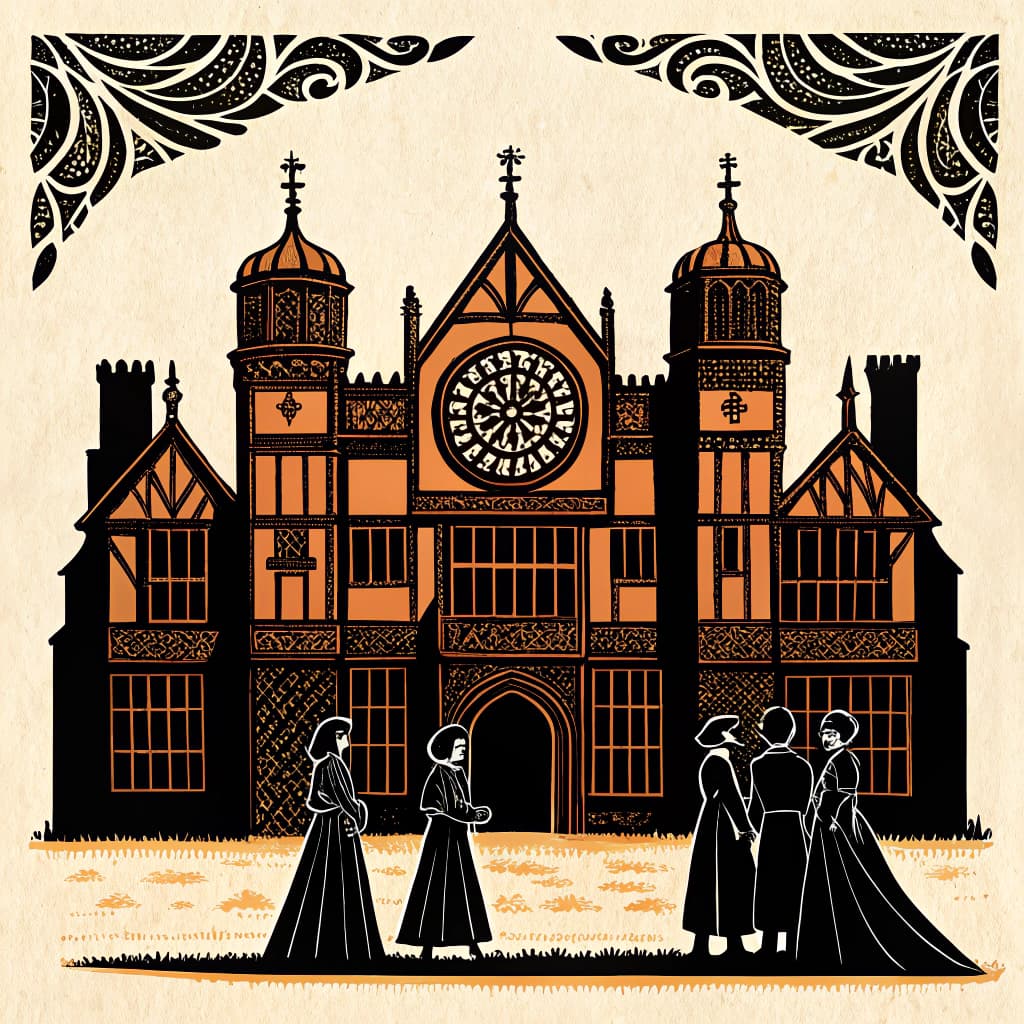
Mary's Accession and Initial Religious Policy
The process of returning England to papal obedience and the repeal of Edwardian laws.
TL;DR:Active learning works well for this topic because it helps students move beyond textbook summaries of Mary’s religious policies. Working through timelines and simulations lets them see how legal, political and personal forces shaped the Marian Restoration in real time.
About This Topic
The accession of Mary I in 1553 brought an immediate and determined effort to restore the Catholic faith in England. This topic examines the process of the 'Marian Restoration', from the repeal of Edwardian laws in Mary's first Parliament to the formal return to Papal obedience in 1554. Students analyze the role of Cardinal Reginald Pole, the obstacles posed by the 'theft' of monastic lands, and the extent to which the restoration was a 'popular' movement.
For Year 12 students, this is a study in the 'reversibility' of the Reformation and the challenges of undoing a decade of radical change. It connects to themes of religious identity and the 'Mid-Tudor Crisis'. This topic comes alive when students can physically model the patterns of 'religious return', analyzing how quickly (or slowly) parish churches brought back the 'old' equipment and rituals.
Key Questions
- Analyze how popular the return to Catholic worship was in 1553.
- Explain the initial steps Mary took to reverse the Protestant reforms.
- Evaluate the challenges Mary faced in restoring Church lands.
Learning Objectives
- Explain the legal and religious justifications Mary I used to repeal Edwardian legislation.
- Analyze the popular support or opposition to the reintroduction of Catholic practices in England in 1553.
- Evaluate the significant challenges Mary I encountered in reclaiming Church property confiscated during the Dissolution of the Monasteries.
- Compare the initial religious policies of Mary I with those of her father, Henry VIII, and brother, Edward VI.
Before You Start
Why: Students need a foundational understanding of the initial break with Rome and the establishment of the Church of England to grasp the subsequent reversals.
Why: Knowledge of the Protestant reforms implemented during Edward VI's reign is essential for understanding what Mary I sought to undo.
Key Vocabulary
| Act of Repeal | Legislation passed in Mary I's first Parliament in 1553 that reversed the religious changes made during Edward VI's reign, returning England to the religious state of 1547. |
| Papal Obedience | The formal submission of the Church of England back to the authority of the Pope, which occurred in 1554 under Mary I's reign. |
| Monastic Lands | Properties and wealth formerly belonging to monasteries, which were dissolved under Henry VIII and often sold to the nobility and gentry. |
| Clerical Marriage | The practice of allowing priests to marry, which was permitted under Protestantism but forbidden under Catholic doctrine. |
Watch Out for These Misconceptions
Common MisconceptionMary I was a 'religious fanatic' who didn't care about the law.
What to Teach Instead
Mary was actually very careful to work through Parliament to undo the Edwardian Reformation. Active analysis of her 'Parliamentary battles' helps students see that she was a constitutional monarch who understood that her religious changes needed legal backing to survive.
Common MisconceptionThe restoration of Catholicism was a total failure.
What to Teach Instead
In many ways, it was very successful; the 'old' religion was restored with surprising speed and efficiency in most parishes. Peer discussion of the 'Marian Church' helps students see that it was only Mary's early death that prevented a permanent Catholic return.
Active Learning Ideas
See all activities→Inquiry Circle
The Restoration Timeline
In small groups, students analyze the legislation of Mary's reign (e.g., the First and Second Acts of Repeal). They must identify the 'stumbling blocks' (like the issue of former monastic lands) and discuss why Mary had to compromise with Parliament to get her way.
Simulation Game
The Return of Cardinal Pole
Students role-play the 1554 ceremony where Cardinal Pole formally absolved England of its 'sin' of schism. They must represent the different reactions of the nobility, the clergy, and the common people to the return of Papal authority.
Think-Pair-Share
Popular or Imposed?
Students analyze churchwardens' accounts from 1553-1554. They discuss in pairs whether the rapid return of altars and vestments suggests a 'popular' desire for Catholicism or simply a 'pragmatic' obedience to the new Queen.
Real-World Connections
- Historians specializing in Tudor England, such as those at the National Archives, use primary source documents like parliamentary records and bishops' registers to reconstruct the process of religious change and assess public reaction.
- Museum curators at the V&A or the British Museum might analyze religious artifacts from the Marian period, such as chalices or vestments, to understand the material culture of the Catholic restoration and its impact on church furnishings.
Assessment Ideas
Present students with a short primary source quote describing a parish's reaction to the return of Catholic services in 1553. Ask them to write one sentence identifying whether the quote suggests popular support or opposition, and one sentence explaining their reasoning based on the text.
Pose the question: 'Was the Marian Restoration primarily driven by the Queen's personal conviction or by broader political and social pressures?' Facilitate a class debate where students must cite specific evidence regarding the repeal of laws, the fate of Church lands, and contemporary accounts of religious practice.
Ask students to list two specific actions Mary I took to reverse Edwardian reforms and one major obstacle she faced in restoring Church lands. They should provide a brief explanation for each point.
Frequently Asked Questions
How did Mary I restore Catholicism?
Why was the issue of monastic lands so difficult for Mary?
Who was Cardinal Reginald Pole?
How can active learning help students understand the Marian Restoration?
Planning templates for History
5E Model
The 5E Model structures lessons through five phases (Engage, Explore, Explain, Elaborate, and Evaluate), guiding students from curiosity to deep understanding through inquiry-based learning.
Unit PlannerThematic Unit
Organize a multi-week unit around a central theme or essential question that cuts across topics, texts, and disciplines, helping students see connections and build deeper understanding.
RubricSingle-Point Rubric
Build a single-point rubric that defines only the "meets standard" level, leaving space for teachers to document what exceeded and what fell short. Simple to create, easy for students to understand.
More in Mary I: The Catholic Restoration
The Spanish Marriage and Wyatt's Rebellion
The political and social opposition to Mary's union with Philip II of Spain.
8 methodologies
Cardinal Pole and the Full Catholic Restoration
The role of Cardinal Pole in the full restoration of papal authority and Catholic doctrine.
8 methodologies
The Marian Persecutions
The burning of nearly 300 Protestants and the creation of the 'Bloody Mary' myth.
8 methodologies
War with France and the Loss of Calais
England's involvement in the Habsburg-Valois conflict and its disastrous outcome.
8 methodologies
Economic and Social Problems under Mary
Harvest failures, sweating sickness, and administrative reforms.
8 methodologies