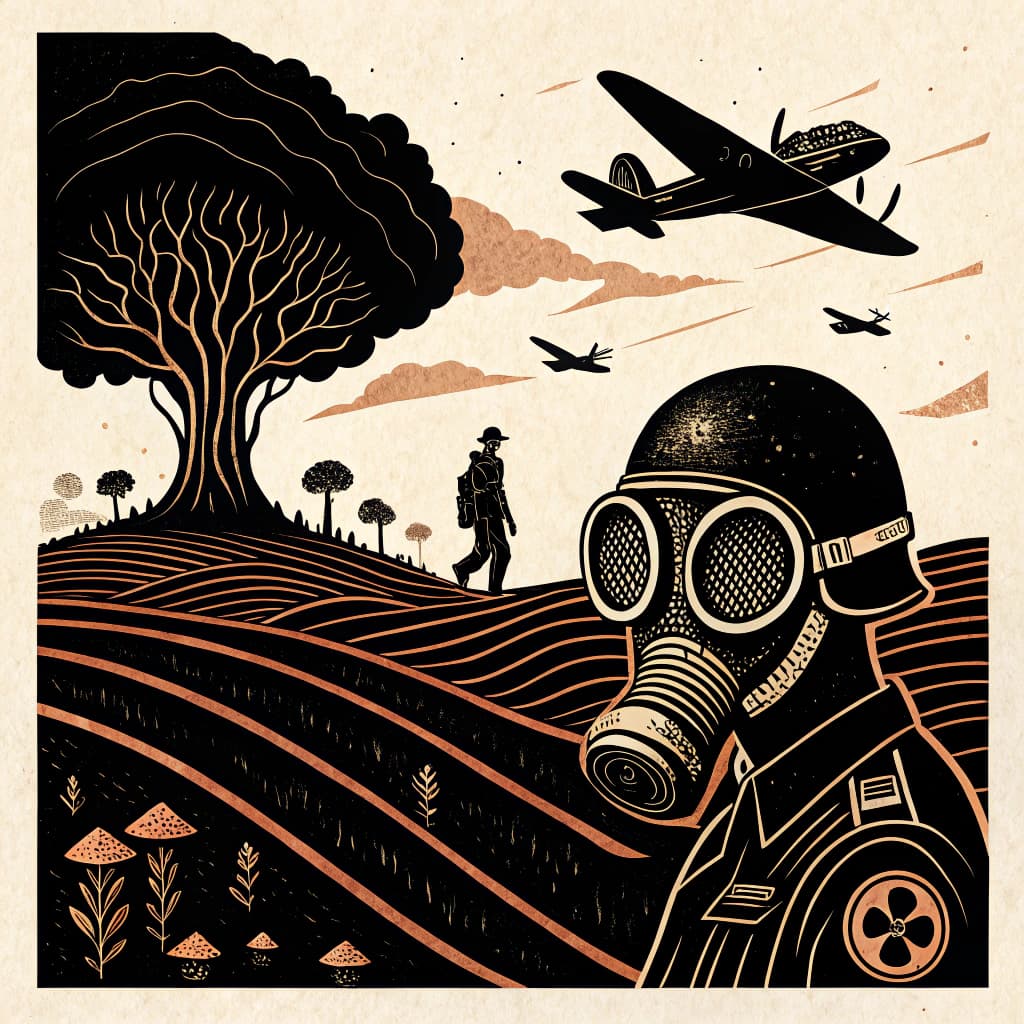
Operation Barbarossa: Invasion of the Soviet Union
Investigate Hitler's decision to invade the USSR, the initial German successes, and the brutal nature of the Eastern Front.
TL;DR:Active learning transforms this complex topic from static facts into a dynamic investigation. Students confront Hitler’s strategic decisions, map the brutal realities of the Eastern Front, and debate Nazi intentions in ways that reveal the intersection of ideology, logistics, and human cost. Movement between sources, maps, and debates builds historical empathy while making abstract causation and consequence visible.
About This Topic
Operation Barbarossa marked Nazi Germany's invasion of the Soviet Union on 22 June 1941, shattering the 1939 Nazi-Soviet Pact. Year 11 students analyze Adolf Hitler's motivations: ideological pursuit of Lebensraum, destruction of Bolshevism, and seizure of resources like Ukrainian grain and Caucasian oil. Initial blitzkrieg triumphs saw Army Groups North, Centre, and South capture millions of square kilometres by autumn, aligning with AC9HI601 on causation.
The Eastern Front embodied a 'war of annihilation', with deliberate starvation policies, mass executions under the Commissar Order, and genocidal intent towards Slavs and Jews. Students evaluate how vast distances, partisan warfare, and 'General Winter's' harsh conditions stalled the advance before Moscow, per AC9HI603. This topic reveals the Holocaust's expansion and turning points in World War II.
Active learning benefits this topic because students handle primary sources like speeches and diaries in groups, simulate campaigns on maps, and debate strategic errors. These approaches build empathy for human costs, sharpen source evaluation skills, and connect abstract ideologies to concrete outcomes.
Key Questions
- Analyze Hitler's motivations for invading the Soviet Union despite the Nazi-Soviet Pact.
- Explain the concept of 'war of annihilation' as applied to the Eastern Front.
- Evaluate the impact of the 'General Winter' on the German advance.
Learning Objectives
- Analyze Hitler's primary motivations for launching Operation Barbarossa, including ideological, economic, and strategic factors.
- Explain the concept of a 'war of annihilation' and its specific application to the conduct of the Eastern Front.
- Evaluate the significance of environmental factors, particularly 'General Winter', in halting the German advance on Moscow.
- Compare the initial successes of the German blitzkrieg with the subsequent challenges faced on the vast Eastern Front.
- Critique the strategic decision-making of both German and Soviet leadership during the initial phase of the invasion.
Before You Start
Why: Students need to understand the core tenets of Nazi ideology, including antisemitism and the concept of Lebensraum, to grasp Hitler's motivations for invasion.
Why: Understanding the context of the non-aggression pact between Germany and the Soviet Union is crucial for analyzing the betrayal inherent in Operation Barbarossa.
Why: Students must be able to critically evaluate primary sources, such as propaganda or soldier diaries, to understand the human cost and ideological underpinnings of the Eastern Front.
Key Vocabulary
| Operation Barbarossa | The codename for Nazi Germany's invasion of the Soviet Union, which began on June 22, 1941, violating the Molotov-Ribbentrop Pact. |
| Lebensraum | A German term meaning 'living space', representing Hitler's ideological goal of territorial expansion into Eastern Europe for German settlement. |
| War of Annihilation | A brutal form of warfare characterized by the deliberate intent to destroy an enemy's population and political will, often involving mass atrocities and disregard for international law. |
| Commissar Order | A directive issued by the German High Command before the invasion, ordering the immediate execution of all Soviet political commissars captured by German forces. |
| General Winter | A colloquial term referring to the severe and harsh winter conditions in Russia, which significantly hampered German military operations during Operation Barbarossa. |
Watch Out for These Misconceptions
Common MisconceptionHitler invaded the USSR only due to personal hatred of Stalin.
What to Teach Instead
Motivations blended ideology, economics, and strategy, as shown in Mein Kampf and planning documents. Group source analysis helps students weigh multiple factors, replacing simplistic views with nuanced causation.
Common MisconceptionGerman failure resulted solely from 'General Winter'.
What to Teach Instead
Logistical overstretch, underestimating Soviet reserves, and brutal policies contributed equally. Mapping activities reveal these layers, as students trace supply lines and compare timelines collaboratively.
Common MisconceptionThe Nazi-Soviet Pact was irrelevant to Barbarossa.
What to Teach Instead
It bought Germany time but masked Hitler's long-term aims. Timeline jigsaws clarify the pact's tactical role, with peer teaching correcting assumptions through shared evidence.
Active Learning Ideas
See all activities→Case Study Analysis
Source Carousel: Barbarossa Motivations
Prepare 6-8 stations with Hitler's speeches, pact documents, and maps. Small groups spend 5 minutes per station noting evidence for ideological, economic, or strategic reasons. Groups then share one key insight in a class debrief.
Case Study Analysis
Map Simulation: Eastern Front Advance
Provide large maps of the USSR. Pairs plot German advances week-by-week using string and pins, noting supply lines and weather impacts. Discuss halts at Moscow and Leningrad, then compare to Soviet counteroffensives.
Jigsaw
War of Annihilation
Assign expert groups to research Commissar Order, Hunger Plan, or partisan warfare. Regroup into mixed teams for debates on brutality's role in German defeat. Vote on strongest arguments.
Real-World Connections
- Military historians at institutions like the Imperial War Museums analyze campaign maps and logistical records to understand the strategic blunders and successes of historical invasions, informing modern military doctrine.
- Geopolitical analysts examine resource dependencies, as seen in Germany's desire for Soviet oil and grain, to predict potential conflict triggers and international relations in regions like the Caspian Sea.
- The study of historical atrocities, such as those committed on the Eastern Front, informs the work of international human rights organizations and war crimes tribunals seeking to prevent future genocides.
Assessment Ideas
Facilitate a class debate using the prompt: 'Was Operation Barbarossa primarily driven by Hitler's ideological fanaticism or by pragmatic strategic and economic considerations?' Ask students to cite specific evidence from primary and secondary sources to support their arguments.
Provide students with a map of the initial German advance in 1941. Ask them to identify three key geographic challenges faced by the German army and explain how one of these challenges, combined with 'General Winter', contributed to the failure to capture Moscow.
Present students with a series of short statements about the Eastern Front, such as 'The Commissar Order was a violation of international law' or 'Soviet partisan warfare had minimal impact on German supply lines.' Ask students to mark each statement as True or False and provide a one-sentence justification for their answer.
Frequently Asked Questions
Why did Hitler launch Operation Barbarossa despite the Nazi-Soviet Pact?
What defined the 'war of annihilation' on the Eastern Front?
How did 'General Winter' impact the German advance in Barbarossa?
How can active learning help teach Operation Barbarossa?
More in World War II and the Holocaust
Blitzkrieg and the Fall of Western Europe
Examine Germany's 'lightning war' tactics and the rapid conquest of Poland, France, and other Western European nations.
8 methodologies
The Battle of Britain and the Air War
Study the aerial campaign over Britain, the role of radar, and the resilience of the British people.
8 methodologies
The Turning Point: Stalingrad
Study the Battle of Stalingrad as a critical turning point on the Eastern Front and in the entire war.
8 methodologies
Pearl Harbor and the Pacific War Begins
Examine Japan's attack on Pearl Harbor, its motivations, and the immediate expansion of the war into the Pacific.
8 methodologies
The Fall of Singapore and Threat to Australia
Study the rapid Japanese advance through Southeast Asia, the fall of Singapore, and the direct threat to Australia.
8 methodologies
Australia's War in the Pacific: Kokoda Track
Focus on Australia's crucial role in defending New Guinea and the Kokoda Track campaign.
8 methodologies