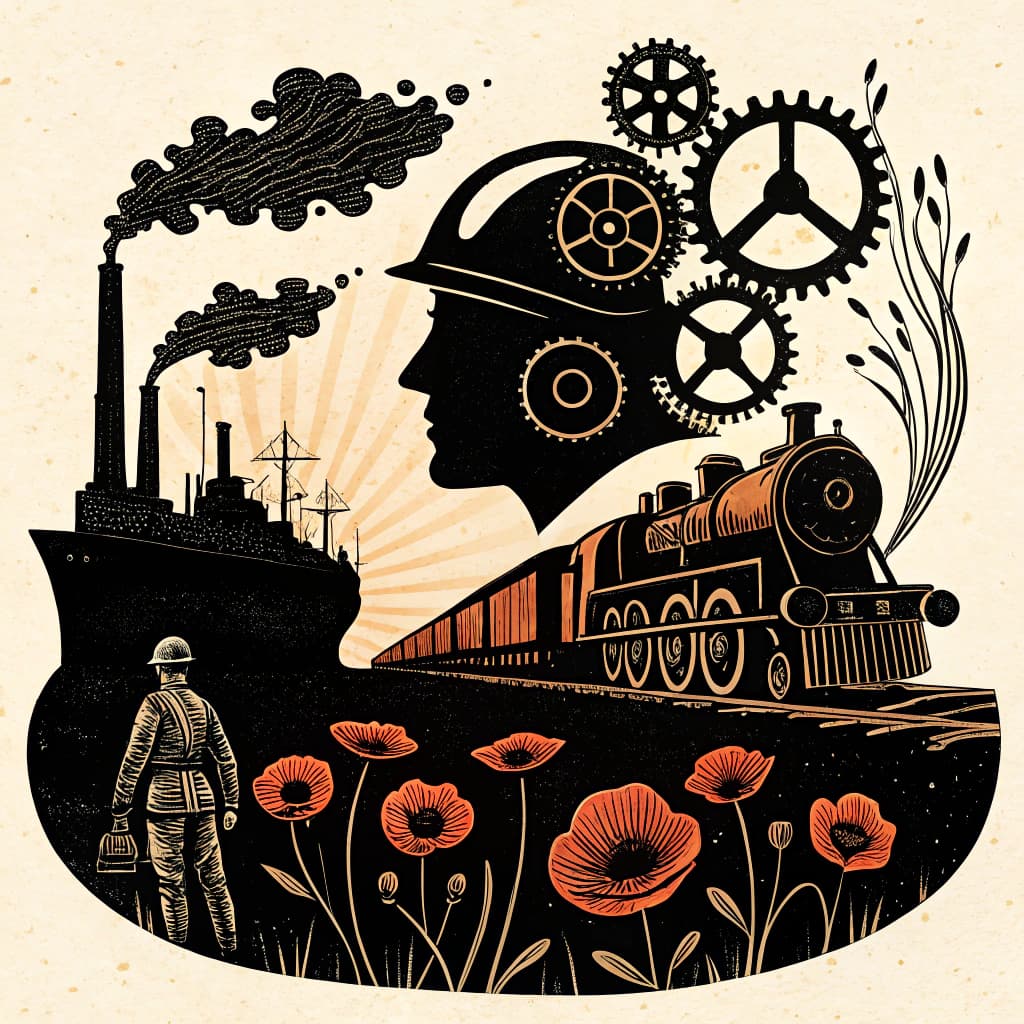
Militarism, Alliances & Imperialism
Examine the long-term causes of World War I, including the arms race, complex alliance systems, and colonial rivalries.
TL;DR:Active learning helps students grasp how militarism, alliances, and imperialism interacted to push Europe toward war. By moving beyond lectures and working with maps, debates, and role-plays, students see cause and effect in real time, not just on a timeline.
About This Topic
Militarism, alliances, and imperialism stand as the key long-term causes of World War I. Students examine the arms race, where European powers like Germany and Britain poured resources into massive armies and dreadnought battleships, creating a climate of suspicion and readiness for war. They trace the alliance systems: the Triple Alliance of Germany, Austria-Hungary, and Italy versus the Triple Entente of France, Russia, and Britain. These pacts meant a Balkan spark could ignite a global fire. Imperialism added fuel through colonial scrambles in Africa and Asia, sparking crises like those in Morocco and sparking naval rivalries.
Aligned with AC9H9K05 in the Australian Curriculum, this content asks students to analyze alliance contributions to war, explain imperial tensions, and distinguish defensive from offensive militarism. It sharpens skills in causation, perspective-taking, and evaluating historical sources, linking past events to today's international relations.
Active learning suits this topic well. Simulations of alliance negotiations or imperial land grabs let students experience decision-making pressures firsthand. Role-plays and mapping exercises clarify complex interconnections, turning dense history into engaging stories students retain long-term.
Key Questions
- Analyze how the system of alliances contributed to the outbreak of a global war.
- Explain the role of imperial competition in escalating tensions between European powers.
- Differentiate between defensive and offensive aspects of pre-war militarism.
Learning Objectives
- Analyze the interconnectedness of the alliance systems (Triple Alliance and Triple Entente) and their role in escalating a regional conflict into a global war.
- Explain how imperial competition and colonial rivalries between European powers contributed to increased tensions and mistrust prior to 1914.
- Differentiate between the perceived defensive and actual offensive characteristics of pre-war militarism, including arms races and military planning.
- Evaluate the extent to which militarism, alliances, and imperialism were the primary long-term causes of World War I.
Before You Start
Why: Students need a foundational understanding of how to identify and differentiate between short-term triggers and long-term underlying causes of historical events.
Why: Understanding the context of European colonization in Africa provides a concrete example of imperial competition that directly fueled tensions between European powers.
Key Vocabulary
| Militarism | A belief that a country should maintain a strong military capability and be prepared to use it aggressively to defend or promote national interests. This included large standing armies and naval expansion. |
| Alliance System | A network of treaties and agreements between nations, designed for mutual defense. In pre-WWI Europe, these included the Triple Alliance and the Triple Entente, which obligated nations to support each other if attacked. |
| Imperialism | The policy of extending a country's power and influence through colonization, use of military force, or other means. Competition for colonies created friction between European powers. |
| Arms Race | A competition between nations for superiority in the development and accumulation of weapons. The naval arms race between Britain and Germany is a key example leading up to WWI. |
| Dreadnought | A type of battleship that became dominant in the early 20th century. The construction of these powerful warships by Britain and Germany fueled the naval arms race. |
Watch Out for These Misconceptions
Common MisconceptionAlliances were secret and unknown before the war.
What to Teach Instead
Many alliances were public treaties, but their rigid terms surprised leaders in crisis. Mapping activities in groups help students visualize public commitments and practice articulating how they locked in responses.
Common MisconceptionMilitarism only meant building more weapons.
What to Teach Instead
It included cultural shifts like youth training and war glorification. Role-plays let students debate policies, revealing social dimensions through peer discussion and source analysis.
Common MisconceptionImperialism had little impact by 1914.
What to Teach Instead
Ongoing rivalries fueled arms races and distrust. Debate simulations show students how colonial stakes intertwined with Europe, using evidence to correct timelines collaboratively.
Active Learning Ideas
See all activities→Simulation Game
Alliance Mapping: Web of Commitments
Provide country cards with alliance details. In small groups, students connect cards with strings on a board to show entanglements. Tug one string to simulate a crisis and observe the chain reaction. Groups present how this led to escalation.
Simulation Game
Imperial Debate: Colony Claims
Assign pairs roles as rival powers debating a fictional African territory. Each side presents arguments on resources and prestige, then switches sides. Class votes on outcomes and discusses real historical parallels.
Simulation Game
Arms Race Graphs: Spending Showdown
Students in small groups collect data on military budgets from 1900-1914 for key nations. Plot line graphs comparing growth rates. Discuss how graphs reveal fear-driven escalation.
Real-World Connections
- Historians specializing in international relations analyze historical alliance structures, like those before WWI, to understand modern diplomatic challenges and the potential for regional conflicts to spread globally. They might study current treaties between countries in Eastern Europe or Asia.
- Diplomats and foreign policy advisors in countries like France or Germany today consider historical precedents of imperial competition and arms races when negotiating trade agreements or security pacts, aiming to avoid past mistakes that led to large-scale conflict.
Assessment Ideas
Pose the question: 'Imagine you are a leader in Europe in 1910. Based on the alliance system and imperial rivalries, would you advise strengthening your alliances, building more weapons, or seeking colonial expansion? Explain your reasoning, considering the potential consequences.'
Provide students with short scenarios describing pre-war European actions (e.g., 'Country A signs a treaty with Country B for mutual defense,' 'Country C builds five new battleships,' 'Country D claims territory in Africa'). Ask students to identify which long-term cause (militarism, alliances, or imperialism) each scenario best represents and briefly explain why.
On an index card, students write one sentence explaining how a specific alliance (e.g., the Triple Entente) could draw multiple countries into a war. Then, they write one sentence explaining how competition for colonies (imperialism) increased tension between two European powers.
Frequently Asked Questions
How did alliances contribute to World War I outbreak?
What role did imperialism play in pre-WWI tensions?
How can active learning help teach militarism, alliances, and imperialism?
What is the difference between defensive and offensive militarism?
More in World War I (1914–1918)
The Assassination & July Crisis
Investigate the assassination of Archduke Franz Ferdinand and the diplomatic failures of the 'July Crisis' that led to war.
8 methodologies
Australia's Entry into WWI
Examine Australia's decision to join the war, its ties to Britain, and the initial enthusiasm for enlistment.
8 methodologies
The Gallipoli Campaign: Strategy & Reality
Explore the strategic objectives and tactical failures of the Gallipoli campaign, and the harsh realities faced by soldiers.
8 methodologies
The Anzac Legend: Myth & Memory
Investigate the origins and evolution of the Anzac legend, examining its role in shaping Australian national identity.
8 methodologies
Trench Warfare & New Technologies
Examine the nature of trench warfare on the Western Front and the impact of new military technologies like machine guns, gas, and tanks.
8 methodologies
Battles of the Western Front (Pozieres, Villers-Bretonneux)
Focus on specific battles involving Australian forces on the Western Front, understanding their significance and human cost.
8 methodologies