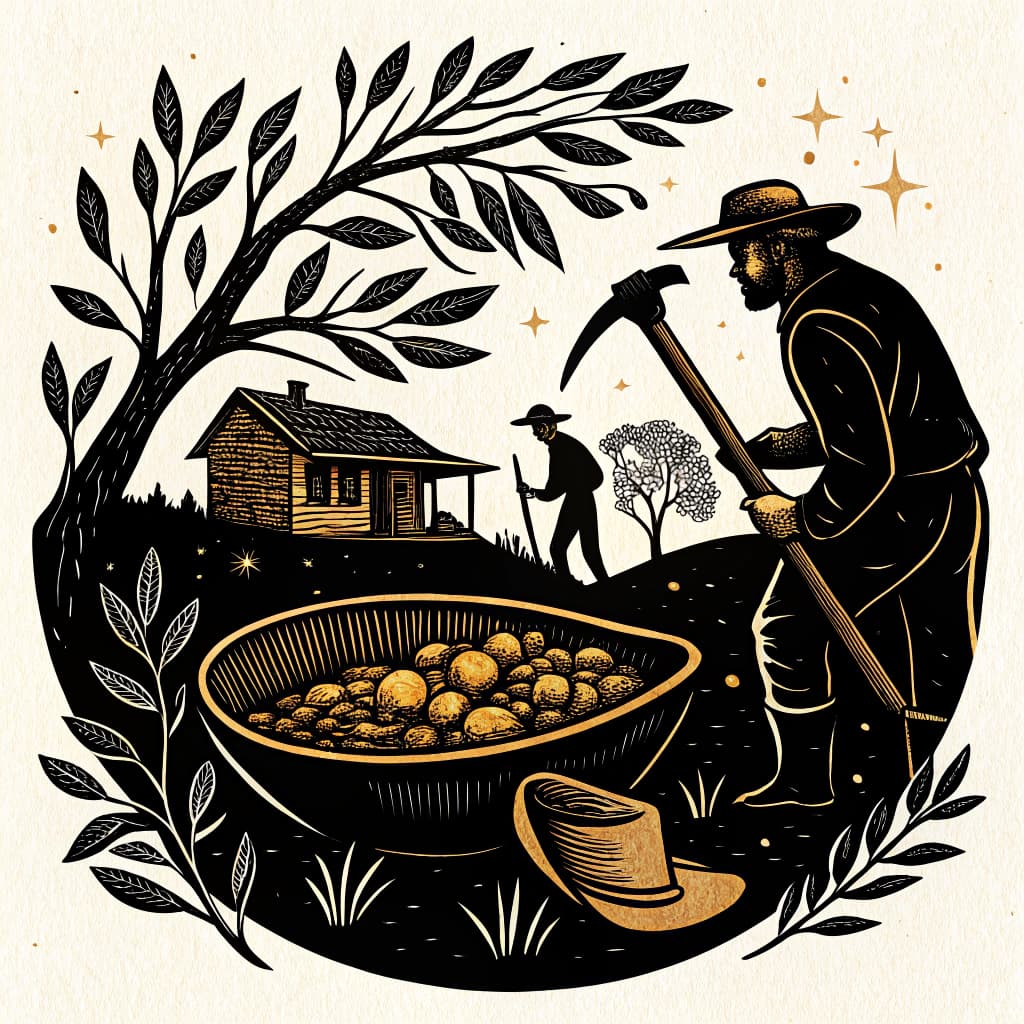
Daily Life on the Goldfields
Examine the harsh conditions, social dynamics, and daily routines of diggers on the goldfields.
TL;DR:Active learning immerses students in the physical and social realities of 1850s goldfields, turning abstract facts into lived experience. When students role-play disputes or construct camps, they confront the exhaustion, prejudice, and scarcity that shaped daily life more vividly than a textbook ever could.
About This Topic
Daily life on the Australian goldfields in the 1850s involved intense physical demands, precarious health risks, and complex social interactions among diggers from Europe, China, and beyond. Students examine routines such as rising at dawn to cradle for gold, battling mud and floods, cooking damper over fires, and facing shortages of clean water and fresh food. They analyze conflicts over claims, prejudices against Chinese miners, and the makeshift communities that formed around tent cities.
This content supports AC9HASS5K01 by building students' understanding of colonial history through empathy and source evaluation. Letters from diggers, sketches of camps, and census data reveal the gap between dreams of instant wealth and the grind of poverty for most. Such inquiry sharpens skills in perspective-taking and evidence-based arguments about migration's impacts.
Active learning suits this topic well. When students role-play claim disputes or build scale models of goldfield tents with period-accurate materials, they grasp hardships kinesthetically. Group timelines of a typical day reinforce sequences and connections, making history vivid and memorable while encouraging peer teaching.
Key Questions
- Explain the challenges and hardships of daily life for gold diggers.
- Analyze the social interactions and conflicts among diverse groups on the goldfields.
- Construct a description of a typical day for a gold seeker.
Learning Objectives
- Analyze primary source documents, such as letters and sketches, to identify the daily hardships faced by gold diggers.
- Compare and contrast the living conditions and routines of different groups of people on the goldfields, including European and Chinese miners.
- Construct a narrative account describing a typical day for a gold seeker, incorporating details about their work, shelter, and social interactions.
- Evaluate the motivations for migration to the goldfields, considering both the pursuit of wealth and the realities of life there.
Before You Start
Why: Students need a basic understanding of the colonial context and the presence of Europeans in Australia before the gold rushes.
Why: Understanding the general concept of why people move from one place to another provides a foundation for exploring the specific pull factors of the gold rushes.
Key Vocabulary
| Cradling | A method of washing gold-bearing soil or gravel in a pan or cradle to separate the heavier gold particles from lighter materials. |
| Claim | A designated area of land that a miner staked out and had the right to work for gold. |
| Damper | A simple Australian bush bread made from flour and water, traditionally cooked in the ashes of a campfire. |
| Sluice box | A long, narrow channel with riffles used to wash large quantities of gold-bearing gravel, separating gold by gravity. |
| Goldfields | The geographical areas where gold was discovered and where mining operations took place during the gold rushes. |
Watch Out for These Misconceptions
Common MisconceptionLife on the goldfields was exciting and easy.
What to Teach Instead
Most diggers endured exhaustion, disease, and failure to strike gold. Role-plays of panning in 'muddy' trays let students feel the frustration, while comparing sources corrects romanticized views from films.
Common MisconceptionAll diggers were white Australian men.
What to Teach Instead
Communities included women, children, and immigrants from China and Europe. Mapping activities with photos and census data help students visualize diversity, and group debates reveal how this led to both cooperation and racism.
Common MisconceptionDiggers got rich quickly.
What to Teach Instead
Few succeeded; most faced poverty after costs for tools and licenses. Timeline constructions show the long odds, with peer reviews using diggers' letters building accurate economic understanding.
Active Learning Ideas
See all activities→Experiential Learning
Role-Play: Claim Dispute Simulation
Assign roles like European digger, Chinese miner, and claim warden. Groups reenact a dispute over a rich claim, using scripted prompts from historical accounts. Debrief with what resolved the conflict and how prejudices played a role.
Experiential Learning
Diary Writing: A Digger's Day
Provide a timeline of goldfield routines. Students write first-person diary entries detailing morning panning, midday meal struggles, and evening campfire tales. Share entries in pairs to compare experiences across roles.
Experiential Learning
Tent Camp Construction
Groups use cardboard, fabric scraps, and labels to build mini tent camps. Add details like fly-proof tents, sluice boxes, and supply stores based on images. Present camps explaining daily uses and hardships.
Real-World Connections
- Historians use similar methods of analyzing primary sources, like diaries and photographs from the American Civil War, to understand the daily experiences of soldiers and civilians.
- Modern prospectors and geologists still use panning and sluicing techniques, albeit with more advanced equipment, to search for gold in rivers and streams around the world.
- The concept of staking a claim is still relevant in resource extraction industries, where companies must legally acquire rights to mine minerals or drill for oil in specific locations.
Assessment Ideas
Provide students with a card asking: 'List two challenges faced by gold diggers and one way they tried to overcome them.' Collect these at the end of the lesson to check for understanding of hardships and coping strategies.
Pose the question: 'Imagine you are a journalist in 1855. Write a short newspaper headline and a two-sentence summary about life on the goldfields, based on what you've learned.' Facilitate a brief class discussion where students share their headlines and summaries.
Show students an image or a short video clip depicting goldfield life. Ask them to identify three specific details that illustrate the harshness of the conditions or the social dynamics. Use a thumbs up/thumbs down or quick verbal responses for immediate feedback.
Frequently Asked Questions
What challenges did gold diggers face daily?
How did social dynamics work on the goldfields?
What active learning strategies teach goldfields daily life?
How to use primary sources for gold rush daily life?
More in The Gold Rush
Discovery of Gold and Initial Rush
Explore the first gold discoveries in Australia and the immediate impact of 'gold fever' on the colonies.
8 methodologies
Global Migration to the Goldfields
Investigate the diverse origins of gold seekers and their motivations for coming to Australia.
8 methodologies
Goldfield Governance and Grievances
Explore the system of gold licenses, the role of the police, and the growing discontent among diggers.
8 methodologies
The Eureka Stockade: Rebellion and Legacy
Investigate the events of the Eureka Stockade, its causes, and its significance for Australian democracy.
8 methodologies
Chinese Migration to the Goldfields
Examine the reasons for Chinese migration to Australia during the gold rush and their unique experiences.
8 methodologies
Discrimination and Anti-Chinese Sentiment
Investigate the discrimination, violence, and legislative measures faced by Chinese migrants on the goldfields.
8 methodologies